Head and pelvis support
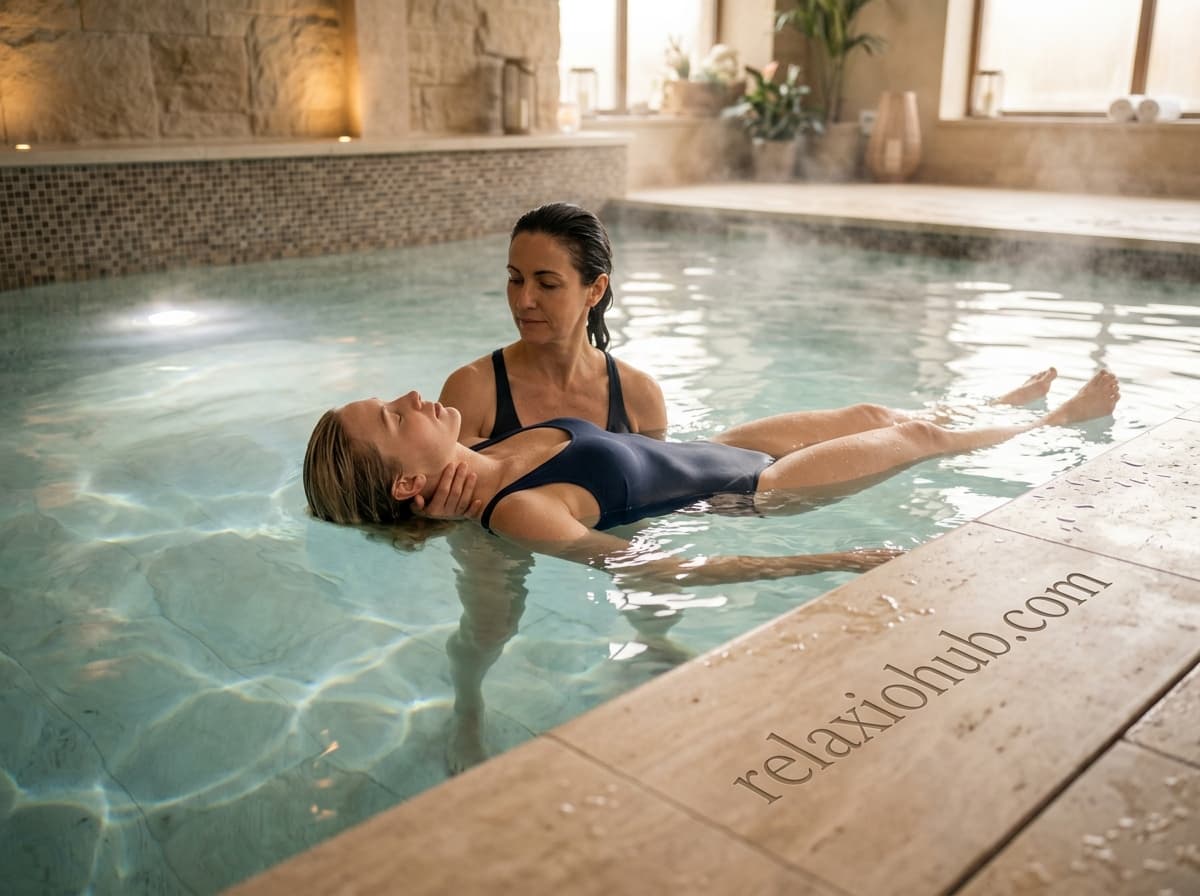
The practitioner holds the body so the neck, back, and pelvis do not strain and the person can float without effort.
Watsu is warm-water massage where the practitioner supports the body at the surface and guides it through smooth arcs, stretches, and quiet pauses. Water removes part of body weight, so movement can feel deep without the usual pressure of a table.
Massage that happens in water
Watsu massage is a form of aquatic bodywork where the client rests in warm water while the practitioner supports the head, back, pelvis, or legs and slowly guides the body through wave-like movement. There is little of the classic table-based muscle kneading: the main tools are buoyancy, water rhythm, breathing, gentle lengthening, and a feeling of safety.
Watsu began in 1980 at Harbin Hot Springs in Northern California. Harold Dull, who had studied Zen Shiatsu in Japan with Shizuto Masunaga, started bringing shiatsu principles and stretches into a warm pool. He noticed that water allowed the body to move wider and softer because joints were not carrying full weight and the client could trust the support more deeply.
Today Watsu is practiced in the United States, Canada, Japan, Australia, New Zealand, Germany, Switzerland, Austria, Italy, Spain, France, the Netherlands, Poland, Czechia, Ukraine, and wellness centers with thermal pools. People search for “watsu massage,” “water shiatsu,” “warm water massage,” and “aquatic bodywork.” It is not swimming and not a bath ritual, but a personal supported bodywork session in water where the practitioner holds and guides the body throughout.
At a glance
Technique
In Watsu, the point is not force but continuous support: the client should feel held by both water and the practitioner's hands throughout the session.
The practitioner holds the body so the neck, back, and pelvis do not strain and the person can float without effort.
The body moves slowly through circles, half-circles, or waves, using buoyancy instead of pressure.
Arms, shoulders, side lines, or legs are softly lengthened within a comfortable range, without sudden pulls.
The pace often follows a calm exhale so the water does not create anxiety or hurry.
Between waves, the practitioner leaves the body in quiet support so sensations have time to integrate.
After the session, the client is slowly returned to support so there is no sudden dizziness or loss of orientation.
Expected effect
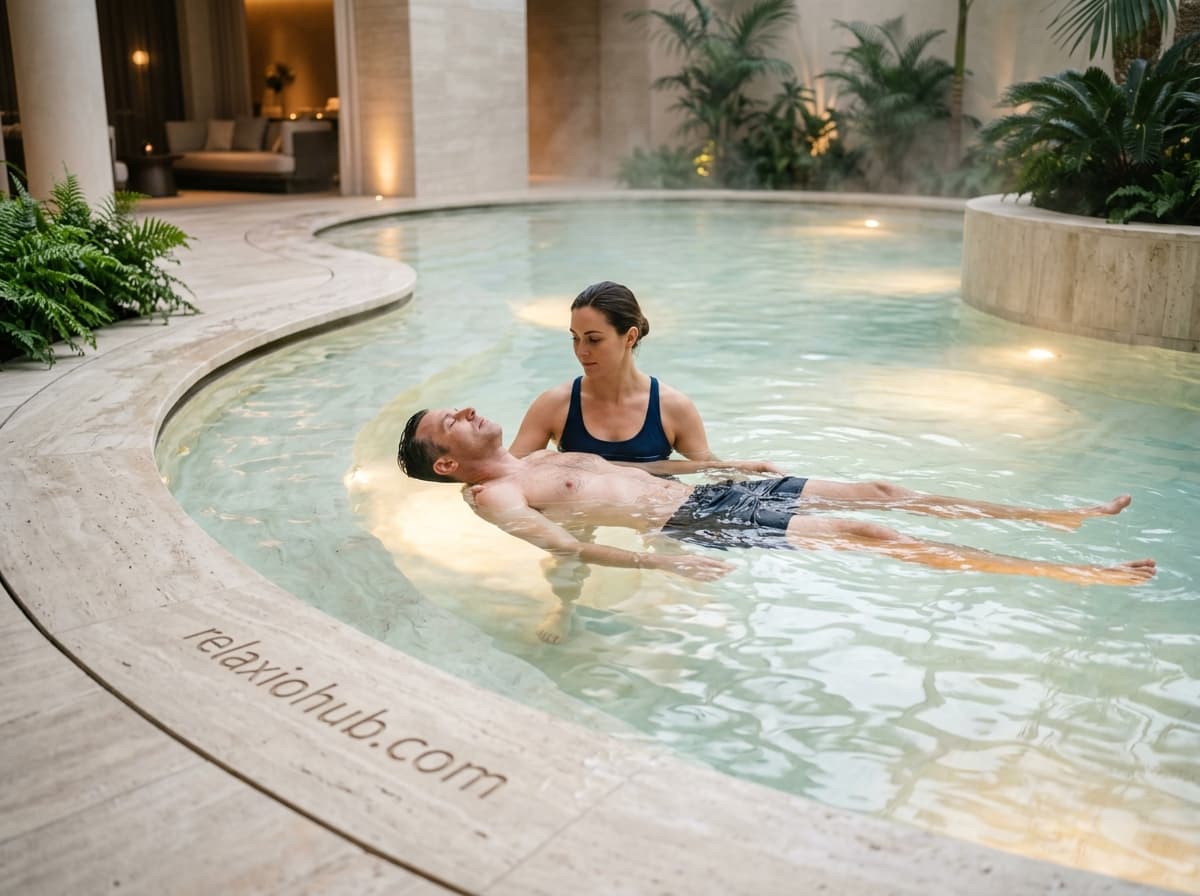
Watsu is a wellness practice, not a medical procedure or treatment for any condition. In this context, its expected effect is a sense of support, softer motion, and deep settling.
Buoyancy helps the body experience movement without the usual load on support points, so the session often feels gentler.
Warm water creates a background where shoulders, back, and breathing often let go of extra tension more easily.
Smooth arcs and stretches may create a feeling of more space in the shoulders, sides, back, and pelvis.
When the body is held in water without hurry, many people describe the effect as calm, trust, and reconnection with themselves.
The session should stop or adapt if water feels uncomfortable, anxiety appears, or breathing becomes tense.
Water pushes evenly on all body surfaces from every side (hydrostatic pressure), providing continuous tactile input. In aquatic therapy this is described as sensory quieting — cortical settling without targeted point pressure.
Timeline
The practitioner asks whether you can relax in water and checks for fear of immersion, ear issues, blood pressure, heart, or breathing concerns.
The session starts slowly: the client adjusts to water temperature, depth, and the practitioner's support.
The practitioner supports the head and torso, then makes short arcs so the body understands the rhythm and movement boundaries.
Smooth turns, lengthening, side lines, arm and leg work, back support, and neutral pauses alternate through the session.
At the end, movement slows down and the client is guided toward the pool edge or a stable position before standing.
Comparison
Watsu is often confused with water procedures, but it is a separate form of personal bodywork.
Watsu fits when you want relaxation through warm water, support, and smooth movement.
Classic or therapeutic massage is more direct if you want local hand pressure.
Swimming or aqua fitness are different because the person moves actively; in Watsu, the practitioner guides the movement.
Because this format uses water, warmth, and floating positions, heart, breathing, skin, ears, and psychological comfort matter as much as muscles.
FAQ
Watsu is warm-water massage where the practitioner supports the body at the surface and guides it through smooth movement, stretches, and pauses.
Watsu was created by Harold Dull in 1980 at Harbin Hot Springs in Northern California by combining Zen Shiatsu with warm-water bodywork.
People usually expect a sense of lightness, calmer breathing, softer mobility, warmth, and deep support without strong pressure.
The practitioner usually supports the client, but basic comfort in water is important. If you fear water, discuss it before booking.
Watsu is practiced in the United States, Canada, Japan, Australia, Germany, Switzerland, Austria, Italy, Spain, France, Poland, Czechia, and Ukraine.
Look for profiles that describe Watsu or aquatic bodywork experience, pool conditions, water temperature, safety, contraindications, and first-session format.
WABA recommends 35°C (95°F) — the thermoneutral zone for adults, where thermoregulatory effort is minimal. At this temperature, the nervous system shifts toward parasympathetic dominance more easily: heart rate slows, resting muscle tone decreases, and cortisol levels fall.
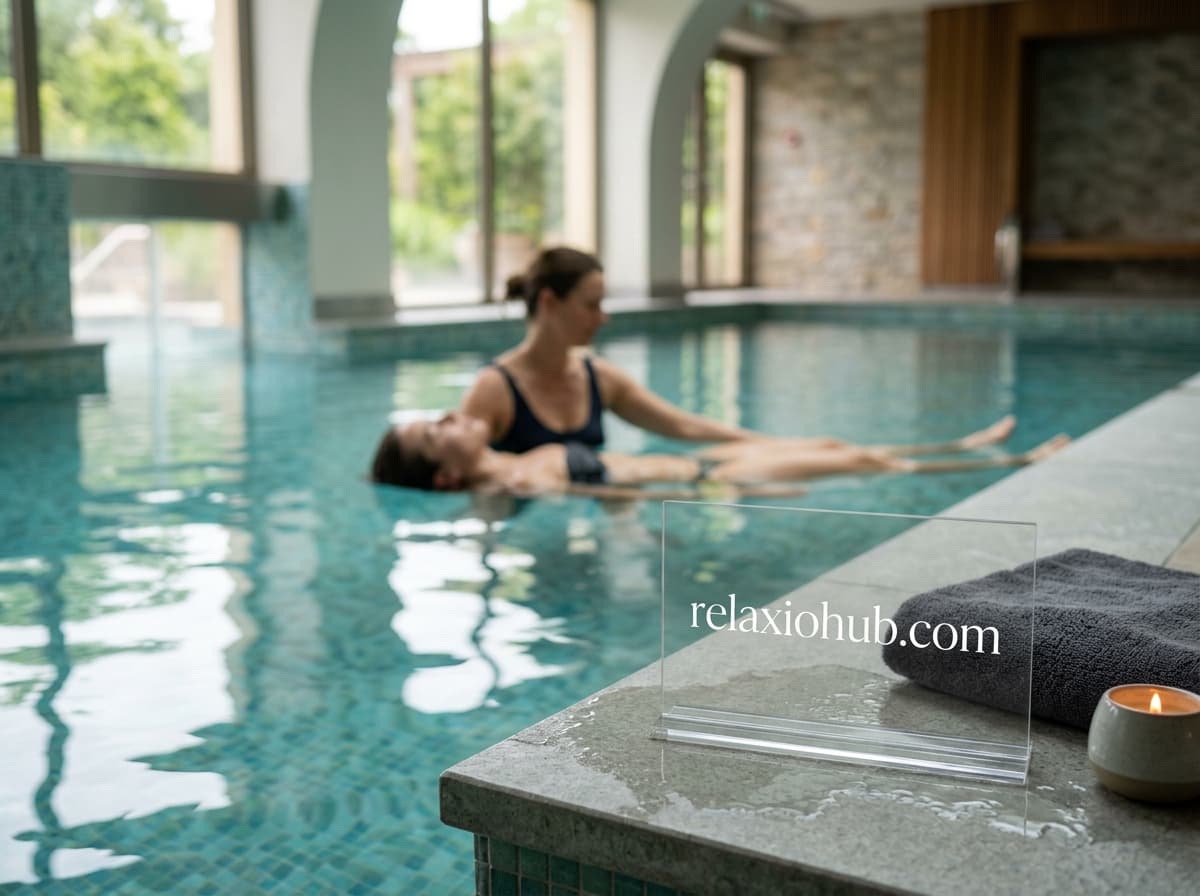
In Watsu, the client should not fight the water: the practitioner holds the body so movement stays slow and safe.
Compare profiles that describe Watsu, water shiatsu, aquatic bodywork, pool conditions, expected effects, contraindications, and experience working in warm water.