Temperature-checked flooding
Palms preview warmth on hands before broad back passes land.
Warm jets or featherweight hydro-gel erase dry friction so palms sweep long arcs—yet studios earn trust through drainage trays, grippy mats, and grab-assist choreography because wet vinyl without discipline becomes a slip hazard fast.
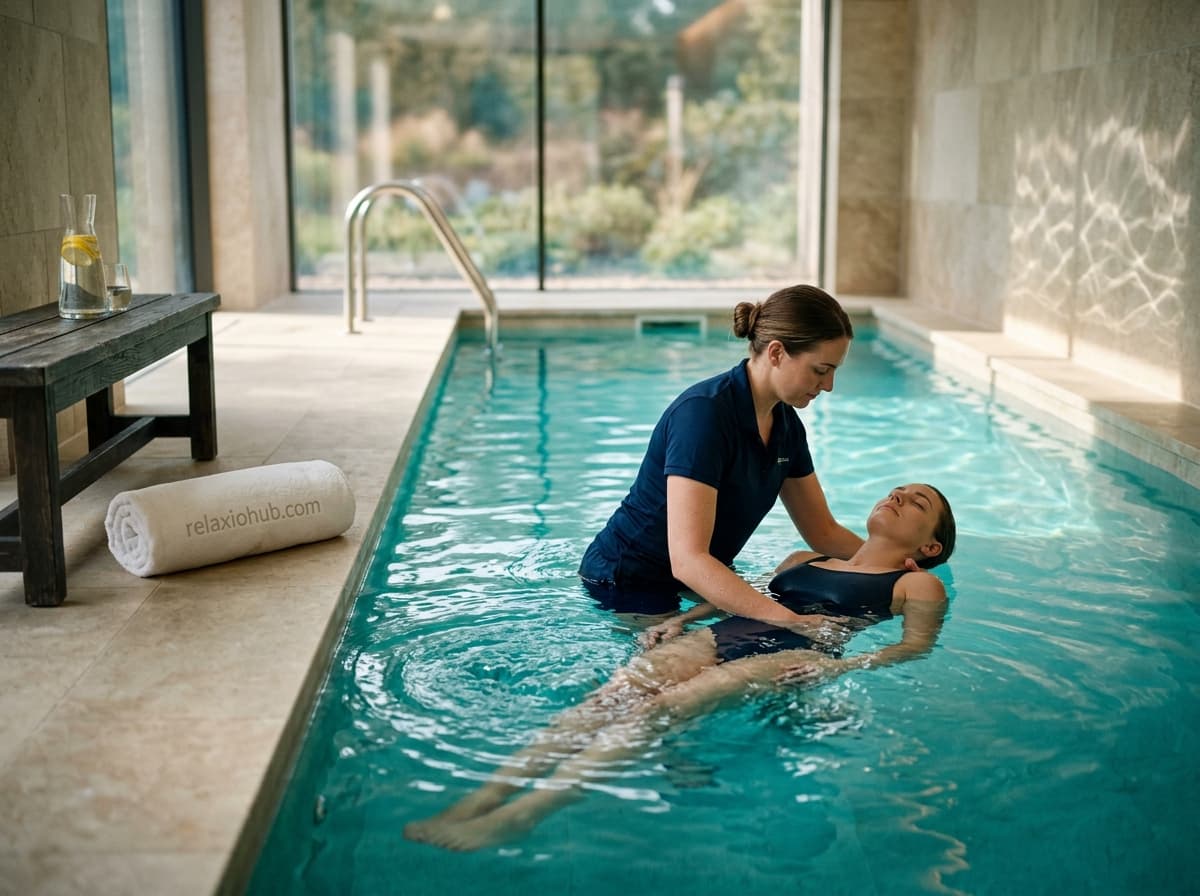
Table hydro rituals
European studios usually offer membrane-lined tables or bolstered mats where therapists intermittently flood skin with warmed water while working through water-based gels or slick serums lighter than trademark Nuru viscosity. You trade oily cling for splash-and-rinse freshness—assuming the room handles puddles responsibly.
This is neither prescription hydrotherapy loungers nor aquatic Watsu pools; you remain atop portable gear inside wellness bounds. Skip detox fairy tales—honest payoff is thermal novelty, silky glide, and sensory reset versus cotton-draped classics.
Compared with Nuru's ultra-slip adult protocols, water massage skews moderate-gliding with quicker rinse cycles and often gentler product stacks. Versus Swedish oils you shed greasy residue yet inherit wet-floor vigilance every minute.
Snapshot
Technique
Therapists continuously adapt pace and pressure as the water medium changes the tactile response at the skin surface.
Palms preview warmth on hands before broad back passes land.
Water top-ups keep glide predictable without surprise dry grabs.
Pressure cues differ from dry fascia work—communicate early.
Brief compresses swap sensation without icy shocks.
Technicians warn about slick tiles beyond the liner footprint.
Why book
Two honest deliverables: sensory novelty of warm water glide and an oil-free skin finish that stays clean after the session ends.
Warm water keeps superficial layers receptive without insisting on clinical outcomes.
Bodies read motion differently once shear drops—novelty itself relaxes some guests.
Skilled therapists rebalance pressure whenever membranes run wetter.
Transparent liner sanitation beats mystery buckets hiding mold risk.
When warm water envelops skin, it exerts uniform omnidirectional hydrostatic pressure—unlike directional hand pressure, this enveloping force explains the "weightlessness" sensation clients frequently report during hydro sessions.
Therapists can fine-tune water temperature mid-session—creating a dynamic thermal arc that static-temperature tools like stones or pouches cannot replicate.
Flow
Flag balance issues, gel sensitivities, open cuts, and heat-triggered nausea.
Assistive pivots plus verbal cues keep mats from folding unpredictably.
Therapist executes long effleurage passes across back, thighs, and shoulders with warm water or hydrogel, alternating water top-ups with pétrissage on stable zones; client voices thermal comfort and pressure preferences; all position changes happen with therapist assistance on the wet surface.
Showers eliminate residue; staff stabilize exits until footwear grips dry floors.
Choosing the format
Three intents beside Nuru or oil-heavy Swedish flows.
Hydro formats deliver squeaky-clean skin sooner than towel-blotting oils ever will.
Choose moderated glide stacks when ultra-slip formats feel excessive.
Seek wellness novelty—not clinic-grade hydro-bed prescriptions.
Heat + moisture + slick membranes exclude some populations.
FAQ
Kin but usually milder viscosity plus shorter cling—compare studio blurbs and ingredient decks.
No—table hydro rituals lack jet prescriptions or rehab oversight.
Pause acute phases; warm gel baths can irritate sensitized mucosa or barrier-deficient skin—ask clinicians.
Request slower pacing, parallel bars, or seated assists—pros should oblige.
Roughly every 3–5 weeks if skin tolerates repeated formulas.
Three main types used in studios: plain warm water (zero additives—cleanest and most transparent, friction returns fastest), water-based gels (carbomer or xanthan gum as thickener, glycerin as humectant, preservatives—sustained slip with a known ingredient risk profile), and seaweed or algae polymer gels (sodium alginate or carrageenan—higher molecular weight, longer-lasting glide, sometimes marketed as marine massage). For practitioners: the thickening agent determines reapplication frequency and session choreography. For clients: this is what touches your skin—ingredient transparency matters.
When skin contacts wet smooth surfaces, the coefficient of friction drops from roughly 0.5 dry to 0.02–0.05 wet—a 10 to 25-fold reduction. Studios offering water massage should have: textured or rubberized membrane surface, non-slip flooring around the perimeter, drainage management between passes, an assisted position-change protocol, and a rule against bare-foot walking on wet tile without non-slip footwear. Clients should check for these before booking; practitioners need to understand that skipping any single element converts a relaxation session into a real fall-risk event.
Pick your city and vet profiles for membrane hygiene, drainage plumbing, gel INCI transparency, and refusal to pitch pseudo-medical hydro cures.