Mapping the zone plus brief warm-up
Hands or light manual strokes lift circulation and outline boundaries where the handpiece stays safe on your skin.
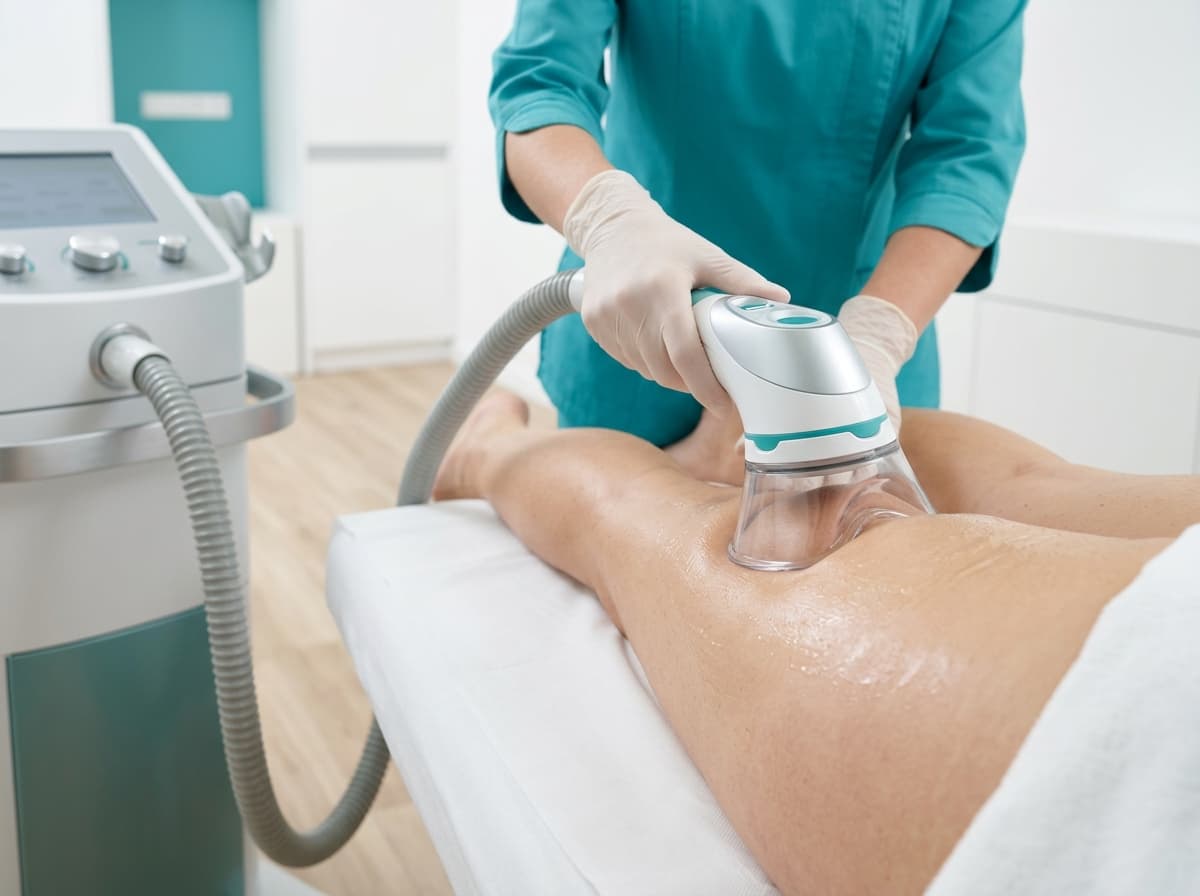
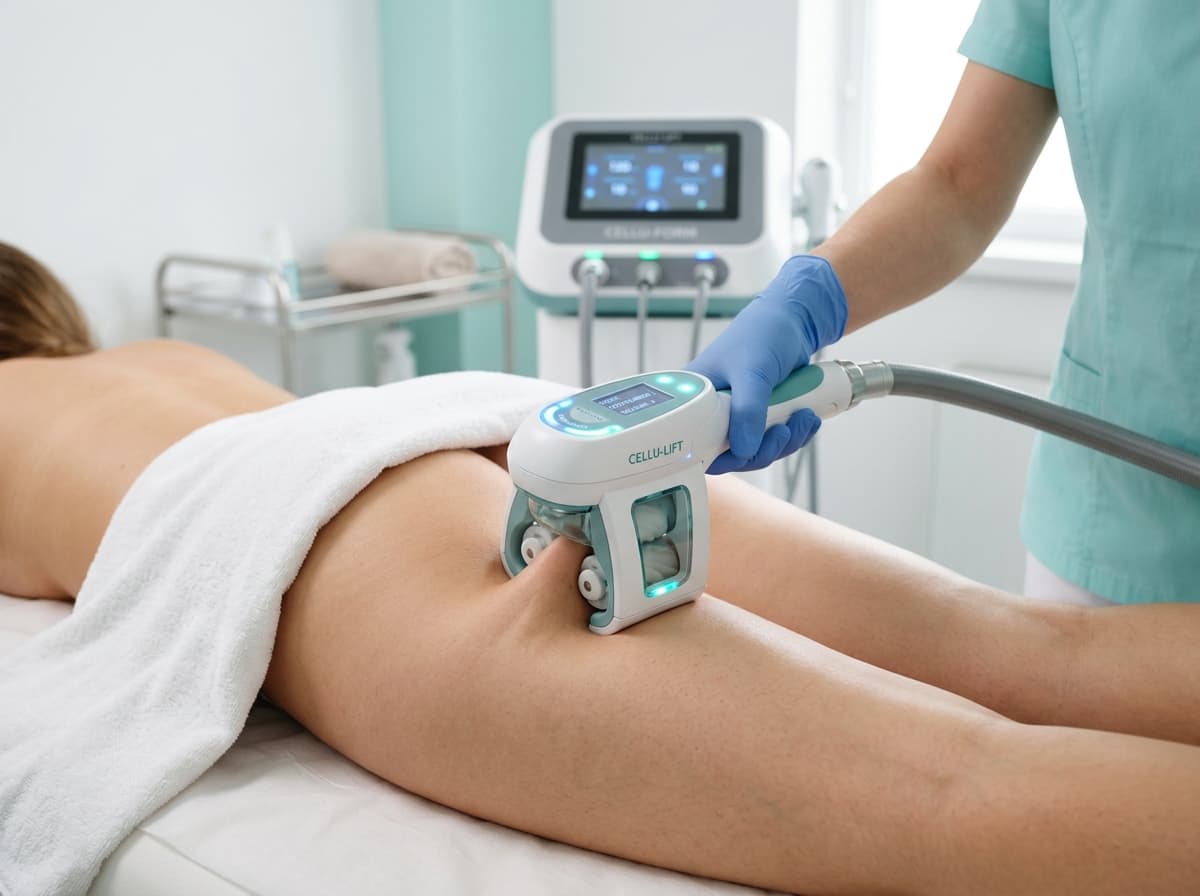
In many studios this means a vacuum-roller handpiece: suction stays engaged while a bead or roller travels in stripes across the skin—a broader kneading pull than isolated static cups, without guaranteeing the classic ring-shaped marks.
High-intent searches
People blur vacuum work with cupping because both lower pressure against the skin. In a typical salon vacuum massage is delivered with a motorized or assisted roller head that lifts tissue while continuously rolling along lines on glutes, thighs, or back. Cupping relies on discrete cups: localized suction, iconic circular marks, and longer stationary holds without that rolling shear.
The distinction shows up immediately: a roller distributes load along a stripe; a cup anchors a smaller footprint and concentrates contrast inside each circle. Subjectively, roller protocols often read as spreading warmth and loosening superficial tightness across a lane; cupping reads as pinpoint traction and—when suction is strong—more pronounced circular discoloration.
Neither format detoxes the body in one session or replaces vascular medical care. Any contour or skin-texture story is individual, short-lived, and depends on tissue response, device settings, and practitioner skill.
Snapshot
Technique
Naming differs; rhythm should stay predictable: prep, intensity pilot, patterned strokes, calming finish.
Hands or light manual strokes lift circulation and outline boundaries where the handpiece stays safe on your skin.
One or two short lanes establish vocabulary—you steer with softer or stronger until the main phase begins.
The roller draws tissue upward under suction; sensations range from mellow heat to dense pressure depending on mode.
Clear joint margins or lymph-heavy zones get skipped or approached only per agreed protocols.
Broad calming strokes blunt post-stimulus sensitivity and even tone after aggressive segments.
Why book
Subjective relief or brief texture shifts—no clinical guarantees.
Different mechanical signature than palms-only work or stationary cups on one anchor point.
Often noted along hips and lumbar zones—always individual.
Displays or dials give repeatable increments versus squeezing silicone cups purely by hand speed.
Spider veins, varicose zones, dermatitis, and anticoagulants belong on the table before contact starts.
Flow
Surgeries, meds, pregnancy, rosacea-like redness, fresh peels or tanning influence allowable maps.
Therapists contrast brisk stripe passes versus slow deep lanes so expectations stay aligned.
Hydrate normally, moderate workout loads for ~24 hours when skin glows angry red, skip sauna friction during that window.
Choosing a modality
Pointers without declaring universal winners.
Rollers tend to spread pressure along each stroke path—still speak up fast if dizziness or nausea appears.
Book cupping or hybrid protocols; vacuum rollers do not photocopy that geometry.
Either modality may redden tissue; softer presets shrink visibility—negotiate upfront.
Negative pressure is serious stimulus—respect red flags.
FAQ
Cupping isolates suction inside discrete cups—often circular marks—with stationary or slow-gliding pulls. Vacuum rollers marry suction with rolling travel across stripes, changing shear mechanics and typical skin reactions; one session never duplicates the other pixel-perfect.
Both manipulate tissue locally via pressure plus motion; visible shifts stay brief and hinge on hydration, sleep, settings, and genetics. Ads declaring permanent winners oversimplify biology.
No—gentle presets may blush skin only. Strong vacuum on thin skin can still yield petechiae, similar to aggressive cupping.
Spa-grade sessions are not interchangeable with regulated devices or lymph-edema plans—talk with clinicians when medicine—not aesthetics—drives the goal.
Look for transparent device mentions, refusal language around varicose paths, realistic mark talk, and instant stop cues if intensity overshoots comfort.
For tension relief or circulation improvement, most practitioners suggest a course of six to ten sessions spaced one to two weeks apart, with results assessed after the first three or four.
Roller suction can temporarily improve skin texture appearance by increasing local circulation and tissue mobility. Lasting cellulite improvement requires a broader approach: nutrition, activity, hydration, and consistent massage over several weeks.
Therapists
Practitioners across Ukraine who provide this massage type. Choose a specialist and view their profile.
Filter profiles for hardware specifics, sensitive-skin experience, and realistic expectations about redness compared with classic cupping.