Consult-style intake plus palpation mapping
Practitioners ask what aggravates symptoms and whether numbness or radiation appears—framing safe zones without issuing diagnoses.
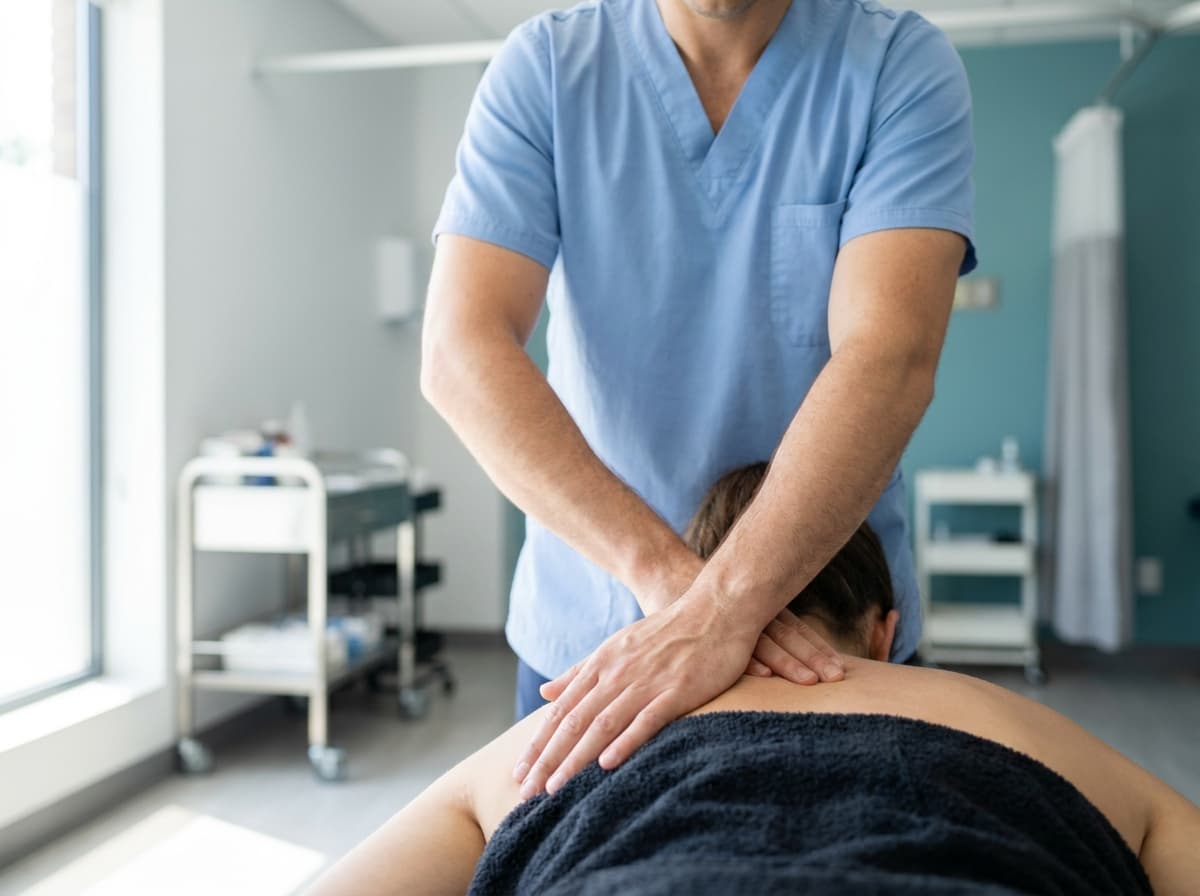
Built around painful hotspots and movement limits: graded pressure, gradual warm-up, and constant feedback so tight muscles yield — without making diagnostic claims from the table.
Format clarity
Studios usually use this term for sessions prioritizing perceived pain relief or stiffness in named regions—often neck and traps, mid-back between the shoulder blades, lumbar area, or posterior thigh chains. Compared with purely relaxation-first flows, more clock time goes to focal work, comfort checks, and slow depth ramps rather than evenly glazing the entire body in feather-light effleurage.
Bodies respond well to predictable arcs: broad strokes warm skin and superficial fascia, then petrissage and sustained compression hunt denser bundles without startling the nervous system. Outcomes remain individual; nerve-root issues, joint pathology, or inflammatory disease may not budge from manual care alone.
Therapeutic massage never substitutes physician evaluation or formal rehab after injury. Acute pain with numbness, focal weakness, fever, night pain of unclear origin, or post-trauma symptoms deserve clinical assessment before deeper manual loading continues.
Snapshot
Technique
Wide contact first, precise contact second—protective reflexes stay quieter that way.
Practitioners ask what aggravates symptoms and whether numbness or radiation appears—framing safe zones without issuing diagnoses.
Long enveloping strokes lift perfusion so deeper layers accept pressure without shock.
Iso-pressure holds invite guarded fibers to exhale instead of snapping into protective spasm.
Short cross-fiber or longitudinal shear heats stubborn interfaces—think scapular anchors, cervical paraspinals, or lumbar erectors after desk marathons.
Breath-paced finishing strokes settle tone; micro-stretches or posture cues extend relief between appointments.
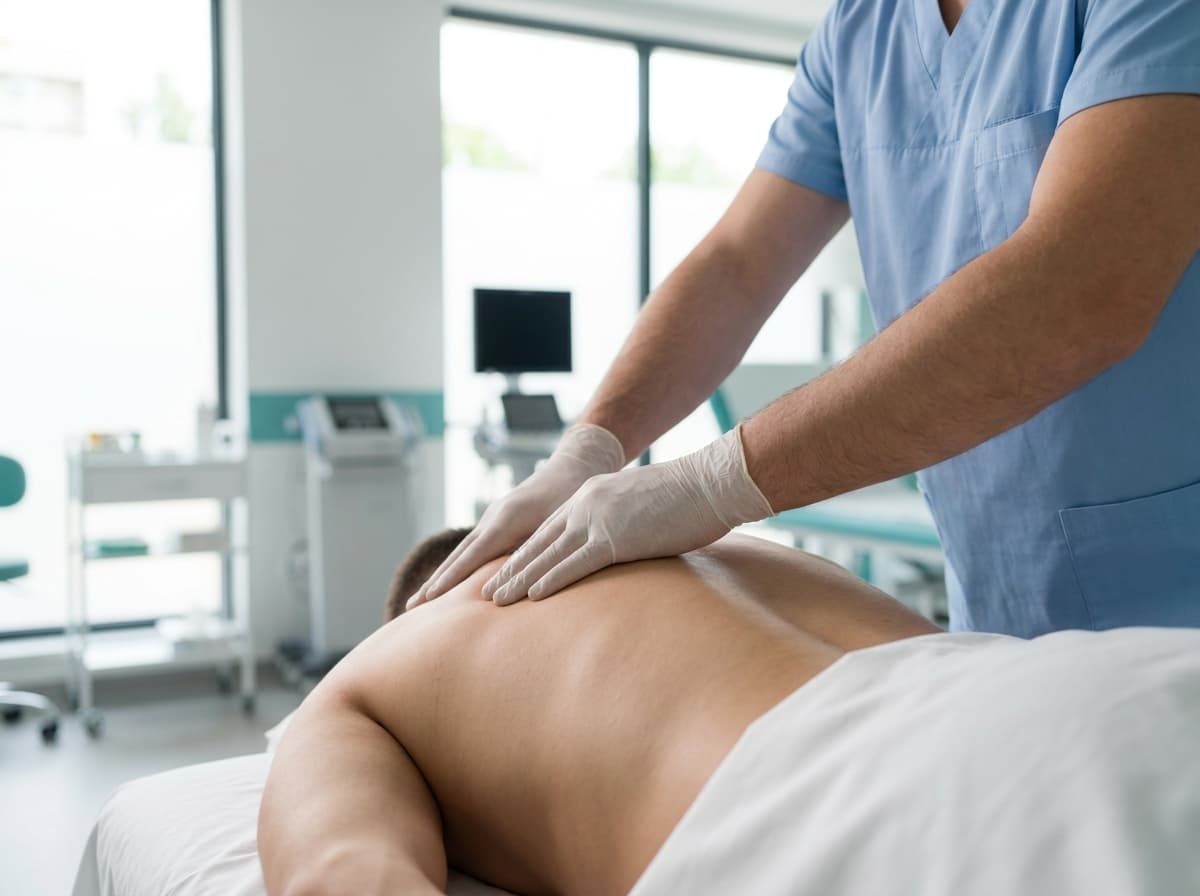
Why book
Most guests want everyday comfort between clinical visits—not magic cures from lotion.
Necks and thoracic segments often turn and extend with less grind once chronic guarding lets go.
Rhythmic loading wakes microcirculation where stillness once felt wooden.
Layered depth minimizes rebound tightness from defensive reflex arcs.
Ethical therapists refer out when red flags surface rather than doubling down on friction.
Consistent work on myofascial knots gradually returns fuller neck, shoulder, and lumbar movement — often noticeable within 2–3 systematic sessions.
Sustained focal pressure engages neurological pain-inhibition pathways: discomfort quiets naturally through nerve-gate mechanisms rather than medication.
Flow
You name one or two priorities; the therapist explains how discomfort gets checked and how to ask for lighter pressure instantly.
Broad strokes yield to slower holds on irritable tissue with breathing-paced breaks.
Gentle flushing strokes stabilize autonomic tone; hydration, sleep, and load tweaks cover the next 24–48 hours.
Choosing the format
Three scenarios distinct from rehab prescriptions or sports conditioning blocks.
You crave trap, cervical, and inter-scapular precision—not only scented ambiance.
No acute tear suspicion, yet muscles feel armor-plated; focal depth beats lightning lymph pacing.
Manual work can keep tissues friendly toward prescribed homework but never replaces exercises or imaging decisions.
Aggressive optimism belongs nowhere near neurology red flags.
FAQ
Classic sessions often balance rhythm across the whole body. Therapeutic formats carve extra minutes for named tight zones and continuously negotiate depth.
No—rehab timelines belong to physicians and physiotherapists. Studio therapeutic massage may only complement stable phases with explicit clearance.
Never. Massage shifts tissue sensations; it does not validate or disprove MRI-level diagnoses.
Many start every 7–14 days for chronic tension, then stretch intervals as symptoms calm; escalating symptoms demand medicine—not frequency tweaks.
Mild delayed muscle awareness can occur; worsening radicular pain, numbness, or swelling is not normal—seek care.
Sports massage targets athletic preparation and recovery, often at higher intensity. Therapeutic massage focuses on stiffness and pain from desk posture or chronic tension, and suits a broader, non-athletic audience.
Look for 2–3 years of experience with neck and back work, honest scope statements without promises to cure disc herniation, positive reviews from people with similar complaints, and willingness to answer questions before the session.
Therapists
Practitioners across Ukraine who provide this massage type. Choose a specialist and view their profile.
Надія Світла
Игорь
Оксана
Кіра
Олеся
Оксана
Сергій Олександрович
Олексій та Анна
Вера
Поліна
Ксенія
Iлона
Pick your city and scan profiles for honest descriptions of neck, mid-back, and lumbar focus plus transparent scope statements.