Palm walking compressions along posterior lines
Body weight—not fingertip prying—creates surfable warmth down spine and hamstrings.
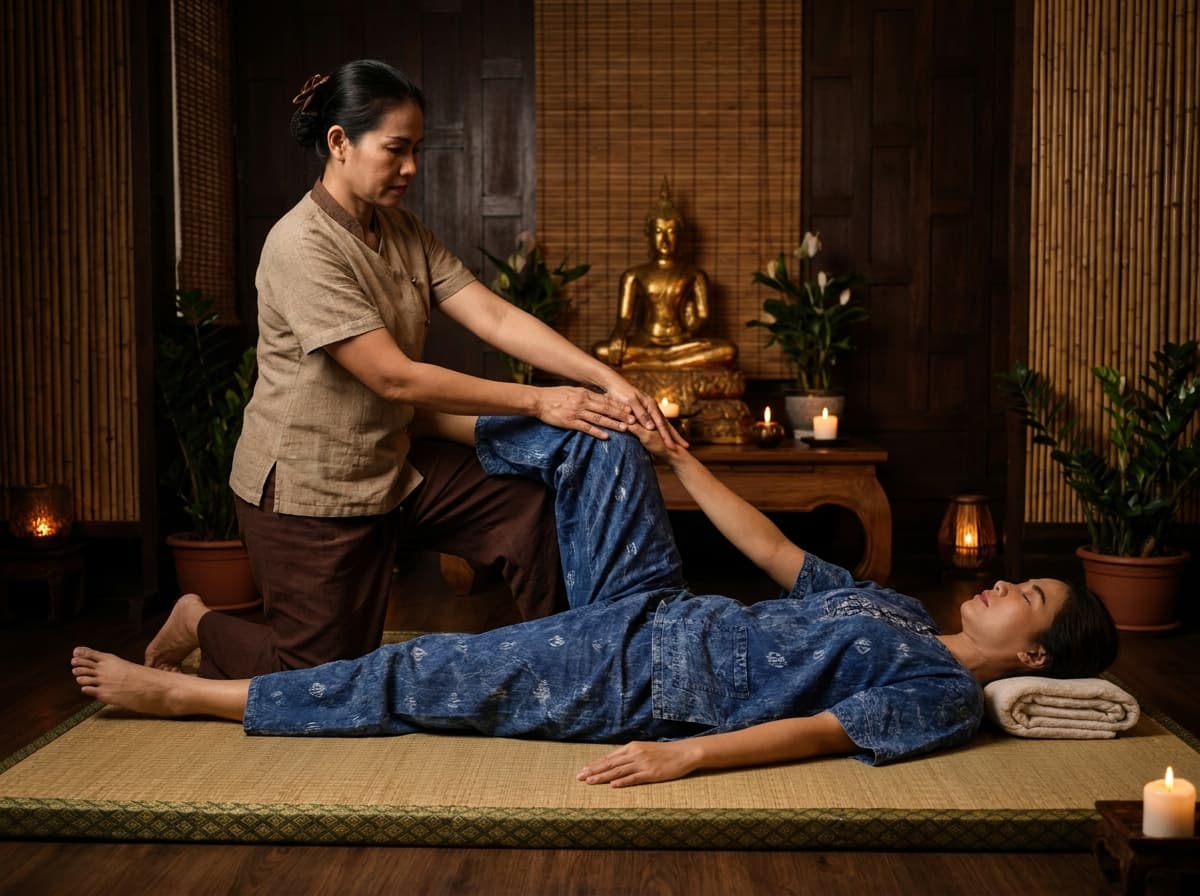
Floor-based flow in soft clothing: therapists weave rhythmic palm compression with gentle assisted stretches—your body borrows their leverage while you breathe and steer intensity.
Session blueprint
Expect cotton pants and a tee—or studio-provided linens—while you lie on a dense futon. Practitioners orbit you, pressing broad highways along the back chain with palms, forearms, knees as braces, and occasionally feet when cushioned lines allow. The choreography is less mystical aura drawing and more tactile sequencing: warm the hips and spine, then invite joints into ranges you rarely hit solo.
Intensity usually lands medium-plus: inter-scapular compression or hip lines can feel deep, yet every wave needs breath space and consent checkpoints. Sessions read like long musical phrases that swell and soften; forced depth triggers guarding instead of calm.
Compared with Swedish oil massage on a table, Thai trades glide for joint participation. Compared with Shiatsu, Thai often sprawls wider—more passive stretches and floor geometry—though lineage traditions blur studio-to-studio, so read each provider blurb before booking.
Snapshot
Technique
Shared DNA: slow vector pressure plus controlled joint excursions with stable anchors.
Body weight—not fingertip prying—creates surfable warmth down spine and hamstrings.
Brief locks melt into movement so nerves never white-knuckle one spot endlessly.
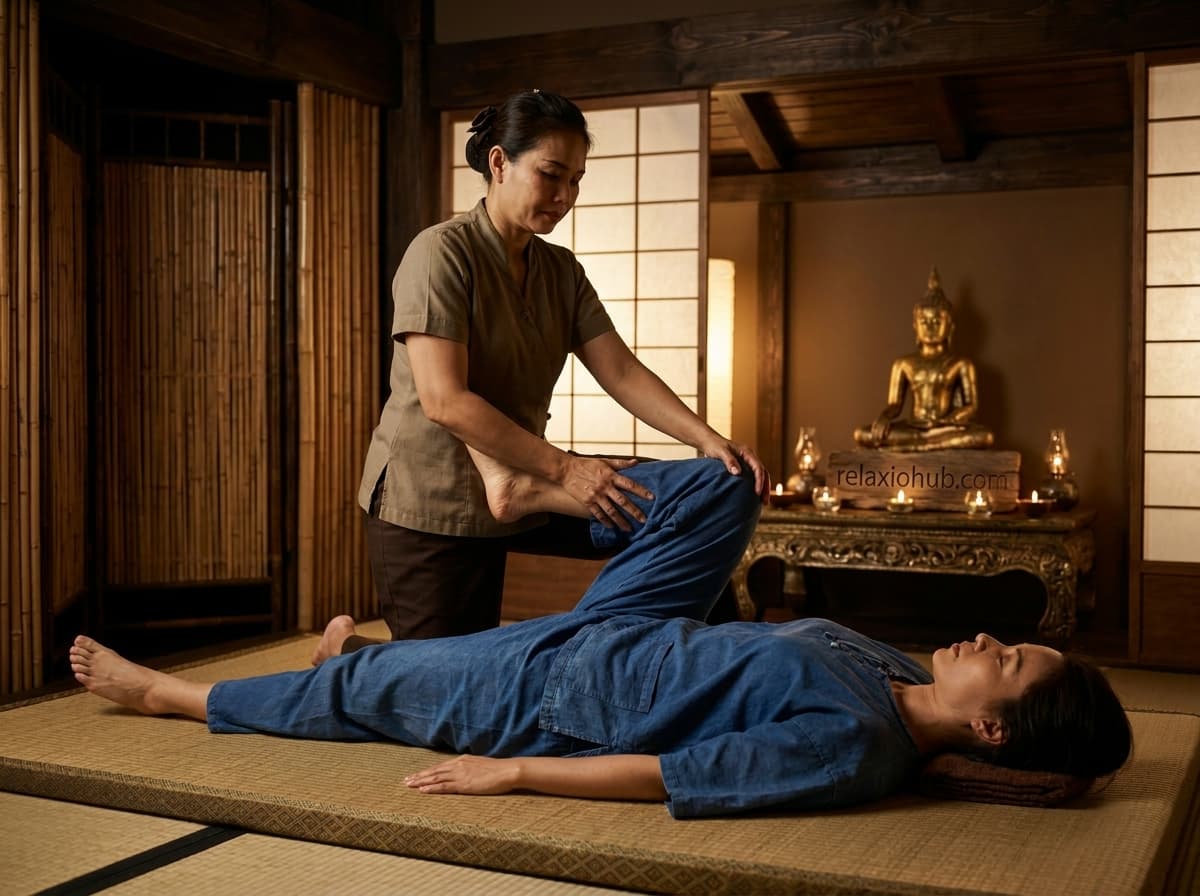
Therapists pin pelvis or shoulder girdle while limbs arc—partner yoga minus Instagram sweat.
Micro sway teaches tissues to exhale before deeper stretching chapters.
When feet appear, load spreads through padding and explicit consent—never surprise chest or abdomen crushing.
Why book
Guests chase lighter hips, quieter backs, and taller posture for days—not miracle cures.
Joints explore arcs because anchor points stay honest.
Pressure distributes across wide footprints so stimulation feels rolling, not stabby.
Great when slick oil sessions overstimulate skin but muscles still crave structure.
Slow repetition cues deeper exhales than desk autopilot allows.
Flow
Learn side-lying, supine, prone transitions; flag painful zones and stretch veto zones.
Posterior chain rhythm opens tissues before hips and thoracic segments borrow bigger arcs.
Light finishing holds at feet or scalp; rise slowly to dodge orthostatic dizziness.
Choosing the format
Three searches beside Swedish oil rituals.
You crave passive hip opening more than aromatic glide strokes.
Fabric barriers and minimal lubricant beat hour-long slick residue.
You like joint exploration with external spotting instead of self-powered end-range fights.
Passive range demands transparent history.
FAQ
Usually minimal or none—compression travels through clothing. Need slick glide? Book Swedish-style table work or confirm hybrid offerings.
Deep can feel intense yet sharp pain or breath holding means pause and dial pressure down immediately.
Swedish emphasizes oil glide on skin; Thai emphasizes fabric-clad compression plus assisted stretching at slower tempo.
Only with individualized protocols and provider clearance—many studios skip abdominal loading and extreme hip torque.
Every 2–4 weeks suits maintenance; short denser courses possible when pros supervise recovery goals.
Shiatsu typically follows meridian lines with sustained point holds at set positions. Thai more often includes wider passive limb stretches and varied floor geometry—though studios interpret both formats differently, so review each provider's session description before booking.
Most guests feel lighter hips and a quieter back after the first session. Lasting range gains—particularly hip flexors and the posterior chain—tend to stabilize over three to five regular visits.
Therapists
Practitioners across Ukraine who provide this massage type. Choose a specialist and view their profile.
Choose your city and vet profiles for mat setup, realistic durations, assisted-stretch experience, and transparent pressure policies.