Heating the stones outside
Volcanic or river stones are warmed in an outdoor fire until they hold stable heat; they are carried inside with tools, never by hand.
Temazcal massage is not a table session in a bright room. It begins inside a low dome-shaped sweat lodge where volcanic stones release herbal steam in darkness, and only afterward does the body receive touch — warmed, softened, and unusually receptive to slow rhythmic work.
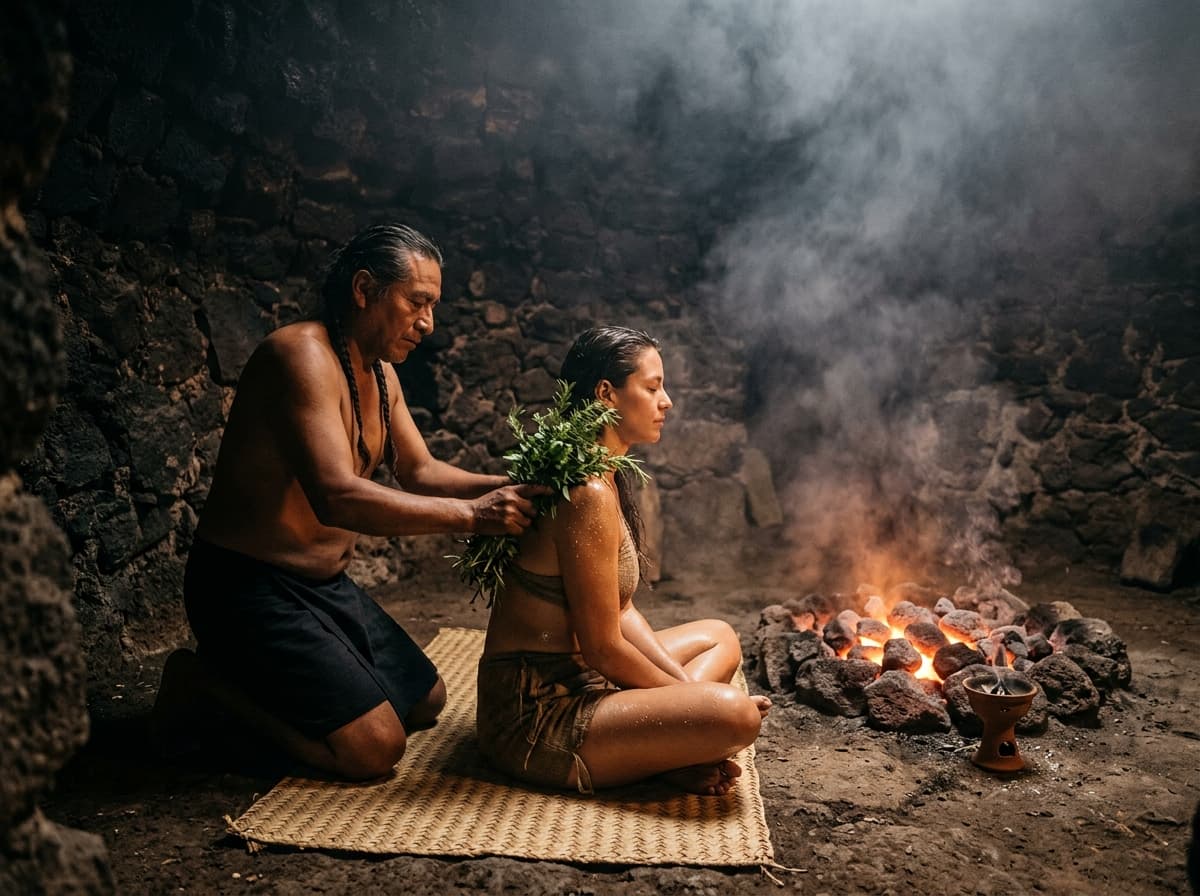
Mexican steam lodge
Temazcal massage combines two layers: the temazcal itself — a small dome-shaped sweat lodge — and bodywork that follows once the skin, muscles, and breathing have been opened by humid heat. People search for it as “Temazcal massage”, “Mexican sweat lodge massage”, “temazcal ritual with massage” or “Mesoamerican steam bath bodywork”. The sensation is unlike classic massage: first comes darkness, stone heat, herbal vapor, and the body's own sweat; then touch lands on tissue that already feels loose and warm.
The history reaches deep into pre-Hispanic Mesoamerica. The Nahuatl word temāzcalli means “house of heat” — from temāz(tli) “to bathe” and calli “house”. Archaeological and codex evidence points to sweat lodges among Nahua, Maya, Mixtec, and other peoples long before European contact. Stones were heated outside, carried inside a low adobe or stone dome, and water infused with herbs was poured over them. The lodge was used for purification before battle, after childbirth, during illness, and as a space where healers, midwives, and temazcaleros guided the body through heat rather than forcing it.
What makes Temazcal exotic is not marketing language but the setting itself: a low round hut, volcanic stones glowing red, copal or resin in the air, steam dosed in waves. In spa adaptations outside Mexico the ritual is often shortened, but the logic holds — heat first, massage second. For practitioners, understanding this sequence is essential: the tissue state after sweating responds differently to pressure than tissue that has only been warmed with hands. Herbal bundles called hojeadores, warm oil, or slow pressing on the back, abdomen, or limbs may follow the sweat phase, especially for tired guests, postpartum recovery, or clients seeking bodywork rooted in curanderismo rather than a standard treatment room.
At a glance
Process
A respectful Temazcal session moves in phases. The practitioner or temazcalero controls heat, steam, and silence; massage belongs to the cooling and integration stage, not to the hottest moment inside the lodge.
Volcanic or river stones are warmed in an outdoor fire until they hold stable heat; they are carried inside with tools, never by hand.
Guests sit low near the ground in a round hut. The door closes, light drops, and the body begins adapting to warmth and humidity.
Water with medicinal plants — eucalyptus, rosemary, chamomile, or local herbs — is poured over hot stones; steam rises in waves rather than all at once.
The leader watches breathing, skin color, and comfort; guests may leave at any time. More stones enter only when the body is ready.
After sweating, the body exits into fresh air or cool water; this pause prevents shock and prepares tissue for touch.
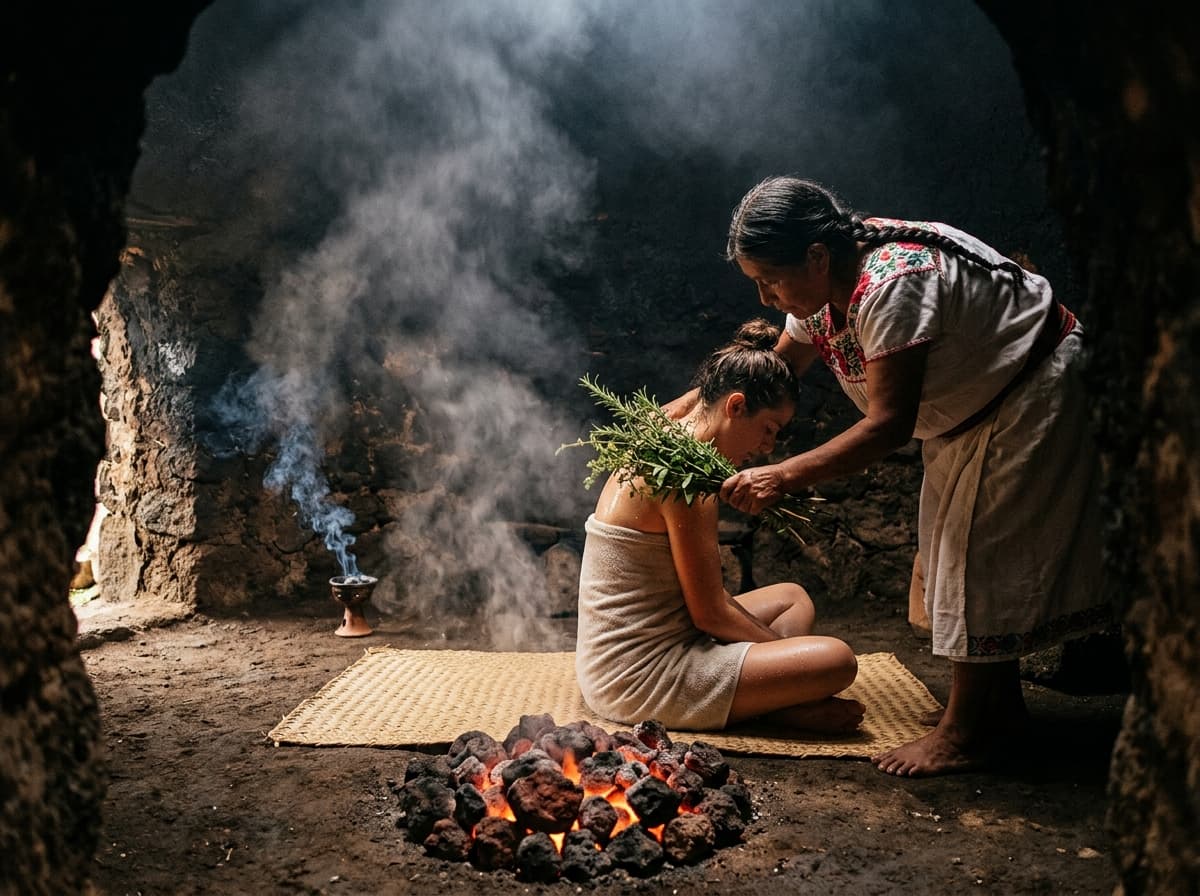
On a mat or low table — while the body is still flushed but no longer in active steam — the practitioner uses warmed oil, herbal bundles, or slow gliding strokes. The tissue is unusually receptive: pressure that would normally need more force lands with less resistance.
Expected effect
Temazcal is a wellness ritual, not a medical cure. People choose it for the combination of exotic setting, deep sweating, herbal steam, and massage on a body that already feels released.
Volcanic stones hold steady radiant warmth; humid steam helps muscles and skin feel less guarded before any manual work begins.
Medicinal plants in the water or in leaf bundles add aroma and a sense of ritual cleansing rather than plain sauna air.
Intense perspiration in a low dark space can make the body feel lighter; massage afterward often lands softer and deeper at the same time.
Darkness, round architecture, and guided steam create an experience closer to indigenous ceremony than to a bright clinic room.
A competent temazcalero lets guests exit when needed, adds heat gradually, and postpones massage if the body is still overwhelmed.
Sustained humid heat expands blood vessels and lowers surface muscle tone, so the massage phase — on a body already flushed and open — lands more evenly and requires less pressure.
Timeline
The practitioner asks about heart, blood pressure, pregnancy, claustrophobia, medications, hydration, and previous sauna or sweat lodge experience.
Guests drink water, remove metal jewelry, and hear how many steam rounds are planned and whether massage will follow inside or outside the lodge.
The body adapts to humidity and stone heat; herbal water is poured in small doses while breathing stays calm.
After sweating, guests breathe fresh air, rinse with cool water if appropriate, and pause before any hands-on work.
Slow pressing, gliding, or herbal bundle work on the back, legs, or abdomen while the body is still warm but no longer in active steam.
Comparison
All three use heat and humidity, but architecture, culture, and the role of massage differ sharply.
Temazcal fits when you are drawn to a low dark dome, volcanic stones, herbal steam, and indigenous Mexican ritual context.
Banya massage centers on bath brooms, higher steam rooms, and hot-cold contrast with birch or oak leaves.
Turkish hammam offers open humid heat, exfoliation with a mitt, and soap foam rather than a closed dark sweat lodge.
Sweat lodges load the heart, vessels, and thermoregulation harder than a massage table alone. Some limits are stricter because of heat and enclosed space.
FAQ
It is a ritual that begins in a Mesoamerican sweat lodge with heated volcanic stones and herbal steam, followed by massage on a body already warmed and softened by the heat session.
The temazcal comes from pre-Hispanic Mesoamerica. The Nahuatl name temāzcalli means “house of heat”. Indigenous peoples used it for purification, healing, childbirth recovery, and preparation before demanding physical or spiritual tasks.
Because of the setting: a low round adobe lodge, glowing stones, darkness, copal or herbal smoke, and a ritual led in the indigenous Mexican tradition rather than a familiar spa cabin.
Sometimes light touch or herbal bundle work happens inside, but full massage usually follows after exit and cooling, when the body is warm yet able to relax on a mat or table.
A sauna is often upright, bright, and wooden. Temazcal is lower, darker, round, uses volcanic stones with herbal infusions, and is guided as a ceremony with spiritual and therapeutic intent.
Look for profiles that describe temazcal training, heat dosing, herbal protocols, exit rules, contraindications, and whether massage is included after the sweat lodge or booked separately.
Temazcal is a low dark dome with volcanic stones and herbal steam, guided as an indigenous ceremony with rounds and dosing. A hammam is an open lit marble room with a central heating slab, kese exfoliation, and soap foam — no ceremonial structure or closed-space heat.
Compare profiles that describe temazcal training, heat dosing protocol, herbal steam selection, post-sweat massage technique, safety rules, and adapted formats for clients with low heat tolerance.