Movement audit & skin screen
The practitioner watches your reach, squat, or stride, palpates hotspots, checks for cuts, rashes, sunburn, folliculitis, and asks about adhesives, aspirin use, or anticoagulation when bruising risk matters.
Kinesiology taping is engineered cotton strip therapy: the elastic recoil gently lifts skin, hints at better glide between layers, cues posture, and buys time for muscles to trust new ranges — not rigid strapping that immobilises joints like classic athletic tape.
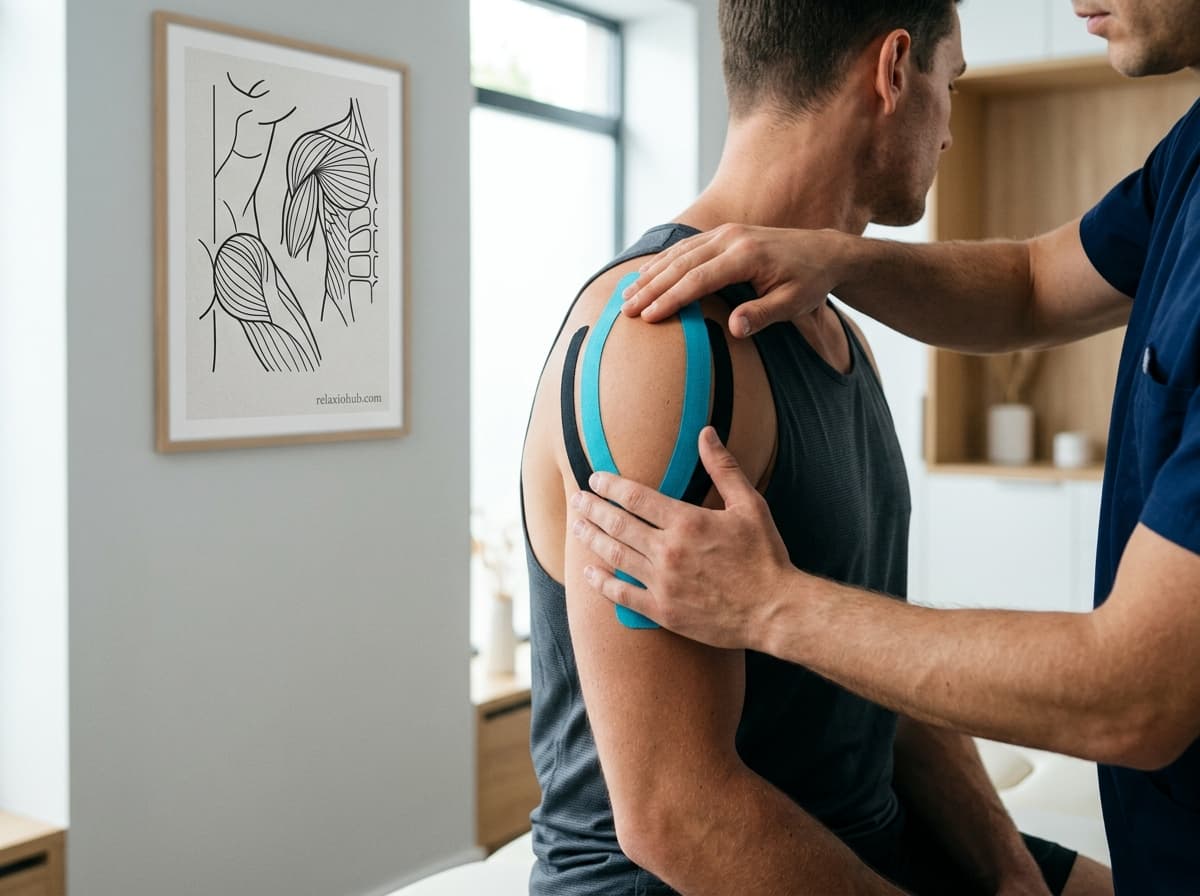
Elastic cues on the skin
Searchers look for kinesiology tape, Kinesio tape, sports taping, KT application, shoulder taping, knee taping, swelling control, or posture reminders after desk marathons. Elastic therapeutic tape differs from white zinc-oxide tape: it stretches with you, channels movement feedback, and survives showers when hygiene rules are respected.
Application is closer to mapping than crafting. Practitioners shave or clip hair only with consent, wipe skin free of oils, measure tension percentages, lay anchors without stretch, then tension the midsection or tail to create the sensory story they want — facilitation, inhibition, space, or drainage awareness depending on training school.
Kinesiology taping is adjunctive bodywork, not a diagnosis. It works alongside sports massage, corrective exercise, or movement coaching — and never replaces imaging, medication, post-injury rehabilitation timelines, or clinician orders. When choosing a practitioner, ask about certification, tape brands used, skin patch-test policy, and under what conditions they would defer or decline.
At a glance
Mapping literacy
Tape without assessment is decoration. Each strip answers a question about load, pain behaviour, lymph safety, and skin integrity.
The practitioner watches your reach, squat, or stride, palpates hotspots, checks for cuts, rashes, sunburn, folliculitis, and asks about adhesives, aspirin use, or anticoagulation when bruising risk matters.
Skin is degreased; anchors are laid with zero tension so the strip does not blister the ends while the middle does the talking. This detail — anchors flat and unstretched — is what separates a five-day application from one that peels by morning.
Depending on intent, the elastic midsection might run 15–50 percent tension — enough for feedback, never a tourniquet. Facilitation taping (applied over the muscle belly in its shortened position) is thought to influence muscle spindle afferent input, subtly altering resting tone without mechanical force.
Warmth from the backing strip's friction pass wakes acrylic adhesive without cooking skin; you feel a secure snap, not suffocation.
Fans or webs can surround a muscle belly; narrow lines track tendons; decompressive lifts create a slight skin tent — microscopically lifting epidermis from dermis — that reduces local interstitial pressure and may facilitate opening of superficial pre-lymphatic channels. Choice depends on map, not TikTok mimicry.
You repeat the painful or limited motion to ensure the tape cues the intended ease; if not, the map is adjusted before you leave.
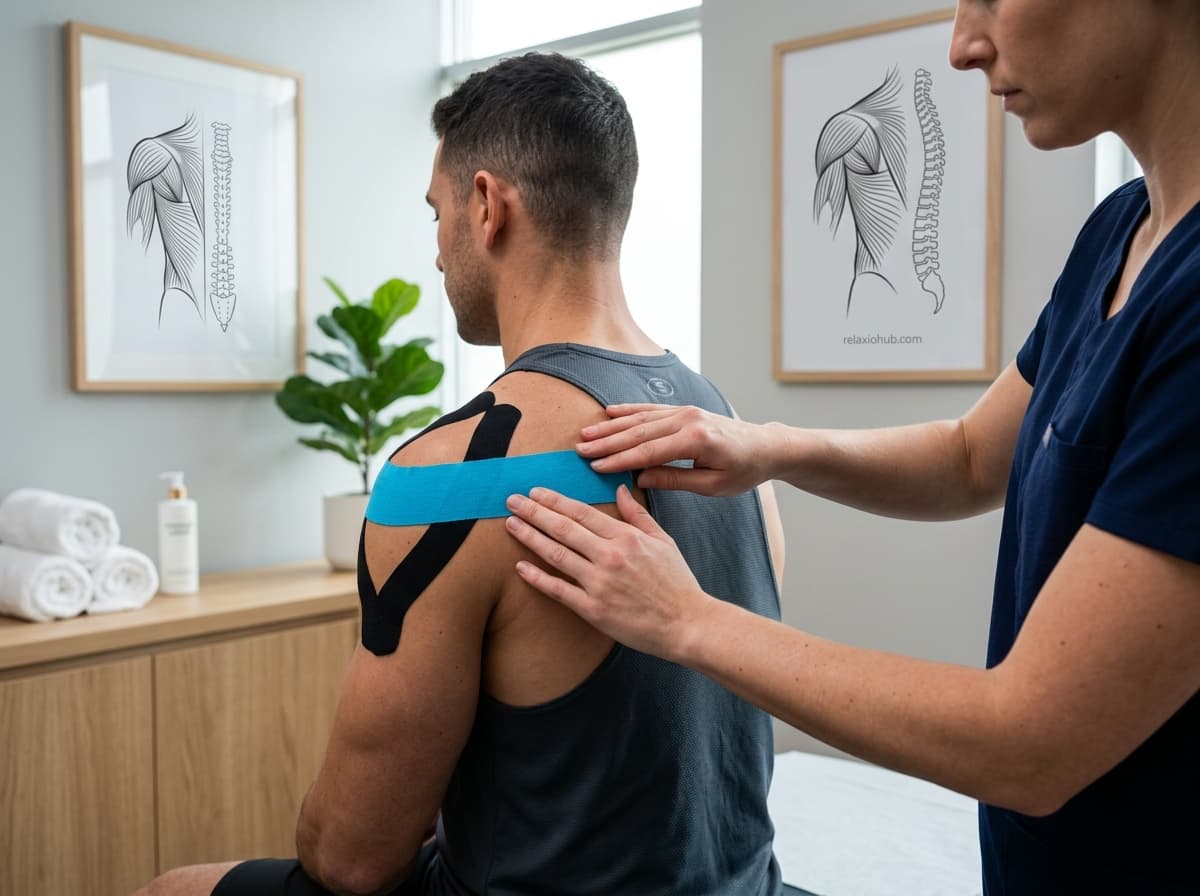
Why clients tolerate the adhesive
Elastic tape does not magically heal tears; it nudges sensory input, posture memory, and fluid awareness while other care continues.
Gentle tactile borders remind fatigued tissues how to track without bracing 24/7 in a rigid brace.
Athletes use it as a bridge after sports massage or physio visits when homework must continue on the pitch.
Drainage-style fan patterns can support comfort around mild swelling when clinicians cleared active issues. The microscopic skin tent created by decompressive tape reduces local interstitial pressure — mechanically distinct from compressing the limb as a garment does.
Thoracic and scapula maps cue open chest alignment without yelling at shoulders through pain.
Unlike ice packs that evaporate focus, tape whispers cues during sleep shifts and commuting micro-strains.
Continuous mechanoreceptor activation — specifically Meissner's corpuscles (light moving touch) and Ruffini endings (sustained skin stretch) — stimulates the somatosensory cortex via A-beta afferent fibres, helping the brain update its internal body map. This is the neurological mechanism behind proprioceptive taping effects beyond simple physical support.
Timeline
Training load, footwear, ergonomics, prior tape reactions, surgery dates, clotting meds, dermatology diagnoses.
Mark keypoints with skin-safe tactics, preview strip lengths, negotiate modesty drapes for torso work.
Anchor, tension body, tails, repetition on opposite limb if symmetry matters for sport symmetry.
Snips stop premature peeling; brisk friction wakes glue without shredding epidermis.
You receive shower timing tips, itch protocols, reorder timeline, photo references, and cues on when texting the therapist photos if edge lift happens.
Pick wisely
When a joint needs locking for contact sport, rigid tape wins. When massage alone resolves the issue and wearing reminders add no value, skip the tape. When diagnosed venous or lymphatic disease is present, prescribed medical compression is the non-negotiable first step — not a tape substitute.
Need joint lock-out for tackles? Rigid zinc-oxide combos win. Want multi-day sensory feedback through range? Elastic kinesiology fits.
Hands-on work resets tissue but fades hours later; tape extends awareness if your nervous system benefits from wearing reminders.
Prescribed compression for venous or lymph disease outranks DIY fan taping — never improvise over diagnosed leg swelling without clearance.
Adhesive therapy fails ethically on infected skin, fragile epidermis, unexplained swelling, active DVT suspicion, adhesive allergy with anaphylaxis history, or oncology radiotherapy fields without clearance.
FAQ
No. Classic athletic tape often limits motion for short windows; kinesiology tape uses elastic recoil to cue movement and awareness across days when applied correctly.
Usually yes after the adhesive sets; pat dry, avoid aggressive scrubbing on edges, and replace if maceration or itching escalates.
It supports comfort, awareness, and training continuity — not tissue healing magic. Persistent pain still deserves clinical evaluation.
A standard muscle facilitation or inhibition strip uses 15–50% elastic tension along the muscle belly; a decompressive lift uses zero tension on the tape back and a wave pattern to gently tent the skin — creating sensory space and reducing pressure in the interstitial layer. Lifts are typically used in areas of superficial bruising or subcutaneous congestion.
The taped area should feel a slight lift or textured pull — not tight, not numb. The movement that hurt or was restricted should feel either easier or more guided immediately after application. Skin should not pucker at the anchors. If burning appears within 20 minutes of application, remove and reassess skin tolerance to the adhesive.
Some patterns are teachable; complex maps around shoulders, knees, or lymph regions benefit from professional measurement first, then supervised practice.
There is no single rule, but most practitioners apply tape after massage when muscles are already warmer and more pliable — the tape's feedback is clearer on relaxed tissue. In sports contexts, taping before a training session (with massage done the day before) is common. Combining both in the same session is valid: massage first, tape second to preserve the adhesive seal.
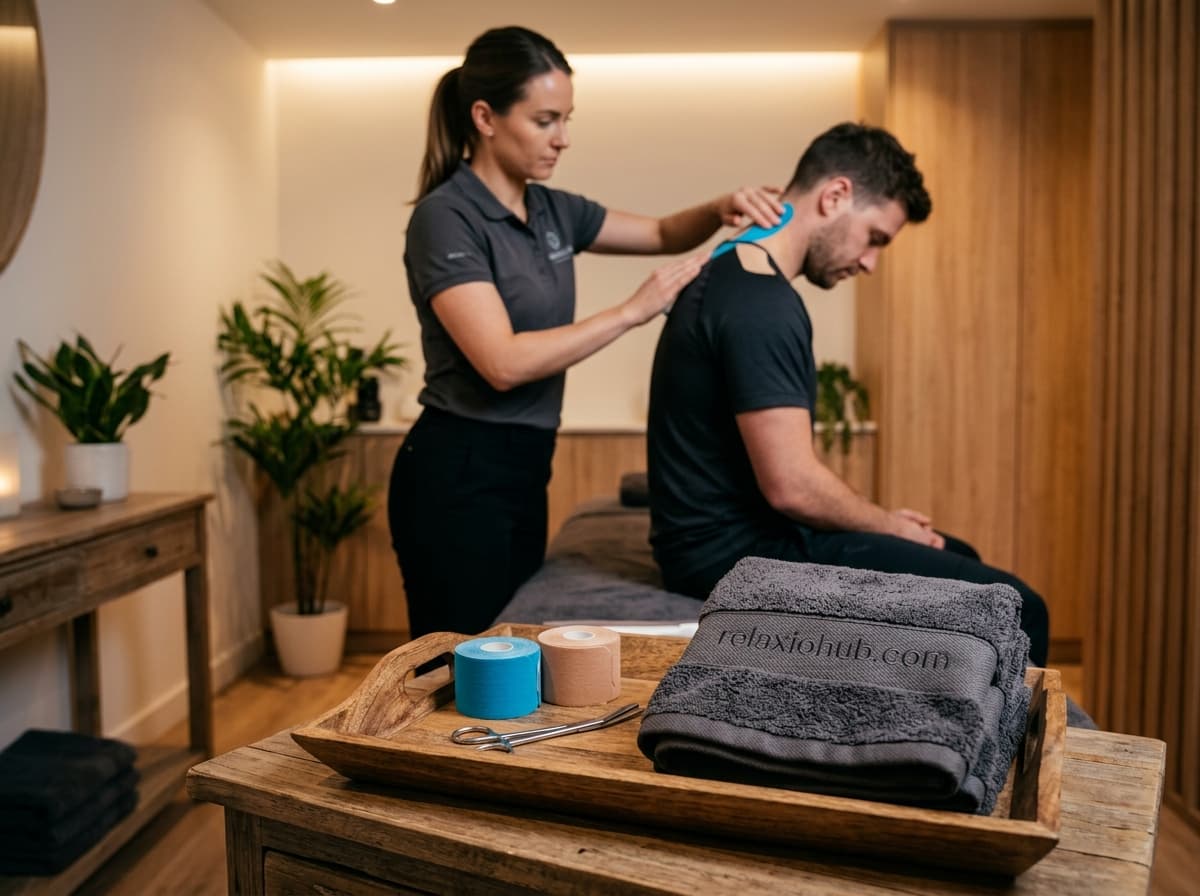
Edge craft defines longevity: rounded corners and clean anchors matter more than trendy colours.
Therapists
Practitioners across Ukraine who provide this massage type. Choose a specialist and view their profile.
Compare profiles that document sports-medicine training, skin safety rules, pattern photos, brand choices, and honest limits with medical referrals.