Checking hands or feet
The practitioner asks about sensitivity, injuries, skin condition, nails, joints, and whether working with hands or feet feels comfortable.
A Korean hand-and-foot technique where the practitioner looks for sensitive correspondence zones, gently stimulates them with fingers, a massage ring, a roller, or seeds, and helps the body shift through attentive contact with small but highly responsive areas.
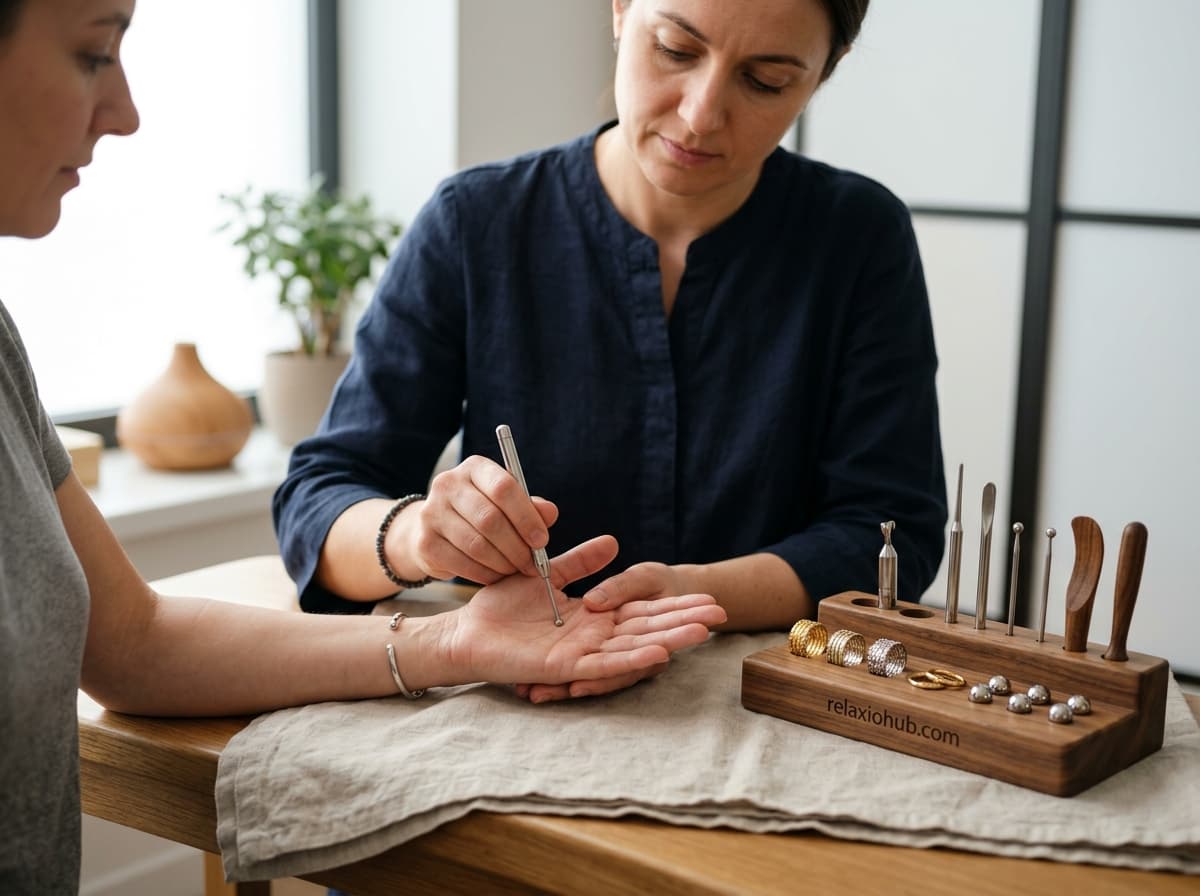
Korean reflexology-style technique
The practitioner takes your palm and slowly searches for a point on the pad of your thumb — and at some moment you notice there is a real response there. That is how Su Jok begins: a Korean technique working with hands and feet through the idea of correspondence zones. The name comes from Korean: su means "hand," jok means "foot." In a wellness setting, the practitioner does not diagnose or treat organs through the palm; they look for sensitive points, press gently, knead fingers, roll a massage ring or roller, and help the person notice tension in small areas.
The modern Su Jok system is associated with South Korean professor Park Jae Woo, who described and popularized the hand-and-foot correspondence method in the second half of the 20th century. During the 1980s and 1990s, Su Jok spread through seminars, teaching centers, and books, later becoming known across Eastern Europe, India, post-Soviet countries, and among reflexology and acupressure practitioners.
Today Su Jok is practiced most actively in South Korea, India, Ukraine, Poland, the Baltic states, Kazakhstan, Uzbekistan, Georgia, Germany, Czechia, the United States, and Canada. Demand is usually linked to searches such as “su jok points,” “hand and foot massage,” “Korean reflexology,” “su jok ring,” and “what painful points on the palm mean.” Good content and a good practitioner answer these searches honestly: this is body stimulation and self-care, not a replacement for a doctor.
At a glance
Technique
The session looks compact, but it needs precision: the practitioner works with small zones, so pressure, finger angle, and the client's response matter more than long forceful passes.
The practitioner asks about sensitivity, injuries, skin condition, nails, joints, and whether working with hands or feet feels comfortable.
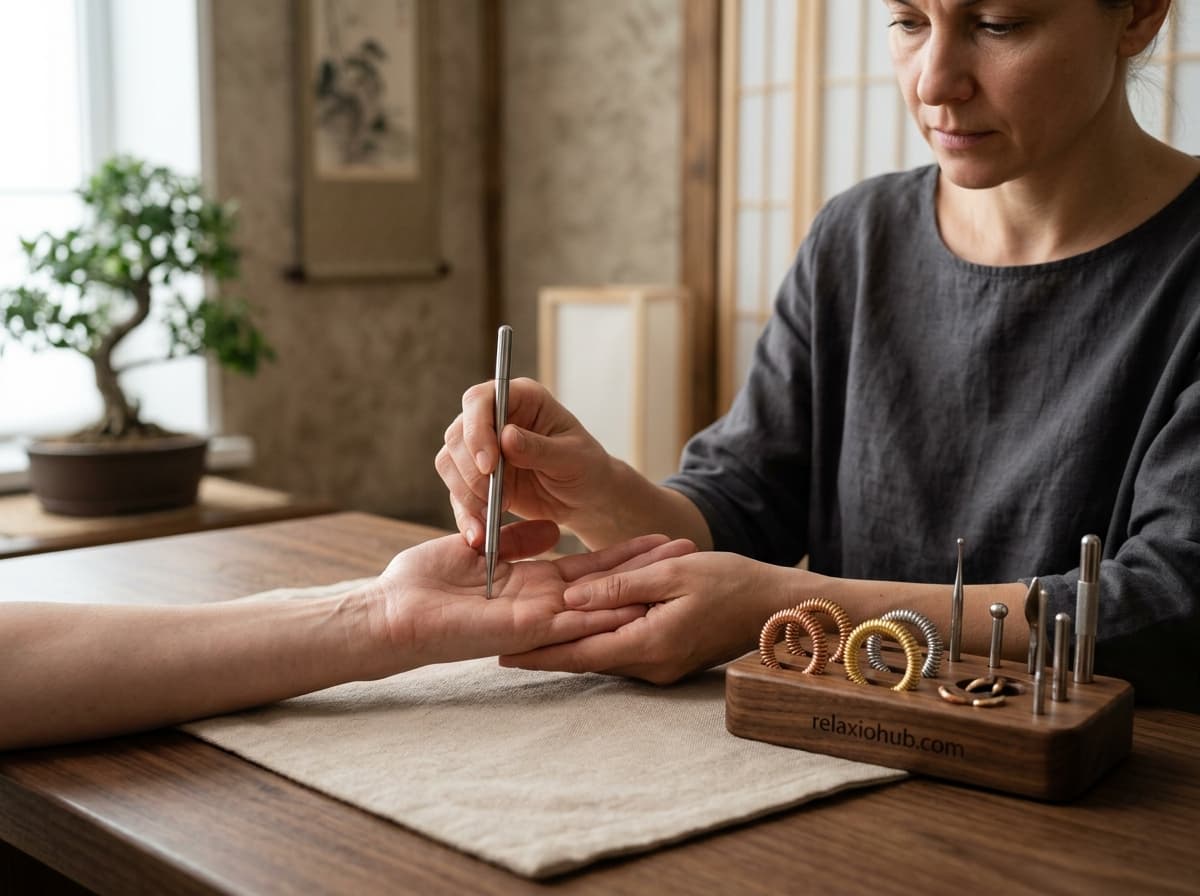
Using a finger or probe, they slowly check areas of the palm, fingers, or foot. Sensation may be pointed, but it should not become sharp pain.
Short presses with pauses give the nervous system time to respond; the practitioner asks what you feel instead of silently pushing deeper.
A spring ring is rolled along the fingers, creating fine stimulation and warmth without needing to locate every point separately.
A roller gives broader rhythm across the palm or foot, while seeds may sometimes be taped in place for a gentle reminder after the session.
At the end, the hand or foot is rubbed more broadly so point work leaves warmth rather than irritation.
Expected effect
In a spa and wellness context, Su Jok is best understood as manual stimulation of hands and feet, self-care, and attentive body contact, not treatment for diagnoses.
Hands are easy to work with even in a short session, so Su Jok is often chosen as a compact format without a full-body setup.
Foot stimulation can create a feeling of warmth and attention to support after walking, standing work, or tired legs.
Point sensations on fingers and palms encourage focus on the body and breathing instead of a stream of thoughts.
The format does not require deep pressure on the back or neck, so it may suit people who want lighter contact.
A massage ring, roller, or simple point pressure on the palm can be picked up in one session and repeated at home — one of the most accessible self-care formats.
A good practitioner explains that Su Jok does not replace diagnostics, medication, or care for acute conditions.
Timeline
You mention hand or foot injuries, diabetic neuropathy, arthritis, joint inflammation, fresh wounds, or strong sensitivity.
Together with the practitioner, you decide whether to work on hands, feet, or both during one session.
Sensitive areas are checked gradually, and pressure is adjusted according to your response.
A ring, roller, or seeds are added only when skin and joints respond calmly.
The practitioner may show simple self-massage moves, without asking you to press into pain or treat symptoms alone.
Comparison
These formats share a point-based logic, but their maps, zones, and expectations differ.
Su Jok fits when you specifically want the Korean correspondence system: su for hand, jok for foot.
Reflexology usually focuses more on the feet and uses its own zone maps, which do not match Su Jok one-to-one.
Acupressure may work with different body areas, meridian logic, and larger zones, not only hands and feet.
Hands and feet are small but highly sensitive: skin, joints, nerves, and circulation need careful handling.
FAQ
It is a Korean technique for stimulating hands and feet through a correspondence-zone system. In wellness, it means massage, point pressure, and self-massage techniques without medical promises.
The modern system is associated with South Korean professor Park Jae Woo, who popularized the method in the second half of the 20th century.
It is especially present in South Korea, India, Ukraine, Poland, the Baltic states, Kazakhstan, Uzbekistan, Georgia, Germany, Czechia, the United States, and Canada.
No. In spa and wellness settings it is not a replacement for a doctor, diagnosis, or treatment. It is better understood as manual hand-and-foot stimulation and self-care.
The sensation may be pointed and sensitive, but sharp pain is not needed. Pressure should stay controlled and decrease when you ask.
Look for profiles that describe Su Jok training, hand and foot work, tools, contraindications, and honest method boundaries without treatment guarantees.
Foot reflexology focuses mainly on the feet and uses its own zone maps. Su Jok, as developed by Park Jae Woo, covers both hands and feet and follows a separate Korean correspondence map. Both formats use point pressure, but their schemes do not match one-to-one.
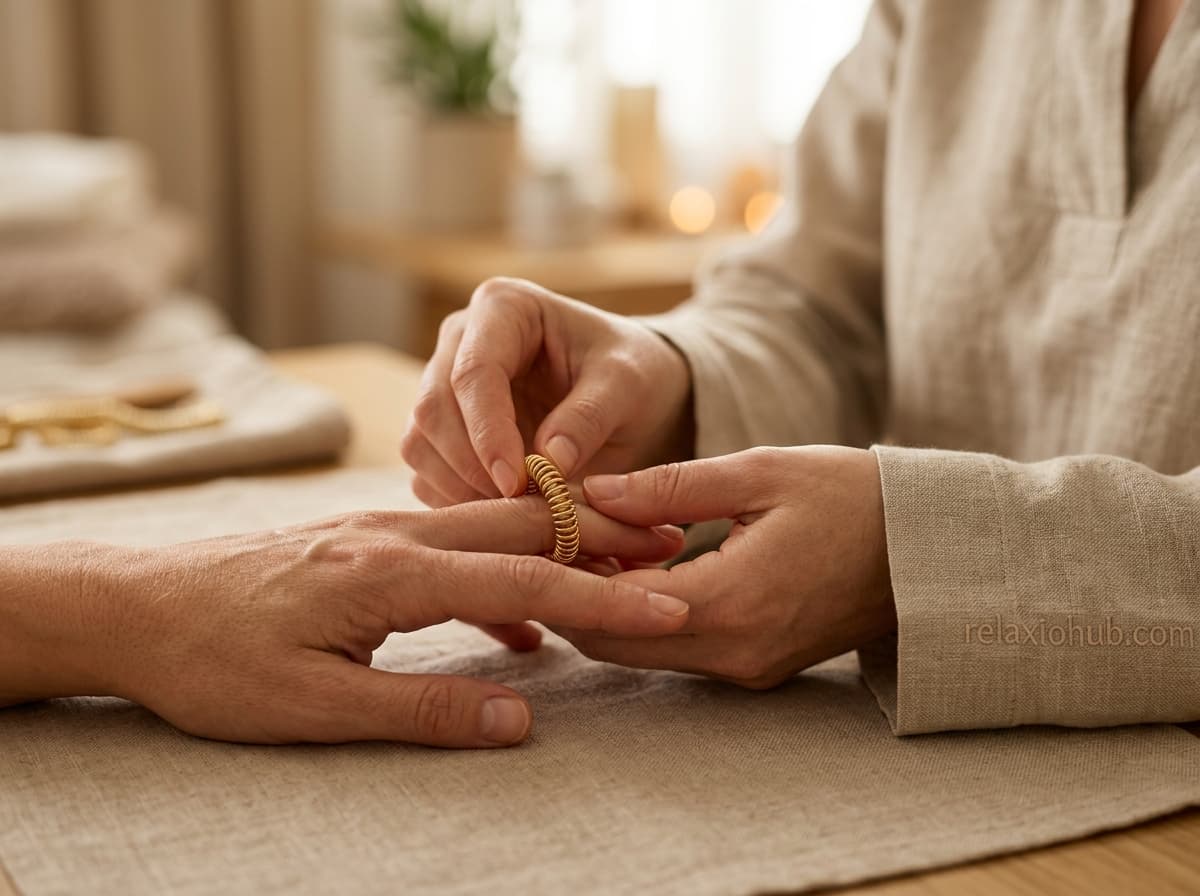
A Su Jok ring gives fine, even stimulation along the finger, yet even a simple tool needs moderation and awareness.
Look for profiles where the practitioner describes Su Jok training, the tools they use, and honest method boundaries without treatment guarantees.