Brief intake about sound sensitivity
The practitioner asks about migraines, epilepsy, anxiety, implants, and whether bowls may be placed on the body.
Not a forceful hands-on massage — a calm ritual of resonance, vibration, and silence. Bowls sound beside the body or touch it gently, giving the mind a slower anchor when stress has been running too loud.
Sound therapy
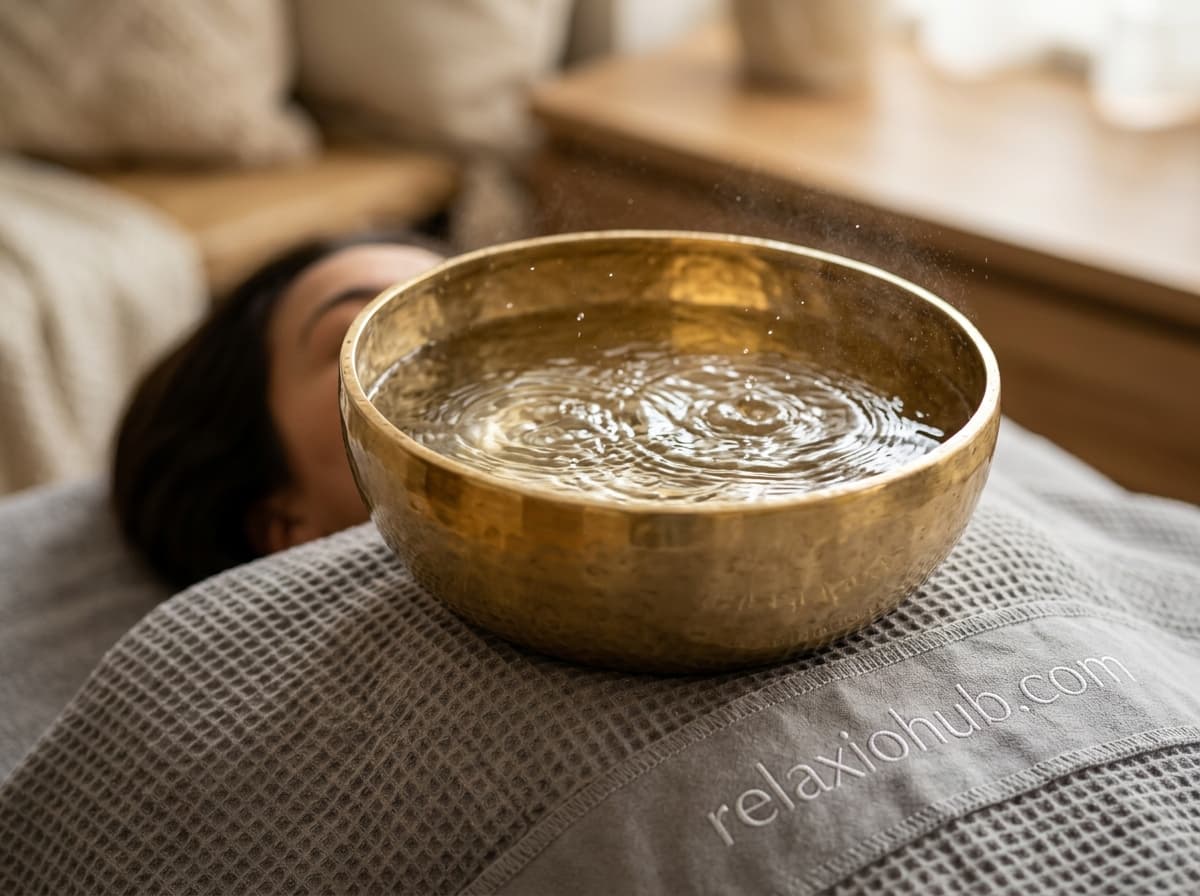
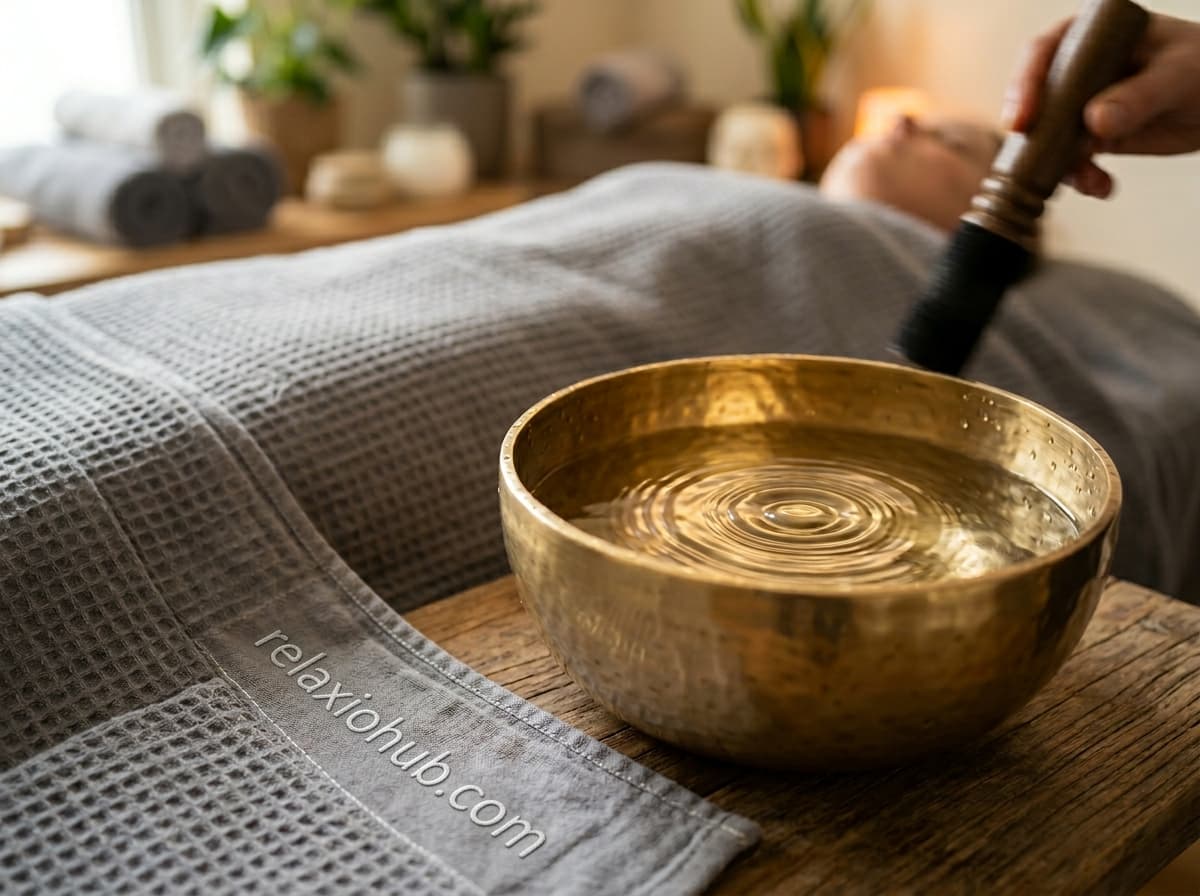
Singing bowl massage works through sound, vibration, and the deliberate silence between tones rather than muscle kneading. A practitioner places bowls around the body, sometimes briefly on protected areas over clothing or fabric, then taps or circles the rim to release long overtones. You are not listening to background music; sound becomes the main tactile cue: the chest notices breath, shoulders notice the pause, and the jaw often softens from its everyday clench.
The expected effect is usually a downshift. Thoughts stop stacking as aggressively, breathing becomes easier to track, and the body senses its own weight against the mat or table. In wellness settings, people choose singing bowls for high stress, screen overload, trouble transitioning to sleep, or a preference for non-invasive bodywork. Bowls do not cure diagnoses or replace therapy, but they can become a ritual that teaches attention to return to the body.
Culturally, singing bowls are associated with Himalayan craft traditions across Nepal, India, and Tibet, and with modern sound bath practices. Different schools use them in meditation, ceremony, yoga nidra, or spa-style sensory sessions. For practitioners, the distinction between Tibetan metal bowls and crystal quartz bowls is not cosmetic: each produces a different acoustic profile and requires distinct striking, rimming, and placement techniques. Respecting the culture means avoiding fantasy claims: this is a living practice where the practitioner explains instruments, volume rules, and realistic effect boundaries.
At a glance
Process
The central skill is not force; it is dosing sound, silence, and distance from the body.
The practitioner asks about migraines, epilepsy, anxiety, implants, and whether bowls may be placed on the body.
A blanket, knee support, or neck bolster keeps the body from fighting discomfort while the sound begins.
Tone enters gradually; if a frequency feels sharp, the bowl moves farther away or changes.
Long overtones hold attention better than short signals; you can follow the decay into silence.
Lower frequencies feel like a soft trembling pressure without hand kneading.
The closing pause prevents the nervous system from being snapped out of rest.
Expected effect
Think self-regulation, calm, and sensory switching—not magical treatment claims.
Repeating overtones help attention stay with one cue instead of jumping across ten thoughts.
The silence between tones often feels like the deepest relief after screens and work chats.
As the sound fades, it becomes easier to follow the exhale and stop gripping the chest unconsciously.
The session suits evening transitions to sleep when you do not overload yourself afterward.
Shoulders, jaw, and belly often reveal where the body holds control—without needing direct pressure.
Sound and vibration offer care on days when any hands-on bodywork feels like too much — the instrument holds the session without requiring sustained physical contact.
Timeline
Mention epilepsy, severe migraines, hearing aids, pacemakers, implanted devices, or pregnancy before sound starts.
Lights dim, the phone is put away, the body is covered, and the practitioner shows a stop or lower-volume cue.
Bowls sound around the body, sometimes near the chest, pelvis, or feet; any on-body contact should be agreed in advance.
After the final tone, a few minutes of silence matter more than talk—the brain needs time to come back.
Comparison
Choose by the kind of calm you need.
Look at classic, sports, or deep tissue massage; bowls do not replace tissue work.
A sound bowl format gives an external anchor, so attention has something concrete to follow.
Singing bowls fit that request: minimal contact, more rhythm, vibration, and pause.
Sound feels gentle, but some conditions can make it too stimulating.
FAQ
In this format, massage means vibration and sound work: the body receives stimulus through wave, resonance, and silence rather than muscle kneading.
Most people look for calm, sleepiness, slower breathing, lighter shoulders, and less inner noise.
Yes. Sleep does not mean you missed the practice—the nervous system may have chosen the most useful mode.
No. They may support relaxation in a wellness setting, but diagnosed conditions need therapy, a clinician, or broader care.
Look for instrument notes, volume rules, contraindications, and willingness to adapt bowl contact with the body.
A sound bath is usually a group format where multiple instruments play while participants lie in a shared room. Singing bowl massage is individual: the practitioner adapts bowl placement, volume, and sequence to one person's response, often working closer to or on the body.
Tibetan bowls are hand-hammered metal alloys producing warm, complex overtones with long decay. Crystal bowls, made from quartz, produce purer sustained tones. Both are used in bodywork; the choice depends on practitioner training and client sound sensitivity.
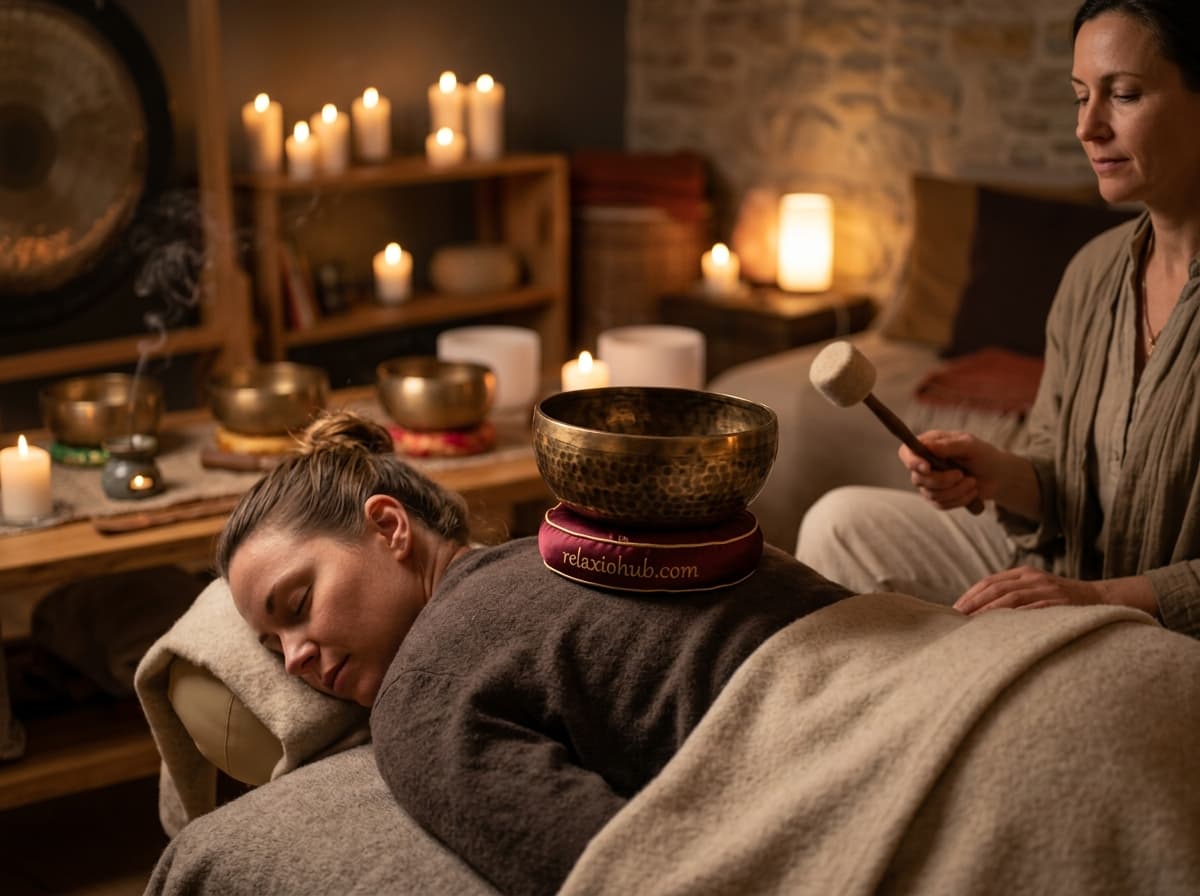
Close bowl placement works only when the practitioner controls distance, volume, and silence.
Therapists
Practitioners across Ukraine who provide this massage type. Choose a specialist and view their profile.
Compare profiles that explain the instruments, sound bath flow, volume rules, and honest contraindications for a calm session without exaggerated promises.