Rhythmic thumb compression lines
Short series marching along legs, torso, or paraspinal zones—you feel sequencing instead of random pokes.
Structured rhythm and sustained pressure along tension lines—for grounding after stress, needle-free depth, and a predictable head-to-toe arc.
Massage overview
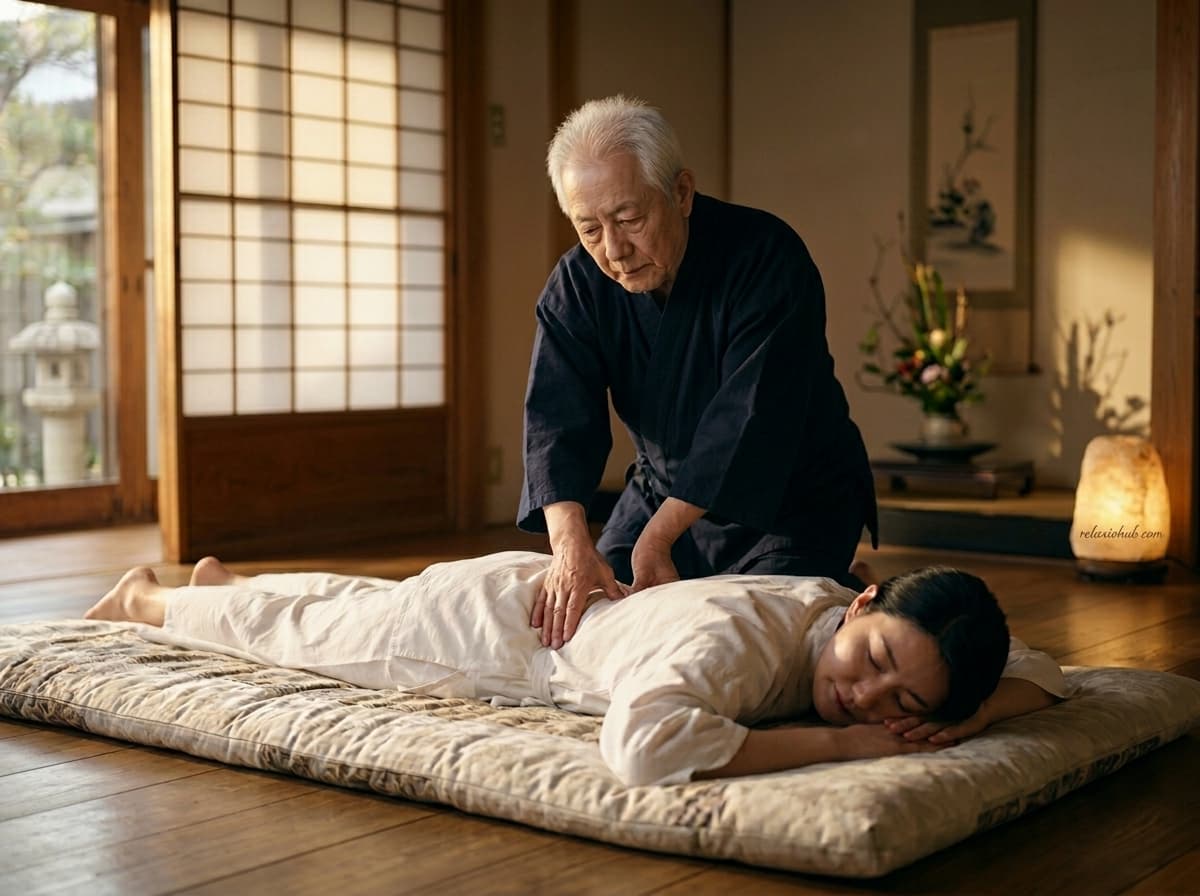
Shiatsu grows out of Japanese bodywork traditions built around slow, articulate touch: therapists use thumbs, palms, sometimes forearms or knees as steady levers, alternating compression with quiet pauses. Sensations feel wave-like rather than one-speed kneading across the entire back.
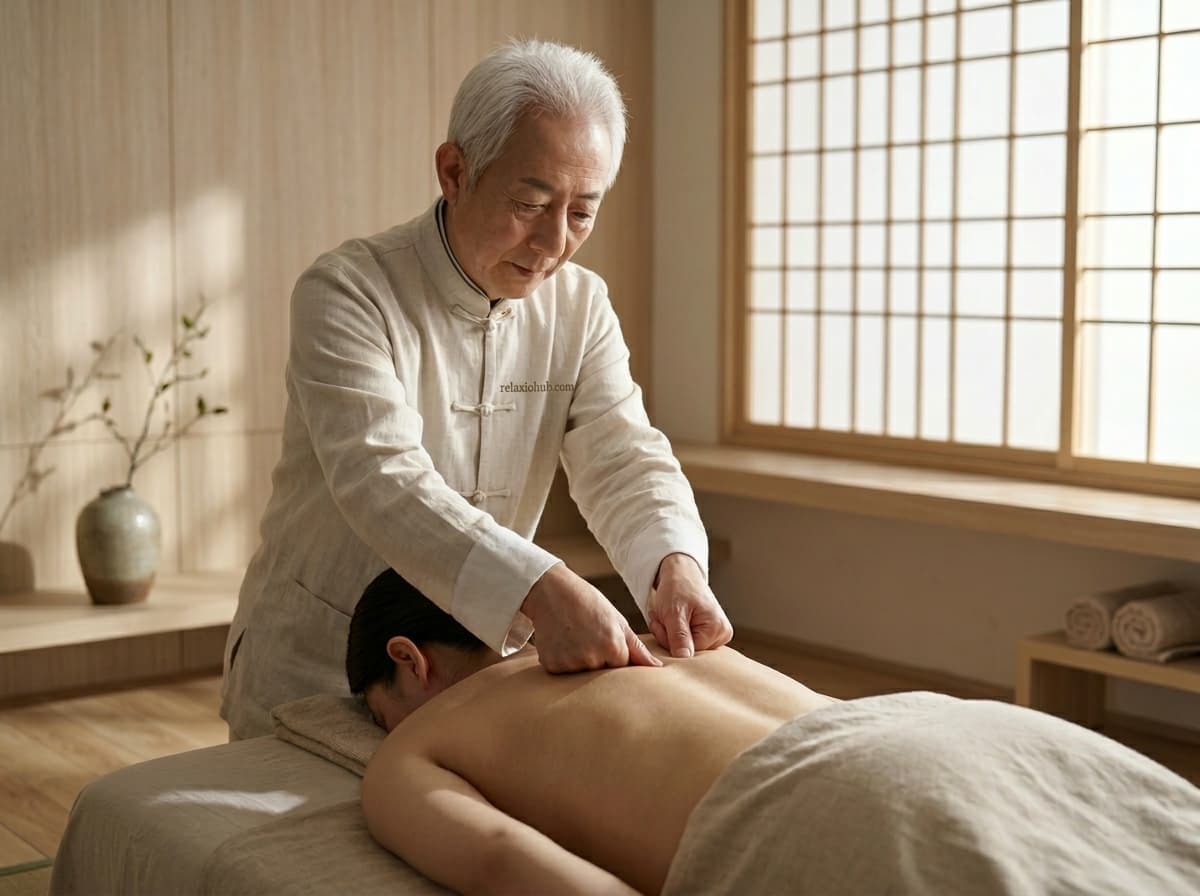
Studios diverge: some honor futon-style work in soft clothing, others adapt strokes on a table with draping and minimal oil; certain lineages lean into joint rotations and assisted stretches, others emphasize stable pressure along pathways traditionally framed as meridians—no mysticism required on your side, but respect for session architecture matters.
People often choose shiatsu for chronic fatigue, a glued-up back after desk marathons, anxiety held in the torso, or when they want a holistic arc without aggressive trigger-point digging. It is not diagnostics or rehab replacement—acute pain, numbness, obstetric cases, or fresh injuries need physician alignment first.
At a glance
Technique
School names vary, but bodies respond to steady contact, predictable rhythm, and zero jerking.
Short series marching along legs, torso, or paraspinal zones—you feel sequencing instead of random pokes.
The palm blankets ribs or thighs and slowly pumps depth, warming tissue before finer work.
Gentle torso side bends, scapular openings, or hip rotations—only with consent and no ballistic snaps.
Vertical pressure through aligned arms channels mass without skin scratching.
Slow broad contacts or light limb squeezes finish without abrupt touch withdrawal.
Effect
Outcomes hinge on sensitivity, session length, and stress load. Below are wellness motivations without cure-all language.
Predictable tempo plus long holds often soften inner rushing.
Stretches paired with compression unlock desk stiffness without sports-table aggression.
Alternating broad and focal contact sparks heat without bruising depth.
Structured lines of tension work for guests avoiding invasive methods.
Process
Discuss pain patterns, sleep, stress, injuries, sensitive zones, and whether futon or table suits you.
Regions progress through compression cycles, pauses, and optional assisted stretches.
Brief rest after intense segments; hydration and gentle loading the next day.
Choosing the format
Searchers blur shiatsu with acupressure or Thai massage. Three grounded scenarios.
Start mid-depth with shorter holds; ask the therapist to announce upcoming weight shifts.
Prioritize paraspinal lines, scapular clearance, and gentle torso rotations—no neck jerking.
Book full duration emphasizing even rhythm over maximal depth every minute.
Compression plus stretching is inappropriate during acute inflammation, suspected joint injury, or unstable spine segments without specialist clearance.
FAQ
Acupressure massage often spotlights focal holds inside a broader massage. Shiatsu classically choreographs a slower full-body protocol with steady lines of pressure—exact emphasis varies by lineage.
No. Thai massage uses different stretch sequencing and cadence. Read each therapist's listed modalities to avoid mixing styles.
Intensity can appear but sharp or breath-stealing pain is not the goal—signal immediately to lighten depth.
Futons give therapists space for weight transitions; tables help guests who cannot floor sit. Pick based on joints and studio offerings.
Maintenance every 2-3 weeks is typical without medical orders; high-stress seasons sometimes justify short weekly series when contraindications are absent.
Meridians are a traditional Japanese framework for mapping session routes and pressure sequences—not a medical diagnosis. In studio shiatsu, they serve as structural guides for sequencing zones, not clinical claims.
Most guests feel reduced back and neck tension after the first session. Lasting improvements in muscle tone and sleep quality typically stabilize over three to five regular visits.
Therapists
Practitioners across Ukraine who provide this massage type. Choose a specialist and view their profile.
Choose your city on the home page and browse profiles listing shiatsu or aligned techniques.