Introducing the tool
Before the session, the practitioner shows the rungu, explains which part will be used and checks whether the client feels comfortable with a wooden tool.
Rungu massage uses a smooth wooden tool with a rounded head, inspired by the East African rungu — a baton associated with Maasai and neighboring peoples. A distinctive deep bodywork format where the tool’s leverage works through precision, not raw force.
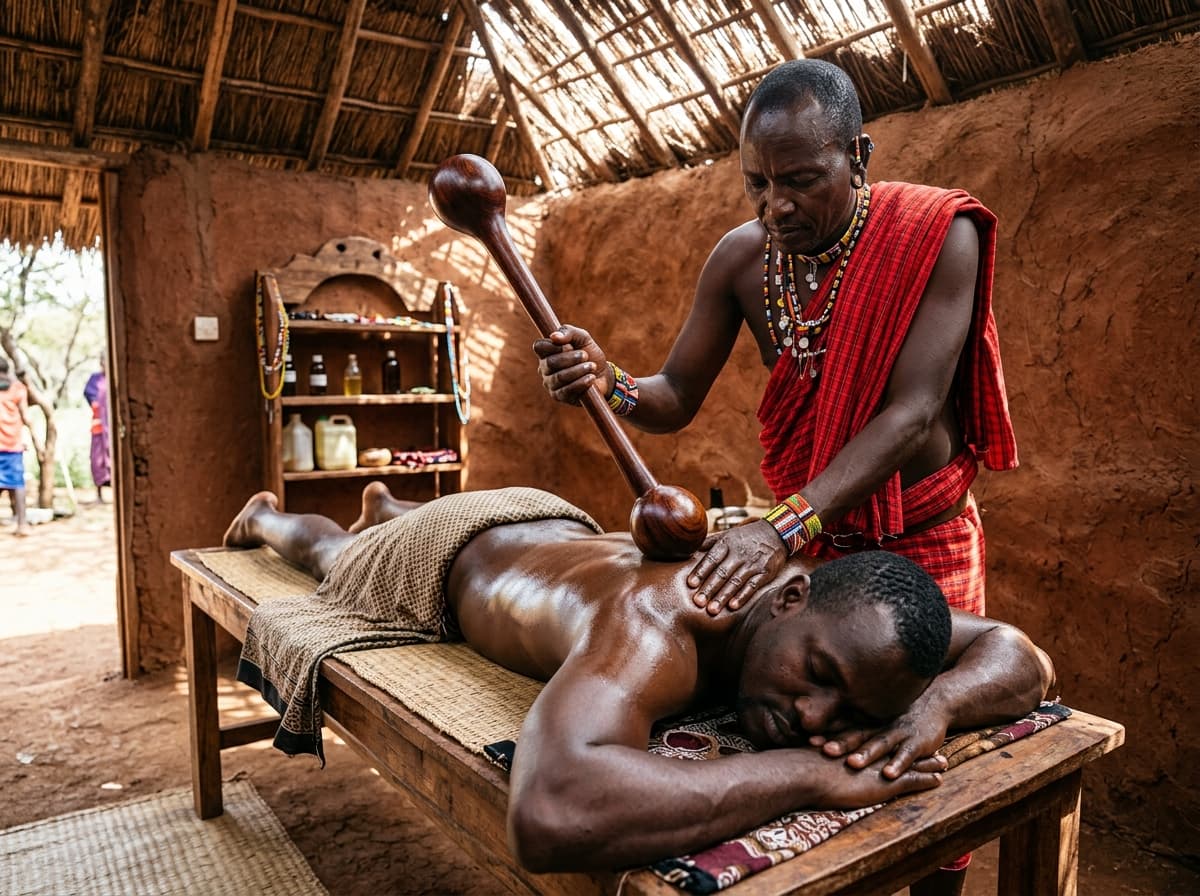
African wooden stick massage
Rungu massage is an instrumental massage where the practitioner works with a smooth wooden baton with a heavier rounded end. It is often searched as “Rungu massage”, “African Rungu massage”, “African stick massage” or “wooden stick deep tissue massage”. The sensation differs from standard manual massage: pressure feels broader, rolling is denser, and the tool allows deep work without sharp finger pressure.
The history of the rungu is connected with East Africa, especially Maasai and neighboring cultures in Kenya and Tanzania. A traditional rungu is not a spa invention, but a wooden club or baton with a long handle and rounded head. It has been used as a status object, herding and protective tool, symbol of adulthood, speech or strength. The modern massage format does not borrow the weapon function; it adapts the shape: smooth wood, weight, rounded contact and controlled pressure on the body.
Today Rungu massage is practised in South Africa, Kenya, Tanzania, Namibia, Botswana, Australia, the UK, the US, and in spa therapist training programmes, often placed alongside bamboo massage and deep tissue bodywork. For practitioners, the instrument extends reach and reduces hand fatigue on larger clients; for clients, it delivers a dense, warm, and distinctly unhurried kind of pressure.
Quick facts
Technique
A good Rungu massage should not feel rough. The tool gives leverage and weight, but the practitioner should move it slowly, steadily and with constant attention to the client’s sensations.
Before the session, the practitioner shows the rungu, explains which part will be used and checks whether the client feels comfortable with a wooden tool.
The body is not started with hard wood immediately: the back, legs or shoulders are prepared with hands, oil or lighter movements.
The handle or rounded part of the rungu glides over large muscle groups, creating a dense and even sense of pressure.
The rounded end may be used for controlled pressure on dense areas, but not for abrupt pressure on bones or joints.
The tool may work from different angles to gently mobilize a tense zone without overloading one tissue line.
After the deep instrumental stage, the practitioner returns to hands or lighter gliding so the body does not stay braced.
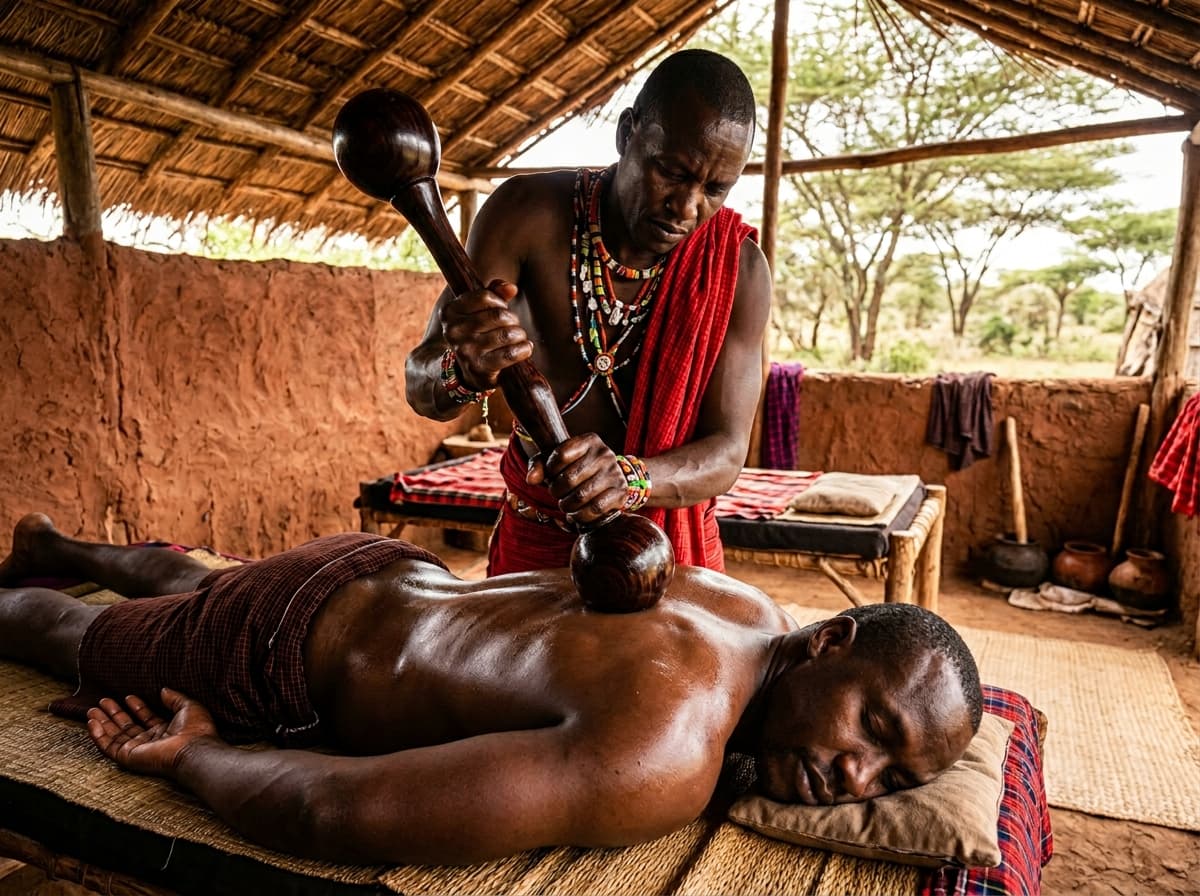
Expected effect
Rungu massage is a wellness procedure, not medical treatment. People choose it for the unusual tool, deep rolling and a dense sense of work without constant finger pressure.
The wooden tool helps create long lines of pressure across large muscles instead of breaking contact into short presses.
The rungu works as an extension of the hand, allowing the practitioner to give depth more precisely without tiring the fingers.
Gradual rolling can create local warmth and a feeling of more active work with dense areas.
The East African origin of the tool makes the session feel noticeably different from classic, bamboo or stone massage.
A good practitioner does not show off the tool’s force; they dose it, ask about sensation and avoid unsafe areas.
The deliberate slow rhythm of rungu rolling lets clients notice exactly where muscle density decreases — useful for tracking tension patterns across sessions.
Session flow
The practitioner shows the tool, explains its shape, origin and how it will touch the body.
The first minutes are done with hands or light gliding so the body accepts contact instead of bracing.
Rungu is used on the back, legs, glutes or shoulders, avoiding the neck, bony points and painful areas.
The client should speak up if pressure is too deep; the practitioner changes angle, speed or switches to hands.
At the end, pressure is reduced, the body is calmed, and the client is advised to drink water and rest after deep work.
Comparison
All three can provide depth, but the sensation and logic are different.
Rungu is a better fit if you are curious about an East African wooden tool, dense rolling and an unusual spa experience.
Bamboo massage often feels more slippery and roller-like, with long gliding movements across the body.
Deep tissue massage is better if you want manual work with muscles and fascia without an instrument.
Because the tool is hard wood, safety matters more than exotic appeal. The session should be adapted if there is a risk of bruising or pain.
FAQ
It is instrumental massage with a smooth wooden rungu, inspired by the East African baton or club shape and adapted for deep spa bodywork.
Because of the tool itself, its East African origin, its unusual look and the dense wooden rolling sensation instead of classic hand work.
The rungu is associated with East Africa, especially Maasai of Kenya and Tanzania. Traditionally it was a baton, herding, protective or status object; massage adapts its shape and weight.
It should not cause sharp pain. The sensation can be deep and dense, but the practitioner must control pressure and avoid bones, the neck and unsafe areas.
Most often the back, legs, glutes and shoulders. The tool is not used, or is used very carefully, on the neck, bony points, abdomen, lymph node areas or injured tissue.
Look for profiles that describe experience with rungu or wooden tool massage, pressure control, contraindications, tool hygiene and areas where the practitioner does not use wood.
The rungu is a club-shaped baton with a heavy rounded knob, suited for targeted rolling and point pressure. Bamboo sticks are uniform cylinders that produce a longer, smoother glide — more rhythmic, less targeted in pressure distribution.
Compare profiles that describe Rungu massage experience, African wooden stick technique, pressure depth control, safe zones, instrument hygiene, and practitioner training background.