Whakawhanaungatanga: conversation before touch
The practitioner clarifies the request, injuries, boundaries, pressure level, emotional sensitivity and explains how the session may unfold.
Romiromi reaches layers that lighter strokes cannot: forearms and elbows move with breath and intention through tissue that holds tension, while the practitioner checks in rather than pushes through.
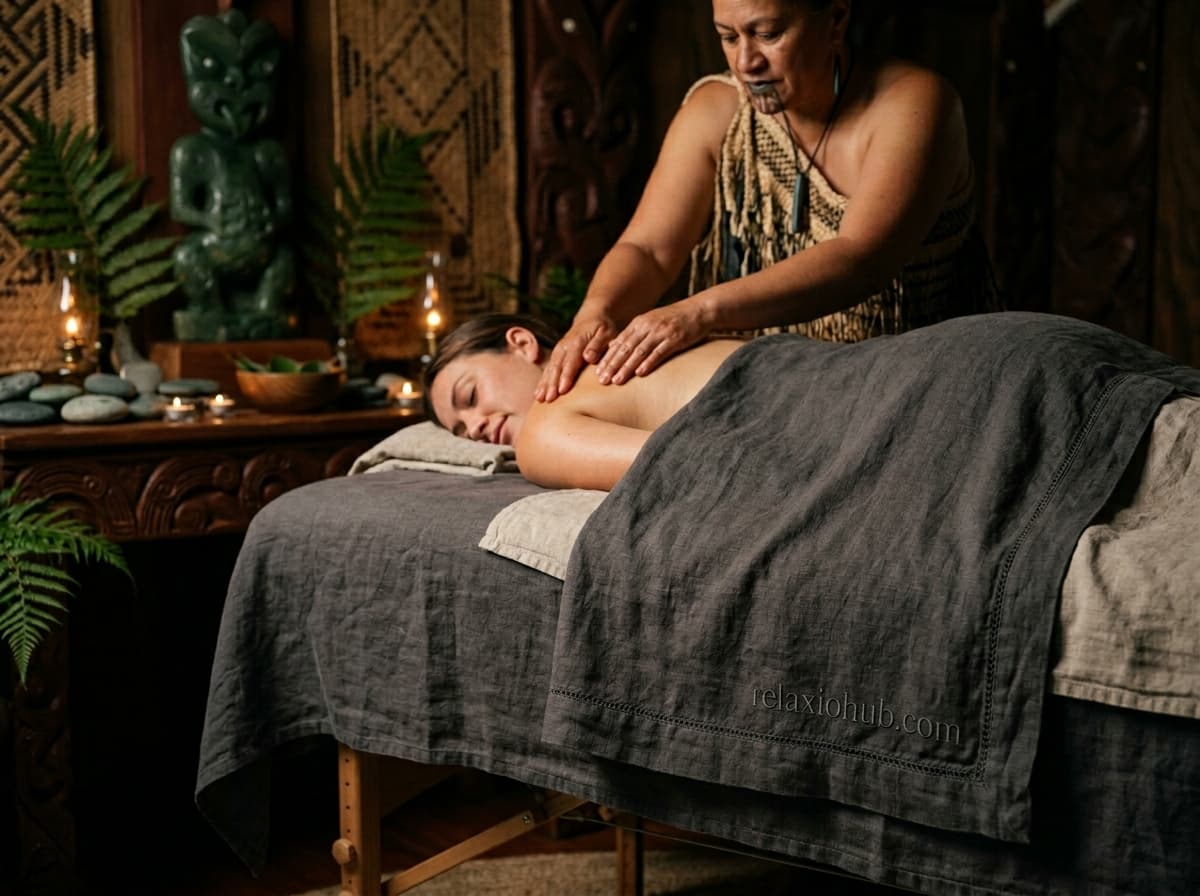
Māori bodywork, not Hawaiian Lomi Lomi
Romi-Romi massage is often searched as “romi romi massage”, “romiromi”, “Maori massage” or “Māori bodywork”. It is not the same as Hawaiian Lomi Lomi: Romiromi comes from Māori traditions of Aotearoa New Zealand and is usually understood as deeper, more structural bodywork with tissue contact, tension points and breath.
Historically, Romiromi is connected with Rongoā Māori, the wider field of traditional Māori healing where the body, emotions, whānau, land and spiritual context are not treated as separate. Knowledge was passed through families, hapū, iwi, practitioners and learning beside a teacher. Mirimiri is often mentioned nearby: a softer form of care and settling, while Romiromi can be more intense and precise.
Romiromi is practiced most strongly in New Zealand, especially in Māori wellness spaces, retreats and indigenous bodywork schools. Through Māori diaspora and international teachers, sessions described as Romiromi massage, traditional Māori massage, Mirimiri and Romiromi, Maori deep tissue bodywork or Rongoā Māori bodywork are also found in Australia, the United Kingdom, the United States, Canada, Germany, the Netherlands and other European countries.
Quick facts
Technique
Romiromi does not have one universal protocol: the style depends on the teaching line, practitioner experience and agreement with the client. Some sessions are softer, others are deep and point-focused.
The practitioner clarifies the request, injuries, boundaries, pressure level, emotional sensitivity and explains how the session may unfold.
Before active work, the client is often invited to slow the breath, feel support and not silently tolerate discomfort.
Palms, knuckles, forearms or elbows may be used to work with tense areas gradually, without sudden force.
Romiromi may work with points practitioners describe as places of held tension; pressure should be agreed and controlled.
Some schools use kōhatu (stones) or rākau (wooden tools), but they are not required in every session.
At the end, the practitioner lowers intensity, gives the body time to settle and explains what sensations may be normal after deep work.
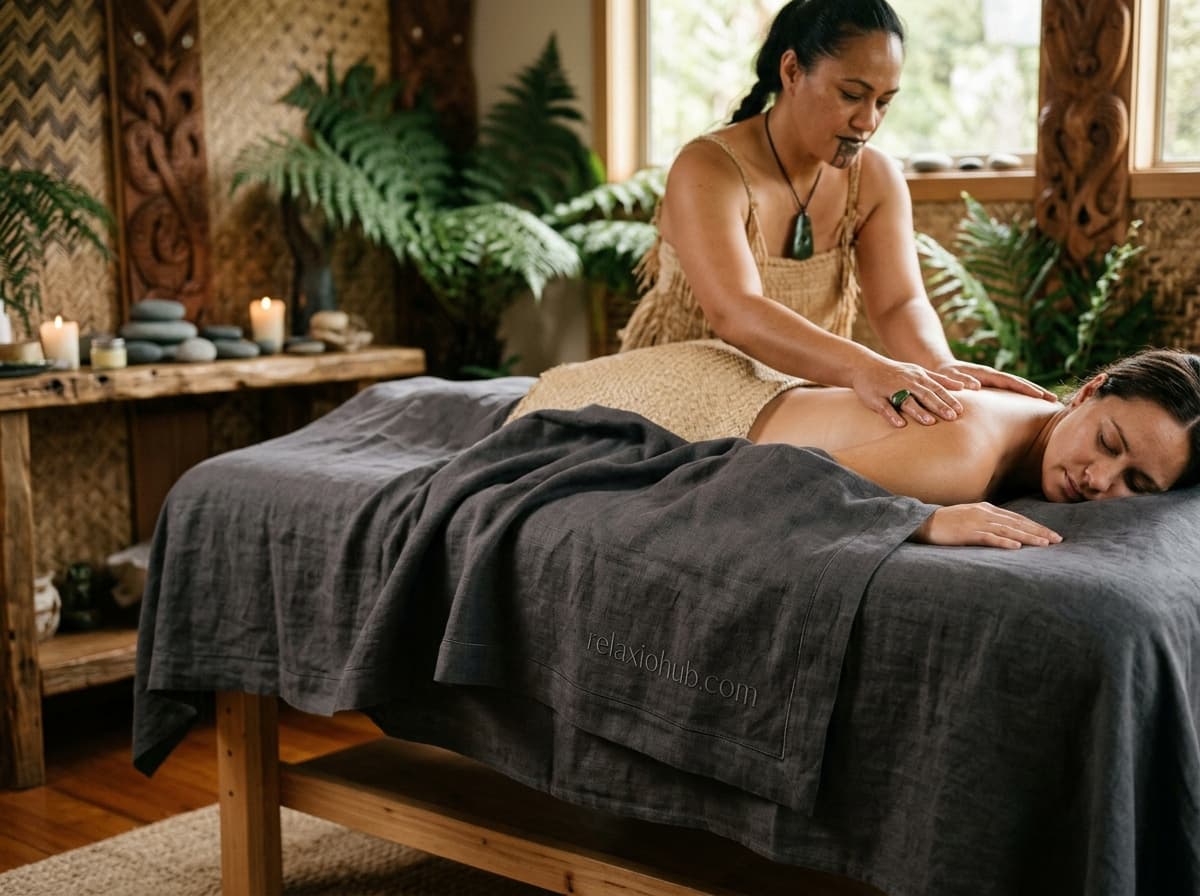
Expected effect
Romi-Romi is wellness bodywork, not medical treatment. People choose it when they want a deep, attentive and culturally rooted approach to the body.
Deep contact through forearms and elbows reaches layers that lighter strokes cannot — the body registers the work as thorough and complete.
A session helps the client notice where the body grips protectively and release that holding gradually, without force.
When pressure follows the breath, the client stays present through intensity instead of bracing against it.
Romiromi carries meaning beyond technique: whakapapa, land and body are treated as connected, not separated.
The practitioner explains intensity, checks the body's response and keeps the client in control of pressure and pace throughout.
After the main work, the body often shifts from held alertness into a quieter state — the kind of rest that comes when deep contact has been genuinely received.
Session flow
Before starting, the practitioner discusses target areas, the client’s experience with deep massage, contraindications and comfortable boundaries.
The practitioner may begin with breathing, lighter contact or a short mirimiri-like settling phase.
Pressure becomes deeper: the back, shoulders, pelvis, legs or specific areas of tension may be worked.
In a good session the practitioner does not rush: they check breathing, tissue response and ask about intensity.
After deep work, a few quiet minutes, water and simple guidance around movement, warmth and rest are helpful.
Comparison
These names are sometimes confused in search, but they come from different cultures and feel different in practice.
Romi-Romi is a better fit if Aotearoa New Zealand, Rongoā Māori, deep point work, breath and cultural context are important to you.
Lomi Lomi is more associated with Hawaiʻi, long wave-like forearm movements, oil and flow.
Deep tissue massage usually focuses on muscles, fascia and specific areas without the Māori cultural layer.
Because of deep pressure and possible emotional intensity, Romiromi should not be treated as a universal massage for everyone.
FAQ
It is a traditional Māori bodywork practice from Aotearoa New Zealand, combining deep pressure, breath, tension points and respect for cultural context in one session.
No. Lomi Lomi comes from Hawaiʻi and often feels like flowing oil work, while Romiromi is linked with Māori traditions of New Zealand and can be deeper.
Romiromi was passed through Māori families, hapū and iwi as part of wider Rongoā Māori knowledge. Modern practitioners teach it in New Zealand and international bodywork schools.
Most strongly New Zealand, and also Australia, the United Kingdom, the United States, Canada, the Netherlands, Germany and other countries with Māori diaspora or indigenous bodywork schools.
The session can be intense, but it should not force you to endure sharp pain. The practitioner should agree on pressure and respond to your breath and words.
Look for profiles that describe Romiromi or Mirimiri/Romiromi, depth level, cultural approach, contraindications, touch boundaries and training background.
Mirimiri is generally described as the softer, settling side of Māori bodywork — gentle contact and calming touch. Romiromi tends to be more intense and precise, working with deeper tissue and tension points. In practice, a session may move between both.
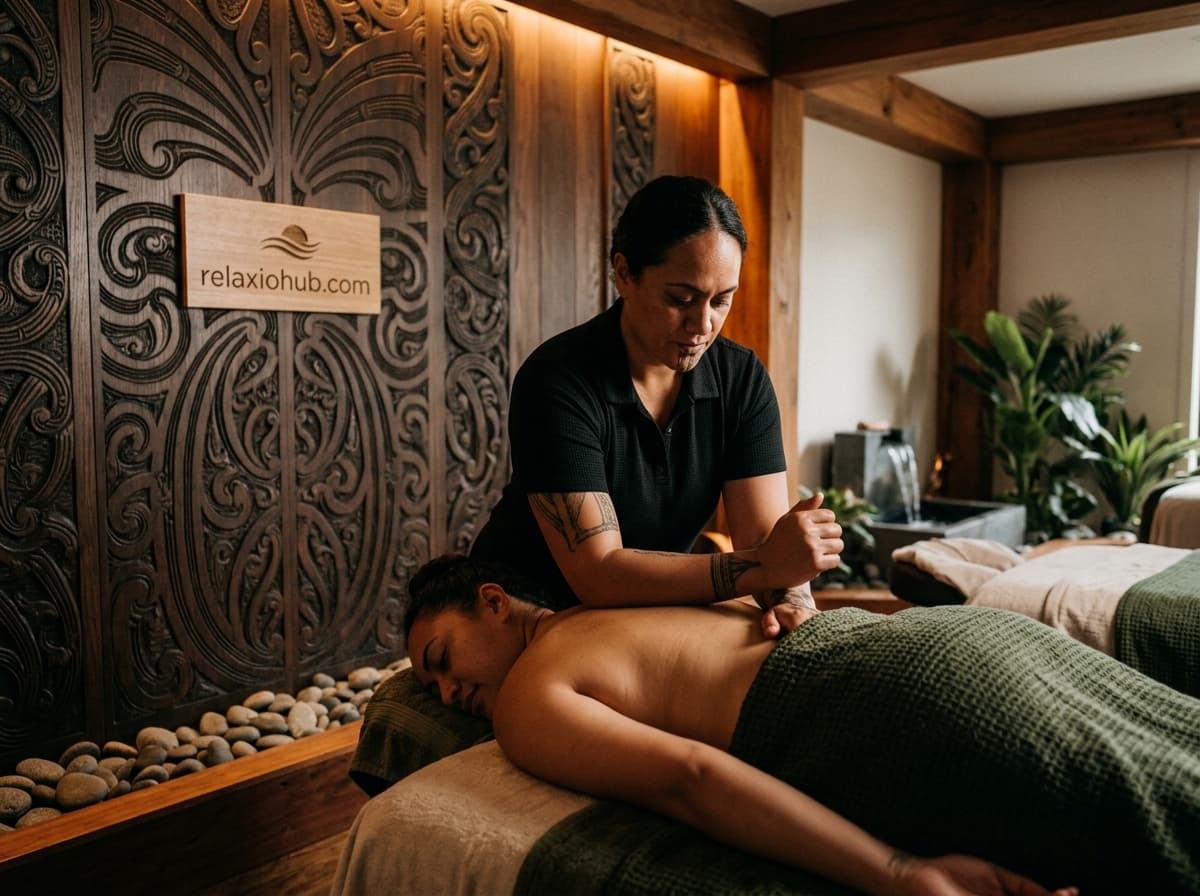
Romiromi requires clear consent: the client should know where pressure will go deep and where it stays gentle.
Compare profiles that describe Romiromi, Māori bodywork, mirimiri, pressure depth, breathing, cultural context, contraindications and practitioner training.