Effleurage as foundation
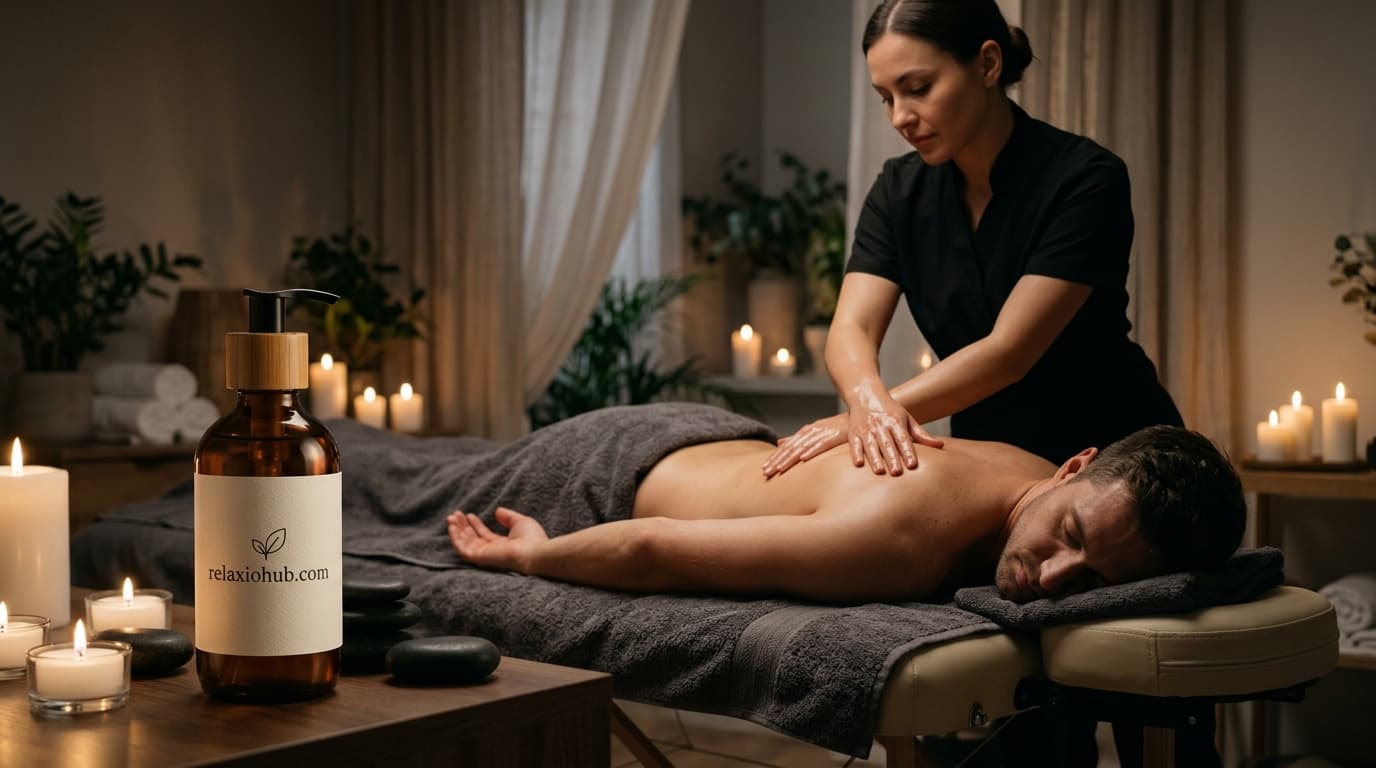
Long smooth palm strokes along the full length of muscles — back, arms, legs. Pressure is even, speed is slow, contact doesn't break abruptly.
Slow enveloping movements, soft steady pressure, and silence — a technique for conscious downregulation of the sympathetic nervous system without forced maneuvers.
Description
Relax massage is a protocol built around activating the parasympathetic division of the autonomic nervous system. The practitioner uses predictable rhythmic movements — mostly effleurage and light petrissage without abrupt changes in tempo or force. The goal is lowering cortisol levels, slowing heart rate, and switching the body from fight-or-flight mode to rest-and-digest.
Unlike sports or therapeutic massage, relax protocol deliberately avoids pain thresholds, deep pressure on trigger points, and any techniques that provoke defensive muscle reaction. The sensation should be pleasant from the start — not 'endure now to feel better later,' but immediately safe and comfortable. The session tempo is slower than classic massage, pauses between zones are longer, transitions between techniques are smooth.
Quality relax massage starts with a brief dialogue: the practitioner finds out your stress level, sleep patterns, whether you have acute pain symptoms (which require a different approach), whether you prefer silence or soft background music. If you come with acute inflammation, fever, unstable blood pressure, or in a state of severe anxiety — it's worth speaking openly to adjust the format or reschedule.
Quick Facts
Technique
Practitioners may add their own variations, but quality relax protocol always builds on predictability, softness, and rhythm.
Long smooth palm strokes along the full length of muscles — back, arms, legs. Pressure is even, speed is slow, contact doesn't break abruptly.
Light grasping of soft tissue without painful compression; used on large muscle groups (thighs, calves, shoulders).
Passive rhythmic movements of limbs or torso that help the body release muscular control and trust the support.
If the practitioner feels a tense area, they work around it with soft movements rather than 'pushing through' the pain.
The practitioner synchronizes movement tempo with your breathing; short pauses between zones allow for integration of sensations.
Effects
Focus on physiological recovery mechanisms and ethical statements without medical promises.
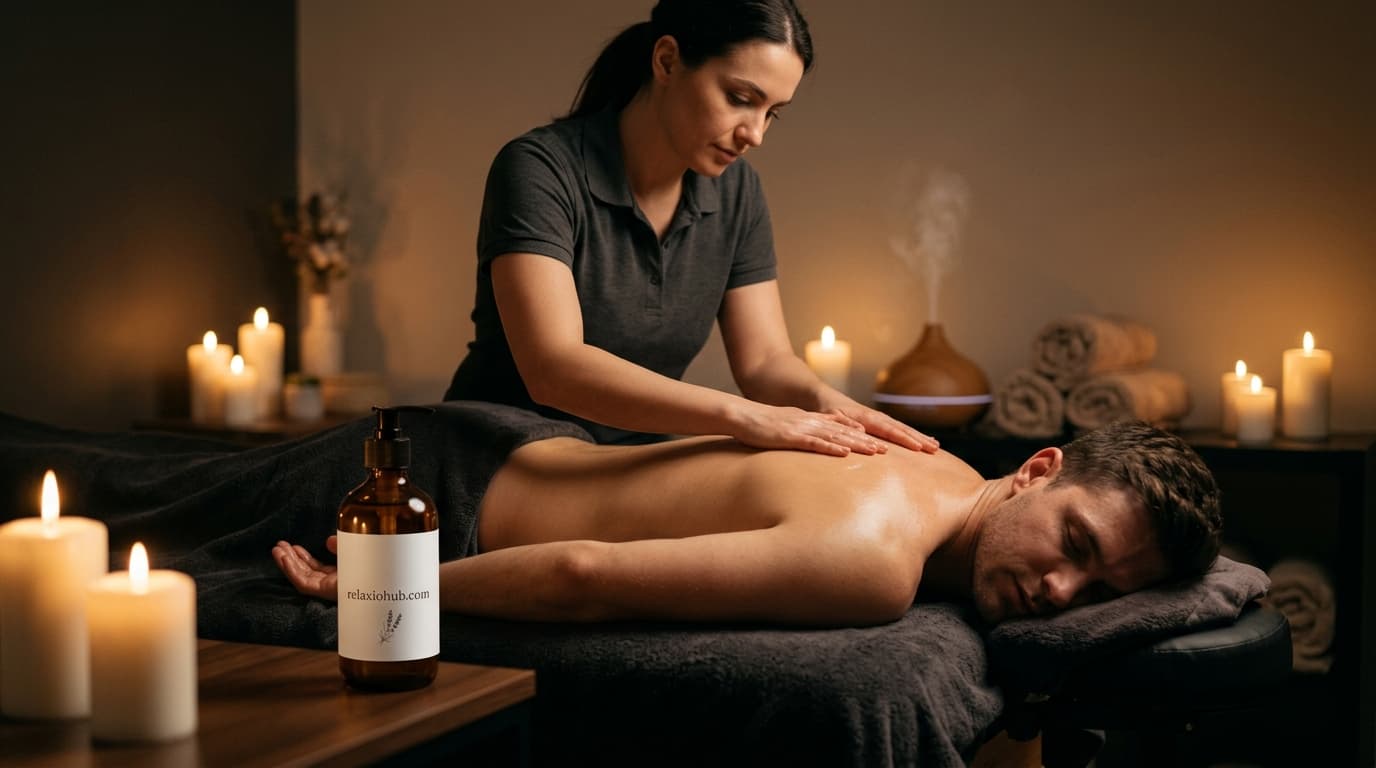
Soft rhythmic touch reduces sympathetic division activity (stress response) and increases parasympathetic tone (recovery, digestion, sleep).
Research shows that massage reduces salivary cortisol concentration — a stress marker — by an average of 20–30% after a 45–60-minute session.
Predictable gentle touch stimulates the baroreceptor reflex and vagus nerve, leading to reduced pulse rate and blood pressure.
Relax massage increases serotonin levels — a precursor to melatonin, the sleep hormone. Regular sessions can ease falling asleep.
Without aggressive stretching or painful pressure, muscles gradually release protective spasm through a neuromechanical trust mechanism.
Slow rhythm and safe contact provide time for emotional processing — many guests note mild relief after the session.
Process
Practitioner asks about stress level, sleep, acute pain symptoms, oil allergies; agrees on touch zones, pressure strength, and music/silence format.
Dimmed light, comfortable temperature, soft covering; practitioner starts with light contact, giving the body time to adapt.
Back, arm, leg effleurage; gentle kneading of large muscles; pauses between zones; constant feedback about comfort.
Soft contact ending, slow rise from the table; after the session — a few minutes of sitting, water, no abrupt transition to cold or noisy space.
Format Choice
Three typical search scenarios — relax doesn't replace sports or therapeutic approaches.
If your nervous system is constantly in 'battle readiness' mode — relax massage helps switch to recovery.
Regular sessions can improve sleep quality through increased serotonin and reduced anxiety.
After traumatic experience, during grief, or in loneliness — soft predictable contact can be therapeutic.
Even a gentle protocol has limitations — safety is always priority.
FAQ
Classic massage includes more intensive techniques (kneading, vibration, tapping) and can work with specific muscle problems. Relax massage focuses exclusively on relaxation: softer pressure, slower tempo, avoiding pain.
No. Relax massage reduces physiological stress manifestations (cortisol, pulse), but doesn't replace cognitive work with a psychologist or treatment of psychiatric disorders.
A single session provides temporary relief (1–3 days). For cumulative effect, recommend a course of 6–10 sessions 1–2 times per week.
In the second and third trimesters — usually yes, but only after obstetrician's permission and with a practitioner who knows positions for pregnant women and limitations.
Speak to the practitioner immediately — pain blocks parasympathetic activation. Quality relax protocol should not be painful.
Yes. A 2020 meta-analysis (Moyer et al., Psychological Bulletin) based on 37 studies showed that one 45–60-minute massage session reduces salivary cortisol concentration by an average of 24% (95% CI: 16–32%). Mechanism: soft rhythmic touch activates the vagus nerve, which inhibits the hypothalamic-pituitary-adrenal (HPA) axis — the central stress response pathway.
Therapists
Practitioners across Ukraine who provide this massage type. Choose a specialist and view their profile.
Choose your city on the home page and browse profiles marked with relax massage or SPA protocols.