Intake and consent
The practitioner asks about health conditions, implanted devices, touch preferences, and areas to avoid. A clear signal to pause or stop is agreed before the session begins.
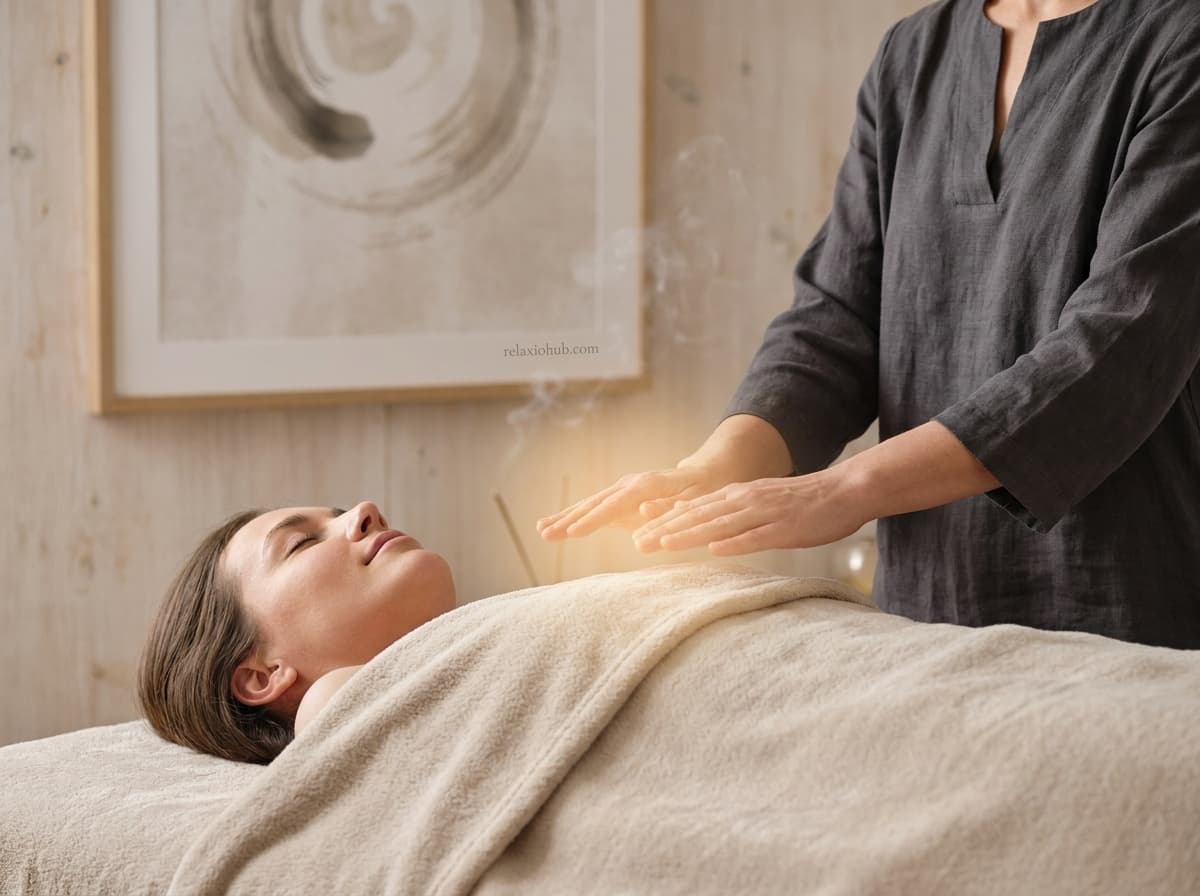
Reiki is a practice of light touch or palm hovering over clothed body areas: the practitioner follows a set sequence of hand placements, the session moves at a calm unhurried pace, and the aim is nervous system settling — not muscle kneading or deep pressure.
Light touch as a format
Reiki is not classic massage. The practitioner does not knead muscles, apply oil, or use pressure. Instead, they work through a set sequence of hand placements — palms resting lightly on or hovering just above clothed body areas, moving from head through torso to legs at a calm, deliberate pace. The client stays fully dressed on a treatment table while the practitioner follows the Usui hand-placement map, pausing at each position for several minutes.
The method traces to Mikao Usui, who developed it in 1920s Japan following a period of study and meditation on Mount Kurama. His student Chujiro Hayashi systematized the hand-placement sequences that most Western practitioners follow today. Hawayo Takata, a Japanese-American woman, received training from Hayashi in Japan and brought Reiki to the United States and Canada in the late 1930s and 1940s, establishing the teaching lineage through which most Western practitioners trace their training. Reiki practitioners are certified through attunement at three levels: Level 1 covers self-practice and in-person sessions; Level 2 introduces distance work and the use of symbols; the Master or Teacher level qualifies a practitioner to attune and train others.
In studio settings, intake before a Reiki session typically covers touch preferences, health conditions, implanted devices such as pacemakers, skin integrity at contact zones, and whether the client wants light touch or a fully hands-off hover throughout. Practitioners position Reiki as a wellness and relaxation format, not a medical treatment, and refer clients to licensed health professionals when a condition requires clinical care.
At a glance
Session structure
Different lineages vary in fine detail, but the core structure — intake, sequential placements, and a quiet close — is consistent across most professional settings.
The practitioner asks about health conditions, implanted devices, touch preferences, and areas to avoid. A clear signal to pause or stop is agreed before the session begins.
The client lies on the treatment table fully clothed. A blanket or bolster is offered. The room is quiet and the lighting is reduced.
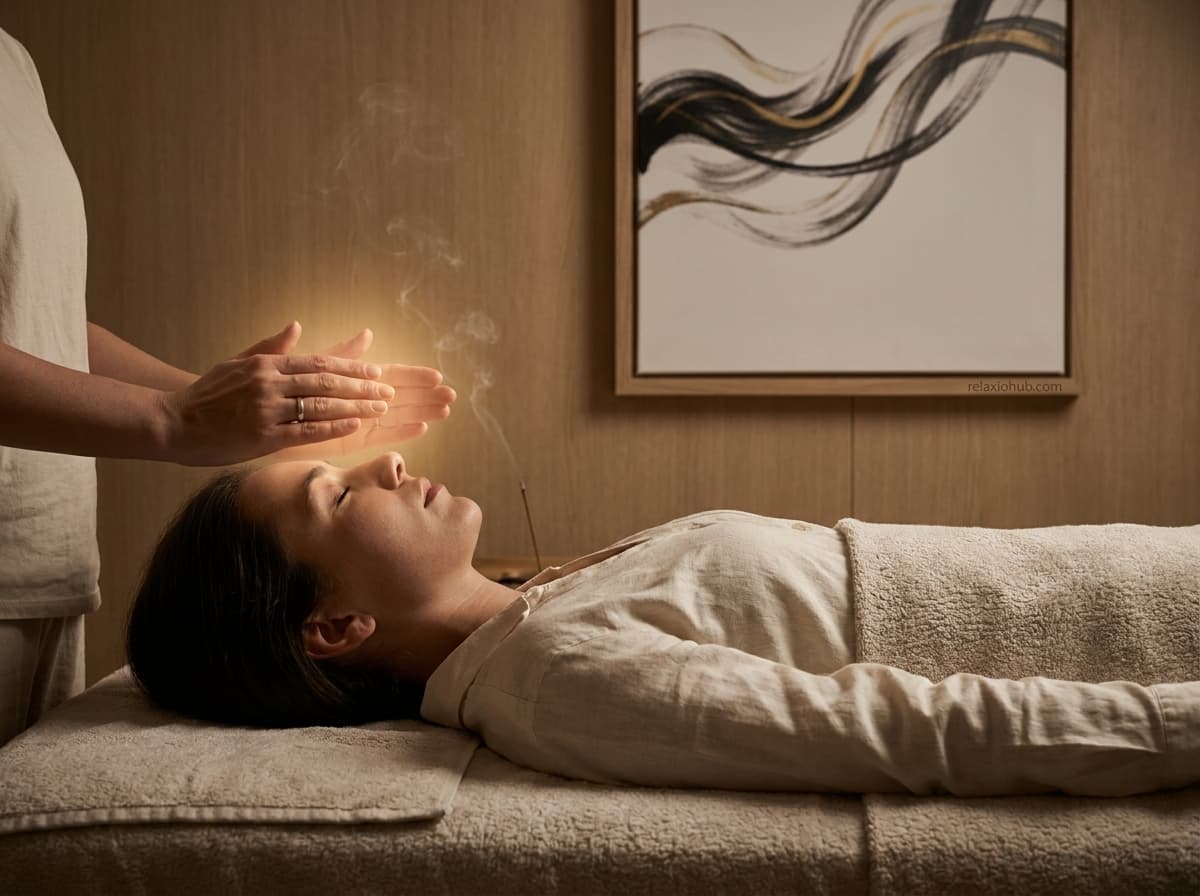
The session typically begins at the head — crown, temples, forehead, and throat — with palms resting lightly or hovering just above the surface.
Positions follow the Usui sequence across the chest, upper abdomen, and lower abdomen, with each position held for several minutes before moving to the next.
Lower-body placements are included in a full session. The practitioner respects modesty and may skip areas the client has asked to exclude.
The session ends with a brief period of stillness. The client returns to alertness slowly before sitting up, which reduces lightheadedness after a long horizontal rest.
Expected effects
Reiki is a wellness practice. Its effects are subjective and relaxation-focused — not a substitute for medical treatment or clinical diagnosis.
The practitioner confirms contact preferences before each placement, making it a clear, negotiated format rather than passive receipt of touch.
Lighter than percussion or deep tissue work, Reiki is practical when physical sensitivity is high or hands-on pressure feels like too much.
The session creates a defined period of horizontal stillness during which the nervous system can shift toward a calmer, less activated state.
Warmth, stillness, and steady practitioner presence shift attention away from mental noise, offering a form of rest that does not require active effort from the client.
A Reiki session can serve as a structured boundary between high-demand periods and recovery time — a deliberate pause rather than a collapse into exhaustion.
Many practitioners share simple self-placement sequences clients can use at home, extending the benefit of calm attention to the body between visits.
Timeline
Discuss touch preferences, health conditions, implanted devices, pregnancy, and any areas of the body to avoid. Agree on a clear stop signal.
The client lies down fully clothed. Blankets, a bolster under the knees, and reduced lighting create conditions for rest.
The practitioner works through the Usui hand-placement sequence, resting or hovering at each position for several minutes before moving to the next.
Hands lift slowly at the end of the sequence. A brief period of stillness follows before the client is invited to return to sitting.
The practitioner may suggest session spacing, note any observations, and mention when referral to a medical or mental health professional would be appropriate.
Comparison
Understanding the difference helps you choose the format that fits your current need.
Choose massage when muscle tension, restricted movement, or post-exercise recovery are the priority. Choose Reiki when stillness and minimal contact are what you need.
Meditation requires self-direction. Reiki is externally structured — a practitioner holds the pace and sequence, which suits people who find unguided stillness difficult.
Reiki can sit alongside therapy when both practitioners agree, but it does not replace diagnosis, medication management, or professional trauma processing.
Reiki involves minimal physical contact, but some conditions require postponement, medical clearance, or adaptation of the standard format.
FAQ
Reiki originated within a Japanese spiritual framework, but most contemporary studio practitioners use secular language focused on relaxation, breath, and consent. Ask the practitioner beforehand if you need a format free of spiritual or metaphysical terminology.
Some clients notice warmth, mild tingling, or heaviness under the practitioner's palms. Others feel mainly stillness or sleepiness. Neither outcome indicates whether the session was effective — subjective experience varies significantly.
Persistent musculoskeletal pain needs assessment from a qualified health professional and may require manual therapy or medical treatment. Reiki can support relaxation alongside that care but does not address structural causes of pain.
Some practitioners offer remote sessions, usually conducted at an agreed time with the client at home. If considering distance Reiki, look for a clear service description, stated pricing, and an honest explanation of what the format involves.
Look for profiles that state the practitioner's training level and lineage, describe the session format clearly, list contraindications, and do not make medical treatment claims.
Most lineages recognise three levels: Level 1 focuses on self-practice and in-person sessions; Level 2 introduces distance work and symbols; the Master or Teacher level enables teaching and attunement of others.
Some practitioners offer combined sessions — typically the massage component addresses muscle tension first, followed by a shorter Reiki segment as a calming close. Ask the practitioner how they structure the transition.
Therapists
Practitioners across Ukraine who provide this massage type. Choose a specialist and view their profile.
Compare profiles that describe training level and lineage, explain the session format and touch policy, list contraindications honestly, and position Reiki as a relaxation practice rather than a medical treatment.