RelaxIOhub
Bolster-supported bump-friendly positionsSlower tempo than sports workScreening before touchFirst trimester — OB clearance required

Prenatal massage

Calm wellness bodywork with side-lying or semi-reclined bolstering: easing loaded lower backs, sacral heaviness, and tired calves — without chasing sports-depth pressure or touching the abdomen unless your OB cleared specifics. No substitute for prenatal care, no promises to fix pregnancy complications.

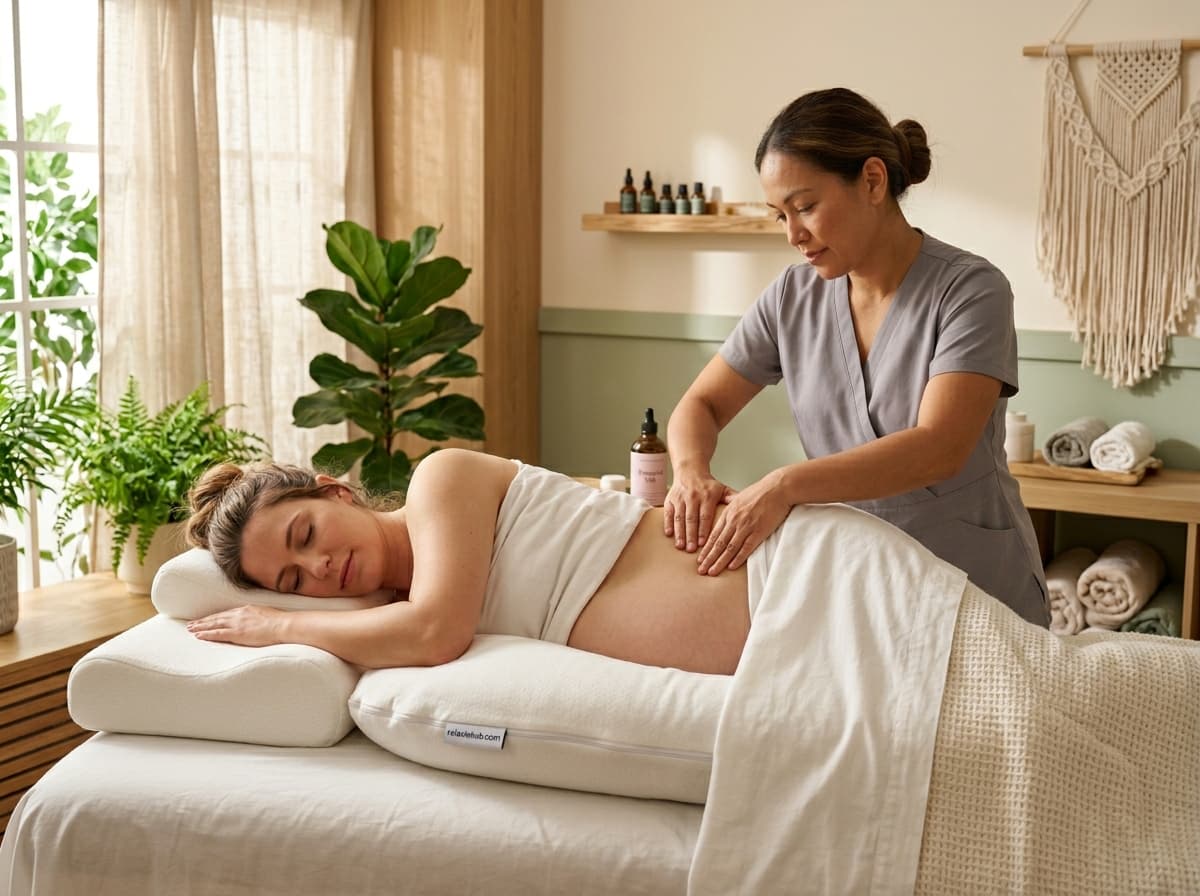
Serene massage setting for a pregnant client with knee and belly support pillows

Adapted bodywork

What prenatal massage means in a studio versus a generic Swedish session

Pregnancy releases relaxin — a hormone that loosens ligaments throughout the body, including the sacroiliac joints, symphysis pubis, and round ligaments of the uterus. This is physiologically necessary, but it also makes those structures genuinely more vulnerable to aggressive depth: which is why a trained prenatal practitioner consciously avoids deep pelvic pressure without medical clearance. In studios, that means a short-to-mid session without sharp percussion, careful mapping around the abdomen, and a focused lower-back and sacral protocol suited to the weekly shift of the center of gravity. Clients describe warmth along long back lines, easier walking for a few hours, and emotional ease — not fetal repositioning or an ultrasound replacement.

Compared with standard relaxation massage, positioning is the most visible change: side-lying with pillows between knees and under the belly is the norm. The physiological reason is clear — prolonged flat-on-back positioning compresses the inferior vena cava, reducing venous return and risking dizziness, so side-lying is the clinical standard rather than a comfort preference. Depth around the sacrum and calves stays collaborative and moderate unless a physician green-lights more. The sciatic-like pain many pregnant women feel along the posterior thigh often traces to the piriformis muscle, compressed by the widening pelvis and baby weight — a key focus area for a trained prenatal therapist. Leg swelling paired with headache and vision changes belongs with urgent care, not deeper strokes.

Editorial honesty: first-trimester policies vary by country, spa, and clinician comfort. Any bleeding, threatened preterm history, or high-risk flags deserves OB- or midwife-led decisions — not blog certainty. RelaxIOhub helps you assess therapist transparency, not issue prescriptions.


Snapshot

Before booking prenatal massage

Trimester + clearance
Ask both the studio and your obstetric provider; multiples, previa history, preterm risk, or bed-rest orders rewrite or cancel the plan.
Timing
Often 45–60 minutes of adapted work plus slow repositioning — confirm exact offerings in each profile.
Positions
Expect side-lying or gentle incline; therapists usually avoid prolonged flat-on-back positioning.
Same-day stop signs
Blood leakage, rhythmic cramps before term, sharp abdominal pain, vision issues with pounding headache, or decreased fetal movement — skip the spa; seek medical care.

Technique

Motifs you may feel on a prenatal-focused visit

Each session adapts positioning first, then tempo — not the other way around.

Bolstering the lumbar curve and bump

Pillows lift the belly and align the hips so the quadratus lumborum — the key lumbar stabilizer overloaded when the belly shifts the center of gravity forward — finally gets to unload. This typically produces the first deep exhale of the hour before any stroke begins.

Slow glides over glutes and lateral hips

Tempo stays well below sports pace. The piriformis, an external hip rotator, frequently compresses the sciatic nerve as the pelvis widens during pregnancy. Unhurried work through the posterior hip can ease the characteristic pain that radiates down the back of the thigh.

Gentle calves and feet with swelling awareness

The soleus acts as a peripheral pump for calf venous return — during pregnancy, that return is already slowed. Work here stays light and non-aggressive; if swelling may be pathologic, the therapist defers to labs and blood pressure before going further.

Short segments for neck and traps

The growing uterus elevates the diaphragm, altering breathing mechanics and loading the upper body with compensatory tension. Brief passes through the trapezius and suboccipitals without sudden neck extension give noticeable relief to screen-driven shoulder fatigue.

Quiet closure paced with breath

Parasympathetic downshift is part of why people book prenatal work. The session should end unhurried, allowing the body to integrate the work before the client moves.

Bolsters supporting belly and knees during a prenatal table session
Support angles are functional: the lumbar hangs without them, and rib expansion suffers — two problems strokes alone cannot fix.

Why book

Why clients choose prenatal massage

Comfort and care language — not disease treatment claims.

Soft, predictable pressure

Relaxin-loosened joints are genuinely more vulnerable — this is physiology, not preference. Voice-led pacing means depth stays within what the body is ready to receive that day.

Up-front health screening

Pre-session intake catches symptoms that mirror ordinary pregnancy discomfort but may signal preeclampsia or other conditions needing medical review. A thorough intake is protective, not bureaucratic.

Hands-on positioning coaching

Proper bolstering reduces compressive pressure on the inferior vena cava and eases round ligament tension. Therapists teach the same pillow stack you can reproduce at home between sessions.

Stage-aware sessions

Supine positioning becomes progressively contraindicated from the second trimester; lymphatic strategies shift in the third. The session map evolves with gestational age — not a single static cookie-cutter plan.

Flow

How an appointment may unfold

1

Intake: due timeline, symptoms, medications, provider guidance

High-risk flags may trigger refusal or a request for written clearance — professional, not personal.

2

Bolster tuning and room comfort

You approve pillow height; draping follows studio policy.

3

Core sequence plus gradual settling

Work proceeds in side-lying with side changes as needed; tempo slows toward a final breath-led closure.

4

Safe return to vertical

Pregnant clients are prone to orthostatic hypotension when rising from side-lying. The therapist assists a gradual stand, checks comfort, and confirms there are no new cramps or concerning sensations before you leave the room.

Compare modalities

Prenatal versus other massage searches

Pregnant clients arrive with different needs: some want the gentlest possible touch with a clear safety protocol, others need targeted back work cleared by a physician, others only want lymph-oriented leg work. Each of those intentions points to a different specialist.

You want the gentlest touch while pregnant

Choose clearly designated prenatal experience, not a vague "relaxation" framing without documented pregnancy-specific training hours.

You crave deep sports back work as before pregnancy

Get clinician input separately; aggressive depth often conflicts with the safety culture that prenatal training is built on.

You only need lymph-oriented legs

Book drainage-first formats once edema is medically vetted; prenatal integrates positioning plus broader red-flag screening.

Prep and aftercare

A day ahead

  • Write OB questions about massage permission; keep the clinic number handy.
  • Eat lightly beforehand; dehydration worsens dizziness during pregnancy.
  • Wear easy layers; confirm oil preferences and allergy policies.

After the session

  • Stand up slowly to avoid orthostatic dizziness.
  • New pelvic pain, fluid leakage, or contractions warrant the provider, not the spa.
  • Walk a little if it feels good; water supports muscle recovery.

Who often fits when clinicians say low-risk

  • Clients cleared by obstetric providers, absent acute red-flag symptoms on session day.
  • People carrying typical back, hip, and leg load complaints from desk or standing work.
  • Anyone seeking tactile care without drug-forward framing, willing to disclose risk factors honestly.
  • Profile browsers who value trained prenatal disclosure over slogans like "every trimester, no questions asked."

When prenatal massage waits

Non-exhaustive — OB or midwife has the final word.

  • Vaginal bleeding, suspected abruption, persistent abdominal pain, fluid loss, or regular preterm contractions.
  • Preeclampsia concerns: sudden swelling paired with headache and vision changes before evaluation.
  • Feverish illness, untreated infections, or anything your physician already said to pause bodywork for.
  • Documented high preterm risk, cervical insufficiency protocols, or activity limits not yet shared with the therapist.
  • New complications arising between booking and appointment time.

People also ask

Prenatal massage FAQ

Is massage safe in the first trimester?

Clinics and countries disagree; many defer until the second trimester. The decision belongs with your obstetric clinician and your specific history — not influencers or general blog posts.

Can massage induce labor?

Responsible prenatal bodywork is not marketed as induction. Contractions, pain, or bleeding always mean medical triage — not a stronger stroke.

How is this different from classic Swedish?

Positioning, abdominal caution, sacral depth limits, and intake depth all shift around pregnancy anatomy. The goal is comfort for a changing body, not athletic release.

What about swollen legs?

Rule out hypertensive issues with your care team first; after clearance, gentle calf work may support comfort — but it is not a treatment for pathologic edema.

How many sessions do I need?

Some book monthly maintenance, others once for travel recovery; ethical studios skip medicalized package counts and let you decide.

How do I pick a therapist on RelaxIOhub?

Look for prenatal-specific training, cautious intakes, willingness to decline when unsure, and zero disease-cure promises.

Can prenatal massage help with sciatic pain during pregnancy?

The sciatic-like pain many pregnant women feel along the posterior thigh often originates in the piriformis muscle, compressed by the widening pelvis and baby weight. Careful release work in that area may ease referral pain — but if numbness travels past the knee or involves foot drop, nerve evaluation with a clinician comes before deeper pressure.

Close-up of bolster support under belly and lower back during prenatal work

Bolster height tracks your week count; without it, the low back fatigues even when strokes stay light.

Find a prenatal massage practitioner in your city

Compare profiles that highlight pregnancy training, honest health screening, and refusal when clinical context is unclear.