Oil warming and selection
Medicated sesame oil, ghee, or blends such as Ksheerabala or Dhanwantharam are heated to a skin-safe warmth matched to the guest's tolerance.
Pizhichil is a Kerala Ayurvedic ritual where warm medicated oil is poured in steady streams over the whole body while therapists massage in rhythm — not a light oil rub, but a slow river of heat that wraps the skin from head to feet.
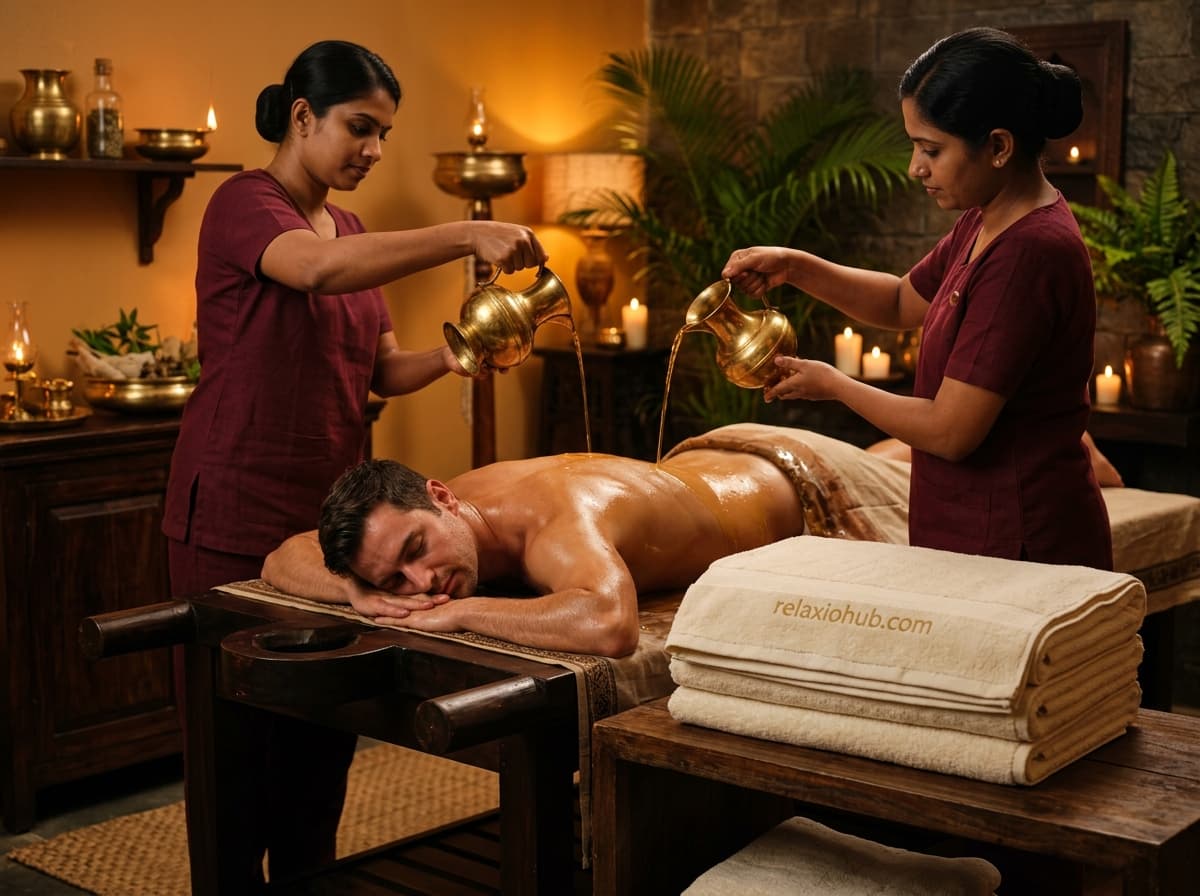
Kerala oil stream ritual
Pizhichil massage — also searched as Kayaseka, Taila Dhara, or Sarvanga Sneha Dhara — is a specialty of Kerala Ayurveda. Warm herbal oil is poured continuously over the body in monitored streams while one or more therapists work with slow synchronized strokes. People look it up when they want something more immersive than standard Abhyanga: the sensation is of being wrapped in moving heat, not simply coated in oil.
The history is rooted in classical Ayurvedic Parisheka Sweda, refined over centuries by Keraleeya vaidyas — physicians of Kerala in South India. In Malayalam, pizhichil means "to squeeze": oil is often held in cloth and released in a controlled stream from a moderate height onto oiled skin. Classical texts describe Sarvanga dhara as full-body pouring; Kerala clinics elevated it into a choreographed treatment performed on a wooden dhara table, sometimes with two to four therapists keeping rhythm together.
What makes Pizhichil exotic is the scale and theater of the oil itself. A single session may use liters of warmed sesame-based or medicated oil. The room smells of herbs and ghee, the table is designed for drainage, and the guest moves through several positions while the streams keep falling. In traditional courses the ritual runs daily for one to three weeks; in international spas it is usually offered as a single 60–90 minute experience — still unmistakably Kerala, still closer to royal body care than to a quick spa oil massage.
At a glance
Process
Professional Pizhichil is timed like a ritual: oil temperature, pour height, and hand speed stay coordinated. If the stream stutters or the oil cools, the body loses the deep warming effect that defines the treatment.
Medicated sesame oil, ghee, or blends such as Ksheerabala or Dhanwantharam are heated to a skin-safe warmth matched to the guest's tolerance.
A light Abhyanga-style pass prepares the skin so the first streams do not feel sharp; head and marma points may receive oil first.
Therapists dip cloth in warm oil and squeeze or tilt vessels so a steady stream falls from moderate height onto the back, legs, or chest.
While oil flows, palms follow with long glides and gentle kneading so heat penetrates rather than simply running off the skin.
The guest turns between supine, side, and seated phases so streams reach shoulders, spine, hips, and limbs evenly.
Pouring slows, blankets may be used, and the body rests so the nervous system settles before standing on the oily table.
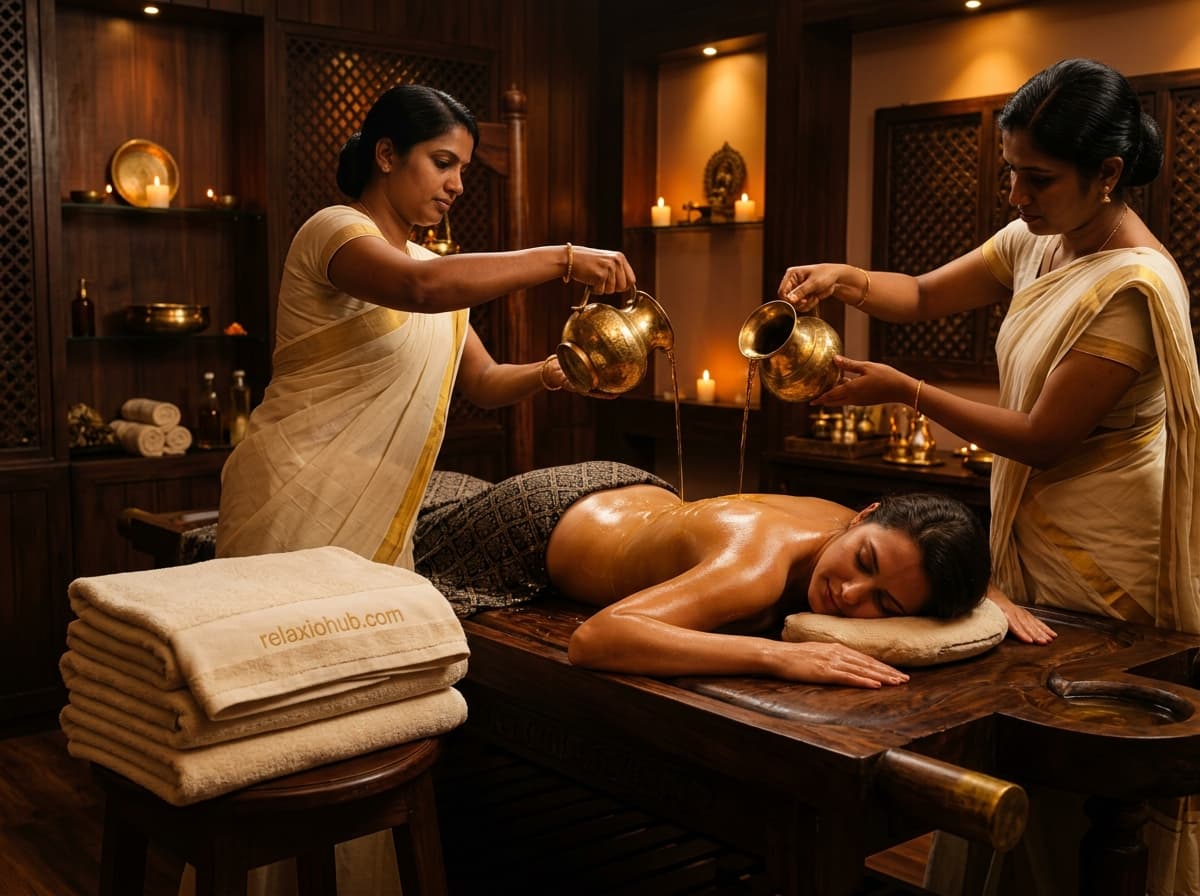
Expected effect
Pizhichil is a wellness ritual rooted in Ayurveda, not a substitute for medical care. Guests choose it for deep warmth, exotic Kerala atmosphere, and the unusual feeling of being immersed in moving oil.
Continuous streams create a sense of total wraparound warmth that a standard table oil massage rarely achieves.
Oil and massage happen at the same time, so heat and manual work reinforce each other instead of arriving in separate phases.
Sesame, ghee, or classical Kerala blends add herb aroma and a ritual quality tied to Ayurvedic body-care tradition.
Steady pouring and synchronized strokes can slow breathing and create a trance-like relaxation for guests who enjoy heat.
Uninterrupted oil flow heats tissue more thoroughly than individual hand passes: warmth accumulates layer by layer instead of dissipating between strokes.
The wooden dhara table, liters of oil, and multi-therapist choreography feel distinctly South Indian — far from a generic spa oil rub.
Timeline
The practitioner asks about heat tolerance, skin sensitivity, nut or sesame allergy, pregnancy, and whether you want a single spa session or Ayurvedic-style course.
You lie on a wooden or adapted table designed for oil drainage; undergarments or draping follow studio policy.
Oil is tested on the hand, then poured over the head, chest, or back in gentle streams while the body adapts to temperature.
One or more therapists alternate pouring and massage across the back, legs, arms, and shoulders through several positions.
Pouring slows, you rest wrapped or draped, and the practitioner explains shower timing, oil residue, and hydration.
Comparison
All three belong to Ayurvedic oil traditions, but the focus and sensation differ.
Pizhichil fits when you specifically want continuous warm oil streams plus massage across the entire body in Kerala style.
Abhyanga is better if you prefer long strokes and kneading without constant pouring from height.
Shirodhara centers on a single forehead stream for mental calm; Pizhichil covers the full body with larger oil volume.
Large volumes of warm oil and sustained heat are not suitable for every condition. Classical Ayurveda also avoids certain stages without preparatory cleansing.
FAQ
It is a Kerala Ayurvedic treatment where warm medicated oil is poured in streams over the whole body while therapists massage in synchronized rhythm — also called Kayaseka or Sarvanga Taila Dhara.
In Malayalam it means "to squeeze", referring to oil released from cloth or vessels in a controlled stream onto the body.
Because of the scale: liters of warm herbal oil, a dedicated dhara table, multiple therapists, and a South Indian royal-ritual atmosphere unlike standard spa massage.
Abhyanga relies mainly on hand strokes with oil. Pizhichil adds continuous pouring from height across the body while massage happens underneath the streams.
Spa sessions often use one to three liters depending on duration and style; classical courses may use similar amounts daily over multiple days.
Most protocols are built on sesame oil — warming, dense, and well-absorbed by the skin — or ghee. Classical Kerala blends include Ksheerabala, favoured for nourishing tissues, and Dhanwantharam, used for warmth and joint mobility support. The choice depends on the guest's needs and familiarity with Ayurveda: sesame and ghee suit most first-time visitors; medicated blends are for those who know their composition. Always disclose sesame, nut, or herbal oil allergy before the session — the practitioner should be able to substitute or advise against booking.
Look for profiles describing Kerala Ayurveda training, oil types, temperature control, allergy policies, table hygiene, and whether they offer single sessions or multi-day courses.
Compare profiles that describe Kerala oil stream rituals, Kayaseka experience, medicated oil blends, allergy policies, and single-session or course formats.