Alternating heel-of-hand tapping
Both palms trade sparkling blows across thighs or erectors; tone stays hollow and resonant, not thudding.
Short rhythmic contacts from the heel or cupped palm wake superficial mechanoreceptors and capillary flow—when the therapist holds tempo and pauses, not just hammers without stopping.
Technique identity
Classic massage curricula classify tapotement—from the French word for drumming—as a family of rhythmic strikes: heel-of-hand alternating taps, ulnar-edge hacking, and hollow cupped-hand clapping that sends bright crisp waves across broad muscles. Sensation skews stimulating rather than deep: the skin and surface fibres respond with warmth and sparkling prickle because rapidly-adapting mechanoreceptors—Pacinian corpuscles in dermis and fascia—fire afferent signals that raise reflex muscle tone in response to phasic pressure.
Studios usually sandwich percussion between warm-up effleurage and a calming close: the intent is alert tone without overwhelming the sympathetic nervous system. Great percussion stays brief, breathes between bursts, and checks in often; runaway tempo without pauses turns relaxation into irritation or lightheadedness—receptors habituate and the afferent signal weakens when rest intervals are skipped.
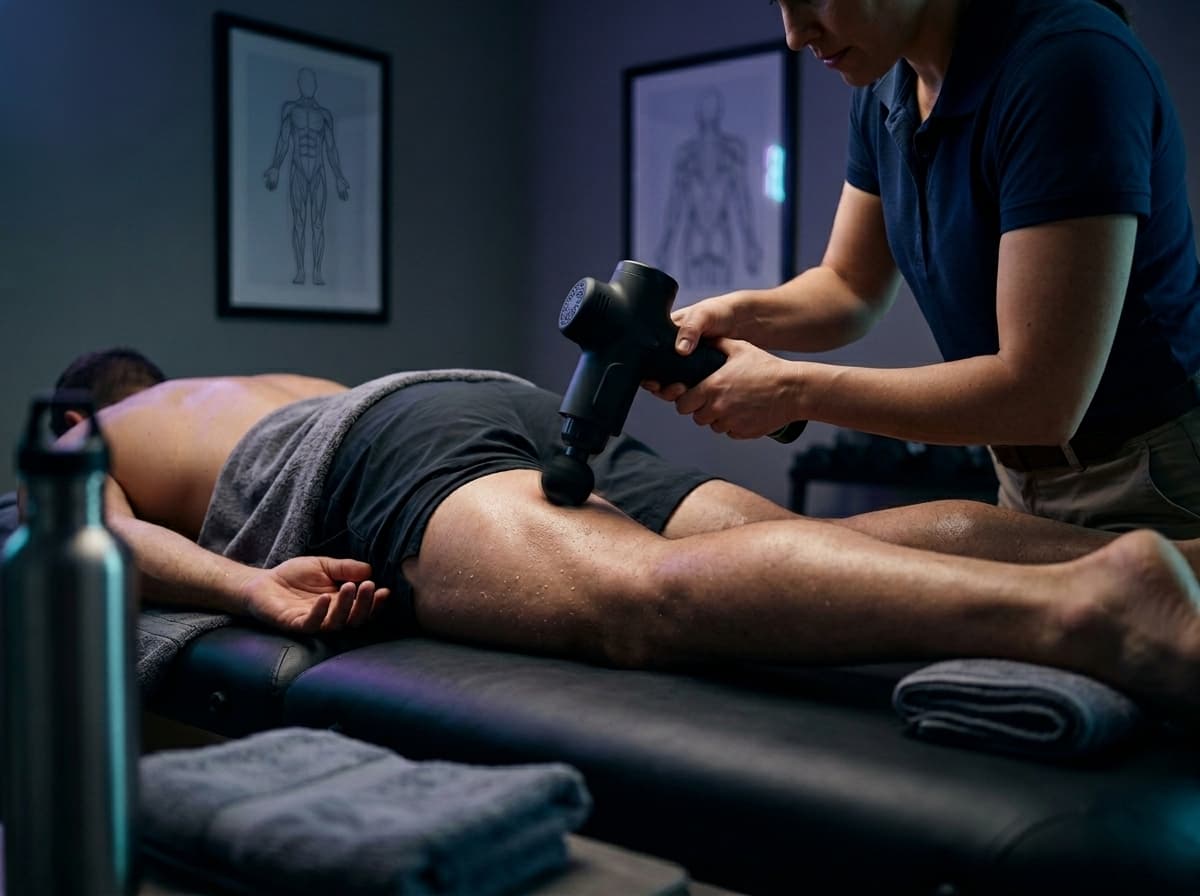
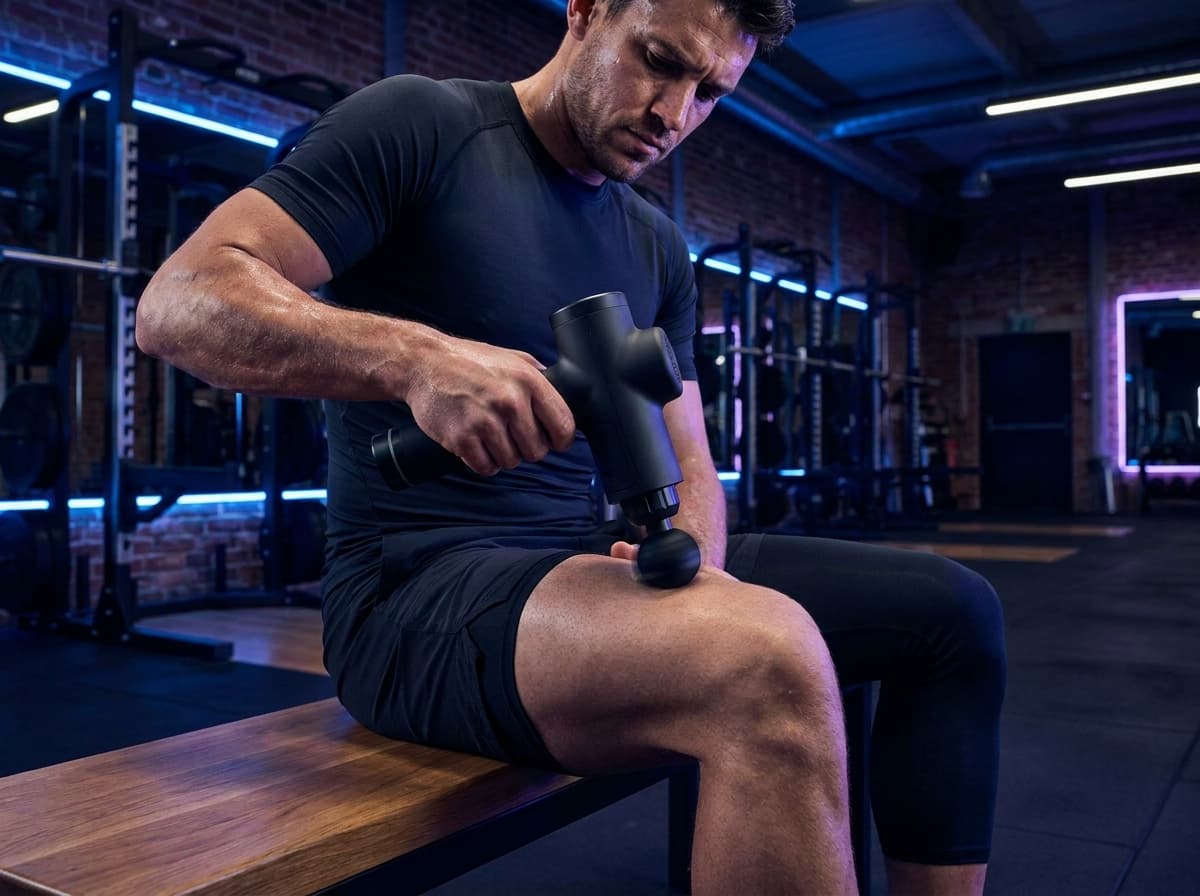
Massage guns and human hands are different instruments: devices deliver fixed-amplitude high-frequency pulses, while therapists modulate angle, pressure, and silence in real time. Neither modality diagnoses pain or breaks chronic adhesions magically—acute inflammation, fever, or fresh trauma rule percussion out entirely.
Snapshot
Technique
Every strike stays low amplitude and cyclic—no throwing body weight like a punch.
Both palms trade sparkling blows across thighs or erectors; tone stays hollow and resonant, not thudding.
Loose wrists drum along long muscle corridors with constant lateral shifting so no single node overheats.
Domed palms trap air for a deeper sonic cushion—still painless, still rhythmic.
Pauses every 20–40 seconds let vessels and nerves rebaseline instead of stacking sympathetic surge.
Long flushing strokes after percussion prevent you from bouncing off the table still buzzing.
Why add it
Outcomes hinge on sensitivity; common reports include perkier muscles and easier deep breaths—not miracle cures.
Rhythm makes muscles feel switched-on—especially after endless desk stillness.
Guests often inhale wider and shrug shoulders freer once the drumming stops.
Ethical pacing alternates bursts with quiet so stimulation stays playful, not assaultive.
Spinous processes, anterior neck, and vulnerable viscera stay outside percussion maps.
Rhythmic compression-and-release cycles briefly widen capillaries—flush of arterial warmth is perceptible during the session and persists 20–40 minutes after.
Pacinian and Ruffini corpuscles in skin and fascia respond to phasic pressure, triggering afferent signals that raise reflex muscle tone without axial loading on joints.
Flow
Effleurage and kneading precede percussion—cold, brittle muscles hate surprise drumrolls.
Short rounds traverse back, thighs, or calves with constant noise/vibration checks.
Slow calming strokes plus hydration reminders before jumping into heavy driving or HIIT.
Choosing the format
Three intents distinct from deep sports stripping.
You crave a wake-up finale across back and thighs—not another hour of whisper-soft spa strokes only.
No acute tear suspicion, yet muscles feel wooden; percussion transitions you toward relaxation without aggressive stretching duels.
You want to feel how therapist-guided rhythm compares with maxed-out massage guns at home.
When unsure, therapists should delete percussion before deleting trust.
FAQ
No. If it feels like sensory overload, ask for softer tempo, smaller regions, or skipping the block entirely.
Devices hammer at preset frequencies; therapists reshape cadence, angle, and idle time based on live tissue response.
Long daily percussion stacks on the same region usually overshoots recovery needs—space sessions and blend modalities instead.
It can lightly prime tissues but never replaces coach-led joint prep or sport-specific drills.
Yes—classic Swedish flows traditionally weave brief tapotement before finishing strokes; booking percussion-forward simply lengthens that accent safely.
Rhythmic contact excites rapidly-adapting mechanoreceptors—Pacinian corpuscles in dermis and fascia—that fire afferent signals raising reflex muscle tone and generating the invigorating sensation. Pacing and pauses are critical: without rest intervals receptors habituate and the alerting effect fades even as tapping continues.
As an adjunct—yes: rhythmic stimulation raises reflex tone and local blood flow in hypotonic areas. But chronic muscle hypotonia needs neurological or orthopaedic diagnosis; massage supports active rehabilitation rather than replacing it.
Therapists
Practitioners across Ukraine who provide this massage type. Choose a specialist and view their profile.
Pick your city and scan profiles for rhythmic technique training, transparent intensity negotiation, and refusal to drum unsafe zones.