Global listening map
Practitioners note breath rhythm, cervical translation, pelvic roll, shoulder blade drift—prioritising what the whole kinematic sentence requests before isolating commas.
Slow-cooked manual work patterned after osteopathic principles—wide listening hands, angled ease positions, diaphragm-quiet finishing—explicitly bounded by massage law: no diagnosing organs, no high-velocity spine pops unless another licence says otherwise.
Word precision
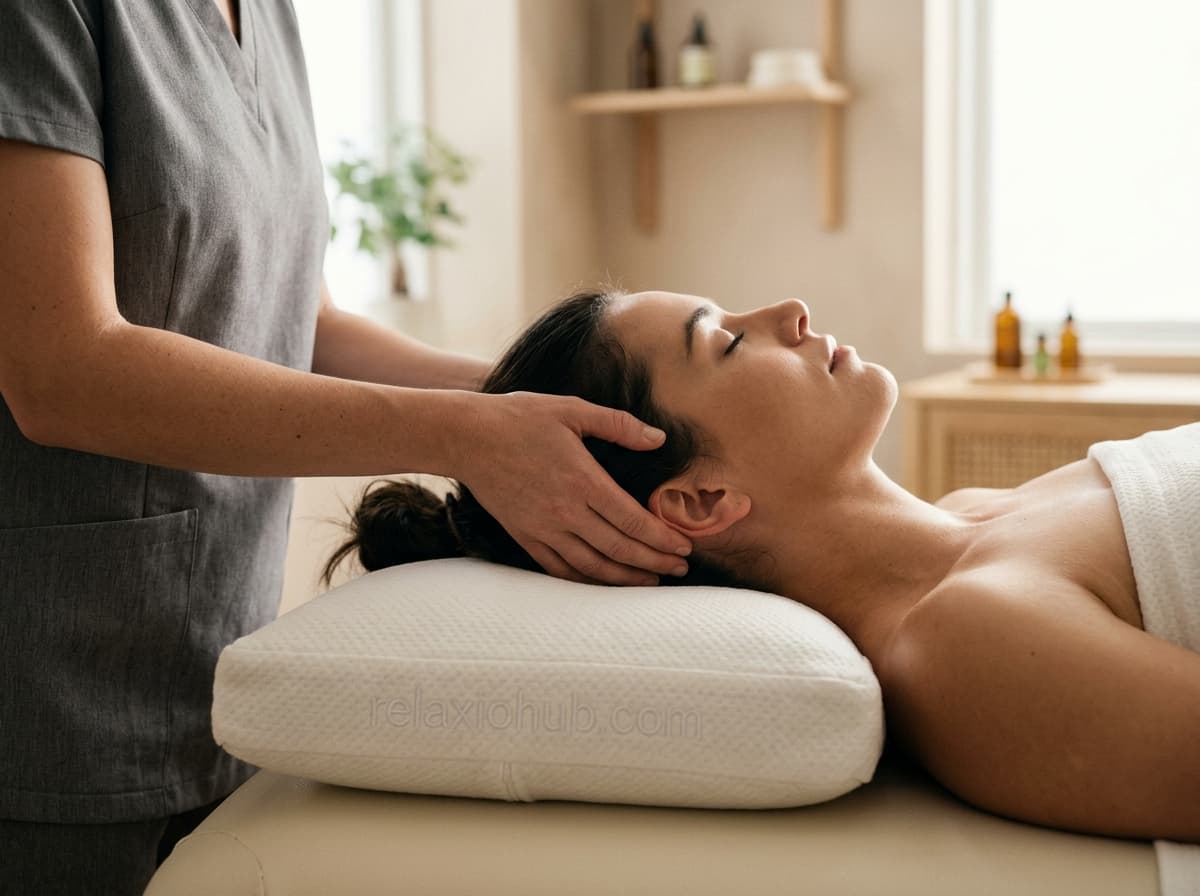
Terms shift by country—in many cities this format denotes gentler osteopathy-flavoured massage: practitioners chase global fascial glide, diaphragmatic buoyancy, and positional comfort before they chase horsepower. Compared with choreography-first orthopedic massage, elbows spend more time coaxing slack into broad sheets—thoracolumbar fascia, iliac sails, cervical anchoring cords—than sprinting tendon frictions.
Sessions often braid palpatory listening, reciprocal-inhibition-inspired pauses where muscles meet at comfortable length, mellow traction at shoulders or hips, and cranial-sacrum-adjacent stillness cues without promising measurable millimetre pulses. Outcomes hinge on physiology plus stress load; visceral diagnoses or skeletal levelling fantasies belong to clinicians with matching credentials.
Where regulation protects the title "osteopath," studio massage marketed this way stays inside soft-tissue scope even when vocabulary borrows from osteopathic textbooks. Fever, neurologic fallout, pulsatile abdominal masses, unexplained thrombotic cues, brittle bones, oncology protocols, unstable pregnancies—all reroute medicine before novelty fascial metaphors escalate.
Snapshot
Toolbox
Stillness recruits change when the sympathetic storm quiets.
Practitioners note breath rhythm, cervical translation, pelvic roll, shoulder blade drift—prioritising what the whole kinematic sentence requests before isolating commas.
Joints slack toward directions of lesser resistance; brief holds invite guarded muscles to liquefy rather than forcibly overstretch.
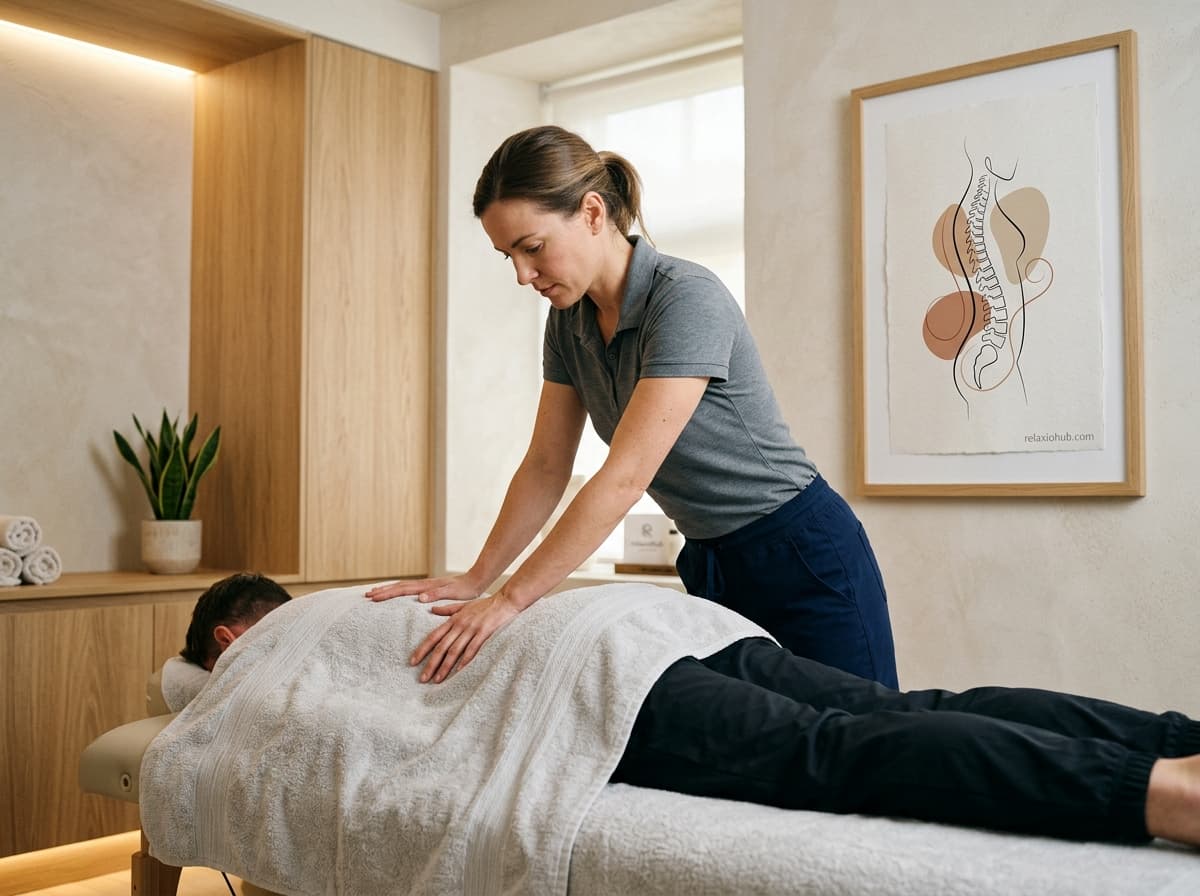
Long oblique strokes link lateral seams to dorsal fascia so adhesions hydrate without punching trigger points competitively.
Rib springing plus calm abdominal pacing coaxes easier inhalation stacks for desk-marinated lungs.
Micro-rocking honours capsular fluid without thrusting—explicitly separating massage scope from manipulative HVLA manoeuvres elsewhere.
Why seekers book
Best for bodies that flinch before depth arrives—paired with pragmatic expectations.
Extended slow contact often lowers vigilant tone so breathing lengthens toward the diaphragm rather than trapping in traps alone.
Gradual ramps help sensitivity-prone nervous systems tolerate more minutes on the table without white-knuckle bracing.
Rib flare, pelvic tuck, cervical forward-head drag may feel less argumentative after fascia-wide balancing passes.
Ethical providers acknowledge when visceral pathology or neurologic escalation demands physicians—not rebranded fluff.
Visit arc
You translate stress loads, migraines, meds, fractures, clot history; therapists explain what they will and will never claim from the couch.
Wide listening strokes deepen only where tissue invites; diaphragm-aware segments interrupt desk collapse patterns.
Quiet closure plus micro homework—breathing drills, gait awareness, ergonomics—not miracle spine alignment TikTok arcs.
Overlap radar
Three contrasts that save budgets and set accurate expectations.
Orthopedic pages spotlight joint arcs, lesion timelines, clinician clearance language; osteopathic-labelled studio work foregrounds fascia continuity, diaphragm tone, indirect ease—even when both modalities share manual overlap.
Craniosacral sessions centre on sacrum-to-cranium stillness as the session axis; osteopathic massage in a studio usually spans broader torso and limb work—compare therapist training and scope before booking purely on name.
Where law protects osteopath titles, physicians or DO-equivalents may deliver thrusts or prescriptions therapists cannot imitate—massage marketing must not blur that firewall.
Quiet hands never veto emergency medicine.
FAQ
Rarely—legal scopes diverge wildly by jurisdiction. Osteopath-designated clinicians may prescribe, image, thrust, or triage visceral pathology. Massage-labelled osteopathic sessions honour soft tissues within statutory limits regardless of poetic marketing.
Not from ethical massage therapists. High-velocity low-amplitude thrusts belong to chiropractors or osteopathic physicians granted that scope. If studios advertise audible pops outside their licence, treat it as an exit cue.
Often gentler cumulative load, yes—but tenderness can emerge when fascia finally releases honesty. Speak up instantly; tenderness should feel tolerable negotiation, not surprise assault.
No guaranteed cures. Breath-and-diaphragm work may soothe discomfort intertwined with posture and stress alongside gastroenterology care—not replace endoscopy verdicts.
Because credentials transparency, escalation policies for red-flag symptoms, and hygiene honesty beat mystic bios promising osteopathic resets without lineage receipts.
Yes, when your physio or rehab clinician confirms soft-tissue massage does not conflict with the protocol. Studio work stays adjunctive—it complements exercise dosing and clinician oversight without substituting it.
Craniosacral work centres on palpating a cranial rhythm at the skull and sacrum, often through prolonged stillness. Osteopathic-styled massage covers broader territory—back, ribs, limbs, fascia—with more movement and breath-driven technique. Both borrow osteopathic vocabulary; compare what a therapist actually does session-to-session.
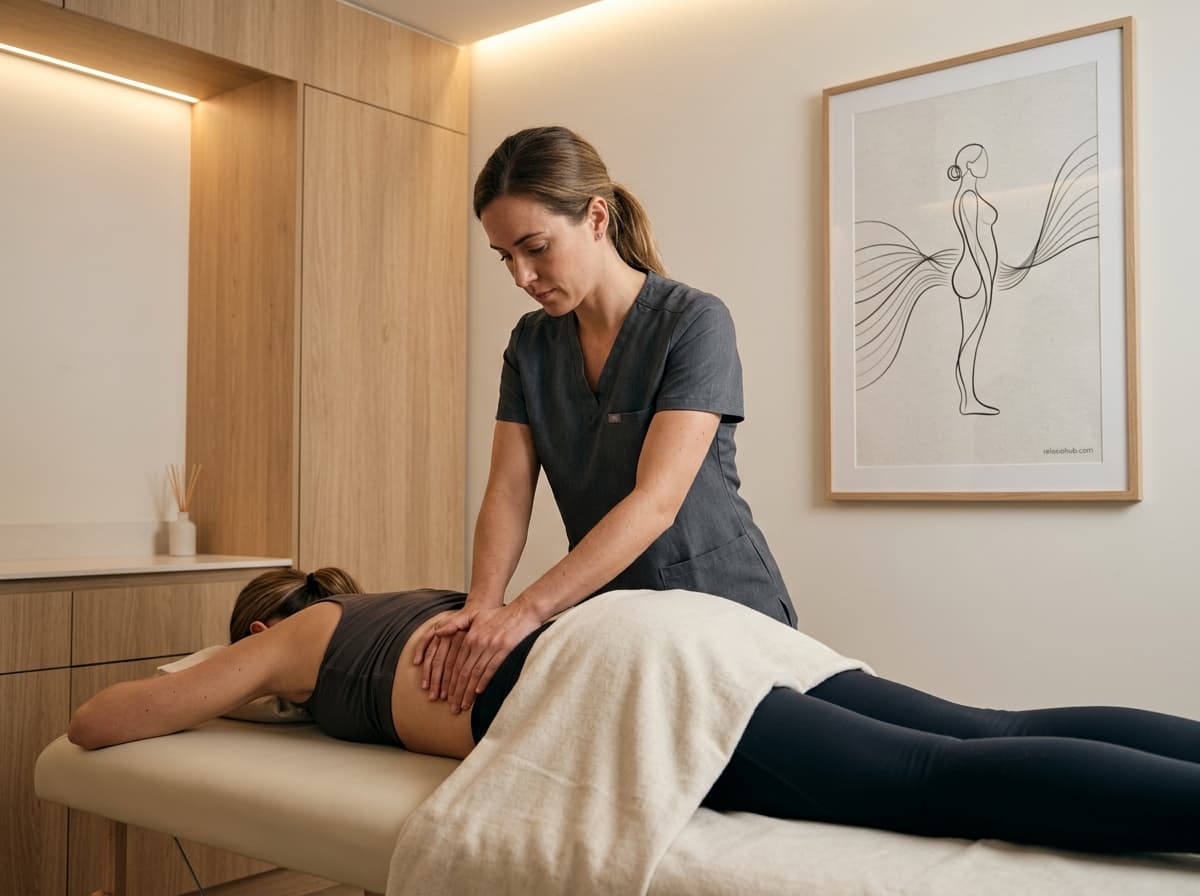
The closing argument is exhale coherence—not how loud fascia gossiped mid-session.
Therapists
Practitioners across Ukraine who provide this massage type. Choose a specialist and view their profile.
Compare training hours, modality honesty, hygiene standards, and escalation policies for neurologic symptoms—then book when narrative and paperwork match.