Assessment of painful ranges of motion
Neck, shoulder, hip joint — the client demonstrates the painful angle of movement: this ties the plan to real discomfort, not to a standardized protocol without assessment.
Soft-tissue work that respects the joints and their range of motion: measured pressure around the shoulder girdle, lower back, hips, or knees — without the theater of “we diagnosed everything without an image.”
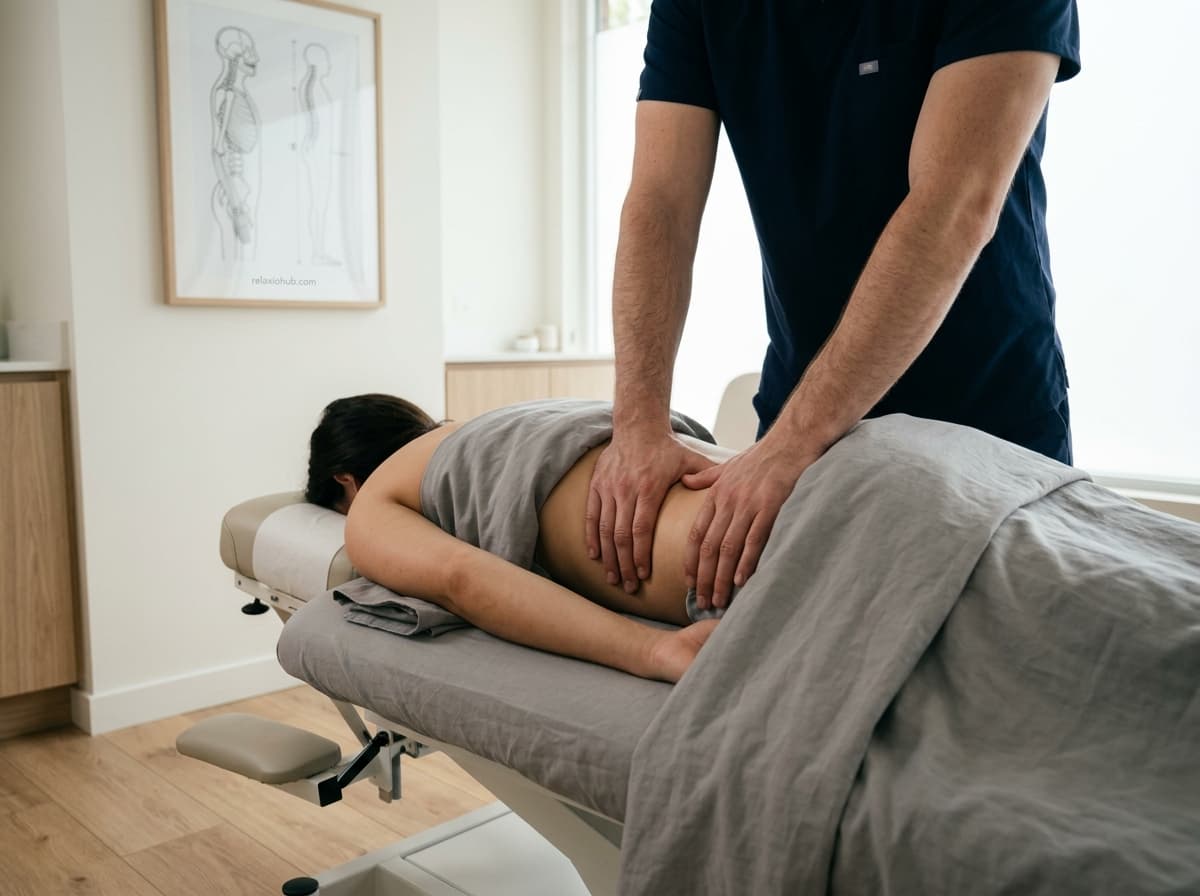
Clarity without advertising fog
In studio practice the word “orthopedic” usually means attentive work with the muscles around the joints — a tense neck after screens, interscapular spasm from low activity, tightness of the hips or calves after a period of limited movement, when the doctor has already agreed to moderate manual help. Unlike a pure wellness format, painful ranges of motion are more often agreed here and a calm pace is kept so the body does not enter protective tension from the first minute.
Typical layers: warming through long sweeping passes; sensing a “map” of tension around the capsule or scapulae; slow transverse or longitudinal shifts of the lower back or calves before deeper contact; careful micro-distractions only where there is no acute inflammation, but without HVLA manipulations, which remain within the competence of a chiropractor or manual therapist.
Easing the sense of mobility between clinic visits is possible; one session does not replace MRI and does not eliminate structural disorders without appropriate medical intervention. Fever, escalating paresthesias, night pain of unknown origin, or new limb weakness — a path to urgent care, not to trigger blocks the same day.
In brief
Techniques
First the tissue's confidence, then precision of contact.
Neck, shoulder, hip joint — the client demonstrates the painful angle of movement: this ties the plan to real discomfort, not to a standardized protocol without assessment.
Slow movement along fascial lines on the back or the lateral surface of the thigh creates micro-heat and reduces the tissue's starting fear.
On tendons, the working arm's elbows, or a tense area of the lower back — the accent is on gliding, not on a push to “rub through to a hole.”
Dosed oscillations within the joint's comfortable range lower protective tone — without forcing movement and without HVLA efforts, which remain in the manual therapist's zone of responsibility.
A few seconds of allowed tension lift the protective “pause” of the nervous system between breaths under the therapist's hand.
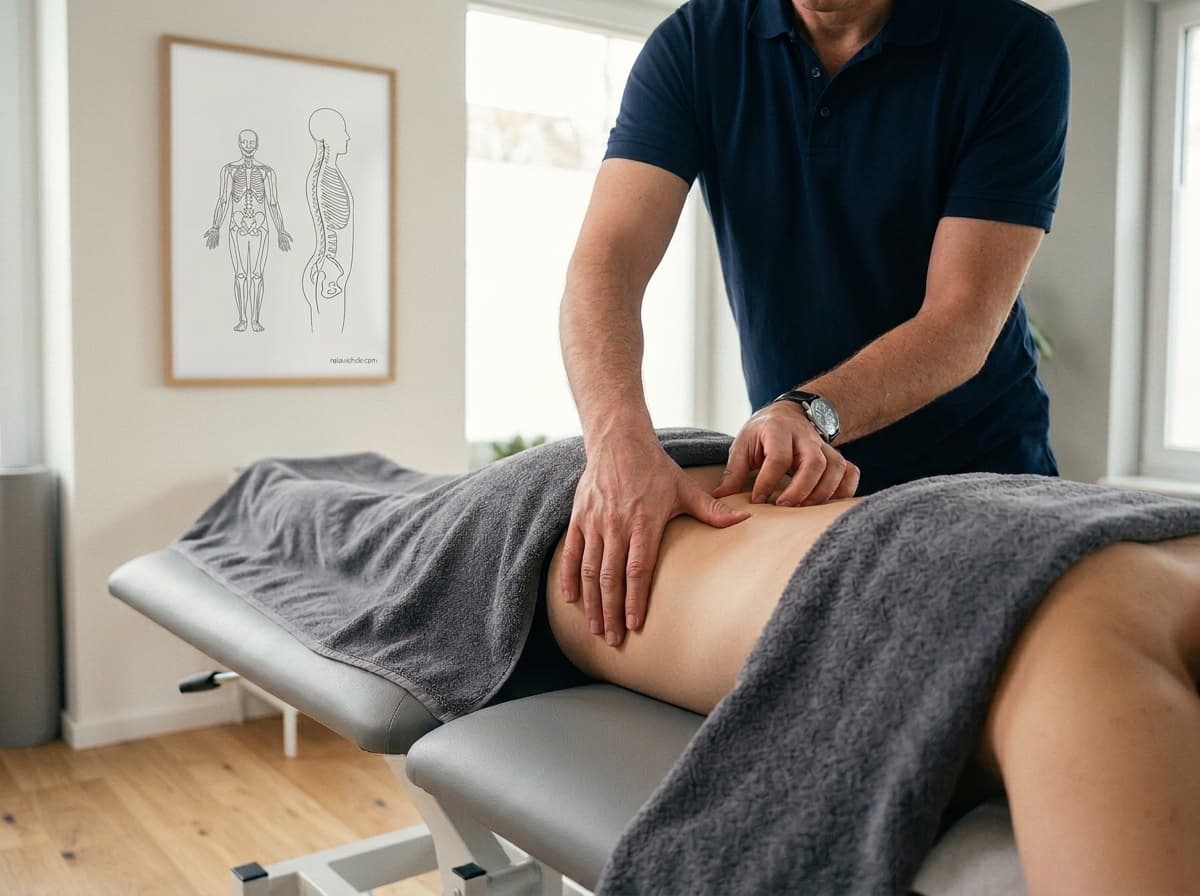
Why this is done
The goal is easier daily life between clinic visits, without the fantasy that hands stand in for an MRI machine.
Turning the head, lifting a bag, or stairs may come more easily — together with movement habits away from the table. The effect is individual and accumulates.
When the doctor has confirmed a conservative regimen and a physical therapist leads the exercises, tidy touch sometimes helps ease protective tension around the joint.
The practitioner says plainly what should not be done and invites you without shame to ask for less pressure at any moment.
Neurological symptoms or a breach of the postoperative regimen — a reason to stop the session and refer to a doctor, not to offer a package.
Course of the visit
Injuries, surgeries, medications, joint braces in sport or at work; a short demonstration of the problem amplitude speaks louder than two Instagram paragraphs.
Broad contact shifts to segments with a live dialogue about depth; no race past your threshold.
Slow calming passes move into calm breathing, a note on exercises, and a direct “if numbness appears — do not wait for the salon's next promotion, call the doctor.”
Not to confuse with neighboring formats
Three landmarks that give clarity before booking.
Therapeutic emphasizes trigger holds or broad softening of tissue; the word “orthopedic” adds agreement of joint checks with the doctor and accounting for traumatic history when all information about injuries and surgeries is transparent.
There they manage the exercise, the pause, and strength metrics; the studio block remains about hands-on comfort when it does not conflict with the protocol.
The sports format bets on competition calendars and resetting volume; your orthopedic request is convenient when the office or daily carrying still hurts even without a medal.
The list is not shortened by asking to book “somehow” on the same day of payment.
FAQ
No. Physical therapy owns skilled dosing and progress charts. Conservative massage can ease tissue and stress between visits, but only as a complement if the clinic has given clear limits of time and zone.
No. Their task is to describe subjective symptoms and refer for red flags without imitating an imaging conclusion. Diagnosis is made by a specialist based on examination.
In practice the overlap is large: both work with pain and protective tone. Additionally the word “orthopedic” emphasizes alignment with a musculoskeletal problem, joint zones, and surgery histories with the doctor's permission.
Only when there is clear permission from the doctor with timelines: which sutures are untouched, what pressure is allowed, which positions are forbidden. Work with implant or graft zones is possible only under a medical protocol, not under advice from social media.
Under pronounced phases it is more usual once every 1–3 weeks; with stabilization the intervals grow. A sharp regression of symptoms moves the booking to the doctor, not into a package with “doubled trigger time.”
Dosed discomfort at the level of “I feel it, but I tolerate it” is acceptable — tissue responds to compression. Sharp cutting or neurological pain that shoots into a limb is a signal to reduce pressure or stop the work. A conscientious practitioner does not earn on your endurance.
There is no clear formula. Acute muscle spasms after overfatigue may respond in 2–4 sessions; chronic protective compensations require a series and parallel measures — gymnastics, ergonomics, work with sleep. A sharp regression of symptoms is a reason to see a doctor, not an extra session.
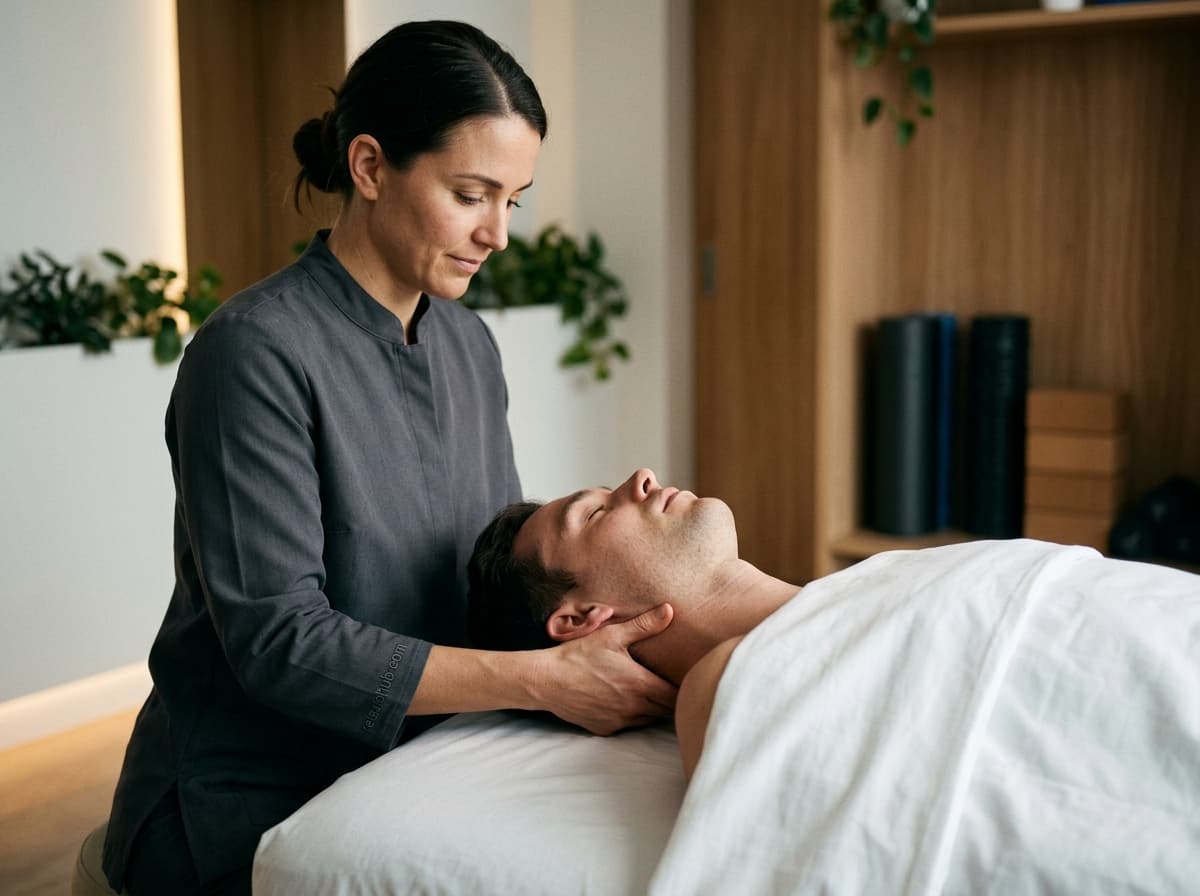
Clean technique is pauses: the therapist slows until confirmation of tissue readiness and respects the joint's limit.
Compare specialists' education, hygiene, readiness to stop the session with neurological symptoms, and transparency without promises to “adjust without MRI.”