Shoulder-girdle mapping
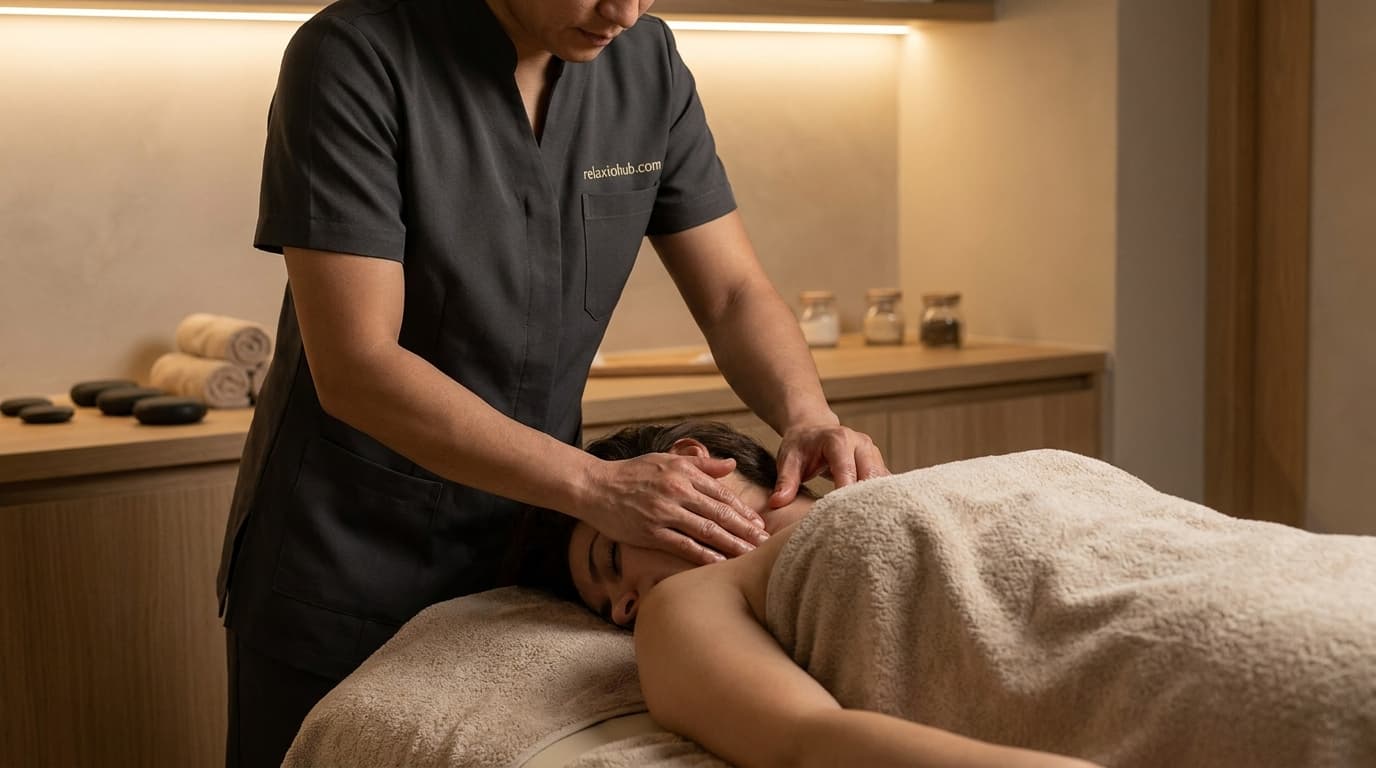
The therapist asks where tension sits, checks comfortable neck rotation and watches whether shoulders creep toward the ears before touch deepens.
Focused work around the upper trapezius, levator scapulae, occiput and shoulder blade edge helps the screen-loaded neck feel less guarded while pressure stays verbal, slow and medically humble.
Upper-body focus
Neck and shoulder massage is a focused upper-body session for the zones that complain after laptop work, driving, stress, awkward pillows or long phone posture: upper trapezius, levator scapulae, suboccipital muscles, the shoulder blade border, pectoral entry points and sometimes the jaw. The levator scapulae originates at the C1–C4 transverse processes and inserts at the medial scapular border—which is precisely why the familiar desk knot forms at the angle between the neck and the shoulder blade whenever the head stays tipped toward a monitor for hours. A good therapist does not “crack the neck” for drama. They warm broad tissue first, ask about arm symptoms, then narrow into knots only after your nervous system stops bracing.
The historical roots are not one branded invention. Manual work on the neck and shoulder girdle appears inside classic massage systems shaped in the 19th century, when Swedish movement ideas and Johan Mezger’s named strokes—effleurage, petrissage, friction and tapotement—gave European soft-tissue work a shared vocabulary. In the 20th century, physiotherapy, sports massage and myofascial trigger-point language added more precise ways to describe tender bands, referral patterns and posture-related overload.
Cervicogenic headache is one reason why the neck and shoulder zone deserves more than routine kneading. C1–C3 afferents converge with trigeminal input at the trigeminocervical nucleus in the brainstem—a recognised mechanism by which upper trapezius trigger points can project pain to the temporal region and behind the eye, mimicking migraine or tension-type headache. Massage may ease short-term stiffness for some people, but sudden severe headache, arm numbness, weakness, trauma or new neurological symptoms signal a medical evaluation, not deeper pressure.
Before booking
Technique
The best sessions build trust from broad warmth toward precise pressure, never from surprise thumb digging near nerves.
The therapist asks where tension sits, checks comfortable neck rotation and watches whether shoulders creep toward the ears before touch deepens.
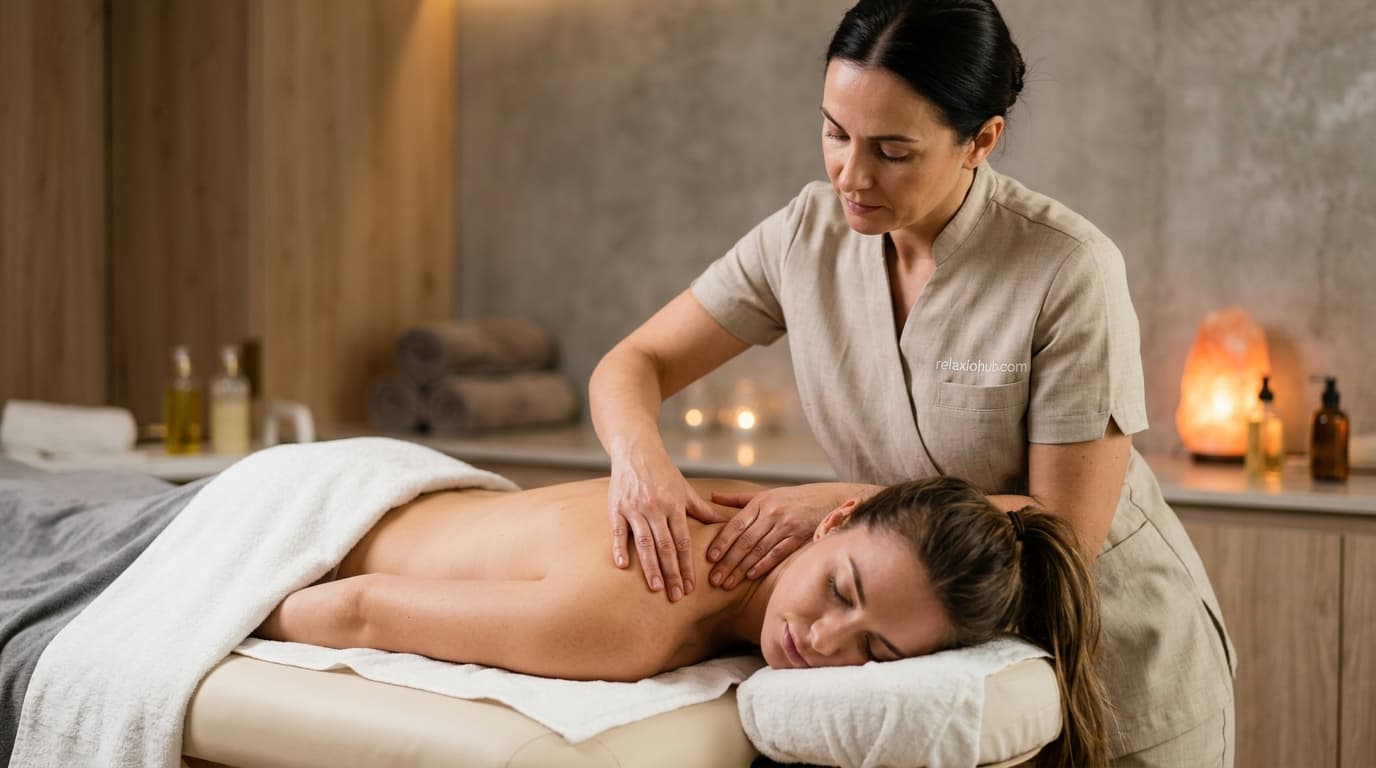
Palms and forearms spread warmth across the upper back so the neck stops guarding against every smaller contact.
Slow compressions trace the angle between neck and shoulder blade; you may feel a familiar desk-knot soften without sharp stabbing.
Gentle fingertip support under the skull gives the base of the head time to release without yanking or forced rotation.
Light chest-wall work and exhale pauses help shoulders settle back instead of only attacking the sore top surface.
A small turn of the head or shoulder roll confirms whether pressure helped, irritated tissue, or needs to be scaled down next time.
Why book it
The honest promise is better comfort and body awareness for selected tension patterns, not a cure for neurological disease.
Slow kneading may reduce the clenched “shoulders at ears” feeling after long screen blocks.
When tissue calms, checking blind spots or looking over a shoulder can feel less sticky for some guests.
Exhale cues help the rib cage and shoulder girdle stop acting like one locked defensive plate.
Focused upper-body time interrupts the habit of carrying the day in the neck without needing a full spa ritual.
Good therapists let you choose light, medium or deeper work instead of proving skill through bruising.
Screening for numbness, weakness, trauma or new severe headache protects you from unsafe deep work.
Session flow
You mention trauma, headaches, arm tingling, weakness, dizziness, disc history, blood thinners and pressure preferences before touch begins.
Side-lying, prone, seated or supported supine work may be chosen so the neck is not twisted just to fit a table routine.
Upper back, shoulders and chest entry points receive slower contact before the therapist narrows to small tender bands.
The session closes with gentle holds, shoulder rolls or breath cues, then a slow rise so dizziness does not surprise you.
Choosing the right format
The name matters because searchers often need the upper quarter, not a generic full-body appointment.
This format spends the budget where desk strain usually sits: upper traps, levator scapulae, occiput and shoulder blades.
Head massage can include occiput and temples, but it may not spend enough time on the shoulder girdle and upper back.
Deep pressure near the anterior neck, scalenes or nerve symptoms is not automatically better; screening decides intensity.
The neck is close to nerves, vessels and airway structures. Some symptoms should leave the spa format immediately.
FAQ
It can help some people feel less stiff for a while, especially with posture breaks and movement. It does not permanently reverse posture by itself.
Sometimes guests feel relief when neck and jaw tension calm down. New, severe, feverish, neurological or positional headaches need medical evaluation first.
Not automatically. Medium sustained pressure often works better than painful digging, especially near nerves and the front of the neck.
Yes. Many therapists offer a focused upper-body or chair-style format, but confirm whether it includes upper back, chest entry points and scalp.
Tell the therapist before booking. Tingling, numbness or weakness can signal nerve involvement and may need medical screening before massage.
For ordinary desk tension, many people start every 2-4 weeks and adjust based on response, ergonomics and self-care habits.
No. High-velocity neck manipulation is not ordinary massage and should not appear as a surprise inside a neck-and-shoulder session.
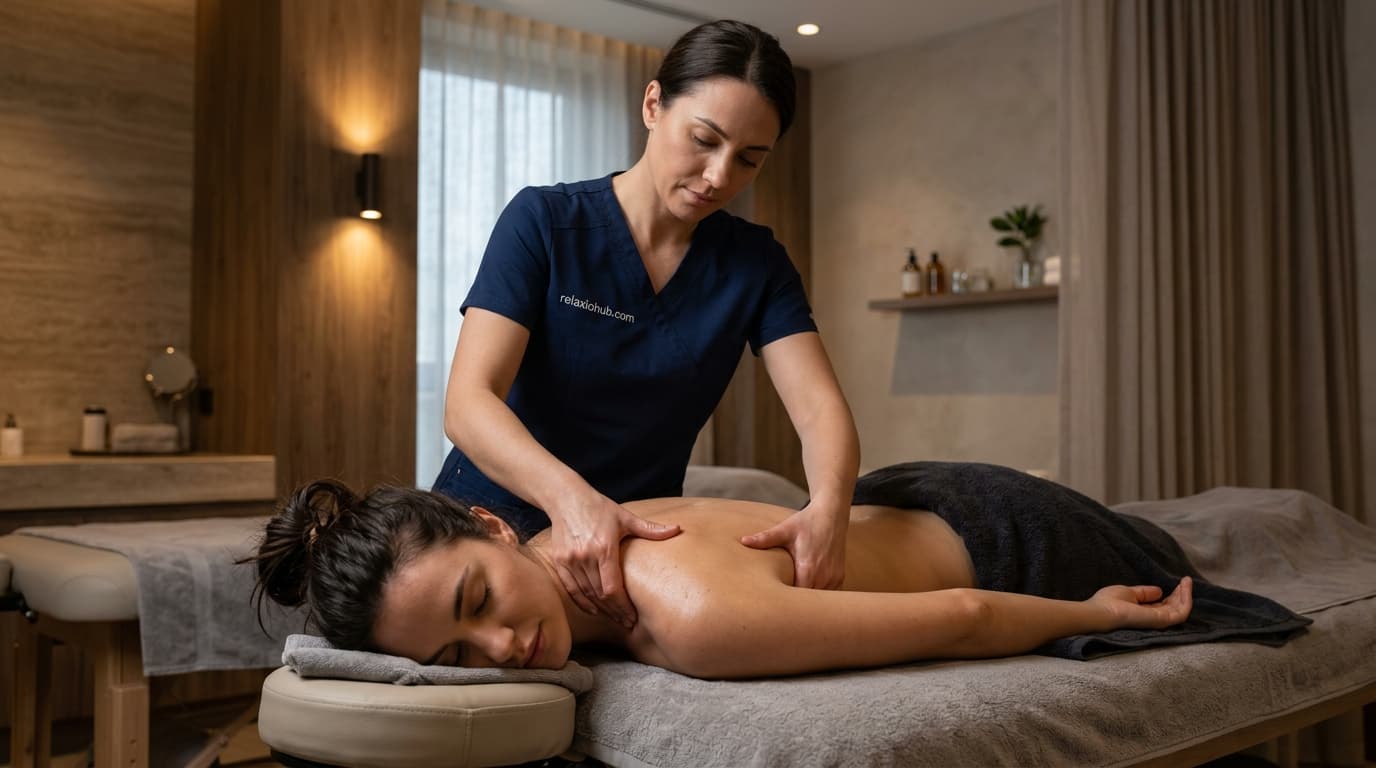
The right pressure feels specific, warm and negotiable—not like a nerve being chased for sport.
Therapists
Practitioners across Ukraine who provide this massage type. Choose a specialist and view their profile.
Альона
Тетяна
Василина
Iлона
Оксана
Віктор
Ірина
Марина
Ольга
Ксенія
Марія
Катерина
Choose your city and compare profiles for focused upper-body timing, pressure style, red-flag screening, oil or dry format, and experience with desk-related tension.