Mapping + verbal contracts
The field of play and hold length get named so surprise doesn't spike protective tension.
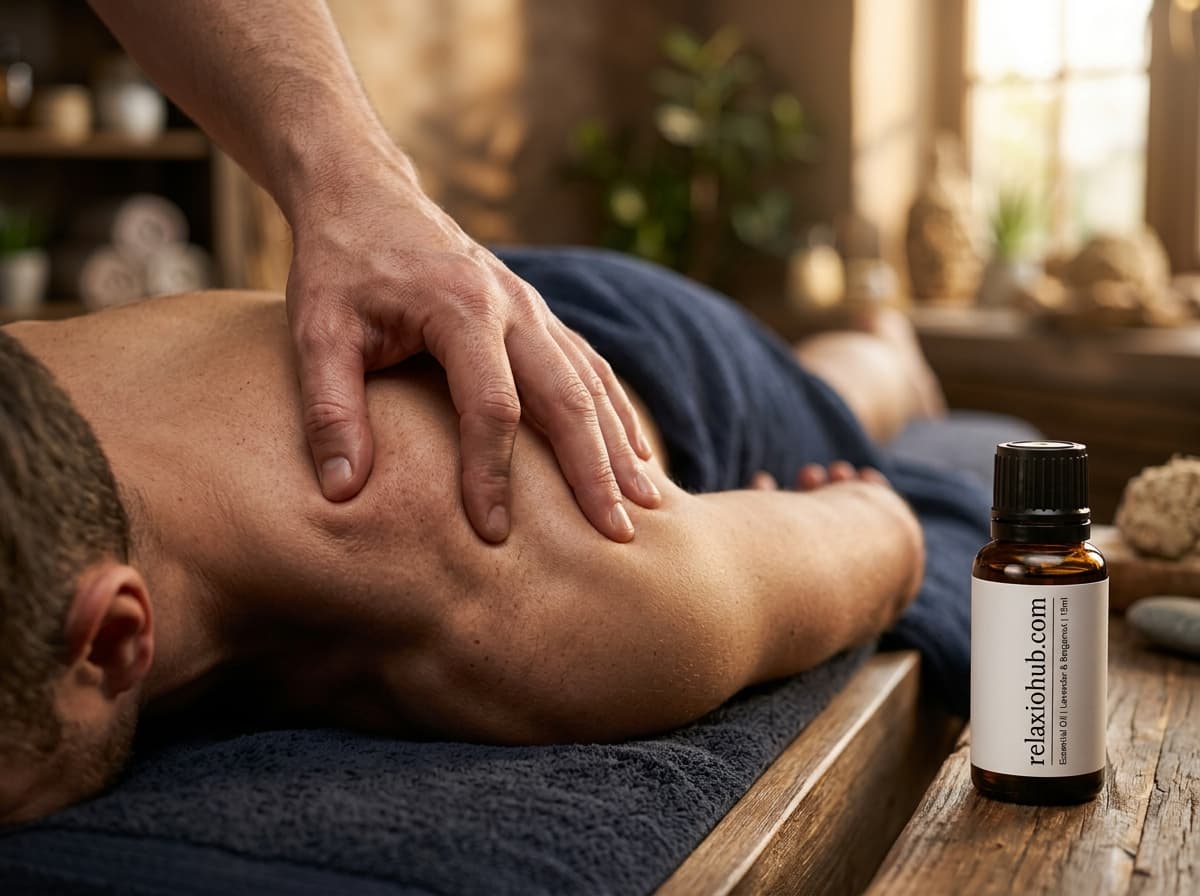
Hands or forearms meet skin with lengthening traction instead of hurried stripping: warming pressure that invites breath and honest depth checks—SPA wellness choreography, not a substitute for diagnosing spine or nerve issues.
Intent behind the search
Guests type "myofascial" when desk posture leaves their glutes numb, traps feel laminated, or stress locks the jaw. In a calibrated session the therapist ramps pressure gradually, minimizes snapping transitions, and syncs cues so you steer with words plus breath—turning the nervous system down instead of surprising it.
Compared with classic relaxation massage, expect fewer rapid-stroke cycles and more sustained contact around an achy neighborhood. Versus our deep-tissue SEO explainer, spa myofascial sessions usually avoid immediately attacking entire muscle slabs with abrasive friction—they linger where restriction patterns show up even though lineage designations blur between schools.
Expectations stay grounded: chronic pain rarely disappears forever after one visit. Mobility ease, softened tightness belts, or calmer fascia stories may last days depending on hydration, sleep, workload, and tissue sensitivity. Any claim to cure discs or mimic medical PT should raise eyebrows.
Snapshot
Technique
Names vary; your body mostly notices tempo and consent.
The field of play and hold length get named so surprise doesn't spike protective tension.
Subtle compression invites ribs, hips, or ankles to redistribute effort while you exhale longer.
Tiny arcs keep superficial layers engaged without hair-trigger snaps.
After a focal window, work may continue down a thigh or abdomen when tension feels linked—common in experienced hands.
Broad calming passes or a warm towel temper rebound tightness after long stillness.

Why book
Subjective ease stories without guaranteed clinical outcomes.
Great when you historically chase aggressive work and want a different nervous-system script.
Practitioners who respect numeric comfort scales build trust faster than ego contests.
Neighboring joints sometimes feel freer—always individual.
Pros decline when acute neuro red flags appear undocumented.
Flow
Unstable blood pressure, suspected clots, or fresh trauma change the green-light map.
Short engagements preview how tissue tolerates slow depth before the main chapter.
Hydrate normally, stroll gently, and postpone PR gym nights if the area feels cooked.
Choose intentionally
No universal winner—intent matters.
Myofascial suits many hypervigilant clients who crave grounded contact instead of flashy percussion.
Compare sports or deep-tissue listings—those sessions may satisfy the itch faster.
That belongs in medical lanes first; SPA massage neither diagnoses nor clears it.
Slow does not equal risk-free.
FAQ
Spa descriptions usually emphasize lengthening holds instead of brisk cross-fiber stripping across whole muscle bundles. Expectations for next-day soreness differ, yet both can be intense when consent is ignored—voice your scale early.
Discomfort can exist but sharp nerve pain is not the goal. Gentle next-day heaviness is common; lightning zingers or spreading numbness are not trophies—get evaluated.
No. Studios lack the diagnostic scope of licensed PT plans. If your physician prescribed a technique, align outside this marketplace.
Some clients feel satisfied after one grounding visit; others stack cadence collaboratively. Beware hard-sell medical package counts.
Look for training receipts, refusal scripts for neuro red flags, and transparent talk about flare risk versus wellness-only outcomes.
Fascial matrix behaves like a thixotropic fluid: sustained slow load and warmth reduce its viscosity, making tissue more pliable. Abrupt fast strokes do not allow this transition—that is why rushing collapses the myofascial promise. For massage students and practitioners, thixotropy explains why 'slow' is not about the therapist's work rate but about the physical response properties of connective tissue itself.
Stretching and yoga work muscle length through active or passive traction; foam rolling is self-applied compression across a whole tissue layer. In skilled myofascial work, a therapist adapts depth, direction, and hold in real time to individual tissue feedback—something tools and passive loading cannot replicate. For students entering bodywork training, that responsive dialogue is the distinguishing skill to develop.

Long holds read in steady wrists and the absence of jerky shearing—stability, not speed, sets the tone.
Therapists
Practitioners across Ukraine who provide this massage type. Choose a specialist and view their profile.
Filter for slow-protocol experience, honest next-day pain talk, and profiles that decline work when nerve warning signs appear.