Warm oil preparation
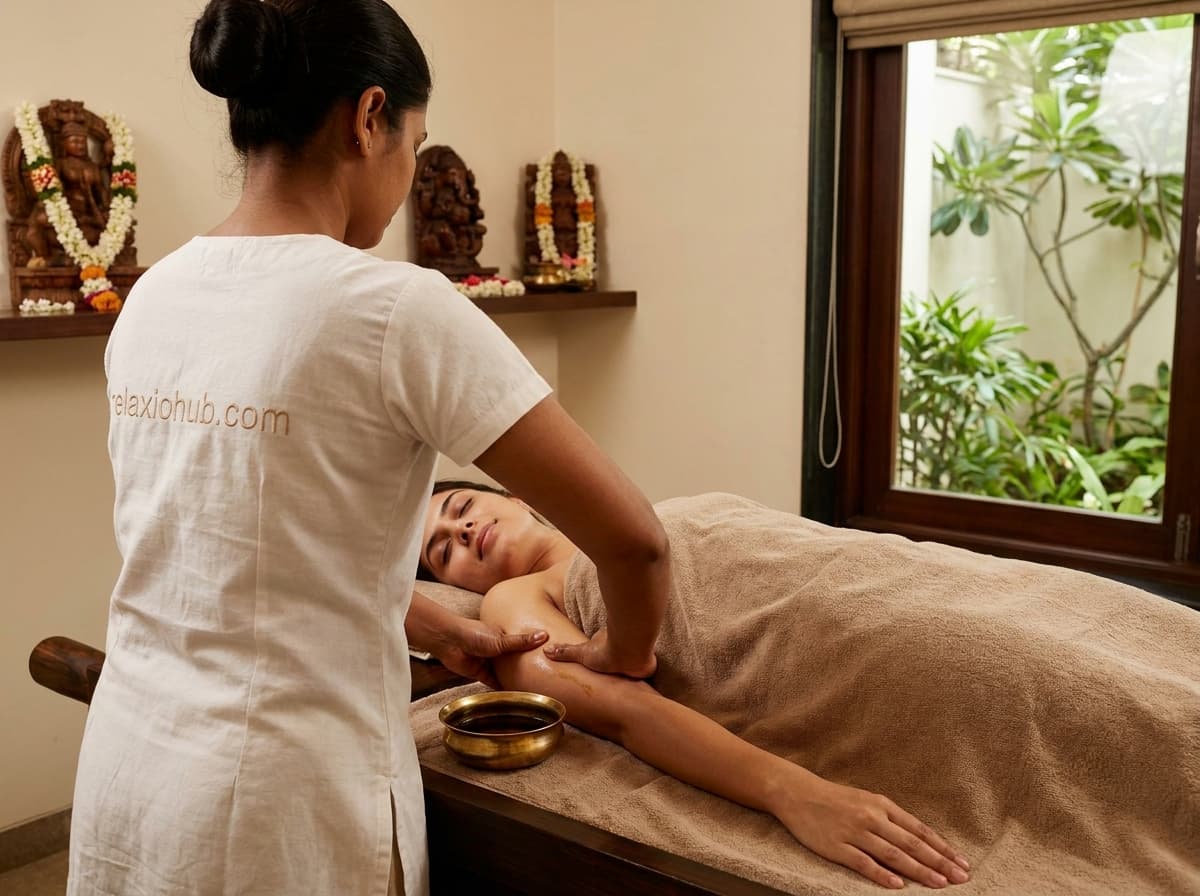
The therapist applies warm oil in broad, even strokes — skin softens, glide increases, and the subsequent point contact sinks in rather than drags. You feel steady heat spreading before any focused work begins.
Ayurveda-informed point work: gentle fingertip pressure, warm oil, and deliberate pauses — for those who want a precise ritual, not a forceful deep-tissue session.
Massage overview
Marma massage is an Ayurveda-informed session built around specific sensitive zones of the body. The therapist settles a thumb or finger pad onto each point and holds steady, light-to-moderate pressure — enough for you to notice a pulse of warmth or a small release in the tissue. Warm oil slows the contact and reduces drag; quiet pauses between points give the nervous system a moment to register the signal. It feels precise and localised, somewhere between warmth, a faint throb, and the sense that the right spot has finally been reached.
Classical Ayurvedic sources, especially the Sushruta Samhita, describe 107 marmas as anatomical sites where five structures converge: muscle (māṃsa), vessels (sirā), ligaments (snāyu), bones (asthi), and joints (sandhi). Sushruta ranked them by clinical severity — sadya-prāṇahara marmas were considered immediately life-threatening if injured; tulya-prāṇahara serious but survivable. Ayurvedic surgery mapped its incisions around these zones with the same caution a modern surgeon uses around major vessels. Contemporary wellness sessions borrow that respect for sensitive anatomy; they do not borrow the authority to diagnose or treat.
On a first visit, expect the therapist to clarify which zones you want addressed, choose an oil suited to your skin, begin with broad warming strokes, then move into targeted point work. Shoulders, the base of the skull, hands, feet, and scalp are common focus areas — places where the body tends to store the residue of a long workday. The session should leave you calm rather than sore or overstimulated. Any sharp, nauseating, or bruising sensation is a signal to ease pressure or stop.
At a glance
Technique
These five steps form a deliberate sequence: oil opens the skin for contact, fingertip pressure works inward, small circles spread the sensation, a broad palm hold settles the area, and a quiet pause lets the nervous system absorb each signal before the next point begins.
The therapist applies warm oil in broad, even strokes — skin softens, glide increases, and the subsequent point contact sinks in rather than drags. You feel steady heat spreading before any focused work begins.
A thumb or finger pad settles onto a small zone and holds even pressure — just enough for you to notice a pulse of warmth or a slight deepening of breath. That moment of focused attention is the core of marma work.
Tiny circles two to three centimetres wide gradually spread warmth outward from the point. The effect is most vivid at the base of the skull, temples, the centre of the palm, and the arch of the foot.
After point work, a broad palm rests over the area for a few seconds of even, calm contact. Without this step, transitions between points feel abrupt; with it, the session keeps a single, coherent rhythm.
Brief stillness between zones is not dead time — it is when the nervous system processes the previous signal. A rushed marma session loses precisely the quality people book it for.
Effect
Keep expectations realistic: the session can be calming and give precise body contact, but it is not a substitute for medical care.
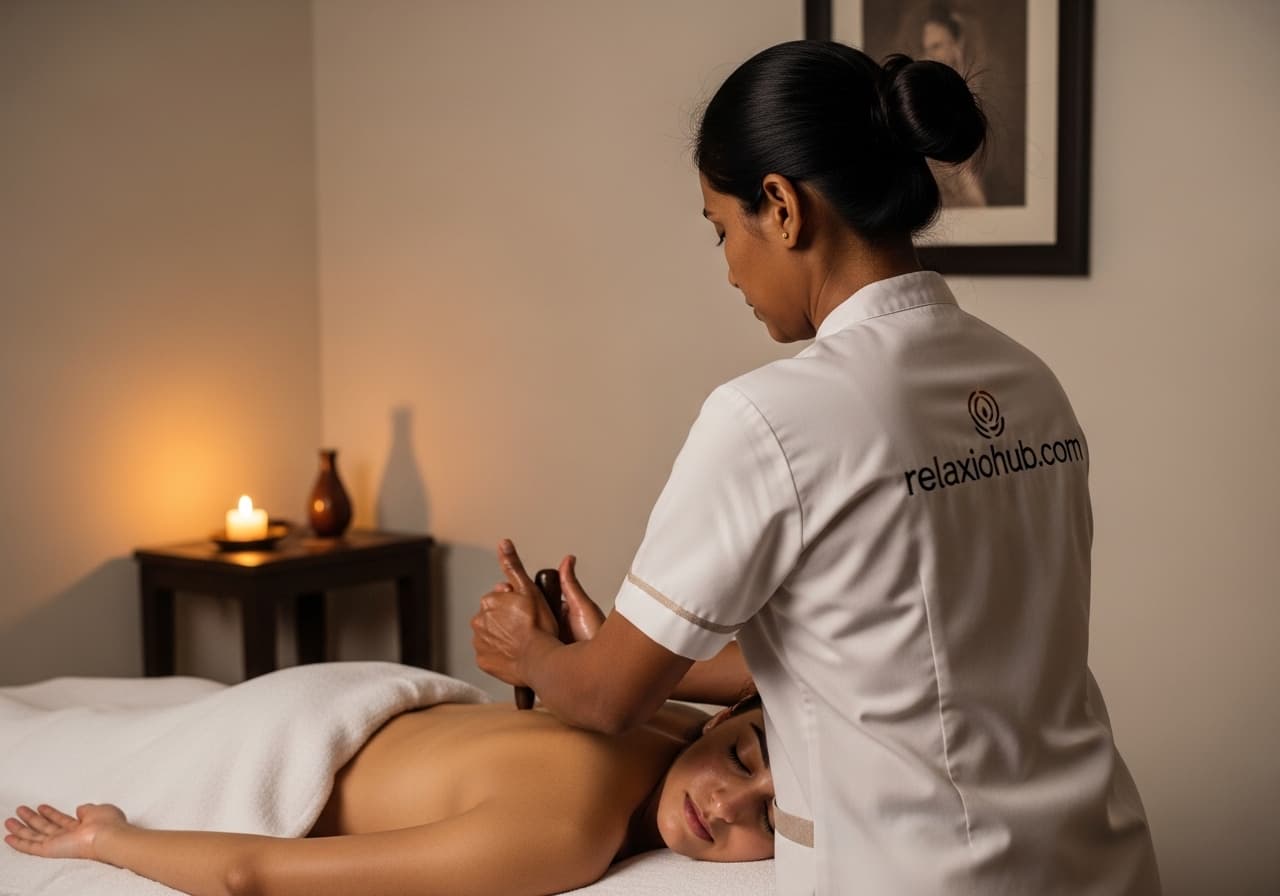
You feel the therapist working the specific places holding tension — jaw, base of skull, hands, feet — rather than a general sweep across the body.
Marma points are treated as sensitive sites, so a good therapist reads your breath and tissue reaction before going deeper — not their idea of the right amount of force.
Soft holds and deliberate pauses shift the body out of workday pace. Most clients notice their breath becoming deeper within the first ten minutes.
Point work makes it easier to notice precisely where you carry tension. That awareness often lingers for several hours after the session ends.
If hard trigger-point pressure causes discomfort or bruising, marma gives you focused work without aggressive digging.
Warm carrier oil deepens the tactile contact and makes the session feel grounded — noticeable especially on dry or sensitive skin.
Process
The therapist asks about allergies, skin conditions, pregnancy, nerve symptoms, recent procedures, injuries, and pressure preferences — before any contact.
A neutral or Ayurvedic-style carrier oil is chosen, then broad warming contact prepares the tissue and gives the therapist a sense of where tension is sitting.
The therapist moves through selected points with soft holds, small circles, and calm transitions. If a zone feels particularly sensitive, the protocol adjusts in the moment.
A few minutes of quiet grounding or towel-off close the session. Stand up slowly — sustained point work can produce deep relaxation or brief light-headedness.
Choose wisely
These formats share an atmosphere but differ in what actually happens under the hands. If you want specific point work, understanding the distinctions helps you book the right session.
Abhyanga is full-body oil flow built on long, rhythmic strokes. Marma pauses at individual points, holds pressure, and rests — more attention per zone, less continuous glide.
Acupressure often uses firmer sustained pressure along meridian logic. Marma in a spa setting is gentler and more ritual-paced: oil, slow tempo, pauses — without the sharp 'found-it' sensation.
Reiki may involve little to no physical pressure. Marma massage is tactile throughout: fingers, palms, warm oil, and visible point contact — you feel every move, not just the presence of hands.
Because marma points are treated as sensitive anatomical sites, conservative boundaries protect both the client and the therapist.
FAQ
Marma massage is Ayurveda-informed point work using gentle pressure, warm oil, and pauses around anatomically sensitive body zones. In a wellness studio it should be calming bodywork, not medical treatment.
The Sushruta Samhita describes 107 marma points classified by tissue type — muscular, vascular, ligamentous, bony, and articular. A spa session will not work every point; the therapist selects zones relevant to your needs and session length.
It should not be. You may feel focused pressure, localised warmth, or a faint pulse. Sharp, electric, nauseating, or bruising sensation means the therapist should ease off or stop immediately.
Abhyanga is primarily long flowing oil strokes across the whole body. Marma massage adds stops at specific points, pressure holds, and pauses — more targeted attention per zone, less continuous movement.
No wellness session should promise cures. Marma massage may support relaxation and body awareness, but diagnosis and treatment belong to qualified clinicians.
It depends on the studio. Oil-based sessions use draping on the areas being worked, while point work on the face, head, and hands can often be done through light clothing.
Ask which body zones are included, what oil is used, how firm the pressure is, and whether the therapist adapts for migraines, skin sensitivity, pregnancy, or recent procedures. Specific, direct answers are a better sign of quality than vague references to experience.
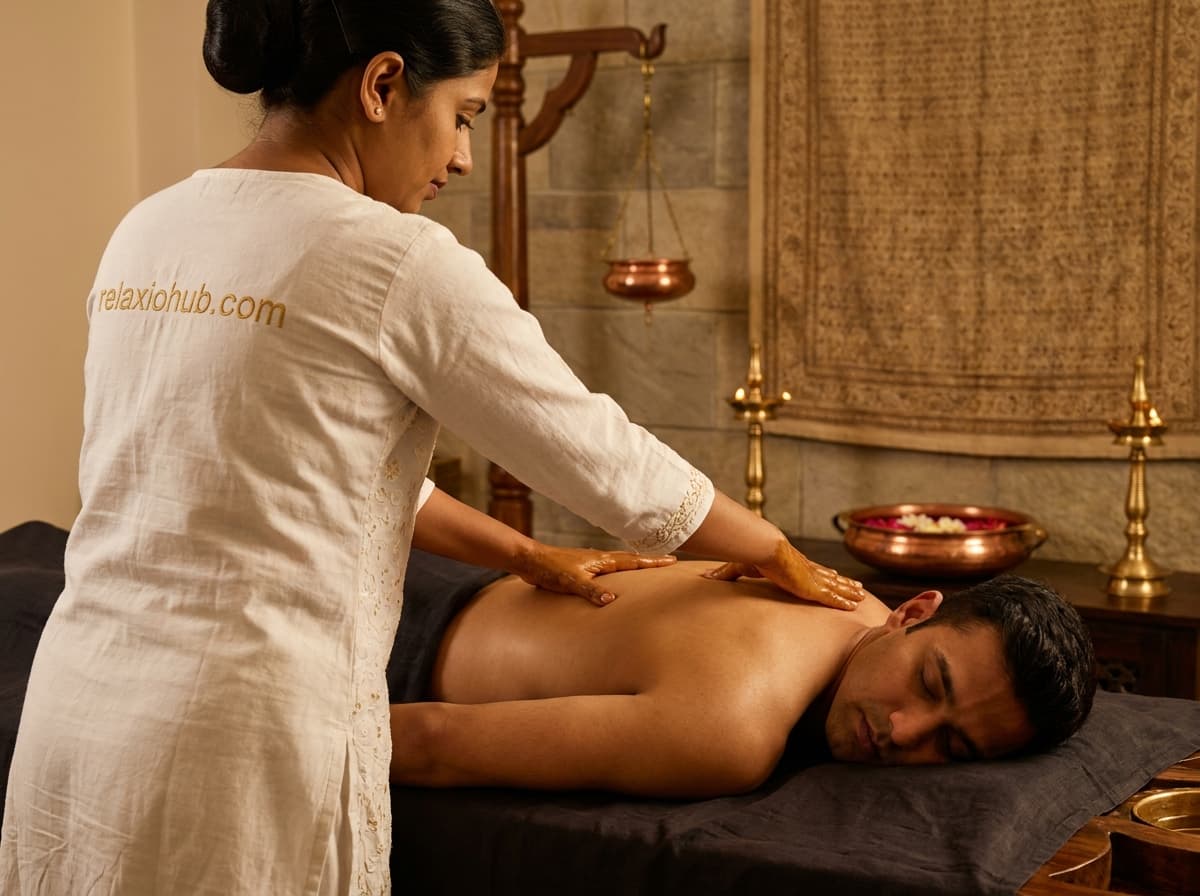
Good marma work is precise but quiet: the therapist reads breath, tissue, and your words before adding pressure.
Look for a practitioner who names Ayurvedic point work or Marma training specifically — not just 'Ayurveda' listed among ten other services. A reliable sign: they ask about oil allergies and contraindications before you arrive.