Temperature check
Before touching the back, the practitioner checks the shell on their own hand and asks about your sensitivity to heat.
Lava Shell massage uses smooth warm marine shells instead of stones: the practitioner glides them over the back, shoulders, legs, and arms, dosing temperature through slow passes and creating a tropical warmth ritual without harsh pressure.
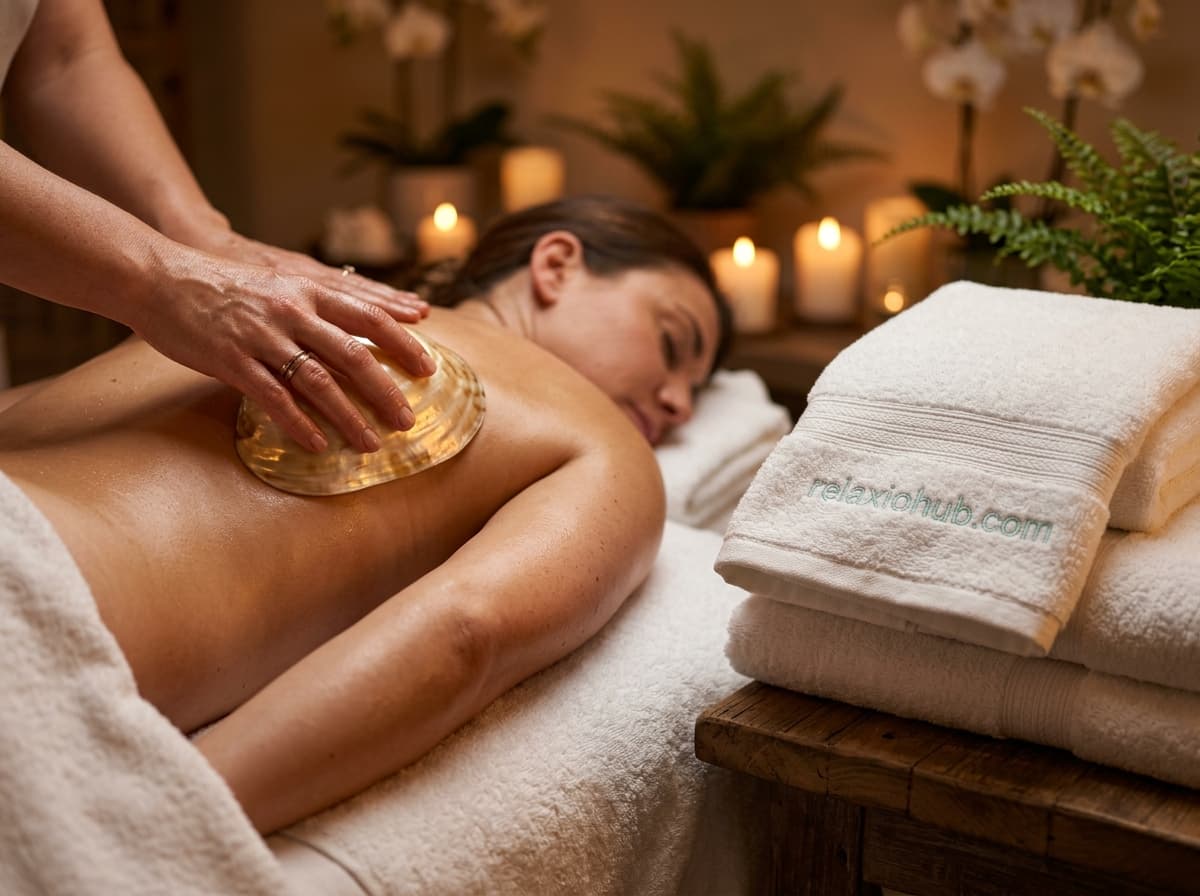
Tropical warmth
Lava Shell massage is a heat-based spa massage where the practitioner works not with basalt stones, but with smooth marine shells. A shell sits in the hand like a natural tool: its rounded edge glides over large muscles, the narrower side works near the shoulder blades and along tense lines, and the heat spreads more softly than from a dry hot stone.
The modern Lava Shells format appeared in the spa industry in the early 2000s as demand grew for more exotic, sensory, hotel-friendly rituals. It is associated with polished marine shells and an internal heat mechanism: a special activator inside the shell warms it gradually, so the practitioner does not need to keep returning to a water heater full of stones.
Lava Shell is most often practiced in the United Kingdom, Ireland, the United States, Canada, Australia, New Zealand, the UAE, Western Europe, the Caribbean, and resort spas across Southeast Asia. Before booking, most people want to understand how a warm shell compares to a basalt stone in feel and temperature, whether the heat can be too intense, and whether it is a good choice for a first thermal massage.
At a glance
Technique
Good Lava Shell massage depends on temperature control: the shell should feel deeply and pleasantly warm, not make the client tolerate heat.
Before touching the back, the practitioner checks the shell on their own hand and asks about your sensitivity to heat.
The body is prepared with oil so the shell moves smoothly, without dragging or rubbing dry skin.
The shell is guided from lower back to shoulders, along the legs, or across the arms, creating broad warmth and calm.
In tense areas, the shell may pause briefly or be angled so the warmth feels more focused.
After warming, the practitioner may switch to palms, forearms, or gentle kneading while tissues receive touch more easily.
Final movements become broader and quieter so the body does not lose the feeling of warmth immediately after the session.
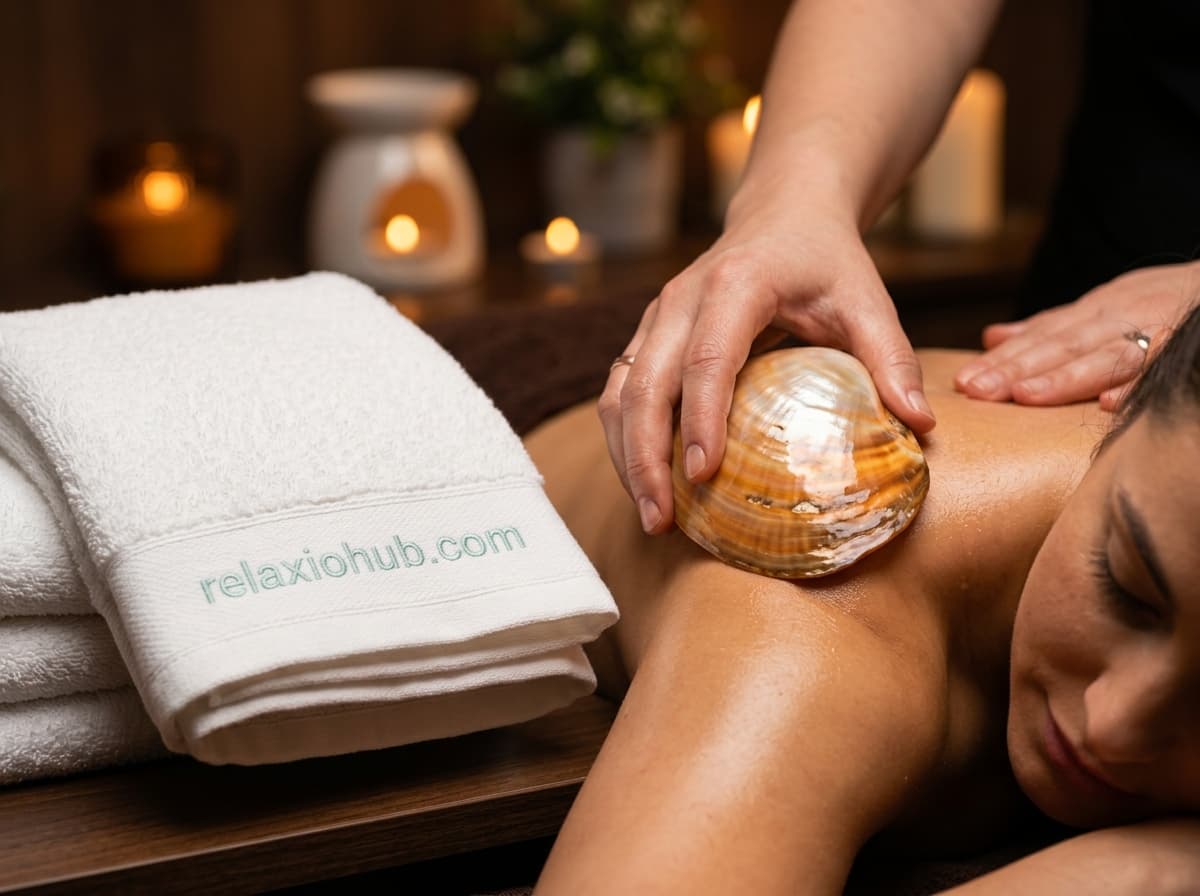
Expected effect
The effect depends on temperature, oil, movement speed, and practitioner skill. In wellness, it is mainly a heat relaxation ritual, not treatment for pain or disease.
A warm shell can help the body settle faster, especially when muscles tense up under a cold touch.
The rounded shape supports long wave-like movements that feel clear across the back, legs, and shoulders.
Lava Shell often feels gentler than an intensive deep massage because warmth works together with the practitioner's hand.
Heat, oil, and the smooth shell surface create a more ritual, care-oriented format than dry mechanical work.
The key rule is never to tolerate burning: temperature and contact time should be adjusted immediately.
The internal activator maintains 43–50°C for up to 90 minutes: the practitioner does not return to a water heater between passes, and warmth stays consistent throughout the session.
Timeline
The practitioner asks about heat sensitivity, varicose veins, rashes, diabetes, pregnancy, recent tanning, burns, or skin procedures.
Shells are heated according to protocol, temperature is checked, and oil is prepared for smooth gliding.
The practitioner touches briefly and asks whether the warmth feels comfortable before moving into long passes.
Shell gliding, localized warmth, and hand techniques alternate across the back, legs, shoulders, or the whole body.
After the session, the body gets a few minutes of quiet, water, and time for warmth to settle.
Comparison
All three formats use warmth, but the sensation and role of the tool are different.
Lava Shell fits when you want smooth warm shells, aromatic oil, and soft gliding without heavy stones.
Hot stones are more often placed on specific areas or used for deeper warming of larger zones.
Candle massage is more about melted butter, aroma, and silky skin texture than the shape of a tool.
Heat can feel pleasant, but it is not neutral for blood vessels, skin, or nerve sensitivity.
FAQ
It is a spa massage with warm marine shells. The practitioner uses them for gliding, gentle pressing, and warming the body instead of, or alongside, hand techniques.
Shells are lighter and easier to guide in long movements, while stones more often provide heavier localized heat or static warming of specific areas.
The modern format developed in the spa industry in the early 2000s, drawing on the image of tropical marine shells, resort care, and controlled internal heating.
It is most common in the United Kingdom, Ireland, the United States, Canada, Australia, New Zealand, the UAE, Western Europe, the Caribbean, and resort spas in Asia.
Yes, if temperature is poorly controlled. A comfortable session should feel like deep warmth, not burning; overheating should be mentioned immediately.
Look for profiles that describe heat-treatment experience, temperature control, contraindications, oil type, and willingness to adapt intensity.
Inside the shell is an activator — a blend of sea water, sea salt, dried algae, and spices. Activation starts an exothermic reaction: the shell heats to 43–50°C and holds this temperature for 60 to 90 minutes without needing a water heater.
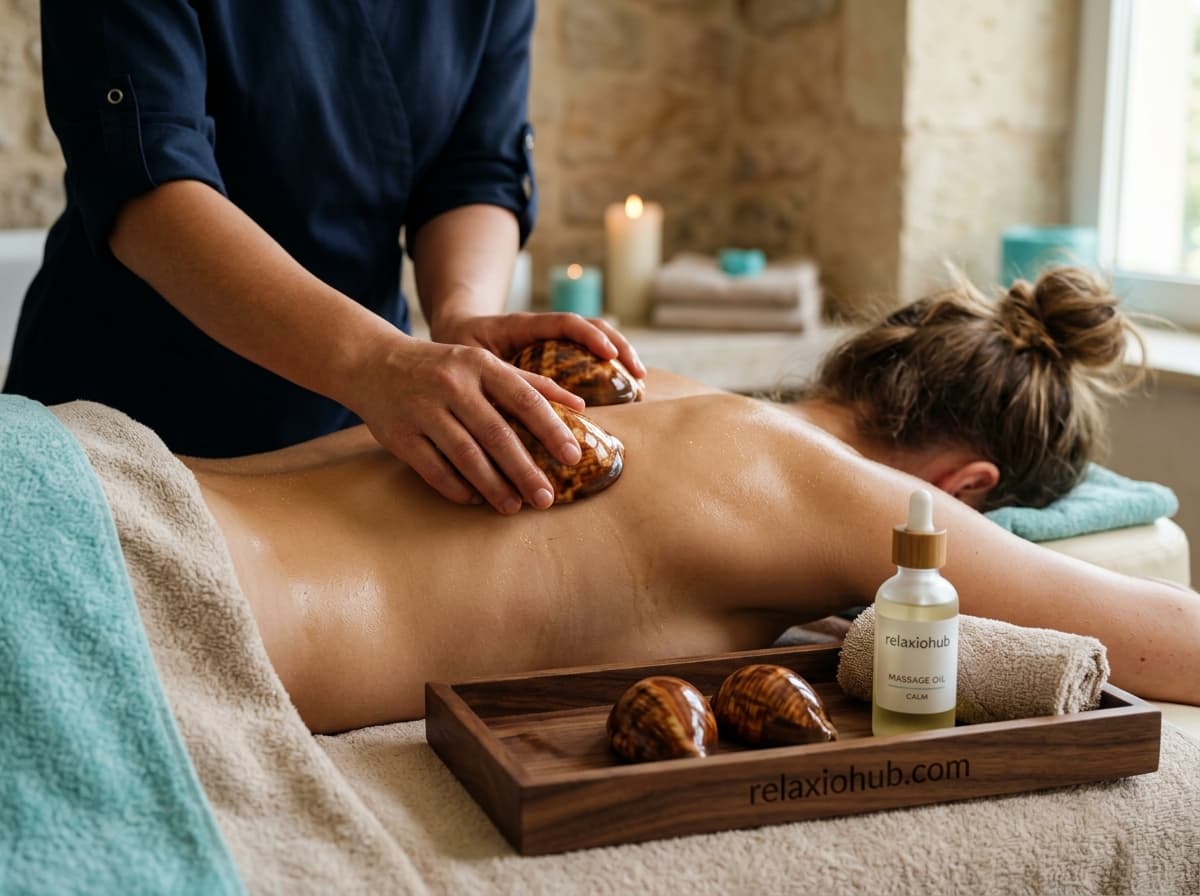
In Lava Shell massage, the shell becomes a warm tool: it should glide smoothly across skin, without harsh pressure.
Compare profiles that describe Lava Shells, heat-based spa experience, oil type, temperature control, contraindications, and session format.