Ku — Anointing with warm oil
Long, intentional strokes distribute warm herbal or sesame oil from neck to sacrum. Skin begins to accept heat; tissue that might resist cold hands opens under the warmth.
Ku Nye is a Tibetan massage from Sowa Rigpa: warm oil, Nyé point work, and slow kneading settle the body into a grounding rhythm where warmth and attentive contact come before force.
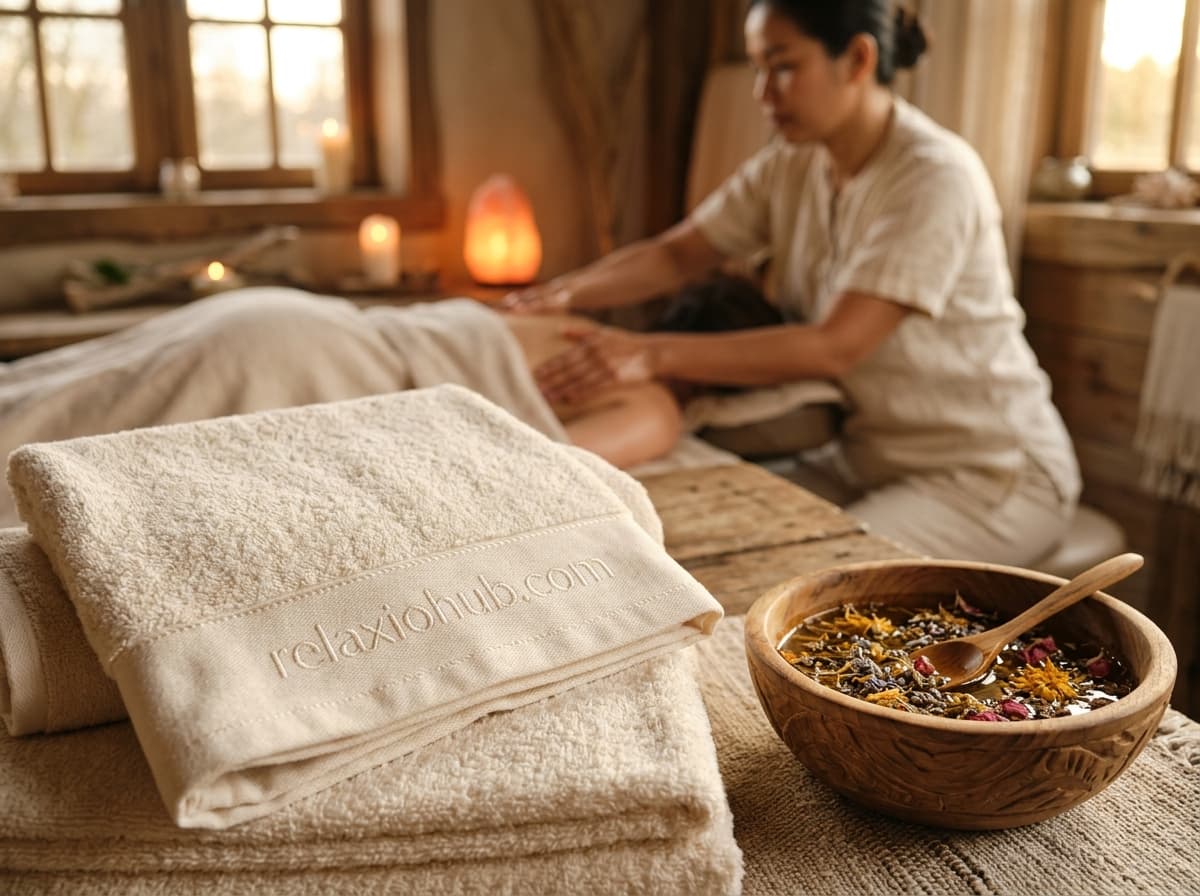
Tibetan bodywork
Ku Nye belongs to the external practices of Tibetan Sowa Rigpa. The name is often explained in practical terms: Ku is applying or rubbing oil on the body, and Nye is kneading, massage, and tissue work. In the classical view, it is not just "oil massage"; it belongs to a system where body, season, age, lifestyle, and a person's state are seen as connected factors.
Historically, Sowa Rigpa developed across the Tibetan cultural world for many centuries and absorbed influences from India, China, Central Asia, and Buddhist philosophy. Tibetan medical texts described external therapies — oil procedures, warming, compresses, rubbing, and massage — as ways to support body balance. In a modern wellness context, Ku Nye should be presented carefully: as traditional bodywork with oil and warmth, not as a promise to cure a diagnosis.
Geography matters for this search. Ku Nye is rooted in Tibet and Tibetan Sowa Rigpa; today it appears in Tibetan medical and wellness centers in India, including Ladakh, Sikkim, and Dharamsala, in Nepal, Bhutan, Mongolia, China/Tibetan regions, and in European and American schools that teach Tibetan massage or Sowa Rigpa external therapies.
At a glance
Sowa Rigpa method
A manghihilot of Tibetan bodywork moves through a layered sequence: warm oil first, then point work, channel strokes, deep kneading, and a grounding close. The five names below describe what actually happens to the tissue.
Long, intentional strokes distribute warm herbal or sesame oil from neck to sacrum. Skin begins to accept heat; tissue that might resist cold hands opens under the warmth.
Circular thumb or palm movements settle onto the 24 Nyé points of Sowa Rigpa. A radiating warmth often spreads outward from each point along the surrounding tissue.
Long, elongating strokes follow Sowa Rigpa channel lines from joint to joint. The body feels its own length — a quiet opening from shoulder to wrist, from hip to heel.
Palms, fingers, and forearms knead muscle and fascia in slow, rhythmic waves. Tense areas in the back, shoulders, and legs respond with a gradual release as the tissue warms.
Warm towels lift the surplus oil; final slow strokes travel across the whole body. The session closes in stillness rather than an abrupt clinical end.
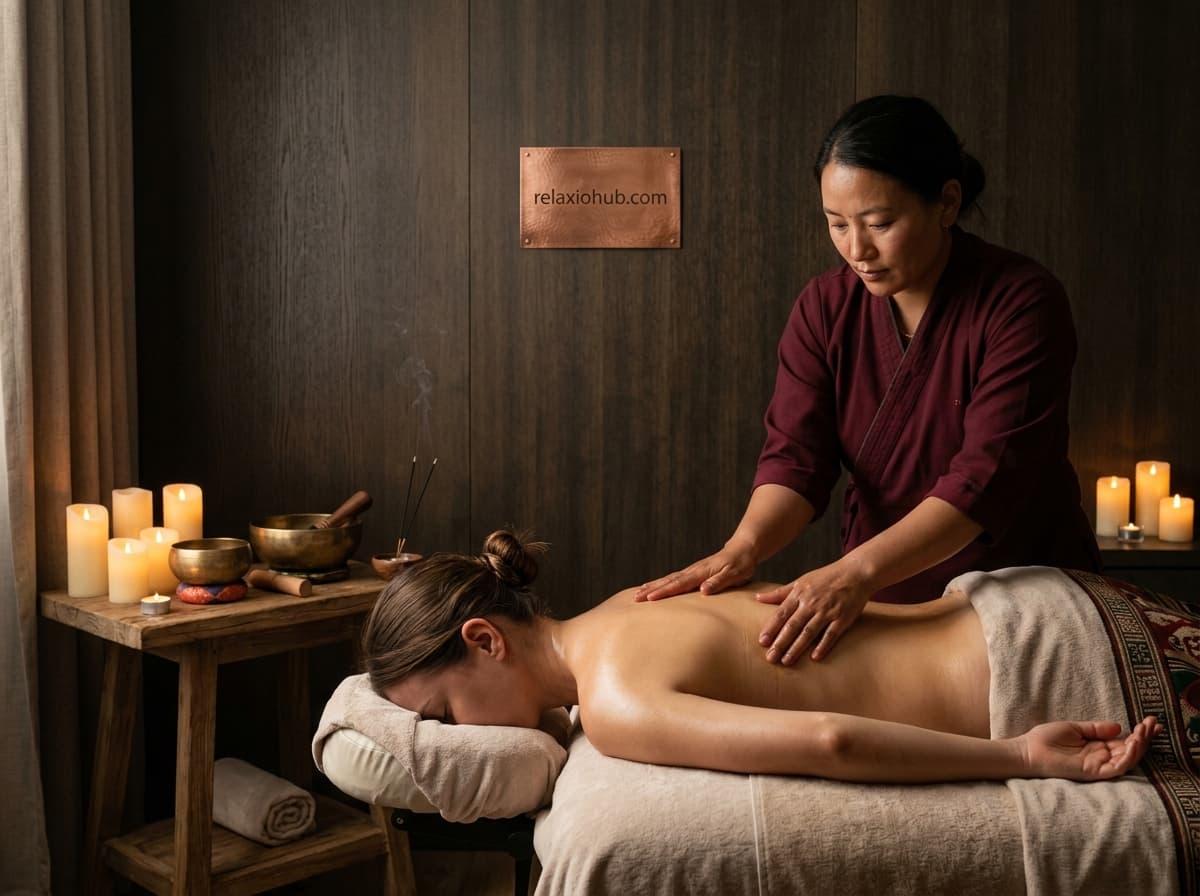
Expected effect
This is about relaxation, warmth, and body care experience, not disease treatment.
Sesame or herbal oil distributes heat before any pressure begins — skin feels less guarded and dry after the session.
The Ku—Dung—Gyen—Nyé—Bsal sequence connects to Sowa Rigpa's view of season, warmth, and body balance — not a sampler of techniques.
The session does not push the body into intensity; breath and attention shift toward warmth rather than bracing.
Nyé kneading is calibrated so the body responds instead of defending — the back and shoulders release rather than tighten.
After Gyen channel strokes and Nyé kneading, areas that felt heavy or held often register as noticeably freer.
A good practitioner names contraindications, lists oil ingredients, and sets realistic expectations without healing guarantees.
Timeline
You share allergies, dermatitis, pregnancy, injuries, acute pain, and sensitivity to scents — this shapes which oil and pressure depth the practitioner chooses.
The practitioner begins with long Ku strokes: warm oil from neck to feet, checking temperature and comfort before any deeper work starts.
Circular Dung movements settle on the Nyé points; Gyen strokes then lengthen along channel lines. Together they warm and open the connective tissue before kneading.
Nyé kneading works through back, shoulders, legs, or feet in slow waves — broad contact alternating with focused compression until the tissue yields.
Warm towels remove surplus oil; slow final strokes bring the session to a quiet close so leaving the table feels unhurried.
Comparison
All three may use oil, but their cultural logic and session feel differ.
Ku Nye fits when Tibetan medicine, Nyé point work, warm oil, and a grounding ritual matter — not just oil on the back.
Abhyanga follows Ayurveda: different logic for oil selection, direction of strokes, and dosha-based approach.
Classic massage is easier to predict: standard strokes, oil, back and neck focus, without a traditional medicine framework.
Warm oil work requires attention to skin, vessels, and general condition.
FAQ
It is a Tibetan oil-based bodywork practice from Sowa Rigpa: warm oil is applied (Ku), followed by Dung point work, Gyen channel strokes, Nyé kneading, and a Bsal grounding close.
The practice is rooted in the Tibetan cultural world and traditional Sowa Rigpa medicine.
It is practiced in Tibet, India, Nepal, Bhutan, Mongolia, China/Tibetan regions, and international Tibetan massage schools.
Both may use oil, but Ku Nye belongs to Tibetan Sowa Rigpa while Abhyanga belongs to Ayurveda; the tradition, Nyé point logic, stroke direction, and oil selection differ.
Ku Nye uses soft to medium pressure. Dung point work and Nyé kneading can feel firm on tense areas, but should not produce sharp pain. If pressure feels wrong, tell the practitioner immediately.
Traditionally warm sesame oil or Tibetan herbal preparations are used. Modern practitioners may adapt the formula to suit your skin type, preferences, or known allergies.
Look for profiles that name Sowa Rigpa or Ku Nye training, describe the oil formula, state pressure level and contraindications clearly, and set realistic expectations without healing promises.
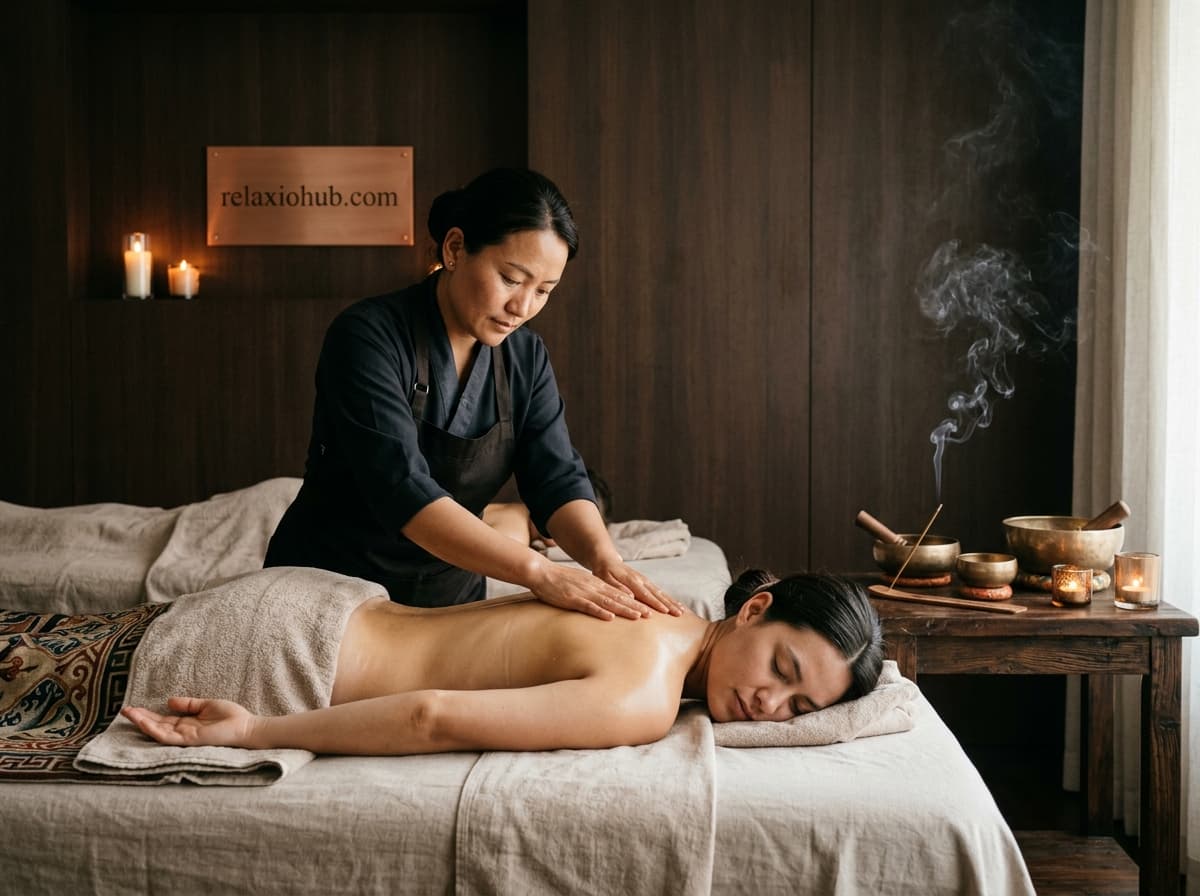
Ku Nye begins with oil-contact quality: when warmth, formula, and rhythm fit the body, guarding eases sooner.
Look for profiles that name their Sowa Rigpa or Ku Nye training, describe the oil formula, state pressure level and contraindications clearly — specific answers matter more than vague wellness claims.