Conversation and intention
The practitioner asks about general condition, touch comfort, areas of tension, emotional tone, and whether a more grounding or softer format is needed.
Jin Shin Jyutsu is often searched as massage, but it is not classic muscle kneading. The practitioner gently holds specific body areas with fingers or palms, follows point sequences, and works with breath and pauses to create a calm sense of inner alignment.
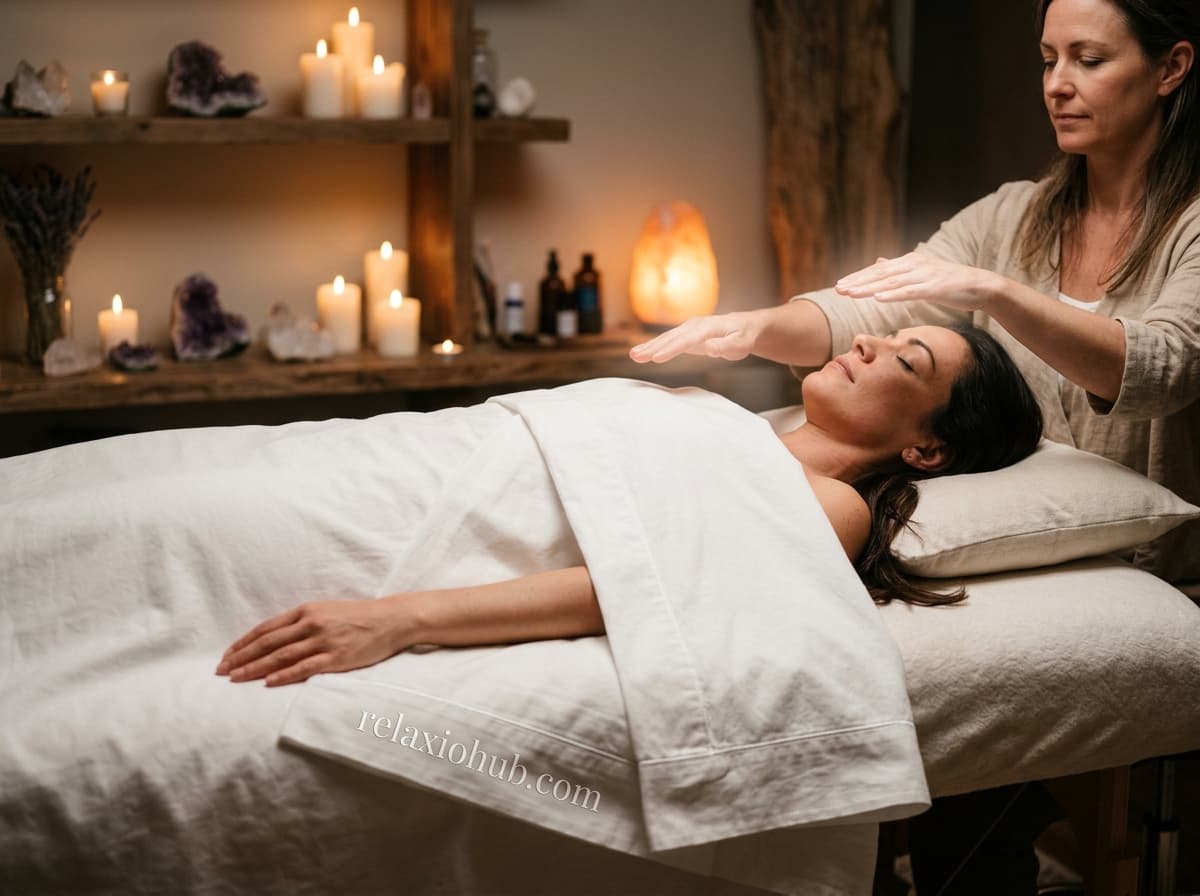
Japanese light-touch practice
Jin Shin Jyutsu is a practice of body awareness and very light touch that spa catalogs sometimes place near massage. In reality, the practitioner does not knead, press deeply, or manipulate muscles. They hold two or more areas of the body, often over clothing, and give the client time to notice warmth, breath, stillness, and a gradual settling.
The modern form of Jin Shin Jyutsu is linked to Japanese master Jiro Murai, who systematized the practice in the early 20th century after his own recovery experience, observation of mudras, and study of ancient texts. The method reached the West through students, especially Mary Burmeister: she studied with Murai in Japan, returned to the United States, and began teaching Jin Shin Jyutsu to a wider audience in the 1960s.
Today Jin Shin Jyutsu is practiced in Japan, the United States, Canada, Germany, Switzerland, Austria, the United Kingdom, France, Italy, Poland, Czechia, Ukraine, and Australia. People search for it as “jin shin jyutsu massage,” “Japanese energy work,” “holding points,” “Safety Energy Locks,” or “self-help jin shin jyutsu.” The important distinction is simple: this is not massage in the classic sense, but a quiet session of touch, sequences, and self-observation.
At a glance
Technique
A session looks quiet and minimal. From the outside it may seem that the practitioner is simply resting hands on the body, but structure comes from sequence, touch quality, and pause.
The practitioner asks about general condition, touch comfort, areas of tension, emotional tone, and whether a more grounding or softer format is needed.
The client usually lies or sits in comfortable clothing. Oil is not used and the body does not need to move actively.
The practitioner lightly touches two areas at the same time or in sequence, working with the 26 named Safety Energy Locks.
Instead of random points, specific routes of holds are used: hands move from one pair of areas to another at a calm pace.
The client does not need to breathe in a special way, but may be invited to notice the exhale, warmth, pulsing, or changing sensations.
After a session, the practitioner may show simple finger or palm holds that the client can repeat at home.
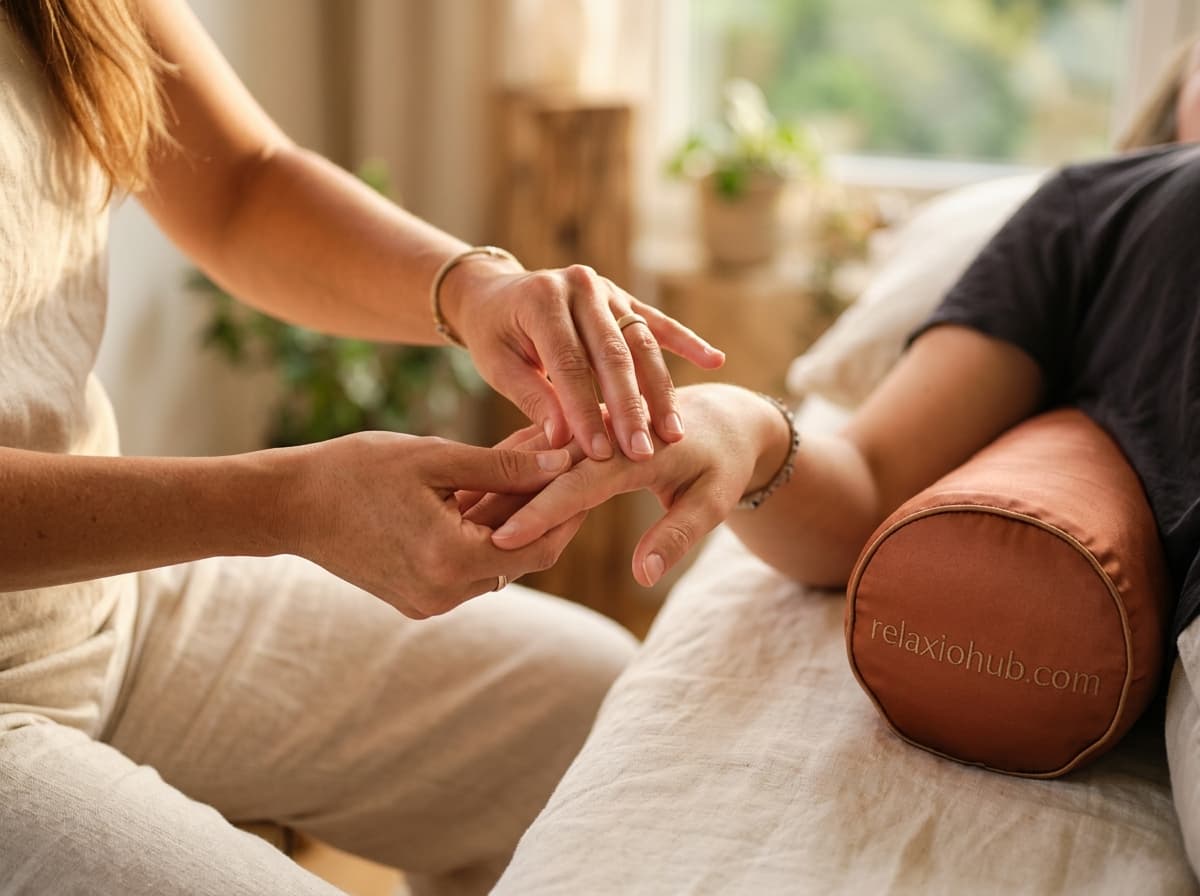
Expected effect
Jin Shin Jyutsu is a wellness practice, not a medical procedure. Its expected effect is best described as a subjective sense of calm, support, and contact with the body.
The practice suits people who do not want strong pressure, kneading, or active body manipulation.
The quiet rhythm of holds can create a feeling of stopping, slowing down, and being able to exhale.
Without forcing a special technique, the client often notices exhale, tension, and moments of softening more clearly.
The practitioner does not work only on one sore point, but through a sequence of areas that makes the session feel whole.
Touch should be light, clear, and agreed; the client can ask to change hand position or stop the session.
After the session the practitioner may teach simple finger or palm holds that the client can repeat independently between visits.
Timeline
You discuss that this is not classic massage, what you expect, sensitive areas, injuries, anxiety, or discomfort with touch.
The client stays clothed, lies on a table or sits; bolsters or a blanket may be added so the body does not need to tense.
The practitioner chooses a pair of areas and holds them for several minutes while observing breath, hand temperature, and client response.
Hands move to the next Safety Energy Locks or flows slowly, without adding strong pressure.
The session ends with a quiet pause; if appropriate, the practitioner shows a simple finger hold for home practice.
Comparison
These formats may share a Japanese context or point work language, but they feel very different.
Jin Shin Jyutsu fits when you want holds and quiet, not pressure, kneading, or active stretching.
Shiatsu is more likely to feel like finger, palm, or elbow pressure with a clearer physical intensity.
Classic massage is better if the main request is back, shoulders, oil, and familiar tissue kneading.
Because the practice is gentle, it has fewer limits than forceful massage, but consent, psychological comfort, and body condition still matter.
FAQ
It is a Japanese practice of gentle holds and touch sequences. It is often searched as massage, but it is not classic muscle kneading.
Classic massage kneads tissues and uses oil and pressure. In Jin Shin Jyutsu, hands usually rest lightly on specific areas.
The modern system is linked to Jiro Murai in Japan in the early 20th century. Mary Burmeister studied with him and taught the practice in the United States from the 1960s.
In Jin Shin Jyutsu, this term refers to 26 areas or locks that are worked with through light holds and sequences.
Usually no. A session often happens in comfortable clothing, without oil and without active body manipulation.
Look for profiles that clearly describe Jin Shin Jyutsu as a holding practice, explain sequences, touch boundaries, self-help, and contraindications.
Many practitioners share simple finger or palm holds for home use. Books by Mary Burmeister and her students are a widely referenced starting point.
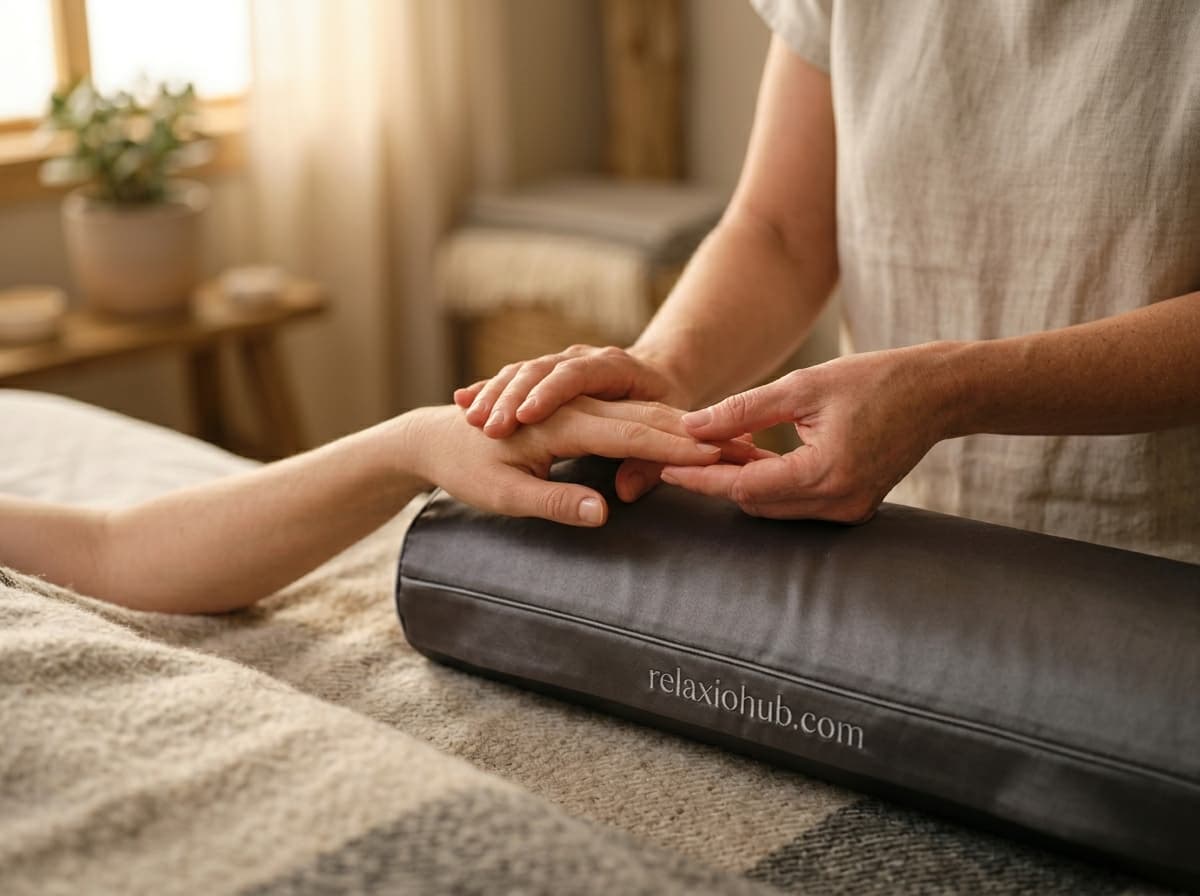
This practice has less movement than massage: change is noticed through warmth, quiet, breath, and settling.
Compare profiles that describe Jin Shin Jyutsu, Safety Energy Locks, gentle holds, self-help sequences, touch boundaries, and practitioner experience.