Conversation about herbs and skin
The practitioner checks allergies, pregnancy or postnatal status, and sensitivity to ginger, turmeric, essential oils, betel or heat.
Jama massage, often searched as Jamu massage, blends Malay-Indonesian herbal body care with gentle massage, warm oils, pastes made with ginger, turmeric, lemongrass or betel, and calming compresses.
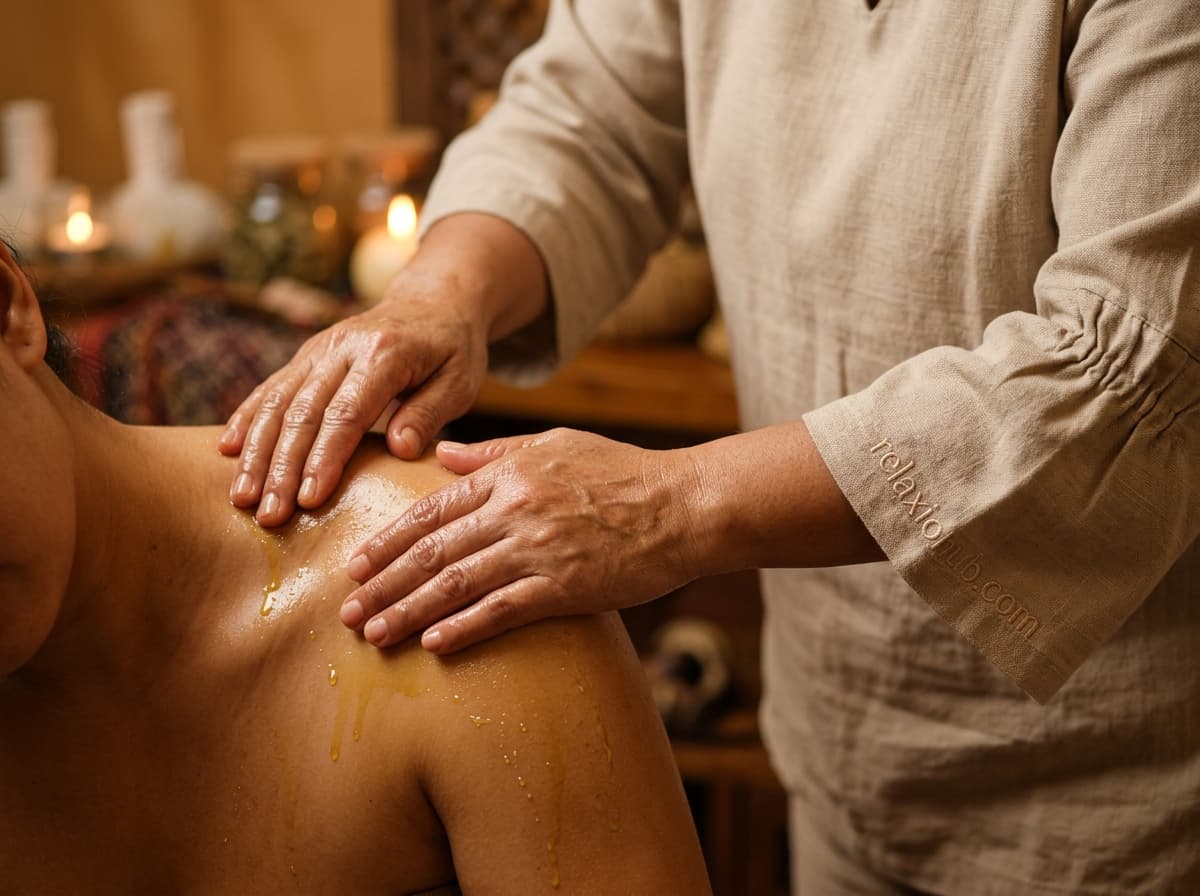
Herbal spa ritual from Southeast Asia
Jama massage is a spa format linked with Jamu: Indonesian herbal blends, oils, pastes and body-care rituals. In everyday search, spellings often mix: some people type “Jama massage”, others type “Jamu massage”. For the client, the substance matters more than the spelling: the practitioner works with soft manual movements, warmth and plant-based preparations, not only with strong muscle kneading.
Jamu history is strongly connected with Java in Indonesia. Herbal drinks, body pastes and oils based on turmeric, ginger, lemongrass, betel, lime and other plants have been used for centuries in family care, palace traditions and postnatal rituals. Later Javanese manuscripts and court collections documented many herbal formulae, while modern spas adapted this heritage into massage protocols.
Today Jama/Jamu massage is practiced in Indonesia, especially on Java and Bali, in Malaysia, Singapore, Brunei, Thailand, Hong Kong, and in diaspora spas across Australia, the United Kingdom, the Netherlands, Germany, the United States and Canada. People search for “jamu massage”, “jama massage”, “Indonesian herbal massage”, “Malay postnatal massage”, “traditional Indonesian body treatment” and “herbal paste massage”.
Quick facts
Technique
The technique depends on the school: in a spa it may be a soft herbal massage, while in postnatal traditions it may be a series of sessions with oil, pastes, compresses and abdominal binding.
The practitioner checks allergies, pregnancy or postnatal status, and sensitivity to ginger, turmeric, essential oils, betel or heat.
A session often begins with warm oil gliding so the body can settle into touch before herbal ingredients are added.
Pastes or scrubs may include turmeric, ginger, lime, lemongrass, rice powder or other ingredients depending on the local tradition.
Movements are usually long, smooth and moderately pressured, with emphasis on care, warmth and rhythm rather than sports-style pressure.
Some protocols add warm herbal compresses, stones or towels to support a deeper feeling of warming.
The paste is removed or left according to protocol, the skin is calmed, and the client is advised not to rush into cold weather or intense training.
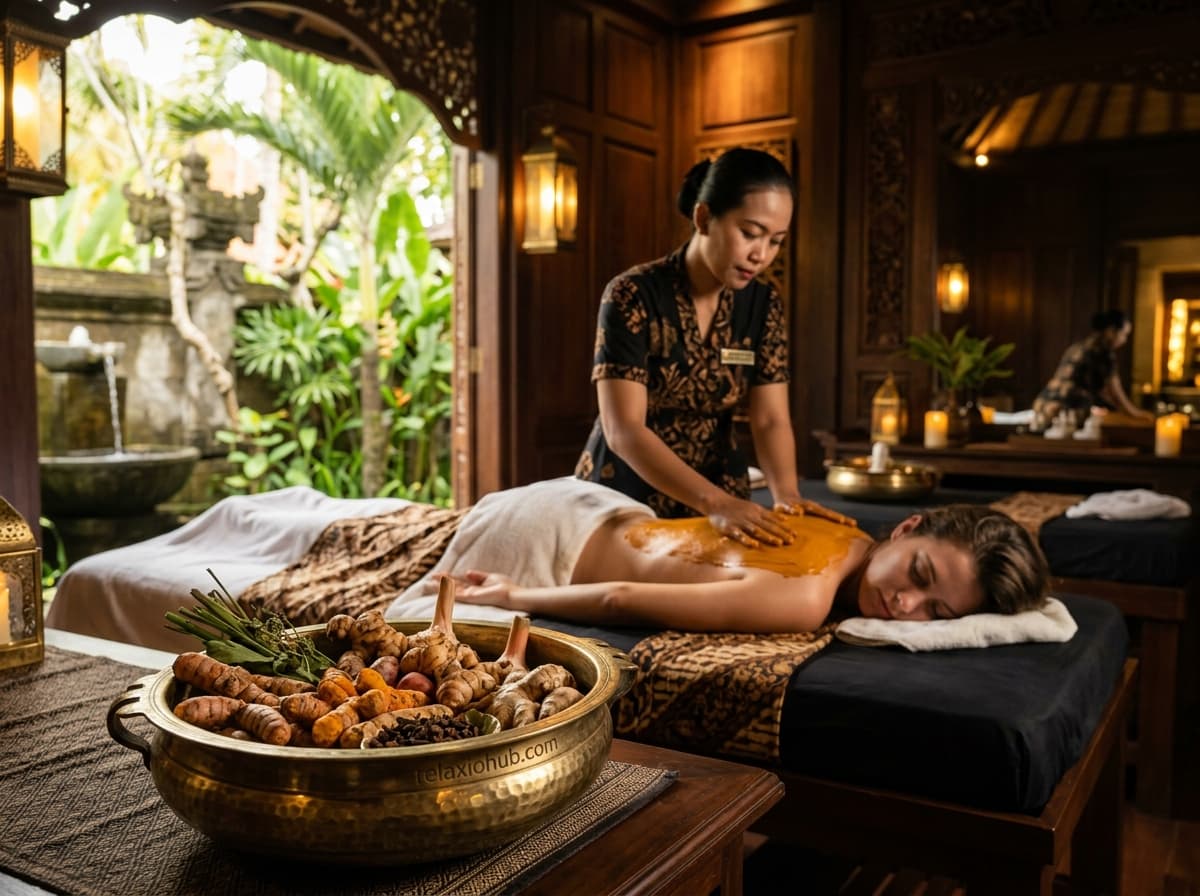
Expected effect
Jama massage is a wellness practice, not medical treatment. People value it for the combination of touch, heat, plant aromas and a slow sense of body care.
Herbs, pastes and oils make the session feel like local ritual care, not just a standard massage with neutral cream.
Warm oils or compresses can help the body feel grounded, especially when the session is paced without rush.
After oil, paste or scrub, the skin often feels softer and more nourished to the touch.
The practitioner does not need to work deeply: the main effect often comes from smooth contact and steady tempo.
Knowing the ingredients in advance matters, especially with allergies, sensitive skin or the postnatal period.
The scent of herbs, warm oil and paste texture make the session a multi-sensory experience, not only a procedure.
Session flow
The practitioner explains whether this is a spa version of Jamu, postnatal care, massage with paste, compresses or a combination of stages.
Before herbal products, the body may be warmed with oil, a towel or a short soft massage.
The back, legs, shoulders or full body are massaged with long movements, combining oil glide and herbal contact.
Paste, scrub, compress or wrap is added only if the client agrees and there is no irritation.
After the session, the practitioner removes remaining products, recommends water, warmth and attention to the skin response.
Comparison
All three formats can be oily and ritual-like, but their logic is different.
Jama/Jamu is a better fit if herbal pastes, warmth, postnatal or restorative Southeast Asian tradition are important to you.
Balinese massage more often combines kneading, stretching, aroma oils and spa rhythm without a required Jamu component.
Ayurvedic massage is more connected with Indian approaches, dosha logic, abhyanga and warm oils.
Thai massage includes passive joint stretching and acupressure techniques, which makes it noticeably different from the soft herbal rhythm of Jama.
Because of herbs, heat and the possible postnatal context, it is important not to ignore skin, allergies and medical limits.
FAQ
It is a massage spa format linked with Jamu: a Malay-Indonesian tradition of herbal pastes, oils, compresses and gentle body care.
Searchers often mix the spellings. Both names, “Jama” and “Jamu”, refer to the Malay-Indonesian herbal tradition, so this page explains the link between them.
Jamu is connected with Javanese herbal culture, palace and family recipes, postnatal rituals and modern spa adaptations in Indonesia and Malaysia.
Most often Indonesia, Java and Bali, Malaysia, Singapore, Brunei, Thailand, Hong Kong, plus diaspora spas in Australia, Europe, the United States and Canada.
People usually expect warmth, softer-feeling skin, aromatic herbal care, a calm pace and a restored feeling without aggressive pressure.
Check whether the practitioner describes Jamu or Malay-Indonesian experience, paste ingredients, contraindications, allergies, postnatal limits and the session format.
A standard spa session usually lasts 60–90 minutes. A full postnatal Jamu protocol may be longer or split across several visits depending on the programme.
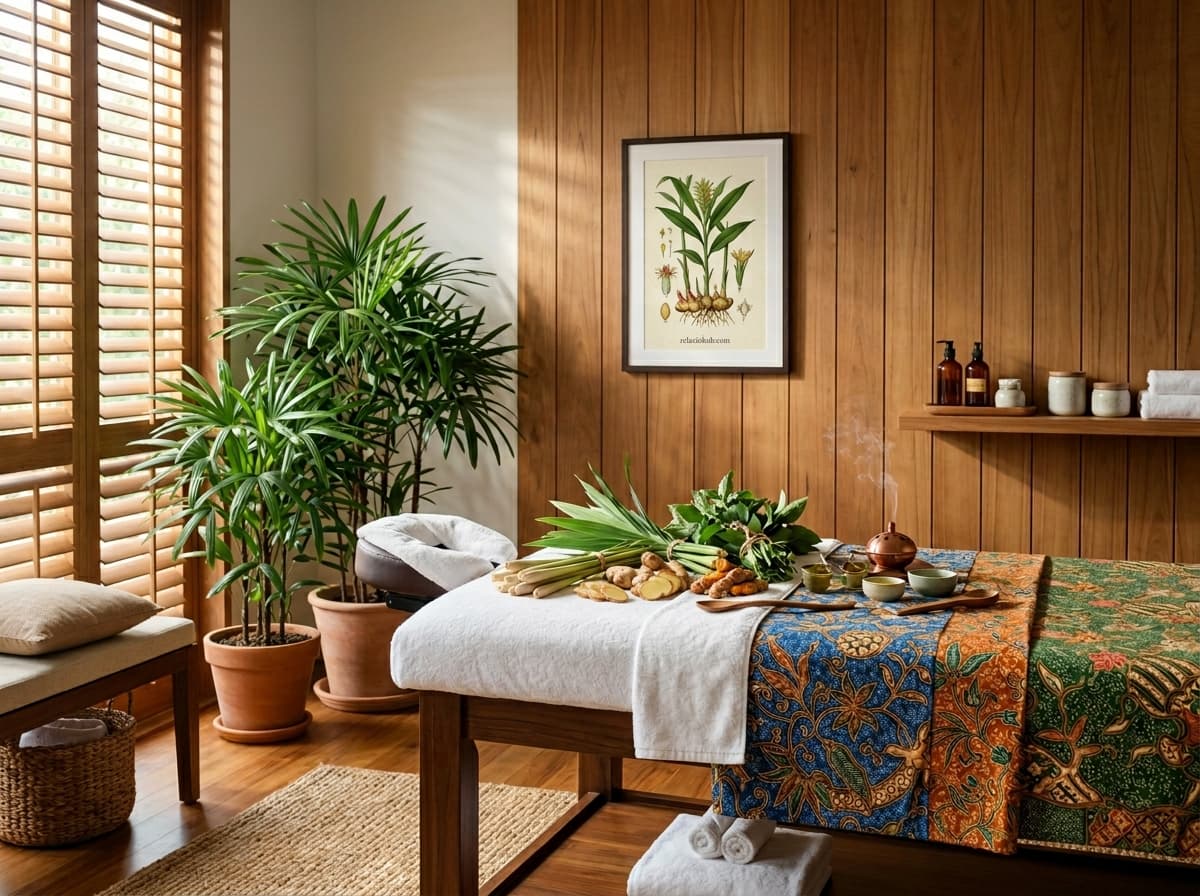
In Jama massage, the herbal formula matters as much as technique: the client should know what is applied to the skin.
Look for practitioners who describe Jamu or Malay-Indonesian experience, paste ingredients, contraindications for sensitive skin, and postnatal protocol limits specifically.