Palm-warmed honey veil
Thin blankets prevent globs that bruise tissue through viscosity spikes.
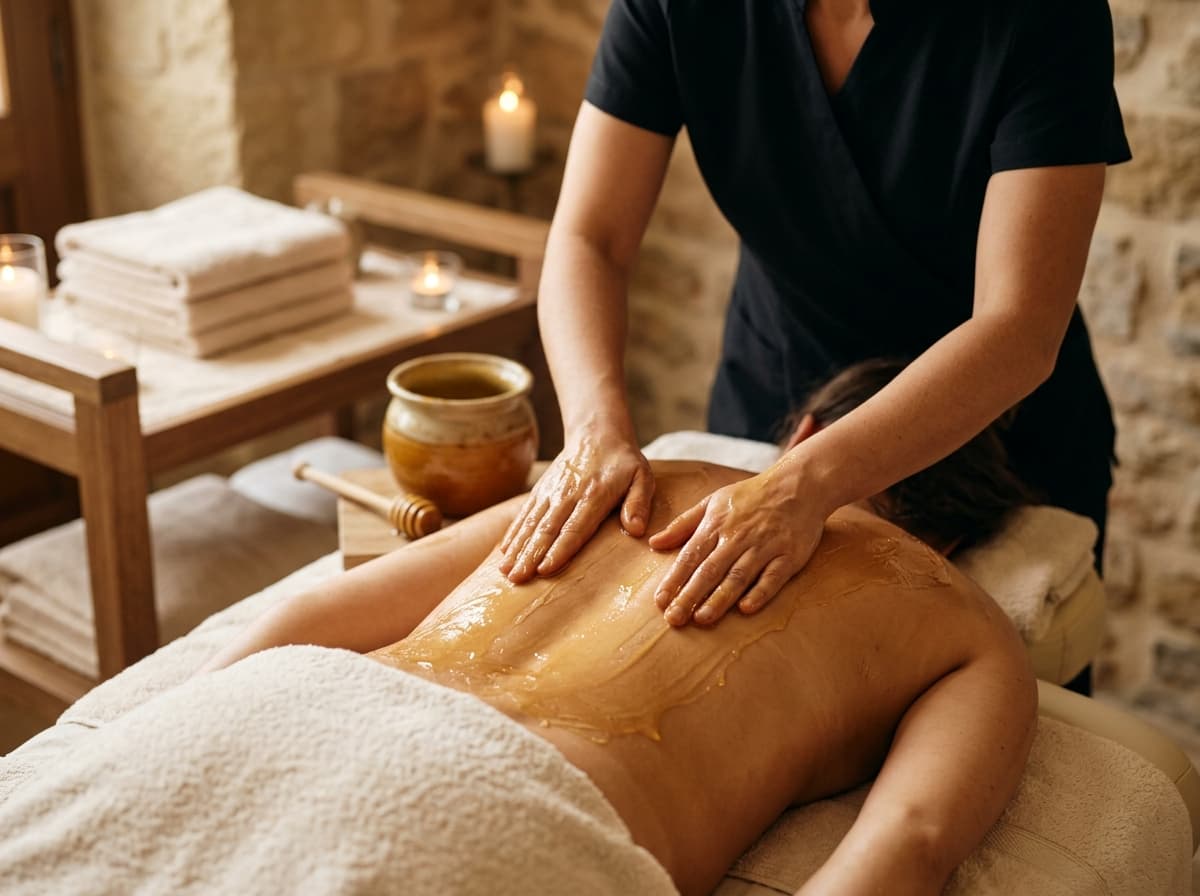
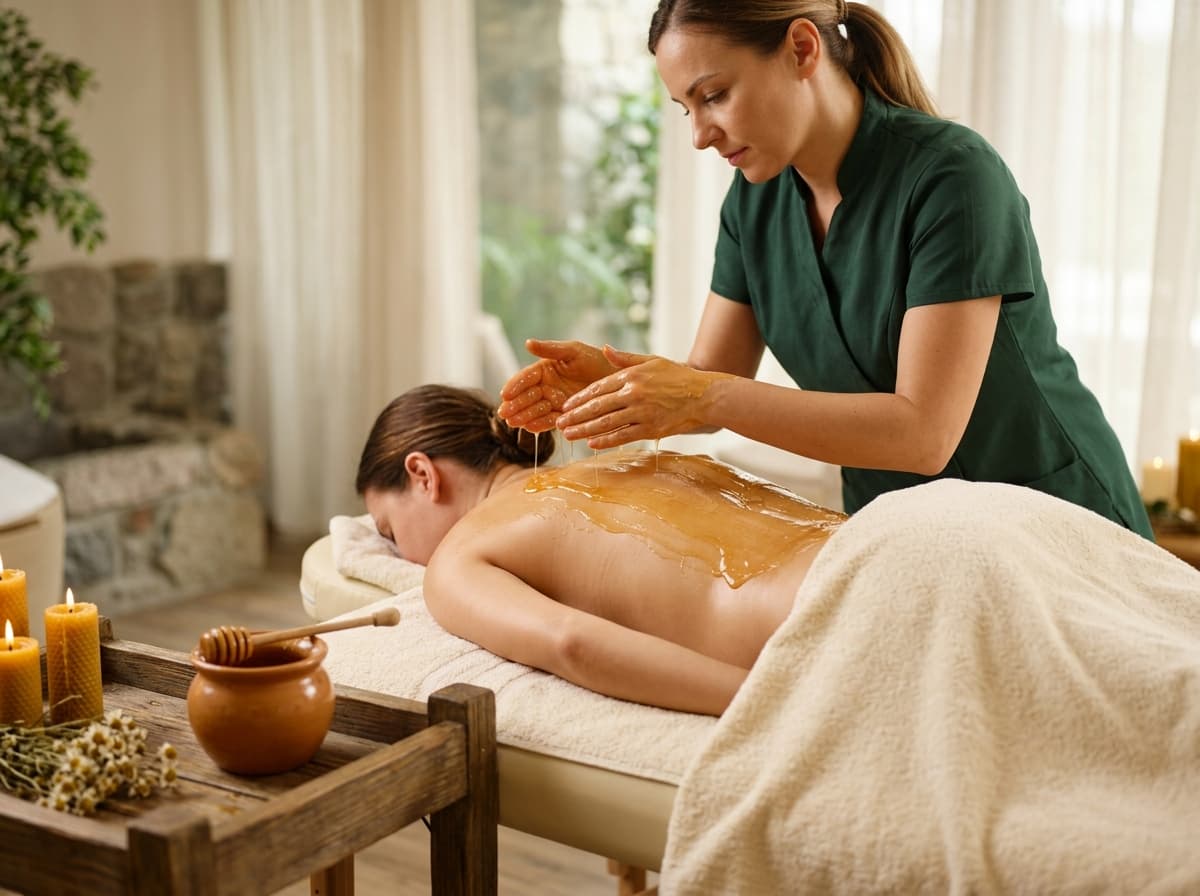
Warmed honey spreads in a thin layer across skin as palms alternate soft kneading with rhythmic taps — sticky traction engages skin mechanoreceptors differently from oil effleurage, giving honey massage a distinct sensory category.
Natural SPA viscosity
Studios typically layer warmed honey—sometimes micro-cut with neutral carriers so glide exists—then choreograph tapping, lifting passes, and intermittent pauses while stickiness evolves with skin heat. Expect more sensory drag than slick oil sessions; nervous systems process friction differently than frictionless effleurage.
Professional copy avoids detox mythology or guaranteed cellulite demolition in one booking. Honey can momentarily leave skin feeling cushiony thanks to humectant occlusion, yet it never substitutes dermatology plans, lymph clinics, or hormonal explanations for tissue texture.
Compared with chocolate massage you swap cacao-lipid perfume + cocoa butter slip for floral-fruity nectar traction. Versus Ayurvedic oil floods there's less uninterrupted glide and more localized tack engagement—making bee-product allergy disclosures non-negotiable before draping drops.
Snapshot
Technique
Controlled tactile rhythm — adjusting pressure and pace with each lift — defines honey massage more than any single striking move.
Thin blankets prevent globs that bruise tissue through viscosity spikes.
Rhythm wakes fascia superficially without punching depth.
Vacuum-adjacent novelty sits at epidermal storytelling—not certified manual lymph credentials.
Therapists may feather carriers in sparingly per studio SOP.
Steam-softening optional when heat contraindications stay ruled out.
Why book
Sensory ritual and brief skin-softening effect — no clinically promised body reshaping.
Skin reads smoother briefly thanks to occlusive honey films—until thorough rinses, not chronic eczema cures.
Ask mono-floral vs poly-floral sourcing plus sneaky essential-oil adulterants.
Palms negotiate viscosity shifts oil massages rarely mimic.
Studios should refuse full-body pours when sting histories or ingestive honey allergies terrify you.
Honey carries glucose oxidase and catalase; on contact with skin moisture they generate trace hydrogen peroxide — the mechanism behind its studied antimicrobial surface effect. In a wellness context this is background science, not wound treatment.
Rhythmic taps and sticky lifts stimulate Meissner's and Pacinian corpuscles differently from continuous oil effleurage — which is why honey massage occupies its own tactile identity.
Flow
Flag pollen crosses, propolis cosmetics reactions, eczema flares, open scratches.
Voice friction comfort immediately — sticky should intrigue, not sandpaper.
Therapist executes patterned tapping and brief peeling passes over the honey layer; intensity and rhythm adapt in real time — erythema beyond mild flushing or pain signals immediate pressure reduction. Discomfort is feedback, not protocol.
Therapists explain rinse repetition, hair shielding, and post-care moisturizer compatibility.
Choosing the format
Three intents beside chocolate SPA offerings or slick Swedish flows.
Chocolate reads cocoa-fat decadent; honey skews brighter floral-fruity.
Honey grip engages differently — for those who find pure oil effleurage insufficiently engaging.
Seasonal indulgence works when allergy screening stays transparent.
Sticky bee biology carries sharper allergy stakes than generic oils.
FAQ
No ethical spa guarantees structural cellulite change per visit — expect sensory benefit and brief skin-softening, nothing more.
Contact sensitivities can differ from digestive tolerance. Disclose any reactions to bees, hives, or honey in food before the session.
Wraps occlude the layer longer under film wrap; massage adds active palm friction and tack-lift passes with shorter dwell per zone.
Ask for protective draping before the session starts. If honey does reach hair, lukewarm water and gentle shampoo dissolve residue — avoid aggressive combing while sticky.
A three-to-five-week interval suits most guests. Increase frequency only if skin tolerates rinse cycles without persistent redness or irritation.
Honey is approximately 80% sugars (fructose ~38%, glucose ~31%), 17–20% water, plus trace enzymes and organic acids. Fructose is hygroscopic — it draws atmospheric moisture — which explains the post-session softness: occlusion plus humectancy, not mineral absorption.
Pressing the palm into honey-coated skin then peeling it away creates brief subatmospheric pressure at the surface, stimulating cutaneous mechanoreceptors and mild hyperemia. The effect is far less powerful than medical cupping or certified manual lymph drainage — calling it equivalent is inaccurate.
Therapists
Practitioners across Ukraine who provide this massage type. Choose a specialist and view their profile.
Ірина
Альона
Катерина
Оксана
Василина
Ольга
Поліна
Анастасія
Ірина
Pick your city, scrutinize profiles for honey sourcing, oil dilution transparency, allergy rehearsal policies, and refusal to pitch pseudo-medical cures.