Haplos — warming strokes
Long, gliding passes spread warm coconut oil across the back and shoulders. The skin softens under continuous contact; the nervous system begins to shift from alert to receptive.
Hilot is a Filipino tradition of touch where warmth, slow oil work, and attentive tissue reading come together — the practitioner tracks overall body balance, not just one tight muscle.
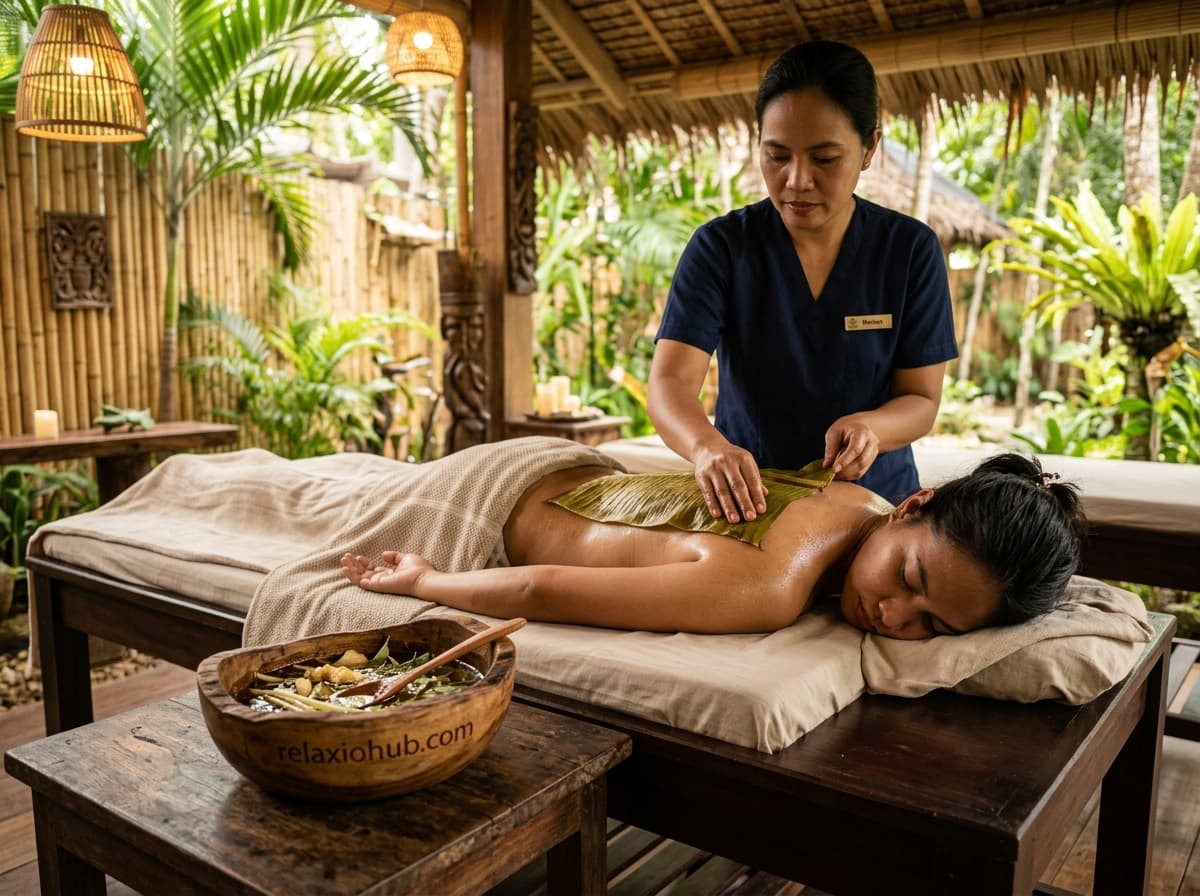
Filipino bodywork
Hilot comes from Filipino traditional wellness touch. In villages and families, knowledge was often passed from elders to younger practitioners, and the practitioner was called a manghihilot — a person with attentive hands who could sense tension, warmth, coldness, movement limits, and the person's general state. In the wider Filipino context, Hilot could overlap with herbs, steam, prayer, or lifestyle advice, but the modern wellness format usually focuses on safe massage, kneading, and relaxation.
Historically, Hilot was not one fixed textbook technique. Across Philippine islands it developed local variations: some styles emphasize coconut oil and warmth, others include stretching, joint work, or acupressure-like points. Today the Philippines also has training and certification pathways for traditional and alternative care practitioners, while spa settings present Hilot as Filipino bodywork without shamanic overpromising.
When people search for "hilot massage," they usually want to know three things: what kind of Filipino massage it is, whether it hurts, and in which countries it can be found. The honest answer: the root practice is the Philippines; outside the country, Hilot is offered by practitioners and wellness centers in Filipino communities and spa markets, including the UAE, Canada, the United States, and other countries where Filipino massage has demand. Cultural tradition and medical procedure are different things: Hilot may create warmth, lightness, and better body awareness, but it does not replace medical care.
At a glance
Filipino methods
A manghihilot draws on a layered vocabulary of touch — from the first warming strokes through focused tissue work to the settling finish. The sequence below reflects traditional Filipino bodywork structure.
Long, gliding passes spread warm coconut oil across the back and shoulders. The skin softens under continuous contact; the nervous system begins to shift from alert to receptive.
The practitioner lifts, squeezes, and rolls muscle tissue between the palms — shoulders, calves, and the sides of the back respond with a gradual release of accumulated density.
Brisk, light rubbing generates localized warmth that spreads outward. Stiff areas around the neck or lower back start to feel less bound after several Himas passes.
Thumbs or knuckles settle into a knot or tension cluster and hold steady pressure until the tissue yields. The sensation is firm but contained — discomfort fades into release.
Long, slow strokes return to the whole body after focused work, letting the areas just treated integrate. The session closes with stillness rather than an abrupt stop.
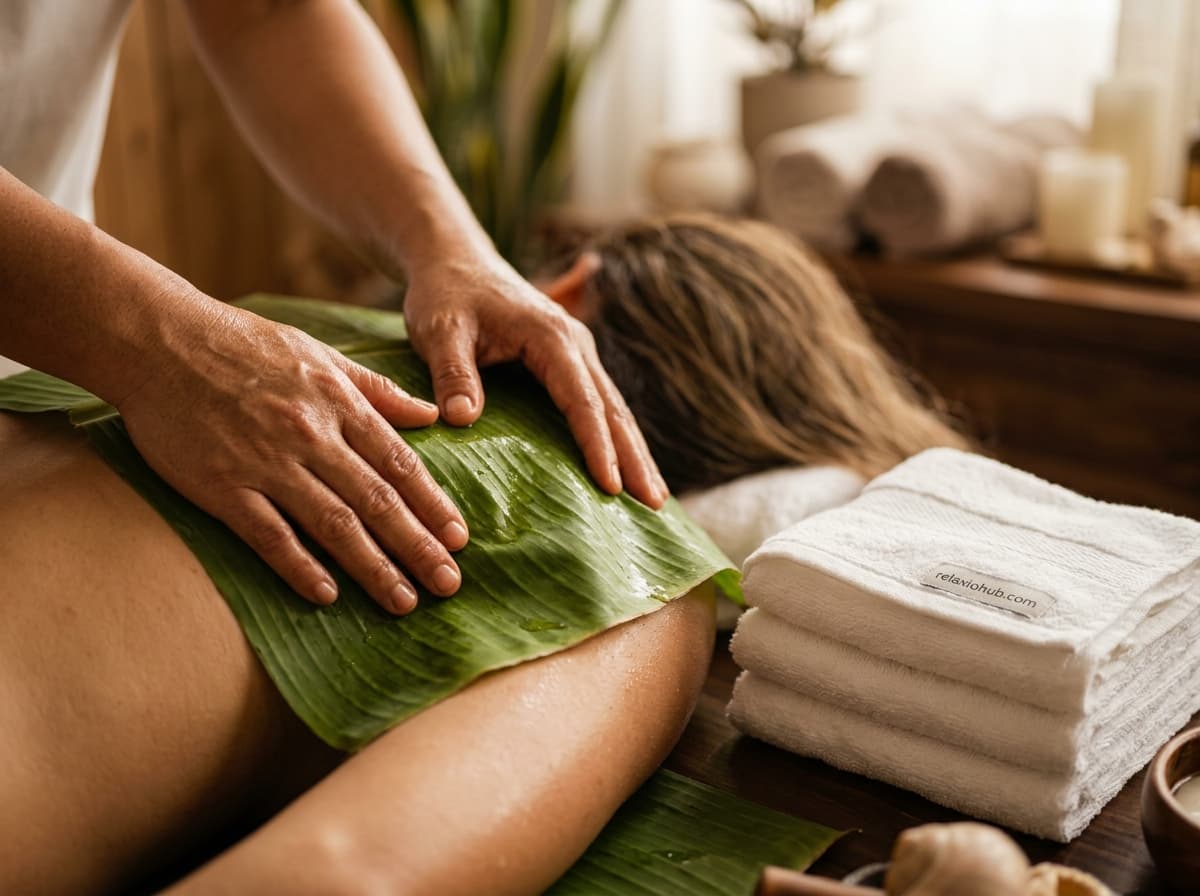
Expected effect
This is about wellness experience and post-session sensation, not promises to treat disease.
The practitioner adjusts pace and pressure to tissue response instead of repeating one identical protocol.
Hilot keeps a live connection to Filipino culture around warmth, oils, and body balance.
After slow Pisil kneading and Himas friction, areas that carried chronic tension often feel noticeably lighter.
When tense areas receive unhurried Tuklaw pressure and Haplos strokes, movement range often opens quietly.
Warmth, repeating strokes, and breath awareness move the body out of a braced state and toward rest.
A professional practitioner explains contraindications, adapts to your condition, and never promises to cure a diagnosis with massage.
Timeline
You explain where tension sits, how you tolerate pressure, and whether there are injuries, surgeries, or sensitive areas.
The practitioner spreads coconut oil, sets the rhythm with Haplos strokes, and observes how the body responds to warmth and touch.
Pisil kneading, Tuklaw point pressure, and Himas friction shift by area — back, shoulders, legs, feet, or pelvis — as the manghihilot reads tissue response.
The session closes with slow, full-body strokes so leaving the table feels unhurried rather than abrupt.
Comparison
All three can work with tension, but the experience and cultural logic are different.
Choose Hilot when the history of the practice, coconut oil, warmth, and attentive tissue reading matter to you.
Thai massage leans toward active stretching and joint mobilization, often performed clothed on a floor mat.
Classic massage is easier to predict: standard strokes, oil, back and neck focus, less ethnographic context.
A traditional name does not cancel modern safety rules.
FAQ
It is a Filipino traditional bodywork practice where touch, warmth, oil, and tension assessment come together in a wellness session.
The root practice is from the Philippines. Today it is also offered by Filipino practitioners and spas abroad, including in the UAE, Canada, and the United States.
A traditional Filipino Hilot practitioner who works through attentive touch and knowledge gained through training or family practice.
Thai massage often includes active stretching and clothed mat work. Hilot leans more on coconut oil, warmth, palpation, and a layered touch vocabulary rooted in Filipino culture.
Hilot uses soft to medium pressure. You may feel firm Tuklaw point work on tight areas, but it should not produce sharp or lasting pain. If it does, tell the practitioner immediately.
Coconut oil is the traditional medium — it spreads easily, holds warmth, and is culturally central to Filipino bodywork. Some practitioners use other base oils depending on client preference or skin sensitivity.
Look for profiles that describe Hilot experience in specific terms — Filipino training, named techniques, coconut oil work, and clear contraindication screening. Specific answers matter more than vague claims about experience.

In Hilot, the name matters less than touch: a good practitioner feels tissue, explains limits, and respects responses.
Look for profiles that describe Hilot experience in specific terms — Filipino training, named techniques, coconut oil work, and clear contraindication screening. Specific answers matter more than vague claims about experience.