Controlled steaming
Bundles hydrate above boiling water or calibrated steamers—never dripping scald liquid onto skin.
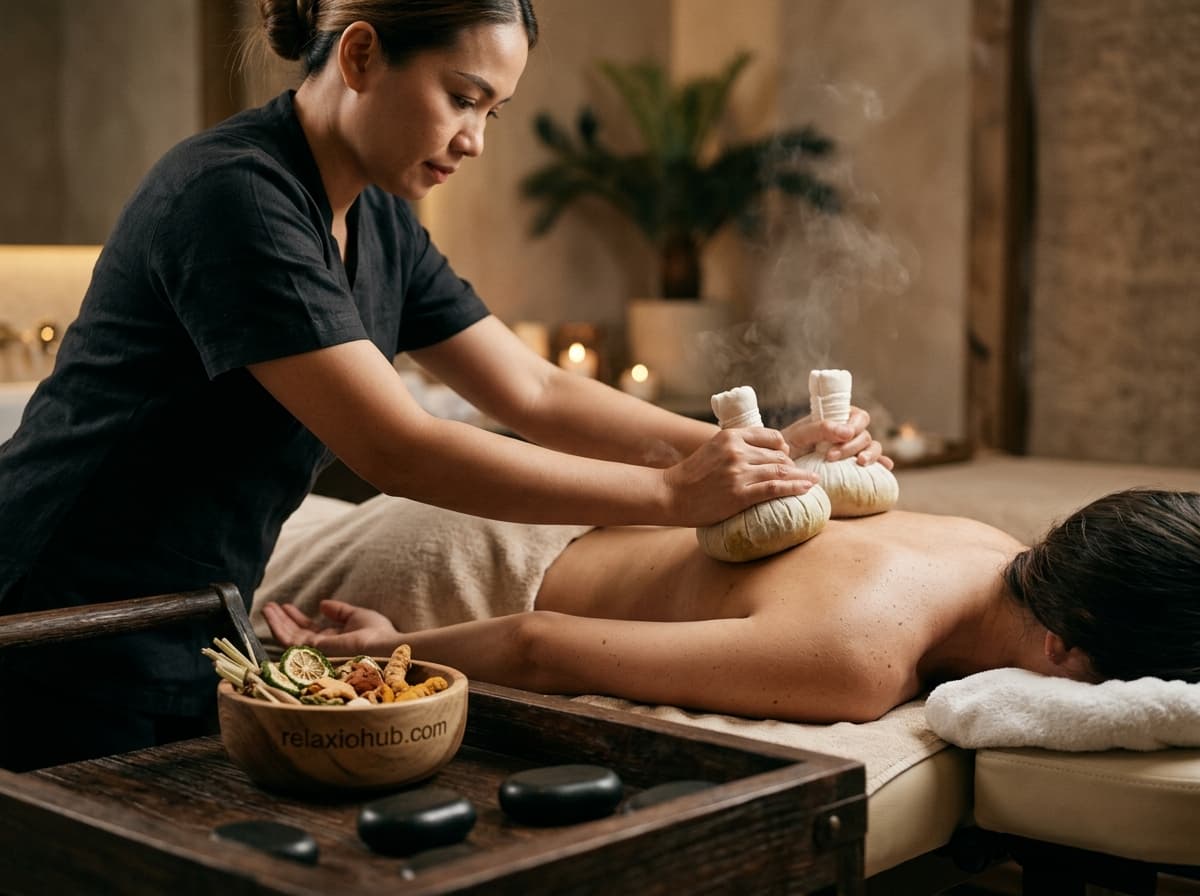
Humid warmth drifting from steamed bundles pressed along your spine—lemongrass or linden scent lifts through the room while linen cushions soften each compression versus naked elbow digs.
Massage overview
Studios typically fill cotton or muslin sachets with dried herbs, florals, roots, or proprietary SPA blends, steam them briefly, then glide or park them on skin. Fabric traps moist heat; therapists alternate rhythmic presses along erectors and rhomboids with palm-based Swedish-inspired strokes between steaming cycles.
European marketing frequently references Thai luk pra kob lineage, yet ingredient decks and steam durations differ wildly per brand. Ethical framing treats it as sensory wellness—humid heat plus mild compression—not botanical medicine replacing prescriptions.
Disclose pollen sensitivities, scent-triggered asthma, undisclosed pregnancy, neuropathy, or fresh burns before draping drops—those variables reshape barrier towels, herb choices, or whether booking should wait entirely.
At a glance
Technique
Professional differentiation rests on verified thermal safety and controlled compression rhythm — not on the theatrics of the application.
Bundles hydrate above boiling water or calibrated steamers—never dripping scald liquid onto skin.
Thin towels soften conductivity for erythema-prone guests without killing therapeutic warmth.
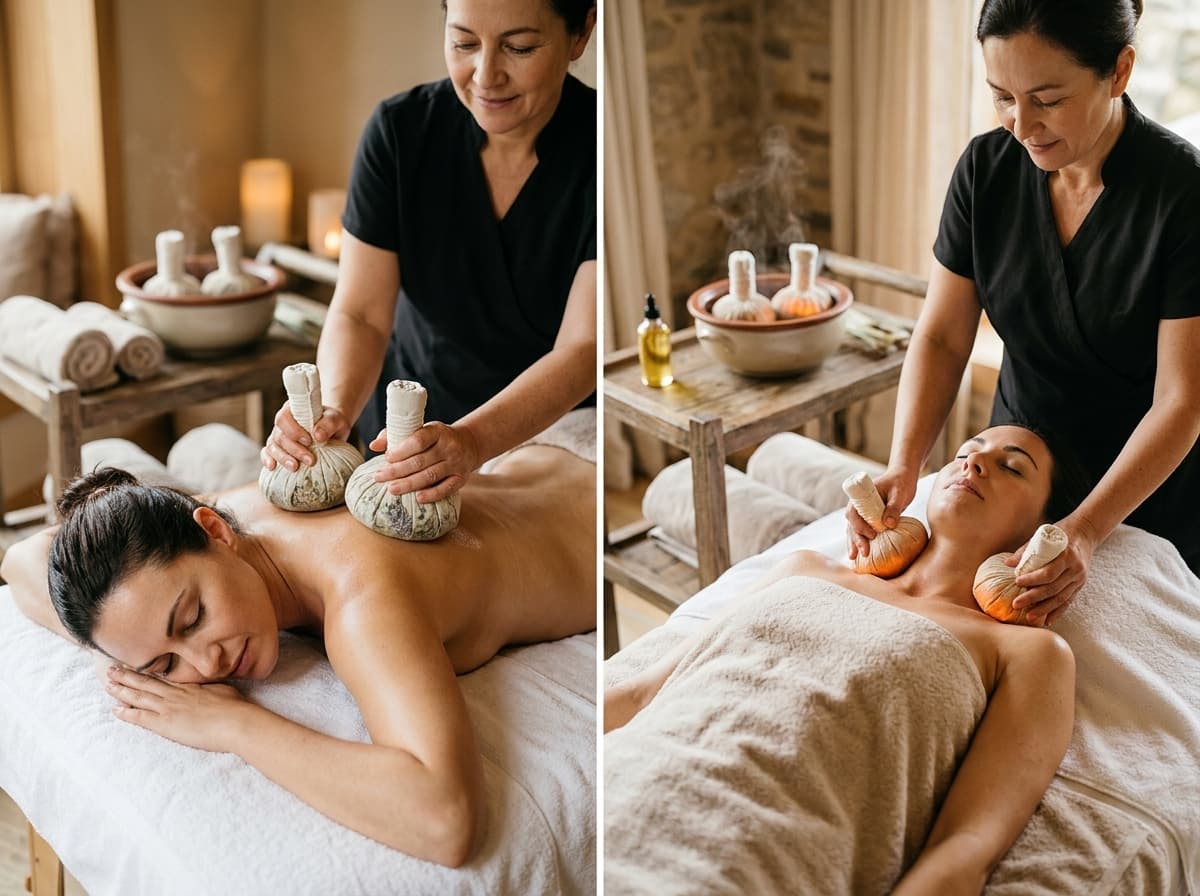
Herbal boluses knead along trapezius valleys distributing pressure broadly.
Holds over lumbar pad hydrate fascia before the next mobilization chapter.
Oil-free or oiled hand phases bridge pouch rotations so nervous systems stay engaged continuously.
Effect
Benefits described responsibly inside restorative wellness—not pharmacology.
Leaf-forward blends amplify spa ambiance where plain oil massage stays scent-neutral.
Humid warmth often softens stubborn desk-bound lumbar grip faster than dry ambient rooms alone.
Fabric spreads compressive force—fewer sharp pinpoint spikes along the spine.
Warm vapor rises around shoulders—cozy during chilly seasons without aggressive stripping depth.
Steam carries monoterpenes and terpenols (linalool from lavender, citral from lemongrass) into the room — volatile compounds act on the limbic system via the olfactory nerve, explaining the calming response that exceeds simple thermal effect.
Moist heat raises superficial fascia temperature more efficiently than dry heat at equivalent readings — temporarily improving collagen fiber extensibility and explaining the released feeling clients describe as qualitatively different from dry stone work.
Process
Herb manifest review, asthma readiness, pregnancy clearance, vascular concerns logged upfront.
Fresh bundles rotate in while therapists solicit thermal feedback before repeat placement.
Warmed pouches roll and anchor across priority zones (trapezius, paraspinal muscles, thighs) with rhythmic and static compression; therapist monitors skin erythema and verbal cues; adjusts barrier towel or cools bundles on request.
Seated hydration, avoid icy wind against freshly steamed skin immediately afterward.
Choosing the format
Three search intents pouches answer distinctly versus stones or classic Swedish.
Herbal pouches add fragrant steam and textile cushioning to the warmth — a different sensory register than stone conduction.
Prioritize slow SPA pacing; book sports massage separately when aggressive stripping matters.
Fabric pouches cushion interface heat—still disclose ragweed-level botanical allergies beforehand.
Steam escalates both topical irritation and airway sensitivity—even sans documented allergy history.
FAQ
Stones emphasize dry conductive heat; pouches add humid steam, textile cushioning, and botanical aroma—often slower and softer perceptually.
Studios can shorten steam cycles, lighten blends, or isolate neutral bundles—speak up before inhalation discomfort spikes.
Yes—sloppy steaming ignores barriers. Professionals test bundles against their wrists first and honor verbal cooldown requests instantly.
Lemongrass, ginger, linden, lavender, eucalyptus appear often—cultural palette choices, not guaranteed cures.
Maintenance roughly once every four to eight weeks absent irritation; gift rituals may be one-offs during colder months.
Traditional Thai luk pra kob typically includes lemongrass (citral), turmeric (curcumin), kaffir lime leaf, galangal root, prai or plai (Zingiber cassumunar), and camphor. European SPA versions frequently substitute these with locally available botanicals — lavender, linden blossom, eucalyptus, chamomile — for regulatory and market reasons. Ask your studio which blend is actually in the pouch.
Water vapor has significantly higher thermal conductivity and specific heat capacity than air, so a 48 °C moist compress heats skin more efficiently than a 48 °C dry surface. This lowers the effective comfort threshold — meaning therapists working with herbal compresses should monitor temperature feedback more carefully than those using dry-heat modalities at equivalent thermostat readings.
Therapists
Practitioners across Ukraine who provide this massage type. Choose a specialist and view their profile.
Choose your city on the home page and browse profiles listing herbal pouches, compress stamps, or steamed SPA massage.