Frontal-to-crown effleurage
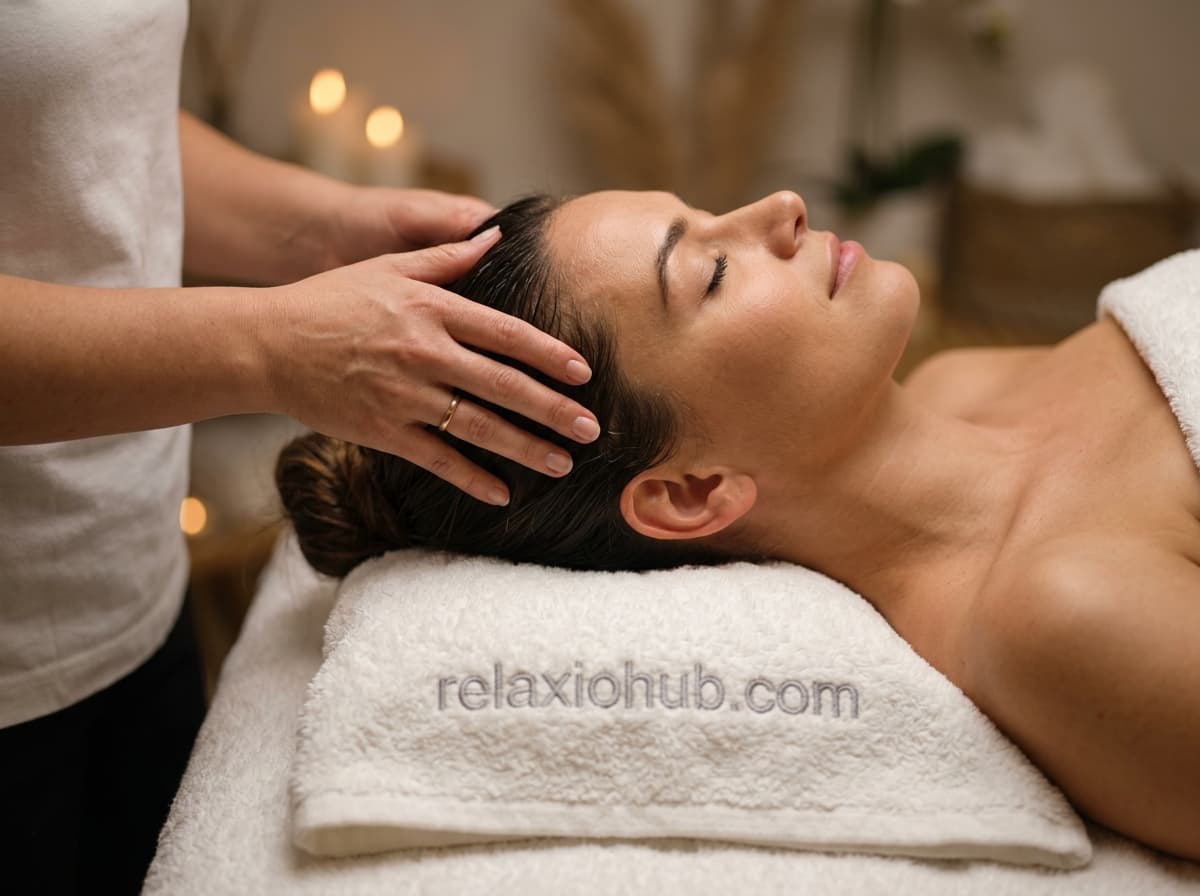
Flat fingers anchor at the hairline then slide toward the crown, repeating slowly so skin temperature rises evenly without aggressive nail drag.
Fingertips map the scalp and broad temple arc, soften the tension band around the skull, and gently anchor the suboccipital base so the upper neck stops acting like a vice after monitor hours — without overpromising on neurological cures.
Upper focus
In most wellness formats, "head massage" is a seated or semi-reclined chapter: light effleurage from the frontal hairline to the crown, overlapping circles across the scalp, slow compressions along temporal muscles, finishing with calibrated contact at the occipital ridge and upper trapezius entry points. Rhythm stays slower than hurried shampooing—you should feel glide, gradual warmth, and permission to soften the jaw.
Professionals differentiate soothing touch from diagnosing headaches or treating hair loss. If someone promises to reverse baldness or abort migraines mechanically, downgrade expectations toward honest relaxation and sensory care.
Compared with Champi—a structured Indian-origin ritual blending scalp oiling, Ayurvedic pacing, optional shoulder arcs, and culturally specific intent—European-style head massage tends to adapt shorter choreography and may stay dry depending on hairstyle or extensions. If Ayurvedic intent and oil-forward ceremony matter, confirm with the provider whether they offer classical Champi or general head massage.
Snapshot
Technique
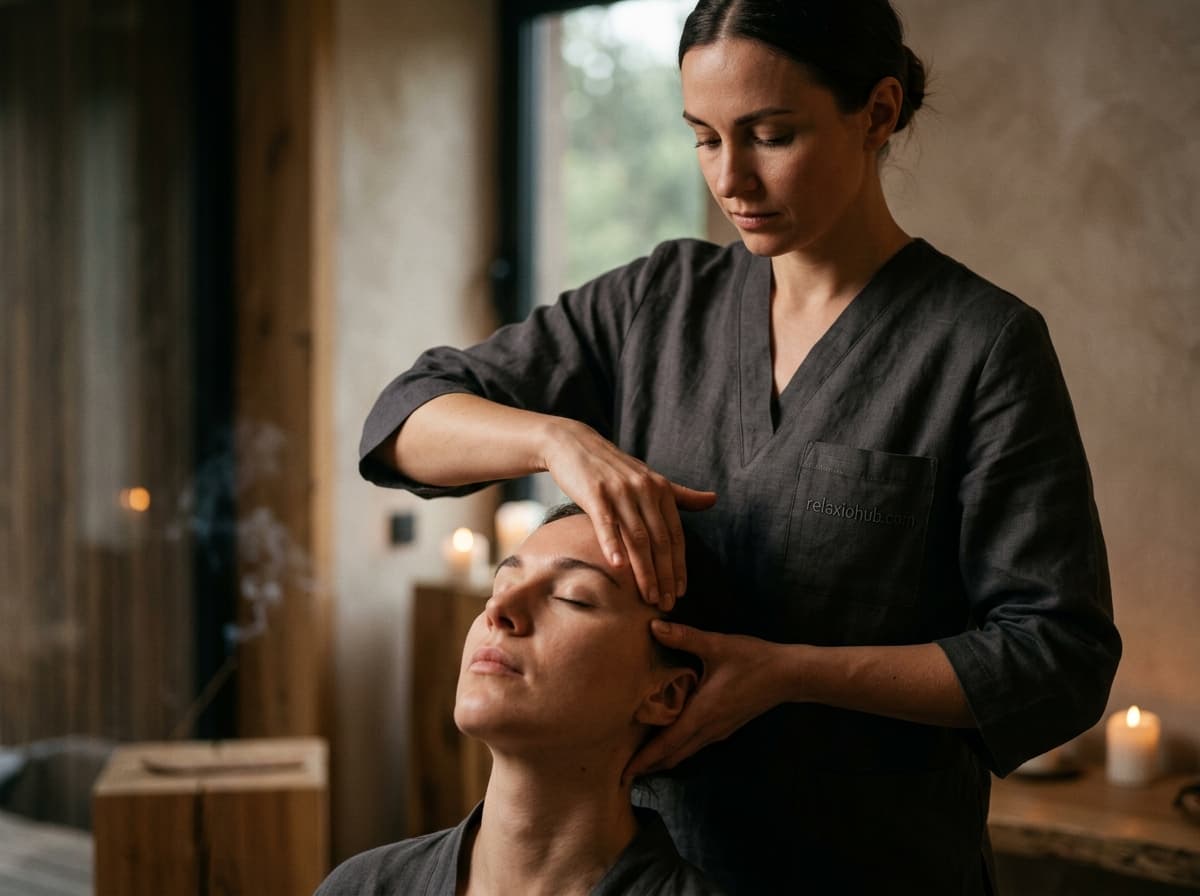
Good protocols layer breadth on the scalp before zooming into jaw-adjacent muscles and the occiput.
Flat fingers anchor at the hairline then slide toward the crown, repeating slowly so skin temperature rises evenly without aggressive nail drag.
Small rotary pressure travels over parietals and temporal crests—clients often describe loosening helmet-like stiffness after headsets or tight buns.
Gentle arcs press temporalis while avoiding direct eye-orbit punching; jaws may involuntarily soften as paired muscles unload.
Supported thumbs or palms meet the ridge where skull meets cervical soft tissue—depth stays cautious to prevent dizzying shear during vascular uncertainty.
Short traction-style slides connect occipital work to shoulders, bridging screen-posture hotspots without snapping the head sideways.
Why book
Outcomes stay sensory and subjective; avoid sellers pitching miracle neurology.
Slow scalp mapping can downshift racing thoughts when paired with measured breathing—still not a substitute for sleep debt or therapy.
Blood flow claims stay modest, yet many notice tingling warmth and lighter roots post-friction—especially after tight hats or dry AC offices.
Soothing touch may loosen the subjective squeeze across temples or the hatband line; thunderclap or aura headaches require medical triage, not deeper pressure.
Therapists should narrate product choice, rinse expectations, and allergy screens before saturating hair.
Flow
Sudden worst-ever headache, fever with stiff neck, new weakness, slurred speech, vision loss, or head trauma channel you to emergency care instead of a couch.
Bolsters support the spine; initial effleurage maps sensitivity before tempo increases.
Techniques stack from broad to focal, closing with lighter strokes so blood pressure and inner-ear sensitive guests avoid abrupt drops.
Final strokes widen and slow to a whisper; the client stays seated for a few seconds before standing — an important buffer for anyone with orthostatic sensitivity or vestibular reactions after extended reclined positioning.
Choosing intent
Three overlaps we see beside generic Swedish passes.
If shoulders already received love but temples still buzz, carve explicit head minutes into the booking notes.
Request dry pacing, silkier friction, or cool-down caps instead of full oil Champi pours.
Pair realistic expectations with neurologists managing migraines, hypertension, TMJ splints, or medication plans.
Escalating neurological flags override spa optimism.
FAQ
No—acute migraines need medical pathways; massage may soothe some tension-type sensations for certain individuals yet cannot replace neurologists.
Champi inherits Indian Ayurvedic scaffolding (often oil-forward, broader ritual cues). Contemporary head massage can be dryer, shorter, and stylable—profiles explain which lineage they honor.
Scalp TLC cannot regrow follicles solo; thinning demands dermatologists or trichologists.
Discuss tape/keratin timelines; studios should offer partial oil avoidance or blotting wipes.
Weekly to monthly depending on symptom stability and budget—back off whenever scalp irritation appears.
The suboccipital group is four small muscles (rectus capitis posterior major/minor, obliquus capitis superior/inferior) between the occiput and the first–second cervical vertebrae. Chronically loaded in forward head posture, they directly influence upper neck tension and the feeling of a heavy head after screen work.
The greater occipital nerve (C2) exits between C1 and C2 and innervates the posterior scalp to the crown. When sensitized — as in tension-type headache — careful contact at the nuchal ridge sends diffuse signals across the full dome of the skull, which explains the spreading sensation toward the forehead.
Therapists
Practitioners across Ukraine who provide this massage type. Choose a specialist and view their profile.
Марія
Любов
Ксенія
Віктор
Оксана
Ірина
Наталія
Поліна
Альона
Надія Світла
Оксана
Ольга
Filter by city, read profiles for oil policies, chair versus table formats, acute-headache refusal ethics, and transparent boundaries around neurology claims.