Hand and wrist intake
The therapist asks about numbness, swelling, recent injury, arthritis flares, surgery, repetitive work and where pressure should stay light.
Warm compressions and tendon glides across palms, fingers, wrists and forearms give screen-loaded hands a quieter rhythm — without promises to cure nerves or carpal tunnel by touch alone.
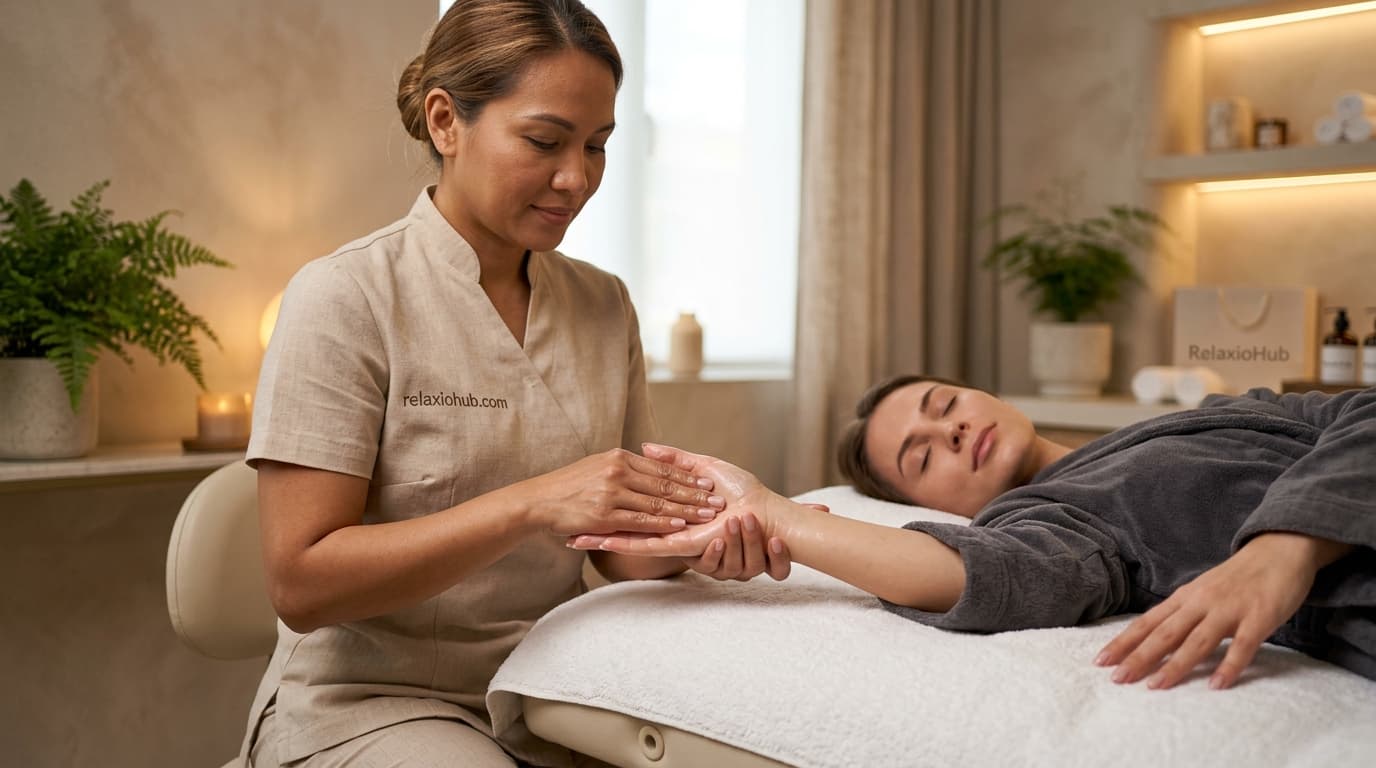
Small-zone focus
Hand massage is a focused session for palms, fingers, thumbs, wrists and often the forearm flexor and extensor lines. It answers a very modern search intent: hands tired from keyboards, phones, gaming, hairdressing, craft work, driving, climbing, caregiving or constant gripping. The work is small but not superficial. Good therapists warm the palm, trace tendon paths, mobilize fingers gently, soften the thumb web and check whether wrist pressure creates tingling, pain or relief.
The hand is built for precision under load: 27 bones, 33 muscles (most of them in the forearm, pulling via long tendons into the fingers), the median, ulnar and radial nerves running within tight anatomical channels, and the carpal tunnel — a fibrous roof over the wrist through which nine flexor tendons and the median nerve pass in close company. That is why repetitive gripping and sustained finger extension create a predictable cluster of symptoms: palm tightening, thumb-web stiffness, wrist ache and, when the median nerve is irritated, that familiar night-time tingling in the first three fingers. A skilled therapist reads these signals and adapts — warming the forearm extensors before touching the wrist, mobilizing each finger separately rather than pulling all at once, and stopping immediately when gliding pressure shifts from warmth into an electric edge.
That modern lens matters because “hand pain” can hide very different stories. A tired palm after typing is not the same as median-nerve numbness, inflammatory arthritis, a trigger finger, a fresh sprain or swelling after trauma. Massage can help some people feel short-term comfort, warmth and less guarding, but it does not diagnose carpal tunnel syndrome, repair ligaments or replace a hand therapist. Profiles should sound calm and precise, not heroic.
Before booking
Technique
A useful hand session moves from broad warmth to small detail without forcing joints or chasing nerve symptoms.
The therapist asks about numbness, swelling, recent injury, arthritis flares, surgery, repetitive work and where pressure should stay light.
Broad thumb circles and soft compressions warm the palm and the thumb-index web, often the first area to grip during phone use.
Each finger receives gentle traction, small rotations and glides so joints feel attended to without cracking or pulling for drama.
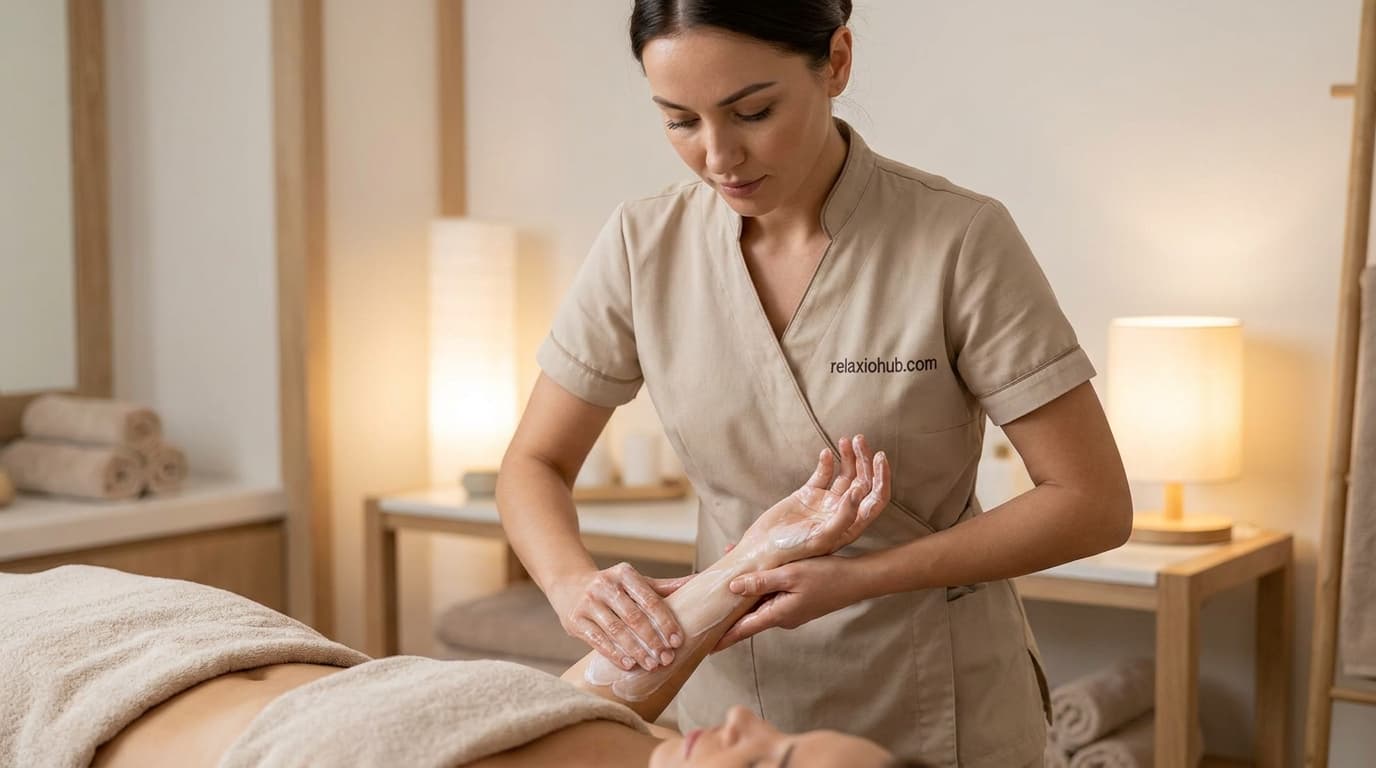
Slow strokes follow flexor and extensor paths around the wrist and forearm, keeping pressure away from sharp nerve sensations.
The practitioner may work toward the elbow because tired hands often share load with tight forearm compartments.
The close includes lighter strokes, a small fist-open movement and a check for warmth, tenderness, tingling or improved ease.
Why book it
Focused contact with palms, fingers and wrists eases habitual gripping tension and restores small-zone body awareness — with clear limits where clinical care begins.
Slow compressions can soften the habitual gripping pattern that builds during typing, scrolling or tool work.
Gentle joint glides and tendon-line work can make opening, closing and spreading fingers feel less sticky.
Work above the wrist helps connect hand fatigue with the muscles that control grip and keyboard posture.
Because hands are highly sensitive, even a short session can feel grounding and emotionally quieting.
Tender thumb webs, stiff wrists or cramped fingers can reveal how tools, phones and posture shape daily tension.
Screening for numbness, swelling, trauma and infection keeps massage from delaying hand care that needs a clinician.
Session flow
You mention numb fingers, tingling, swelling, arthritis, repetitive work, injury history, scars, skin issues and preferred pressure.
The hands rest on a towel, bolster or therapist support so wrists do not hang in extension during the session.
The therapist alternates warming strokes, thumb pressure, finger mobilization and wrist/forearm work with regular feedback checks.
You open and close the hand, rotate the wrist gently and report whether any tingling, pain or unusual weakness appeared.
Choosing the format
Choose by symptom and goal, not by the most impressive treatment name.
This is the right focused format when typing, gripping, phone use or craft work makes the hand itself feel tired.
If the main fatigue follows flexor or extensor lines toward the elbow, ask whether the session includes forearm work rather than only palms.
Persistent numbness, weakness, locking fingers, fractures or post-surgical rehab belong with a clinician or certified hand therapist.
Hands are small, nerve-rich and easy to irritate. Some symptoms should not be treated as ordinary tension.
FAQ
It can help some people feel warmer, less clenched and more aware of gripping habits. Ergonomics and breaks still matter.
No. Massage may feel supportive for mild overuse patterns, but persistent numbness, night tingling or weakness needs medical screening.
No. Gentle movement is different from forced cracking. A massage session should not surprise joints for dramatic sound effects.
Usually yes if skin is intact, but avoid pressure over cuts, irritated cuticles, fresh wounds, infections or painful nail beds.
Some people with medically stable hand arthritis enjoy gentle massage, but hot swollen flares or severe pain require clinician guidance first.
For ordinary screen or craft fatigue, many guests use it as an occasional add-on every 2-4 weeks or after heavy work blocks.
Look for clear pressure language, wrist and forearm inclusion, refusal around numbness or swelling, and no promises to cure nerve compression.
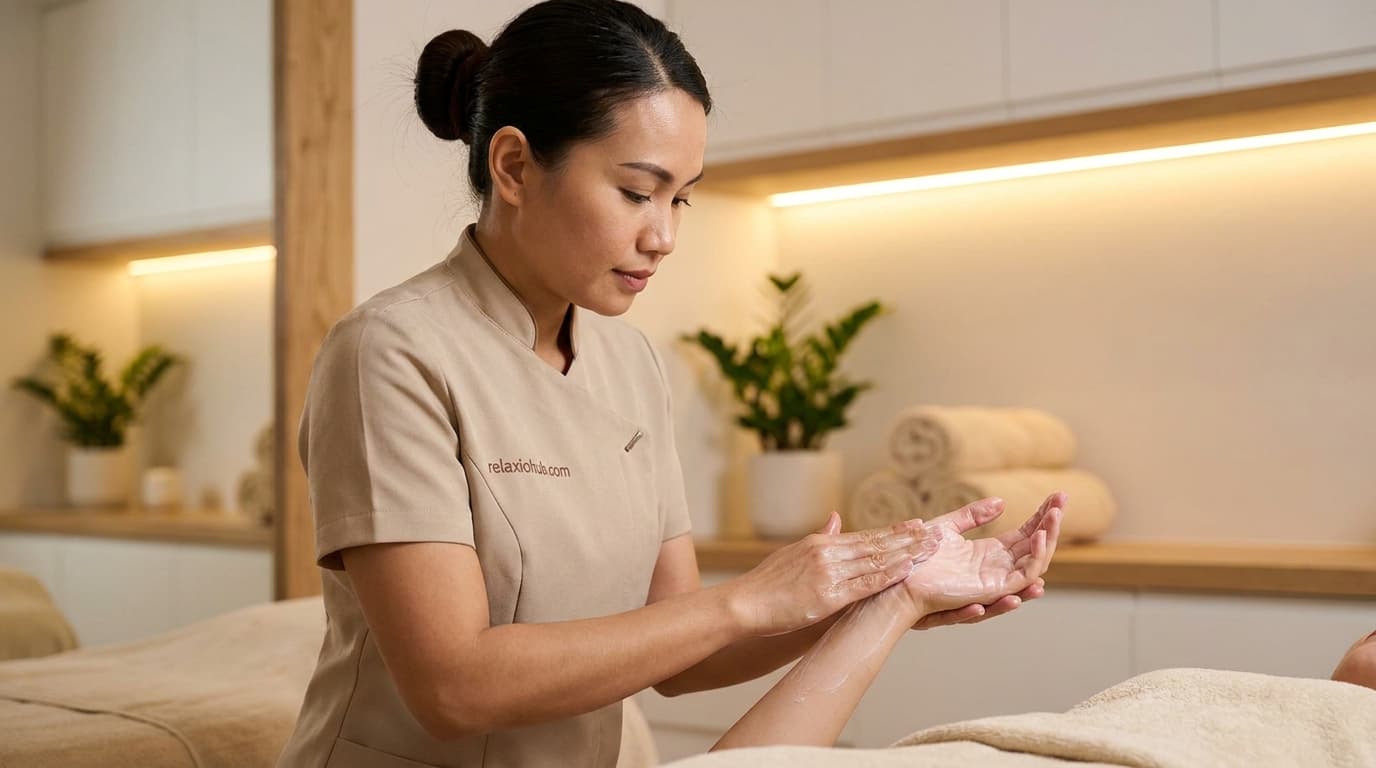
Skilled hand work listens for small signals: warmth, glide, grip ease and any tingling that says stop.
Therapists
Practitioners across Ukraine who provide this massage type. Choose a specialist and view their profile.
Віктор
Тетяна
Любов
Ксенія
Марія
Оксана
Ірина
Наталія
Поліна
Надія Світла
Кіра
Оксана
Choose your city and compare profiles for palm, finger, wrist and forearm focus, pressure style, oil or dry format, safety screening and experience with screen or craft-related hand fatigue.