Tissue preparation
Broad palm contact or light kneading helps skin and muscle accept load before the edge ever bites.
Slow fascial glide with a smooth tool and supportive hands—warmth spreading through tight tissues, easier breathing after stress, and a pace you can steer without chasing bruises as a trophy.
Massage overview
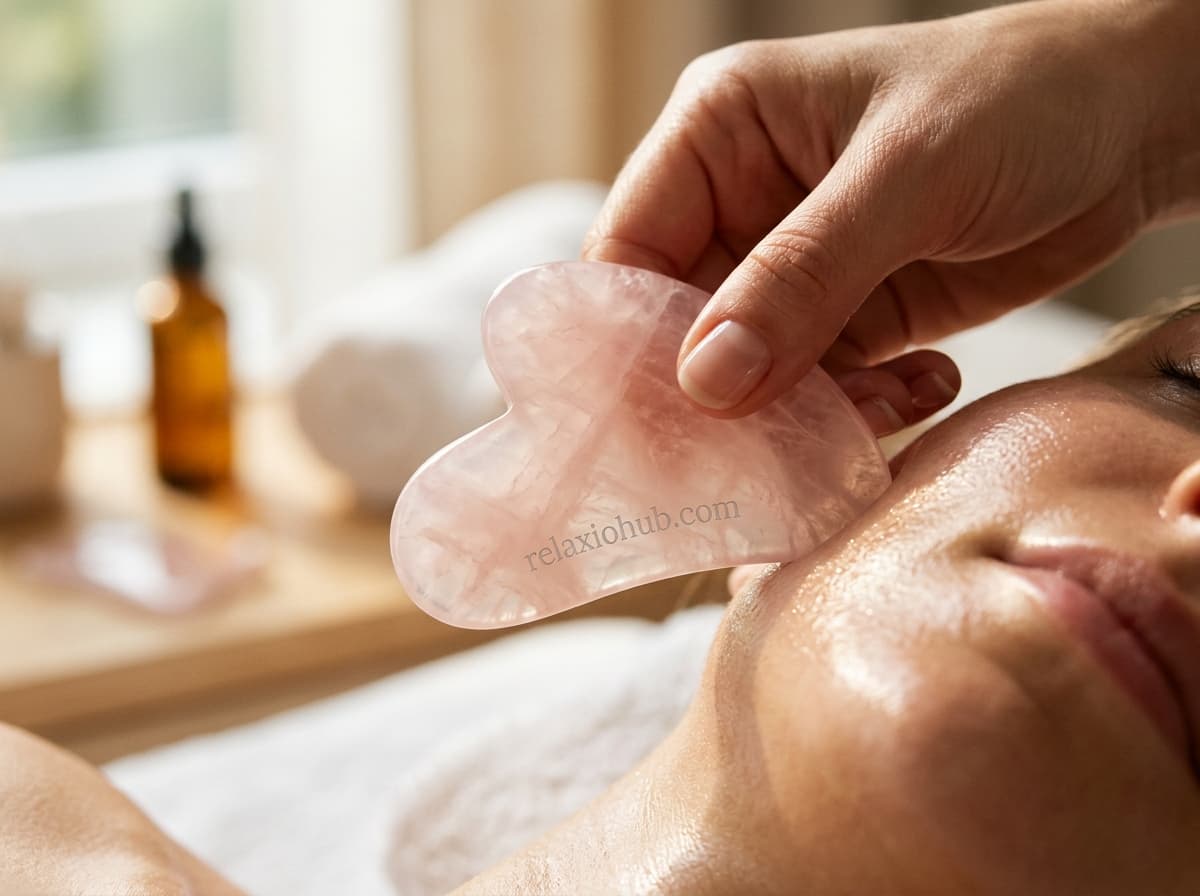
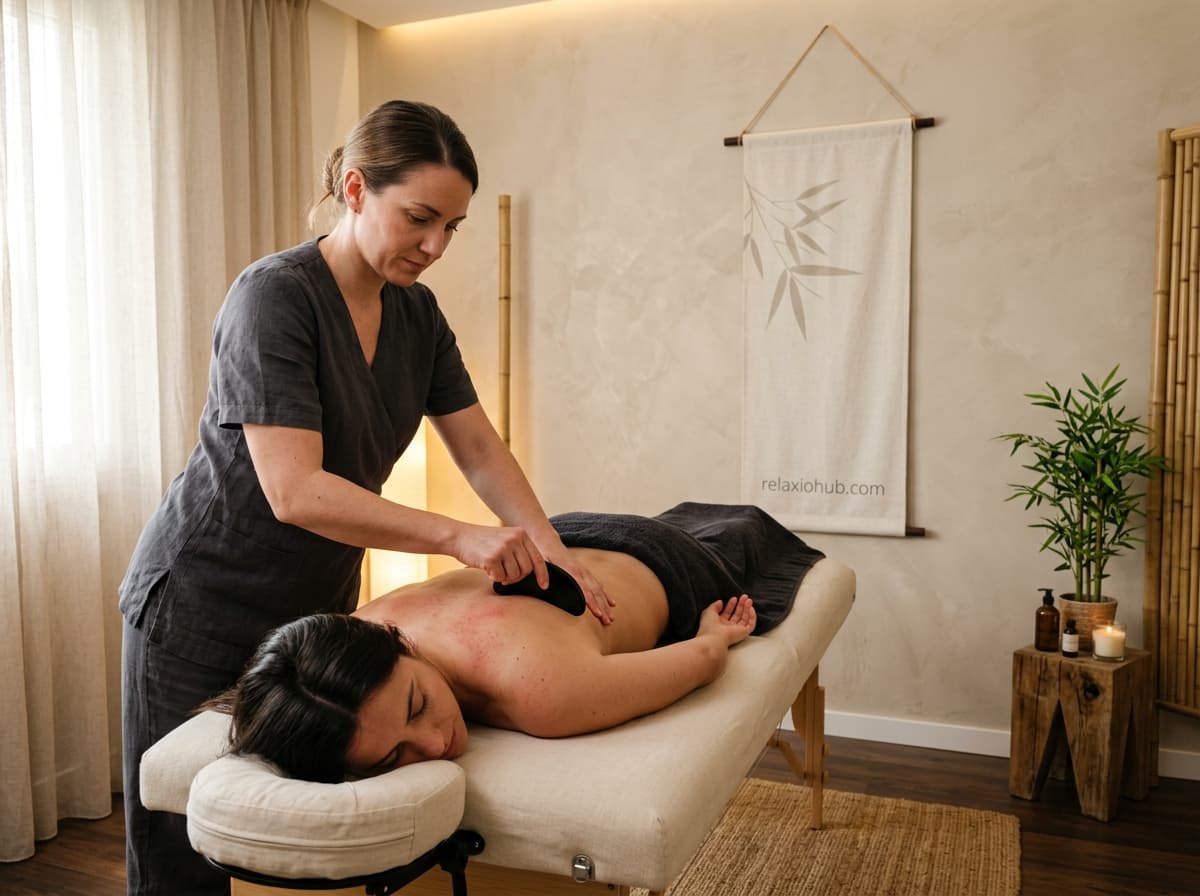
Gua Sha (scraping massage) is a sequence of slow strokes with a smooth plate, beveled stone edge, or ceramic tool on skin—usually with enough oil to eliminate dry friction. A skilled therapist follows tense chains: trapezius, paraspinals, glutes, posterior thigh or calf—and alternates tool work with broad hand kneading so your nervous system stays in charge of the intensity.
With appropriate pacing you feel heat building, a lengthening sensation in superficial layers, and gradual slack in stuck areas. Temporary petechiae—tiny red dots sometimes called “sha”—can appear. They are not a required proof of a “good” session; they depend on skin reactivity, stroke depth, area duration, and capillary response. Comfort and consent always beat aesthetic bruising.
In wellness settings people often choose Gua Sha after monitor neck, interscapular heaviness, or when they want depth without percussive pounding. It is not a medical procedure and not a substitute for diagnosis: blood-thinning meds, fragile vessels, unexplained acute pain, or active rashes deserve a clinician before experimenting with aggressive scraping.
At a glance
Technique
Tool materials vary (jade, horn, stainless), but the body reads the same story: warm-up, oiled glide, rhythmic short passes, then calming hands.
Broad palm contact or light kneading helps skin and muscle accept load before the edge ever bites.
The plate travels along fiber lines or diagonal paths between shoulder blades; pressure ramps with your breathing cues.
Micro-length strokes can unlock a fixation without the sandpaper feel of dry scraping.
Neck work stays lighter with more slip; throat, front-neck, and clavicle zones need explicit consent and training—sometimes they are off-protocol entirely.
Slow hand strokes finish so skin settles and you feel opening instead of raw burn.
Why people book
Outcomes depend on sensitivity, prep quality, and agreed depth. Below are honest wellness reasons—not disease treatment claims.
Controlled stretching contact can bring a sense of heat—helpful after static posture and chilly office air.
Fascial glide often pairs with easier head turns and calmer upper-chest breathing after stress weeks.
A fit for people who like intensity but dislike sharp elbows or rapid percussion.
You should be able to slow or stop pressure before unwanted hematomas—communication is part of the technique.
Flow
Medications, clotting issues, varicose segments, recent sunburn, eczema flare, herpes breakout, or acute pain guide which regions and how deep.
Back, hips, or neck progress with adequate oil; intensity moves from a light test stroke to a mutually agreed “productive edge.”
Gentler hand work follows heavy zones; you get a minute or two to lie still before popping up quickly.
Choosing modalities
Searchers compare tools and vacuum cups. Here is a neutral map of differences without dismissing other methods.
Acupressure pins tension with thumbs; Gua Sha drags a wider ribbon of tissue with a smooth edge.
Cupping lifts via suction; scraping shears along the plane of the skin. Vascular cautions overlap; preference is both sensory and medical.
Request a light protocol: more oil, shorter lines, shallower angle—valid adaptation, not a lesser massage.
Scraping stresses skin and microvessels; honest screening prevents avoidable petechiae disasters.
FAQ
No. Petechiae depend on pressure, vessels, and area. You can ask for a lighter session with minimal visible marks.
Cupping uses vacuum lift; Gua Sha uses shear along the surface with lubrication. Sensations and cautions overlap but mechanics differ.
The tool idea is similar, but cosmetic facial routines are gentler and shorter. A full back session is not a DIY face-sculpting trend.
After strong petechiae, many people wait until skin calms—often several days to a week. Moderate wellness cadence might be every 3–5 weeks if screening stays clear.
Light activity is usually fine; postpone aggressive training if the area feels tender or irritated to touch.
Skip peeling, sun exposure, and shaving on planned areas the day of. Disclose blood thinners, varicose segments, pregnancy, dermatitis, and fresh tattoos. If bruising concerns you, request a lighter protocol upfront.
A Gua Sha plate distributes pressure along a smooth broad edge, avoiding the focal sink of a digit or elbow point. The wider contact surface generates fascial glide; focused instruments concentrate force at a smaller point.
Therapists
Practitioners across Ukraine who provide this massage type. Choose a specialist and view their profile.
Pick your city and read profiles for real scraping experience, transparent petechiae policies, medication screening, and clear refusal when vascular risk is present.