Long dry strokes along the outer lines of the limbs
Rhythmic upward passes from feet and palms warm the skin steadily until it flushes pink and starts to tingle.
Ayurvedic dry glove ritual: raw silk or textured fabric traces fast rhythmic passes across the skin until it flushes warm and tingles — no oil at the start.
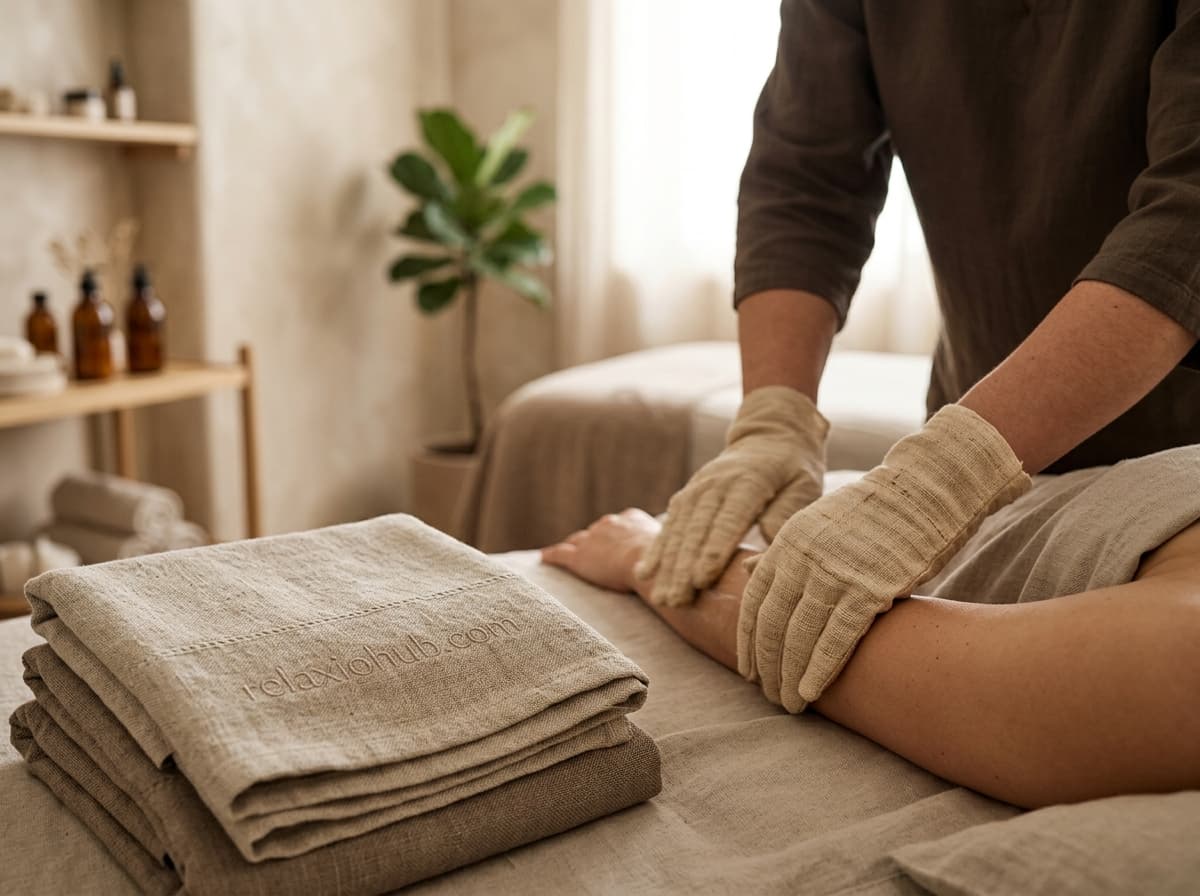
Massage overview
In Sanskrit, garṣaṇa means rubbing or friction. Ayurvedic classical texts — including the Charaka Samhita — describe the technique as rhythmic dry friction applied with a glove or cloth bag, moving from the limbs toward the heart to stimulate surface circulation. In contemporary studios the name refers to a dry-first protocol: the therapist works the body with gloves before the shower, removing spent skin cells, and the session may finish with oil Abhyanga or a light moisturiser depending on the studio format.
Garshana differs from Abhyanga because oil plays no part in the first phase — the entire point is mechanical exfoliation on dry skin. Starting without oil gives the glove cleaner friction; after the shower, the skin absorbs oil or moisturiser more evenly. It is also distinct from manual lymph drainage: the contact mechanism is different and there is no clinical claim about altering lymphatic flow. Swelling with a medical cause needs a physician, not a glove session.
Before booking, it is worth asking the therapist about glove material and how the studio launders its equipment. Raw silk gives a smoother, more even contact; coarsely woven cotton or synthetic fabric delivers sharper friction. Knowing what touches your skin matters especially if you have textile sensitivities or reactive skin.
At a glance
Technique
Strokes follow a centripetal direction — from the periphery toward the heart — which is the classical Ayurvedic pattern for activating surface circulation.
Rhythmic upward passes from feet and palms warm the skin steadily until it flushes pink and starts to tingle.
Intensity adjusts to your feedback — the décolleté and chest are often excluded or softened unless you ask otherwise.
Friction eases over bony prominences; the therapist signals the change before increasing contact pressure.
Rinsing lifts the exfoliation residue and opens the skin barrier so that oil or moisturiser absorbs more evenly in the next step.
Post-exfoliation skin absorbs oil more readily than untreated skin; the therapist confirms oil composition for any known allergies.
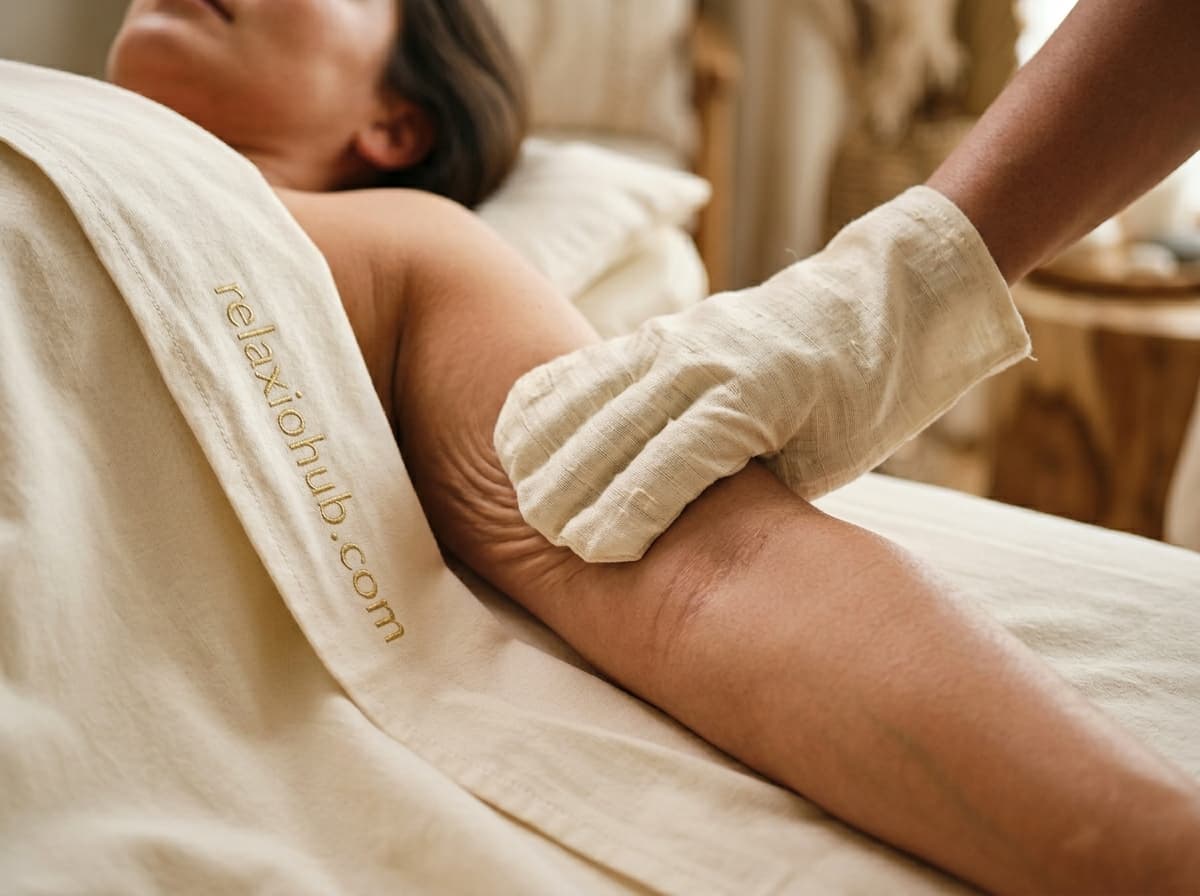
Effect
Renewed skin texture and light warmth — without medical guarantees.
Removing the uppermost layer of dead cells leaves skin feeling fresh to the touch for several days.
A dry opening suits clients who prefer clean friction over an immediately slippery surface.
A good therapist explains why strokes move from periphery to center rather than simply invoking ancient tradition.
Glove material, laundry detergent, and oil composition should all be named before the session begins.
Process
Isotretinoin, topical corticosteroids, or atopic dermatitis all affect how much friction is appropriate — the therapist adjusts pressure accordingly.
Pace and pressure are adjusted by your voice throughout; stopping or modifying at any point is expected, not exceptional.
A warm rinse removes exfoliation residue and prepares the skin; a short rest follows before the next stage.
Oil nourishes the freshly opened barrier; the therapist reminds you that exfoliated skin is more sensitive to sun exposure.
Comparison
Three practical reference points — no single right answer.
Combo packs pairing Garshana with Abhyanga are designed for exactly this arc: dry exfoliation opens the skin so oil absorbs more deeply in the second phase.
A therapeutic or deep-tissue protocol without gloves keeps the focus on muscle tissue rather than the surface layer of skin.
Skin texture may look more even for a few days as surface circulation improves and the dead cell layer is removed; changes in fat tissue structure do not occur from a single session or even a short series.
Friction and heat have clear limits.
FAQ
Traditional Garshana gloves are made from raw (unprocessed) silk, which provides an even, moderately abrasive contact without micro-tears. Coarsely woven cotton or synthetic gloves deliver a sharper, more intense effect. Before the session, ask about the material — especially if you have textile sensitivities or reactive skin.
Yes, when the therapist adjusts pressure and glove choice. On sensitive skin, raw silk gloves are usually preferred, passes over delicate areas are lightened, and the same zone is not worked more than once per session. Active dermatitis or open inflammation are reasons to postpone entirely.
Not necessarily — some formats offer a dry-only session. However, exfoliation leaves the skin barrier temporarily open, so most studios recommend a gentle moisturiser or light oil after the shower to prevent the skin from drying out.
Abhyanga is an oil massage in which warm oil is the foundation from the first stroke. Garshana starts completely dry: the glove works on an uncoated skin surface, which is precisely what makes the exfoliation effective. Oil, if used at all, comes only after the shower.
Skin texture may look more even for a few days after Garshana because surface circulation improves and the uppermost dead cell layer is removed. This is a temporary surface effect. Changes in the structure of fat tissue do not occur from a glove session — that requires a different mechanism altogether.
No. The pink colour that appears during Garshana is capillary dilation in response to friction — increased blood flow close to the surface. The term detox has no clinical meaning in this context, and no visible sign of "toxin release" exists.
Look for profiles that specify glove material, the studio's laundering policy, how the therapist adapts the session for sensitive skin, and an absence of claims about detoxification or permanent cellulite removal.

Glove material and studio hygiene shape the session experience more than the ritual's name in the format.
Compare profiles that describe glove material, dry phase protocol, shower transition, and clear guidelines for sensitive skin.