Mirrored long strokes along both sides of the trunk
Feels like one wide wave—often eases left-right tension chatter in the head.
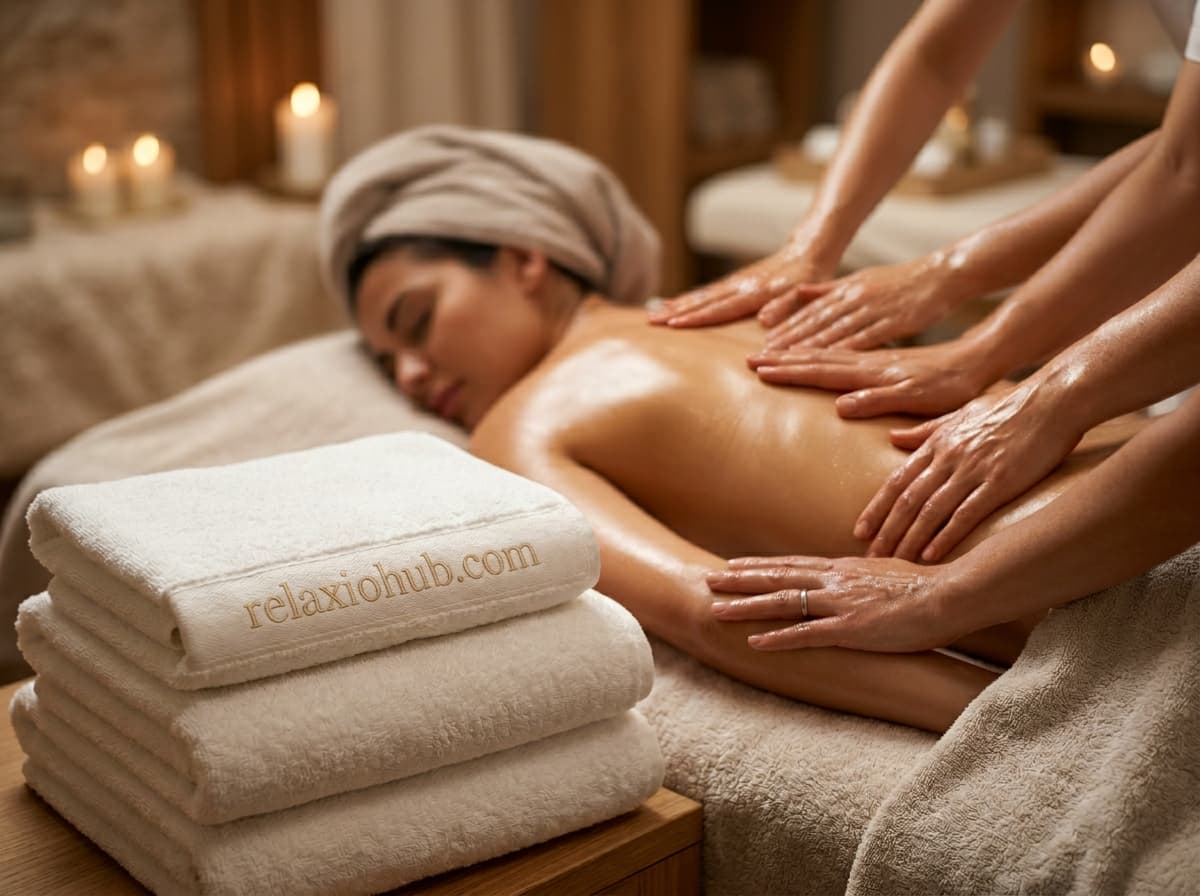
Two pairs of palms can sustain continuous contact longer than one: while one line of movement finishes a long effleurage along your back, the other already meets your hip or neck from the opposite side. In an professional studio protocol it is a rehearsed duet with roles and tempo explained up front—not "double medicine" and not a romantic couples session for two guests on adjacent tables.
Search intent
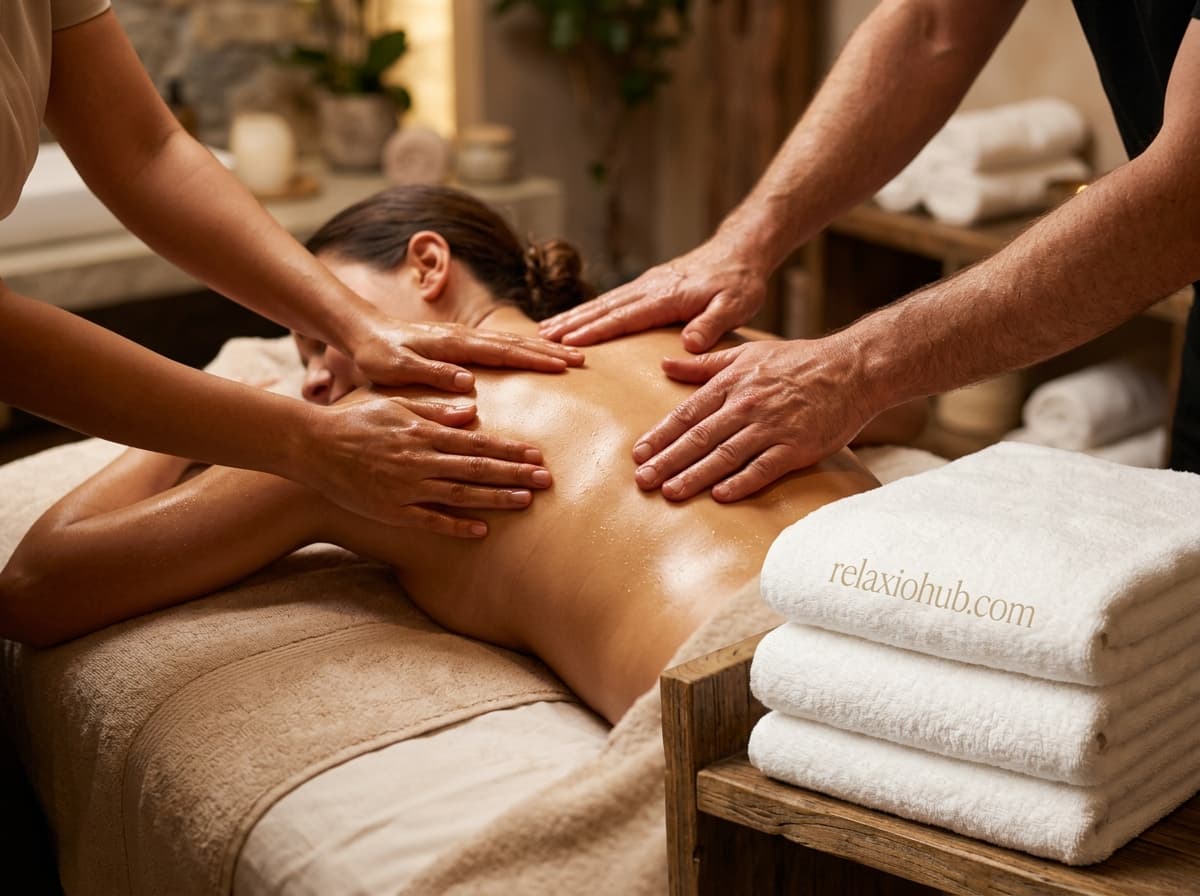
Profiles call it duet, 4 hands, tandem, or dual therapist—the idea is the same: you are the only guest on the table while two professionals work. A thoughtful opening covers who leads depth, who supports breath cues, and how both voices stay coherent. Technically you may feel mirrored effleurage on glutes and paraspinals, split upper-body / lower-body coverage, simultaneous calf and back contact, or opposing vectors through hips and shoulders that create a long wave without jerks.
Budget and time reality: these sessions are almost always longer and pricier than a standard one-therapist booking—two payrolls, hygiene setups, and tighter room choreography. Candid copy also admits dual touch can feel unexpectedly intense for some nervous systems: many guests drop into deeper rest; first-timers occasionally feel touch overload—that is feedback to slow the rhythm or simplify roles, not a personal failure.
Wellness boundaries: two therapists does not duplicate medical diagnosis or replace a neurologist or cardiologist. Fevers, fresh injuries, unexplained neuro symptoms, and acute vascular events belong with clinicians, not a duet booking.
Snapshot
Technique
Names differ; bodies remember rhythm and whether contact ever vanishes into awkward silence.
Feels like one wide wave—often eases left-right tension chatter in the head.
Shoulders release while hips and legs still receive work—less hopscotch than one therapist sprinting between poles.
Four anchor points spread load, but depth still rides on your verbal yes.
While one pair of hands holds a slow drag, the other glides lightly nearby—harder for the nervous system to armored-lock.
Downshifts adrenaline after a dense mid-session chapter.
Why book
Continuous contact and multiple vectors—not a promise of doubled clinical outcomes.
Useful if short off-table pauses snap you out of relaxation.
Symmetry helps drop shoulders when solo work leaves one side mentally "unfinished."
Handy if you want different depths on different regions simultaneously.
Mature studios name the lead, the support therapist, and a single stop word for both.
A rehearsed duet synchronises trajectories and minimises path interference. The nervous system reads one coherent wave pattern rather than two competing cues.
Two therapists justify a higher price — an honest studio description gives clearer purchase grounds than promised '2× effect' copy.
Flow
Names, coverage map, and how to halt the whole team with one word—so you never feel on stage.
Tempo ramps together; mirroring simplifies if your nervous system asks for less complexity.
Hydrate, stroll gently; if nausea or anxiety spikes after a duet, tell the desk before rebooking.
After the main phase, both therapists collect brief feedback on what felt too dense or underworked — input that adjusts the protocol for any follow-up session.
Compare
Three intents—no mandatory hero format.
A rehearsed duet often earns its minutes in the first wave.
Solo classic stays simpler socially and lighter on logistics.
That is a different SKU; four-hands means two pros on one guest.
Dual therapists do not erase medical red flags.
FAQ
No. Four hands means two therapists for one guest. Side-by-side romantic sessions are a different offering.
Nearly always—two professionals and longer room time. Matching solo pricing should prompt questions about duration and whether both therapists stay in-room.
Two pairs of hands raise sensory bandwidth; first visits can feel intense—not a moral failure, a sign to slow tempo.
Same wellness scope on soft tissue; the delta is duet logistics, rhythm, and price—not doubled medical power.
Look for shared photos or copy proving the pair rehearses together, transparent roles, honest timing, and zero cure-all promises.
Two simultaneous streams from cutaneous mechanoreceptors — Meissner's corpuscles, Merkel discs, Pacinian corpuscles — create a wider afferent front than solo work. The reticular activating system may respond with arousal rather than downshift. The fix is slowing tempo or simplifying the duet protocol, not abandoning the format.
Yes. Research on interpersonal motor synchrony shows rehearsed duets anticipate each other's movements through shared kinematic memory, minimising path interference. For the guest this means fewer micro-pauses that reveal two strangers improvising — a rehearsed pair reads as one coherent wave.
Compare profiles highlighting duet experience, shared protocols, slot lengths, and clear boundaries on depth and zones.