Foot check and hygiene setup
The therapist checks skin, nails, cuts, swelling, temperature, neuropathy risk and comfort before covering or cleaning the feet.
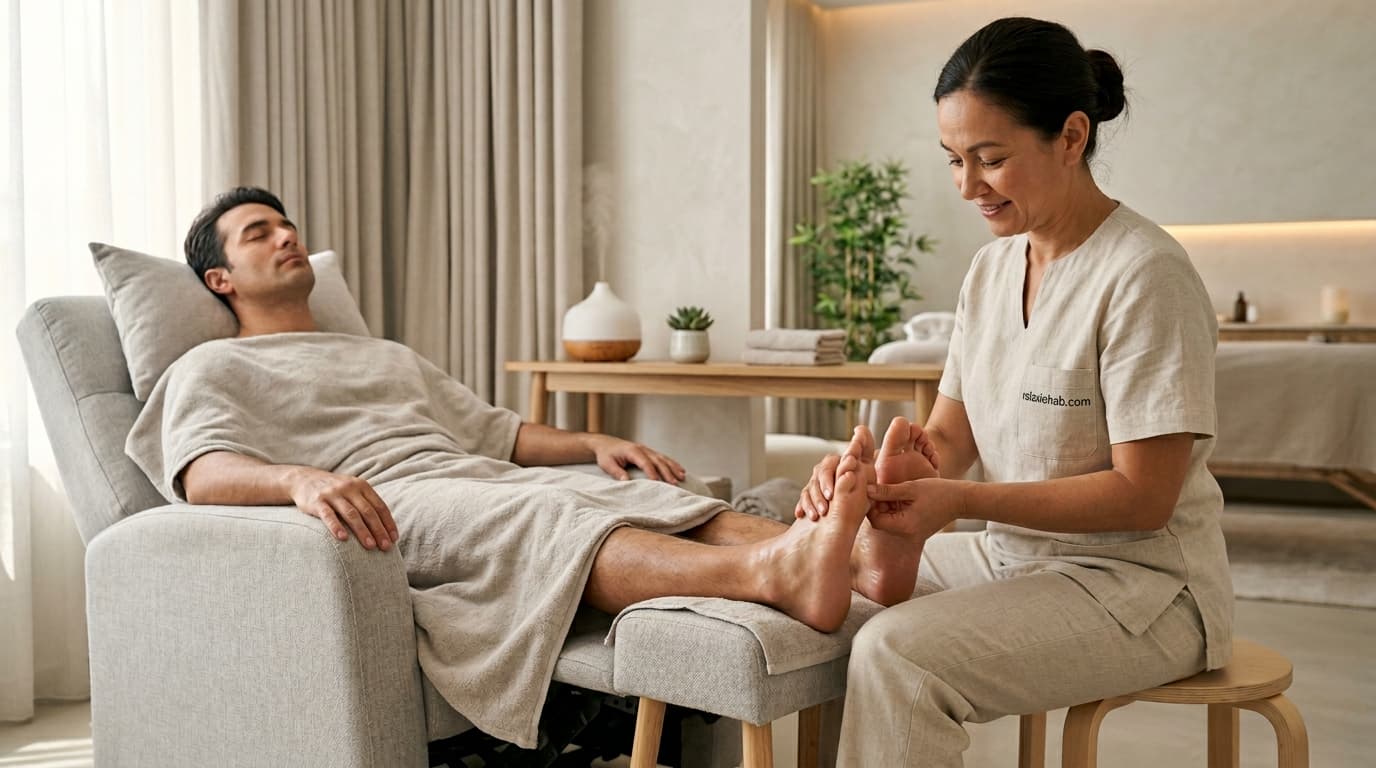
Precise thumb pressure, holds and rotations on mapped zones of the feet create a grounded, deeply attentive ritual: a slow conversation with soles, arches, heels and toes rather than ordinary rubbing.
Mapped foot work
Foot reflexology is a focused session for the soles, arches, heels, toes and ankle line. Unlike a simple foot massage that mainly kneads tired muscles, reflexology uses a map: the practitioner works small zones with thumb-walking, finger pressure, rotations and sustained holds. Guests usually search for it when feet feel overloaded after walking, when stress makes the body restless before sleep, or when they want a quieter ritual than full-body oil massage. The Ingham-style map divides the foot into five bands: toes for head and sinuses, the ball for chest and lungs, the arch for abdominal organs, heel for pelvis and lower back.
Its history is layered and often over-romanticized. Ancient foot work appears in stories about Egypt, China and India, including the frequently cited Ankhamor tomb image around 2330 BCE and later Asian foot maps. Modern reflexology, however, took its recognizable Western form in the early 20th century. Physician William H. Fitzgerald described “zone therapy” and ten longitudinal body zones; Joe Shelby Riley expanded the maps; physiotherapist Eunice Ingham separated foot reflexes into a dedicated system and popularized charts through books and teaching. That is why many contemporary foot maps still carry the language of Ingham-style reflexes. Her books — Stories the Feet Can Tell (1938) and Stories the Feet Have Told (1951) — fixed the reflex-zone maps that most training programs still use.
A responsible studio does not claim to diagnose organs from the foot or cure disease by pressing a point. Reflexology can be framed as skilled touch, pressure attention and nervous-system downshifting; research is mixed, with some studies suggesting possible support for sleep, fatigue or anxiety, but evidence quality varies. For booking, the useful standard is clear: the practitioner should explain pressure, hygiene, diabetes and neuropathy limits before working.
Before booking
Technique
The work looks small, but good reflexology is highly paced: pressure builds gradually, and every tender zone has a clear exit.
The therapist checks skin, nails, cuts, swelling, temperature, neuropathy risk and comfort before covering or cleaning the feet.
Broad palm contact and gentle ankle movement soften the foot so mapped pressure does not arrive as a surprise.
The thumb moves in small caterpillar-like steps along the sole, arch, heel and ball of foot, pausing where tissue feels dense.
Small circles and holds around toes and the forefoot can feel precise, especially after tight shoes or long standing days.
Grounded pressure on the heel and arch often feels like the foot finally spreads its weight instead of gripping the floor.
The practitioner lightens pressure, covers the feet and asks about warmth, tenderness, dizziness or emotional release before you stand.
Why book it
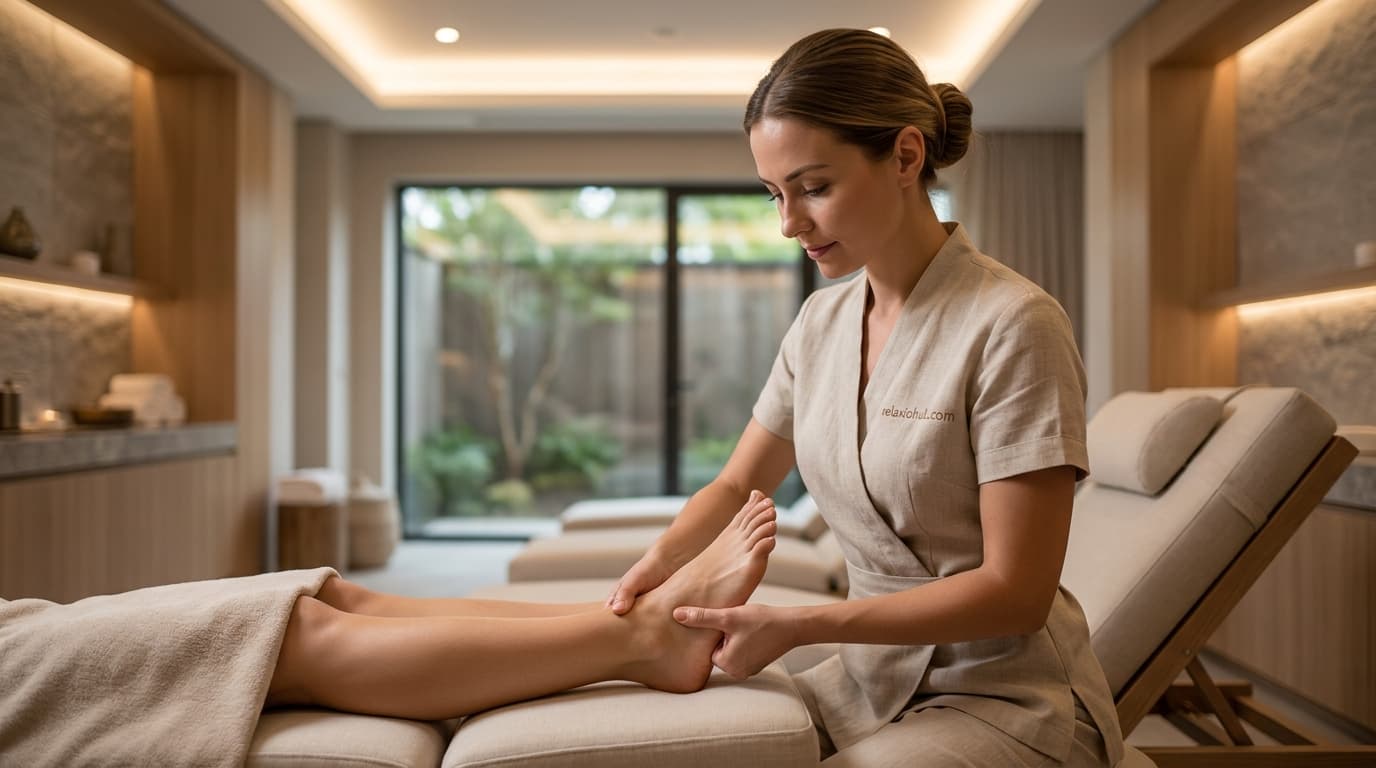
The strongest promise is grounded relaxation and careful foot attention, with medical claims kept out of the spa room.
Soles, arches, heels and toes get more attention than they usually receive inside a full-body massage.
Slow rhythmic pressure gives many guests a quiet, body-heavy feeling that helps the mind stop racing.
The steady pace invites longer exhales, especially when the therapist avoids sudden painful point hunting.
Tender zones can reveal how much tension lives in footwear, gait, standing habits and protective gripping.
Thumb-walking and holds target small areas without needing full-body undressing or heavy oil work.
A careful intake prevents unsafe pressure on ulcers, neuropathy, infection, fractures or clot risk.
Session flow
You disclose diabetes, neuropathy, poor circulation, foot ulcers, gout, fungal infection, pregnancy, clots, fractures and pressure preferences.
You lie or recline while the feet are cleaned or wrapped; bolsters support knees so the ankles can relax.
The practitioner works through soles, arches, heels, toes and ankle lines with thumb-walking, rotations and still holds.
Tenderness, warmth or sleepiness are discussed before you stand; unusual pain, numbness or skin irritation means stopping and reassessing.
Choosing the format
All can involve feet, but they answer different search intents.
Reflexology is best when you want a quiet, point-by-point foot ritual with clear pressure language and a chart-based flow.
If the goal is calf kneading, ankle mobility and general tired-leg relief, a regular foot-and-leg massage may feel more direct.
Fish peeling works on softened dead skin in water; it is not pressure work and does not replace reflexology or a pedicure.
Feet can hide circulation, nerve and skin issues. Reflexology should never override foot-health screening.
FAQ
No. Foot massage usually kneads muscles for comfort, while reflexology follows mapped zones with smaller, more specific pressure.
No. A responsible practitioner may use a foot chart for session structure, but does not diagnose organs or replace medical testing.
Tender points can feel intense, but sharp, bruising, electric or nauseating pain means pressure should change immediately.
Only with caution. Neuropathy, ulcers, poor circulation or impaired healing require medical guidance and very conservative pressure.
Some studies suggest possible support for relaxation and sleep, but evidence varies. Treat it as supportive wellness, not treatment.
For general relaxation, many guests book every 2-4 weeks or around stressful periods, adjusting to foot tenderness and budget.
Look for clear pressure language, hygiene rules, diabetes and neuropathy screening, and no promises to cure internal disease from foot points.
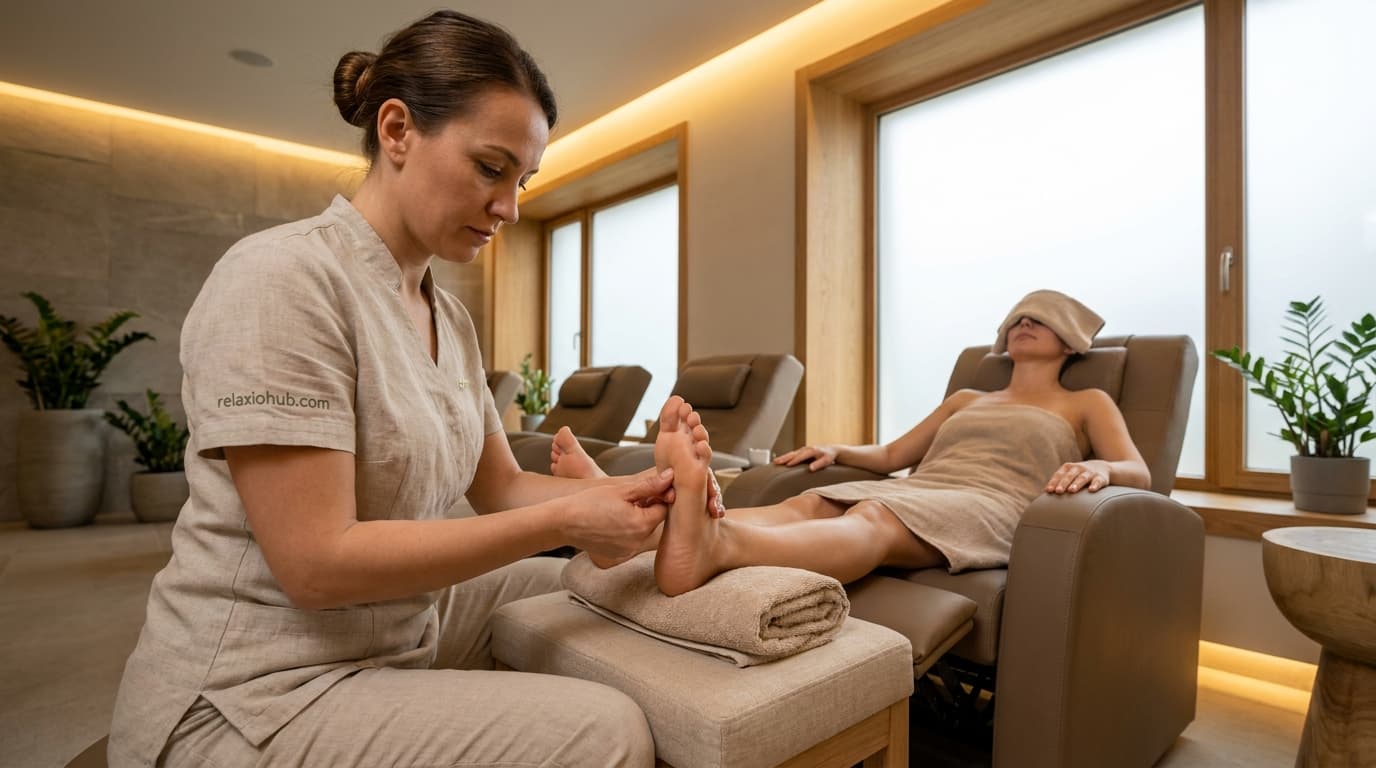
The best reflexology feels precise and calm: small zones, clear pressure, warm feet and honest boundaries.
Therapists
Practitioners across Ukraine who provide this massage type. Choose a specialist and view their profile.
Олеся
Віктор
Кіра
Ольга
Ірина
Альона
Катерина
Любов
Ксенія
Василина
Choose your city and compare profiles for pressure style, hygiene standards, diabetes and neuropathy screening, foot-zone language and whether calves or a short foot massage are included.