Foot inspection
The practitioner checks for open cuts, fungal infection, diabetes-related wounds, or fresh shaving nicks before the feet enter shared water.
Fish peeling is a foot spa ritual where tiny Garra rufa doctor fish nibble softened dead skin in warm water — not a hand massage, but a living exfoliation that feels ticklish, fizzy, and unmistakably exotic from the first second your feet enter the basin.
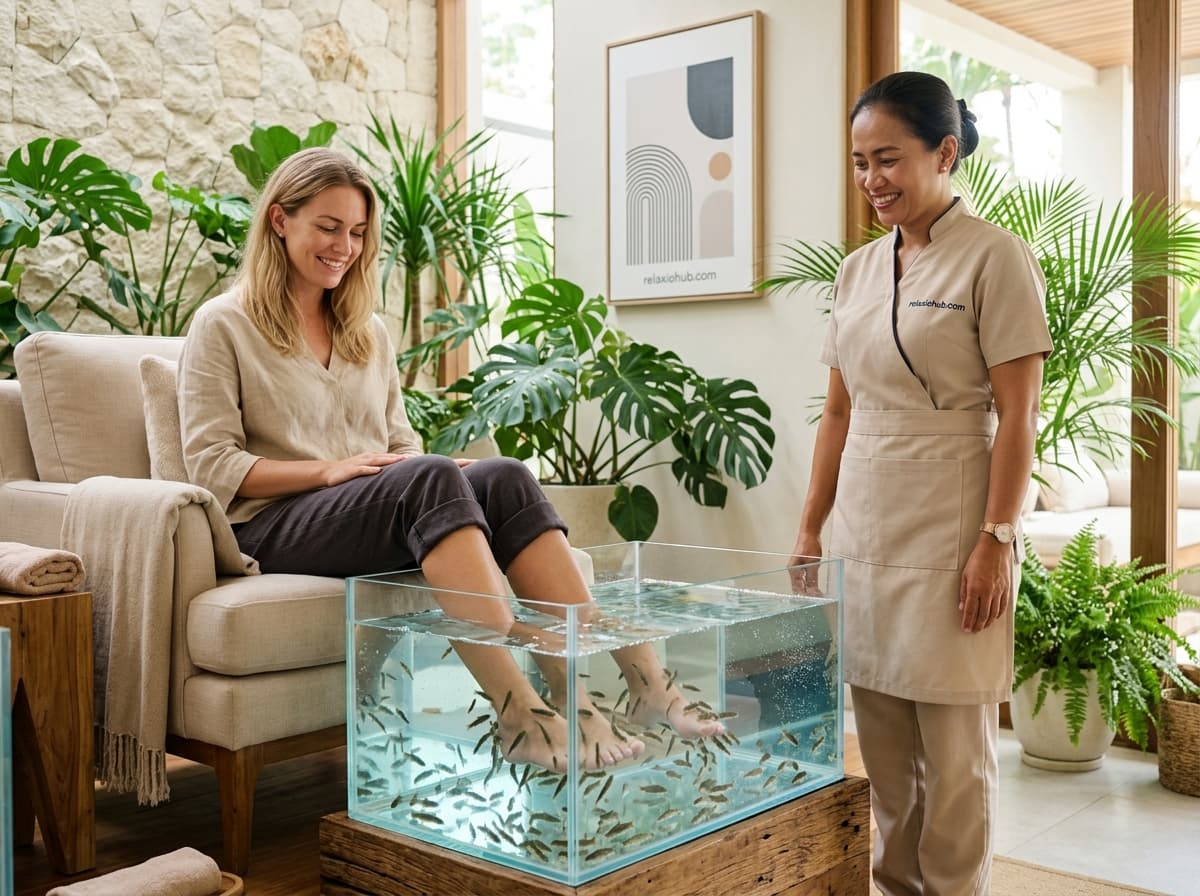
Living foot exfoliation
Fish peeling — also searched as fish pedicure, doctor fish spa, Garra rufa pedicure, or ichthyotherapy — places the feet (and sometimes hands) in a basin of temperature-controlled water where small fish gently remove softened dead skin. People book it for calluses, dry heels, curiosity, and the unusual feeling of dozens of tiny mouths working at once. It is closer to cosmetic foot care than to deep tissue massage, but on the platform it sits among massage-adjacent spa rituals guests actively look for.
The history begins in the hot springs of Kangal, Turkey, where Garra rufa — later marketed worldwide as "doctor fish" — were noticed feeding on skin plaques of bathers. Local ichthyotherapy for psoriasis and eczema became a medical curiosity in the early 20th century and later a global spa trend after salons in Asia and Europe adopted filtered basins. Garra rufa lack teeth; they use lips and sucking motions on softened keratin, which is why the sensation reads as tingling or ticklish rather than biting.
What makes fish peeling exotic is the tool itself: living animals instead of a metal file, pumice, or scrub glove. Warm water, visible fish circling the ankles, and the unpredictable tickle when a cluster gathers near a heel create a spa photo-moment unlike any standard pedicure chair. Quality studios filter and cycle water, rest fish between clients, and verify species — because Garra rufa must not be confused with Chinchin fish, which can bite.
At a glance
Process
A professional fish spa treats hygiene and fish welfare as part of the ritual. The peeling only works on softened skin — rushing or skipping foot prep weakens both safety and results.
The practitioner checks for open cuts, fungal infection, diabetes-related wounds, or fresh shaving nicks before the feet enter shared water.
Feet may be rinsed and soaked briefly so dead skin softens and fish target keratin rather than healthy tissue.
You lower feet into filtered warm water; fish approach gradually, often starting at toes and heel edges where skin is driest.
Garra rufa gather where skin is softest, creating waves of ticklish suction that many guests laugh through at first.
Feet may be lifted briefly to let fish rest and to check whether heels, ball of foot, or sides need more exposure.
Feet are rinsed, dried, and optionally finished with cream, light manual buffing, or a short calf massage depending on studio format.
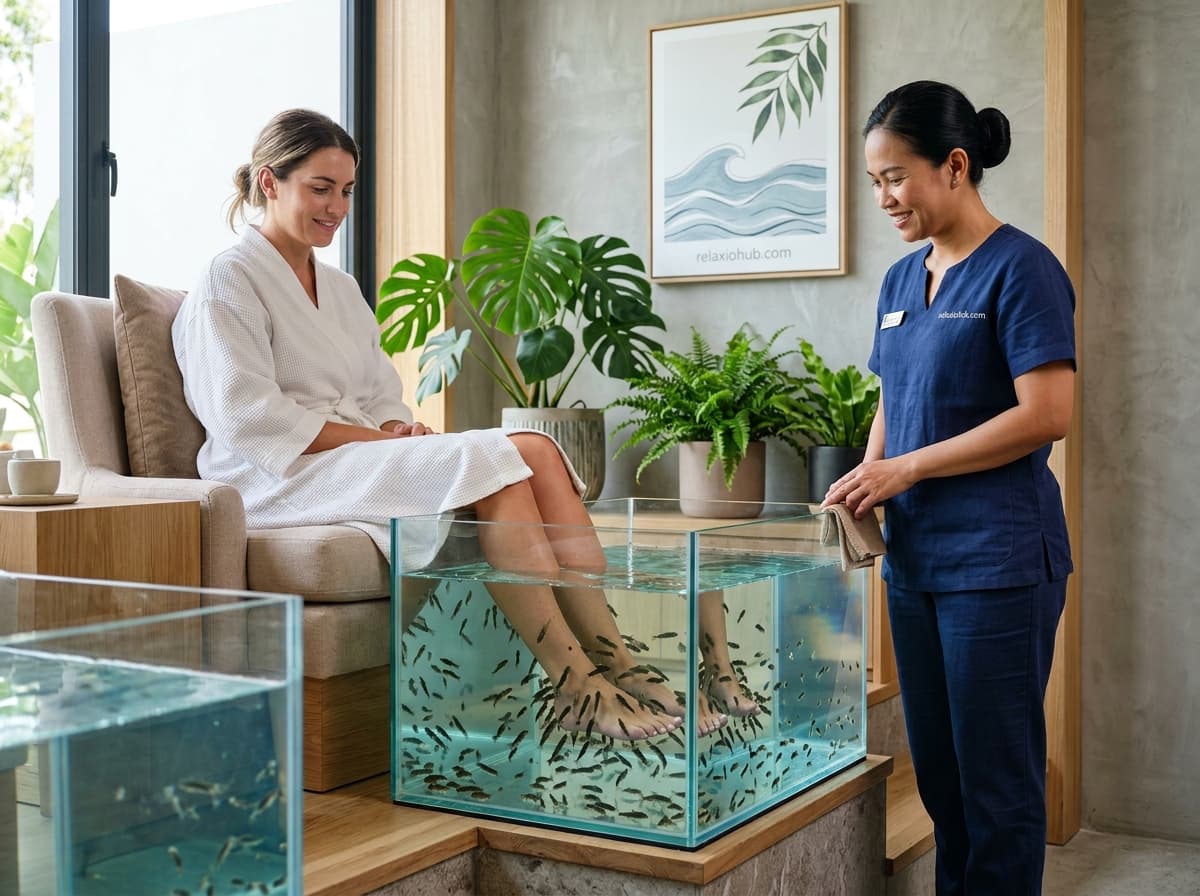
Expected effect
Fish peeling is a cosmetic spa ritual, not medical treatment. Guests choose it for smoother heels, curiosity, and the unusual sensory experience of ichthyotherapy.
Garra rufa target softened dead skin with light suction — heels often feel smoother without aggressive filing pressure.
Temperature-controlled soaking can ease tired feet after walking, travel, or long standing shifts.
Living fish in a glowing basin is a memorable ritual unlike standard pedicure chairs or mechanical peelers.
Fish work mainly on softened callus edges and dry patches when water prep and timing are done correctly.
Reputable studios inspect feet, filter water, verify Garra rufa species, and refuse guests with open wounds.
Fish work on softened keratin only — no metal files, acid peels, or abrasive pads touch the skin during the ritual.
Timeline
Staff ask about diabetes, open cuts, fungal infection, immune conditions, pregnancy, and recent shaving or waxing on the feet.
Feet are rinsed; water temperature is adjusted so skin softens without overheating.
You lower feet slowly; initial tickling is normal as fish explore toes and heel rims.
You stay 15–30 minutes while fish work on softened areas; practitioners monitor comfort and basin hygiene.
Feet leave the basin, are rinsed with clean water, dried, and may receive cream or light manual finishing.
Comparison
All three care for feet, but tools, sensation, and goals differ.
Fish peeling fits when you are curious about Garra rufa, enjoy ticklish sensations, and want an exotic spa story rather than a file-and-polish routine.
A classic pedicure is better for cuticle work, nail shaping, lacquer, and mechanical callus removal with tools.
Foot reflexology or therapeutic foot massage targets tension and pressure points — fish peeling focuses on skin, not deep muscle kneading.
Shared water and micro-contact with fish raise hygiene stakes. Some conditions make any foot bath — with or without fish — unsafe.
FAQ
It is a foot spa ritual where Garra rufa doctor fish nibble softened dead skin in warm filtered water — also called fish pedicure or ichthyotherapy.
It should not hurt. Garra rufa lack teeth; most guests describe tickling, tingling, or light suction — laughter on first contact is common.
Garra rufa became famous at Kangal hot springs in Turkey, where bathers noticed fish feeding on skin plaques; the practice later spread as a global spa trend.
No. Reputable spas use toothless Garra rufa. Chinchin fish can bite and should not be used for peeling — always ask which species a studio uses.
Risk depends on studio standards: water filtration, basin cleaning between clients, foot screening, and fish rest periods. Open wounds should never enter shared tanks.
Look for profiles describing Garra rufa species, water filtration, contraindications, foot inspection policy, session duration, and whether manual finishing is included.
Contraindicated for anyone with open wounds or cuts, active fungal infection, psoriasis or eczema in flare, immunosuppression, uncontrolled diabetes with poor wound healing, or who has shaved or waxed their feet within 24 hours.
Compare profiles that describe Garra rufa doctor fish spas, water hygiene, foot screening, ticklish peeling sessions, and post-soak finishing care.