Screening and risk explanation
The practitioner asks about skin sensitivity, vascular issues, medication, pregnancy, allergies, fear of fire, and explains that the session can stop at any moment.
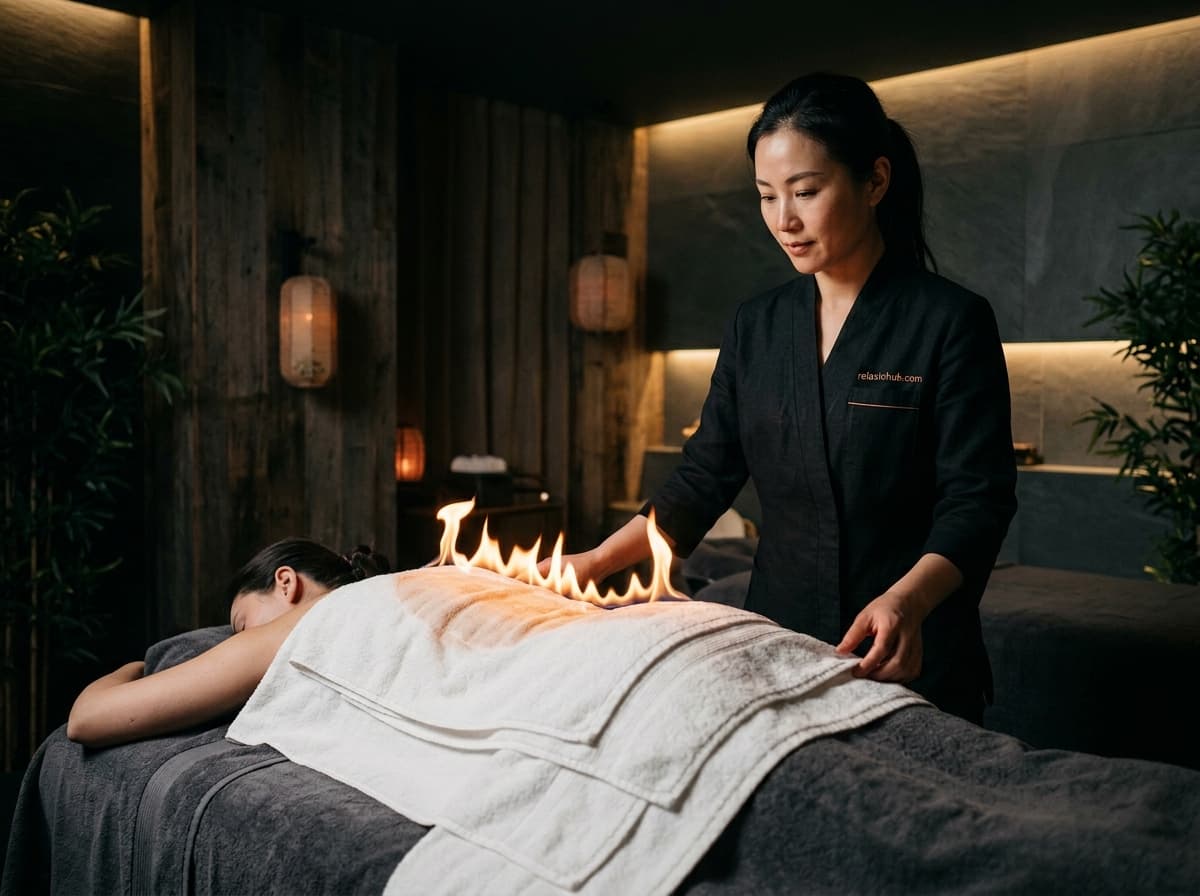
A dramatic heat ritual where the practitioner does not place open fire on bare skin, but uses controlled flame, protective layers, and brief warming to create a deep sense of heat and relaxation.
Heat ritual
Fire massage is a visually striking SPA format where brief controlled flame is used to create warmth through a protective layer of cloth, towel, or special covering. A correct session does not mean the practitioner “sets the body on fire”: bare skin should not touch flame, and heat is dosed through preparation, insulation, moist fabric, and constant supervision.
The idea of heat therapy is much older than the modern name. In Chinese tradition, practices such as Huo Liao or fire therapy combine heat, herbal components, an alcohol carrier, and towels in a warming ritual. Related heat-based body practices also appear in Vietnam, Thailand, Korea, Japan, Tibet, and Eastern European bathhouse cultures, but the format with visible flame is most often marketed today as Chinese or Asian fire massage / fire therapy.
Search demand usually comes from two motives: people want an unusual ritual with a strong feeling of warmth, and they want to know whether it is safe. That is why the main selection criterion is not a beautiful flame photo, but the practitioner's experience, fire protocol, ventilation, product ingredients, absence of flammable fabrics nearby, and readiness to stop immediately at the first sign of discomfort.
At a glance
Huo Liao protocol
Protocols vary between schools, but a professional session follows the same logic: contraindication check, skin insulation, brief flame, heat control, and a calm finish.
The practitioner asks about skin sensitivity, vascular issues, medication, pregnancy, allergies, fear of fire, and explains that the session can stop at any moment.
Skin is covered with a towel or cloth; hair, synthetic fabric, paper, and flammable items are moved away; quick extinguishing tools should be nearby.
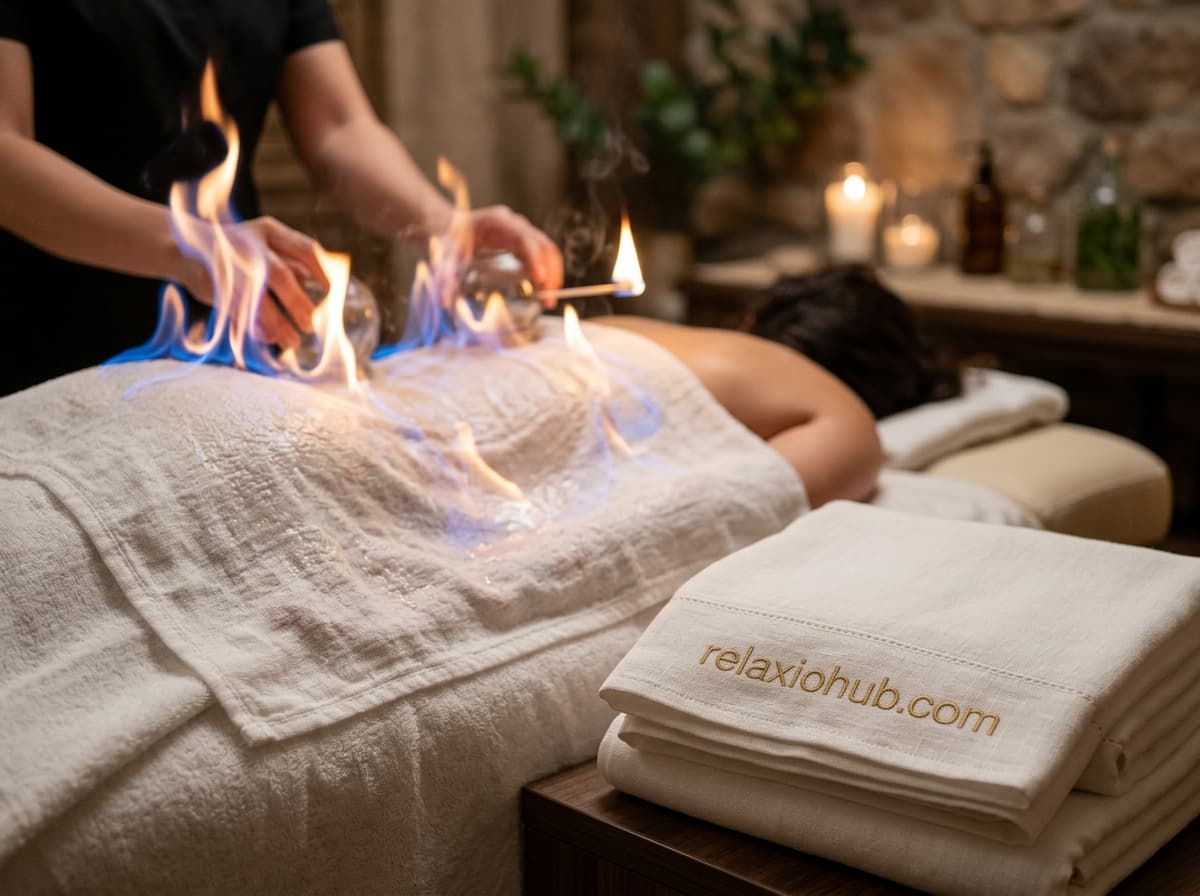
Flame is started on the outer layer and kept brief, so the client feels a wave of heat rather than burning. The practitioner stays at the table and never leaves fire unattended.
The fire is put out quickly and completely, then the practitioner checks the skin and asks about sensation. Warming is not repeated if there is heat, fear, or irritation.
After heat, soft rubbing, gliding, or work on the back, shoulders, or legs may be added so warmth feels more even and the body does not exit the ritual abruptly.
Expected effect
The effect depends on preparation, briefness of heat contact, practitioner skill, and your sensitivity. This is a wellness ritual, not disease treatment.
Brief warming can feel more intense than regular oil or a warm towel, especially across the back and shoulders.
The ritual nature of the session makes you focus on body signals, breath, and comfort instead of mental noise.
People book fire massage as an event: for a new sensation, visual atmosphere, and contrast with classic massage.
A skilled practitioner does not rush the flame, explains method limits, checks temperature, and refuses work when contraindications are present.
Timeline
You share skin issues, vascular conditions, medication, allergies, pregnancy, fear of flame, alcohol use, fatigue, or anything that raises risk.
The practitioner explains where heat will be felt, how long flame lasts, how it is extinguished, and which word or gesture stops the session.
Protective layers are placed on the body, exposed flammable items are removed, and flame stays only in a controlled area.
The flame works briefly; you should feel warmth, not pain, burning, or panic.
After extinguishing, the practitioner checks the skin and completes the session with soft movements so the body returns gradually to calm.
Comparison
All three formats involve warmth, but the sensation, risk level, and expectations differ.
Fire massage fits people seeking a fire therapy experience who are willing to choose safety carefully.
Hot stone massage is calmer: stones release heat gradually and do not involve open flame.
Candle massage is closer to nourishing skin and aromatic SPA; the flame melts a dedicated massage candle, not the body.
Because heat and flame are involved, contraindications are stricter than in many classic SPA procedures.
FAQ
It is a heat-based SPA ritual where brief controlled flame works through a protective cloth or towel layer. Fire should not touch bare skin.
It can be safe only under a strict protocol: trained practitioner, protective layers, brief flame, ventilation, and no contraindications. Without that, burn risk is too high.
The modern format is often linked to Chinese Huo Liao or fire therapy. Heat rituals also appear in Vietnam, Thailand, Korea, Japan, Tibet, and bathhouse cultures.
It can be found in China, Taiwan, Vietnam, Thailand, Korea, Japan, some Tibetan centers, and SPA studios across Europe, Ukraine, and the United States.
Hot stones provide steady warmth without open flame. Fire massage is briefer, more theatrical, and requires much stricter safety control.
No. A correct session delivers warmth, not pain or burning sensation. If heat builds up uncomfortably, the session must stop immediately. Pain, blistering, or persistent skin redness after the procedure are signs of an improper technique.
Look for profiles that describe fire massage experience, extinguishing protocol, contraindications, protective towel work, and realistic expectations without healing promises.
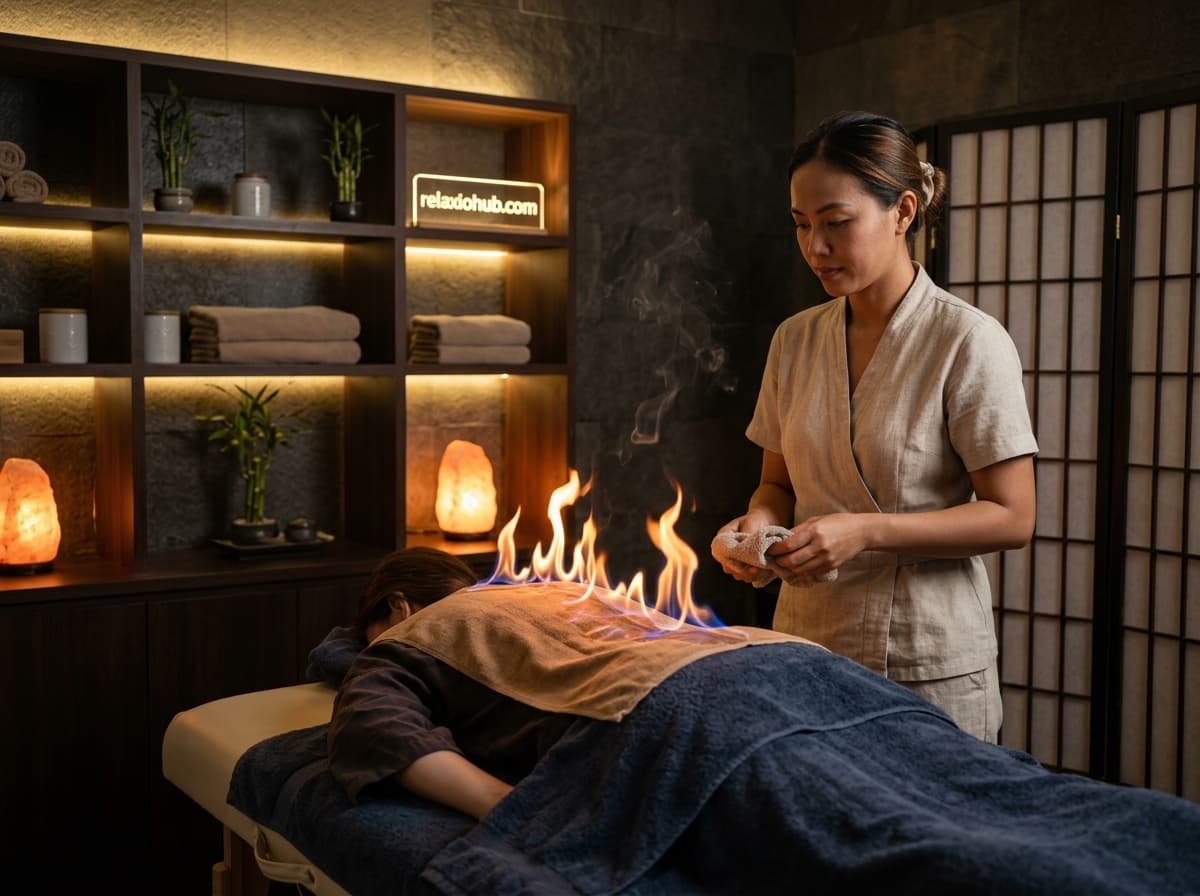
Controlled distance between flame and skin is the key safety condition in fire massage, regardless of setting.
Therapists
Practitioners across Ukraine who provide this massage type. Choose a specialist and view their profile.
Compare profiles that explain fire massage experience, safety protocol, towel technique, contraindications, and realistic expectations for a heat-based SPA ritual.