Assessment and palpation of connective-tissue zones
The practitioner looks for areas where skin and subcutaneous layer move less well or react more sharply to a light shift.
This German connective-tissue method works not with broad muscle kneading, but with short pulling strokes on the skin, subcutaneous layer, and fascia. The sensation can be vivid, almost “cutting,” but the aim is a precise reflex stimulus and better tissue mobility — not brute force.
History of the method
Dicke massage is a connective-tissue massage known in the German tradition as Bindegewebsmassage or subcutaneous reflex therapy. It was developed by Elisabeth Dicke, a German remedial gymnastics practitioner: in 1929 she suffered a severe circulatory disorder of the right leg, used a wheelchair, and doctors were considering amputation. Forced bed rest left her with pain in the low back and pelvic area; during self-massage of these regions she felt tense, poorly mobile zones of skin and subcutaneous tissue and began working them with repeated pulling strokes.
The method’s theoretical basis rests on Head’s zones — areas of skin that, according to this model, are linked through nerve pathways with certain organs. Dicke herself described that after repeated work over the pelvic–sacral zone she felt warmth and changes in the leg — this is her personal experience, not proof of the mechanism. The method was later developed in Freiburg together with Hede Teirich-Leube, and the name became established after publications on connective-tissue reflex zones.
In a modern wellness or SPA context, Dicke massage is a precise manual technique with a physiotherapeutic history, not medical treatment of vascular disease. The practitioner works on tension zones, explains the intensity of sensations, does not diagnose from the back, and does not promise to save the vessels without a doctor.
At a glance
Technique
Here the value is not a long relaxing flow, but the precision of short tissue shifts.
The practitioner looks for areas where skin and subcutaneous layer move less well or react more sharply to a light shift.
The classic approach often starts lower on the back: short passes create a basic tissue response before broader work.
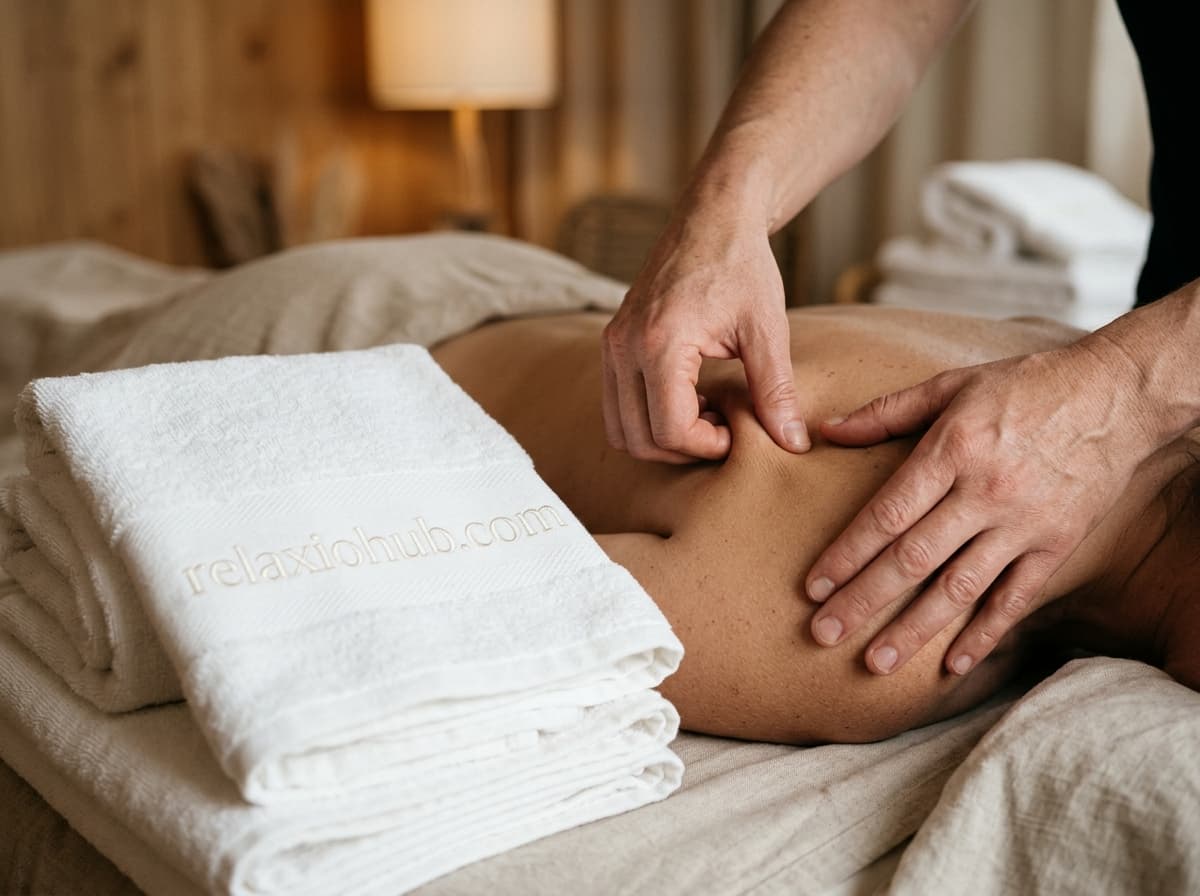
Fingers do not glide on oil but shift the layer beneath them; the sensation resembles a controlled pull on thin tissue.
At fascial edges the work can be more intense, so the practitioner should explain where it will feel sharp and when pressure should be reduced.
After a local response they move to the back, costal arches, or other zones, but not chaotically: the route should be clear.
Expected effect
The format’s benefit is precise tissue feel, a local response, and control of tension — without promises to cure vessels or organs.
Suits those who want not general stroking, but work with a specific zone of tightness.
After short pulling strokes the tissue may warm quickly — this is not an aim for pain’s sake, but a controlled stimulus.
The method was born from a circulation theme, but a modern practitioner does not replace a phlebologist or cardiologist.
You may notice that an area shifts more easily under the fingers and is less “stuck” to underlying layers.
A competent profile describes contraindications and does not sell the method as universal treatment of internal organs.
The practitioner orients by skin zones and explains why they work right there — you understand the session’s course rather than taking it as random movements.
Scenario
The practitioner needs to know about varicose veins with complications, thromboses, cardiac conditions, fever, acute inflammation, surgeries, and blood-clotting medications.
Tension zones are described as a tissue response, not as proof of a diseased organ.
Sharpness is allowed only within an agreed scale; bruising, sharp burning, or numbness is a signal to stop.
Local warmth, fatigue, or sensitivity are possible; severe pain, increasing swelling, or neurological symptoms need a doctor.
Comparison
Names may sound similar, but session expectations differ.
Choose Dicke and look in the profile for mention of Bindegewebsmassage, reflex zones, screening, and short pulling strokes.
Myofascial massage is closer: it is often longer, softer, and less segmental.
Classic or Californian massage will match this request better than a short reflex technique.
The method creates an intense stimulus for the skin and subcutaneous layer, so screening here is critical.
FAQ
A German remedial gymnastics practitioner who in 1929 developed Bindegewebsmassage after her own experience with back pain and a severe circulatory disorder of the leg.
The practical aim was to reduce pain, influence connective-tissue tension, and support circulation through reflex links; in a modern SPA this does not replace medical treatment.
There can be a sharp pulling or “cutting” sensation. It must stay controlled; severe pain, numbness, or fear is a reason to reduce intensity.
Dicke more often works with short segmental shifts of skin and subcutaneous layer; myofascial format is usually slower and works more broadly with fascial stretch.
Look for mention of Bindegewebsmassage, training, screening of vascular risks, no promises to cure organs, and readiness to explain sensations before starting.
Head’s zones are a model that links areas of skin through nerve pathways with certain organs. Dicke massage rests on this idea and works with skin and subcutaneous layer in the corresponding zones. This is a historical concept of the method, not a proven clinical mechanism.
Classic Bindegewebsmassage arose in a physiotherapeutic setting and requires knowledge of reflex zones and screening of vascular risks. If a practitioner works without physiotherapeutic training, the format should remain within wellness practice.
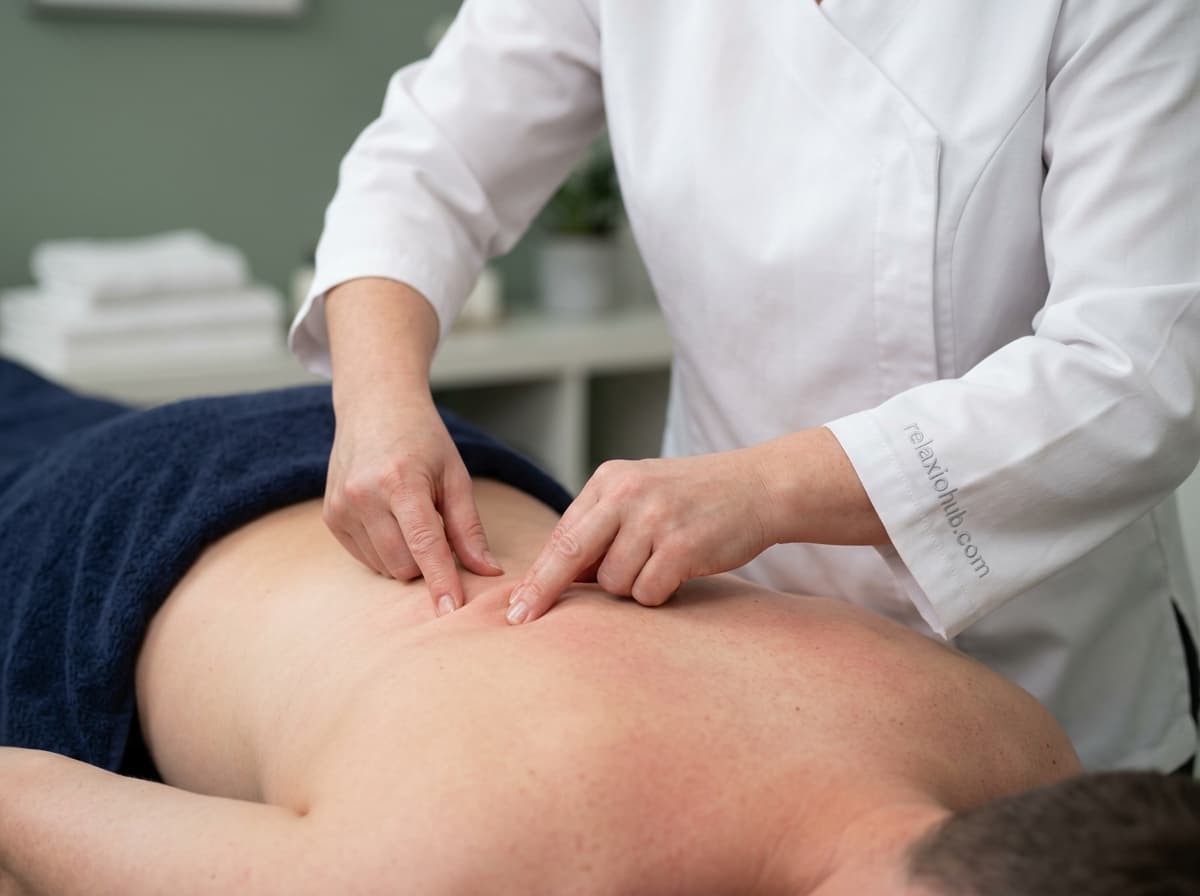
In Dicke massage a small movement matters: fingers shift the skin layer by layer, finding the tension boundary without injury.
Compare profiles by description of Bindegewebsmassage, short pulling techniques, screening of vascular risks, and wellness boundaries without medical promises.