Effleurage-style warm-up
Palms slowly prime tissue so suction lands less startling and you learn your comfort ceiling.
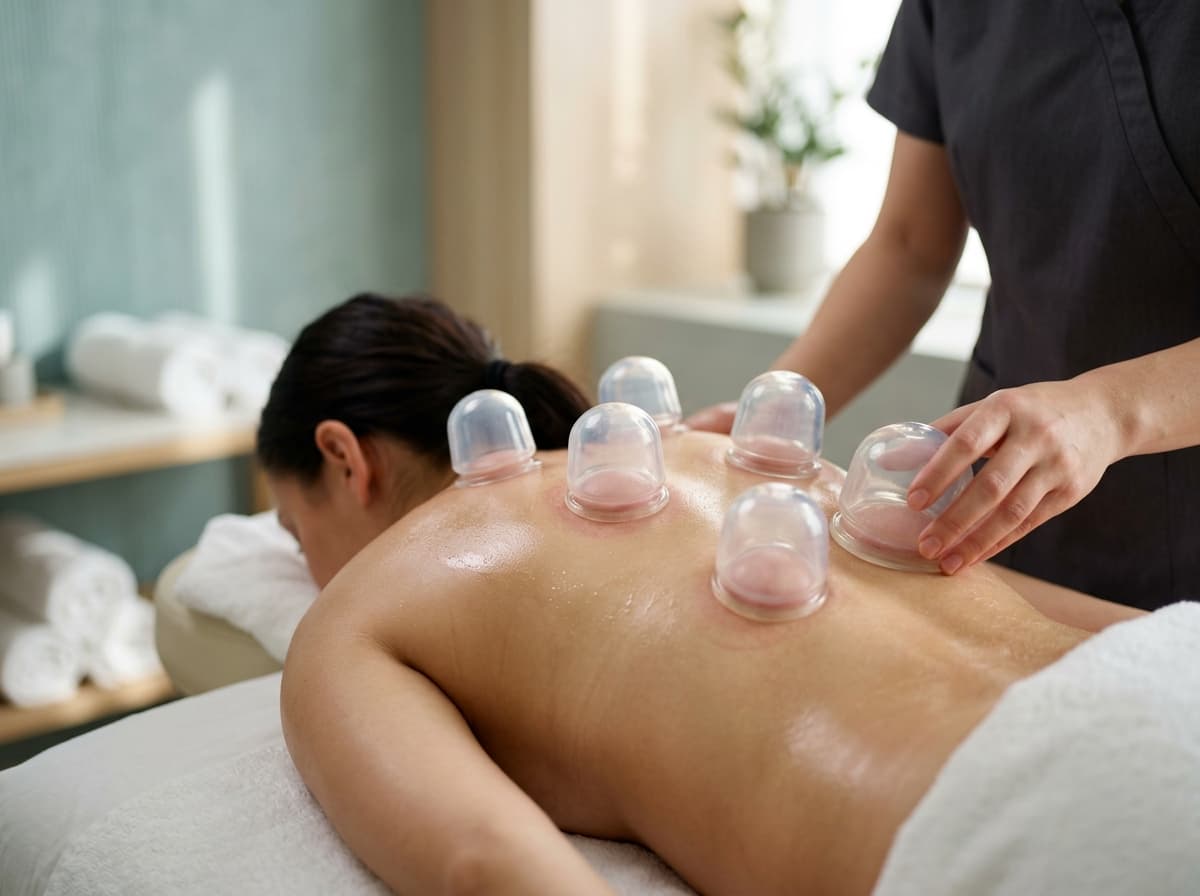
Silicone or glass cups create controlled suction on the skin—you feel a pulling warmth and easing of desk-bound shoulders or thighs, plus characteristic round marks—without medical treatment claims or “flush toxins in one session.”
High-intent searches
People searching cupping often expect either relief after office posture—or myths about instant cleansing. In real SPA mechanics the idea is simple: pressure under the cup drops, skin and superficial layers lift toward the rim, circulation-sensitive warmth rises, and many describe a loosening sensation around tight traps or low back.
Round marks afterward are not expelled toxins tracked by color grading—they reflect vascular and tissue response to suction; hue and fade time vary. Ethical therapists explain this before starting and negotiate intensity.
Compared with gua sha, scraping glides over skin with a flat tool; cups hold suction with slow glide or short stationary pulls. Versus manual anti-cellulite massage, studios sometimes blend techniques, but bruising risk needs explicit consent and vascular screening.
Snapshot
Technique
Studio naming differs; rhythm follows prep skin contact, controlled suction, glide or timed holds, calm finishing strokes.
Palms slowly prime tissue so suction lands less startling and you learn your comfort ceiling.
Timers plus verbal checks—you steer with words like lighter or remove rather than enduring silently.
The cup travels along traps or paraspinal lines; sensation reads as dragging heat without chasing bruises as proof.
Modern cups vent pressure quickly when a zone spikes sensitivity.
Broad strokes after removal ease lingering ache and redistribute warmth evenly.
Why book
Subjective wellness outcomes only—no disease-treatment promises.
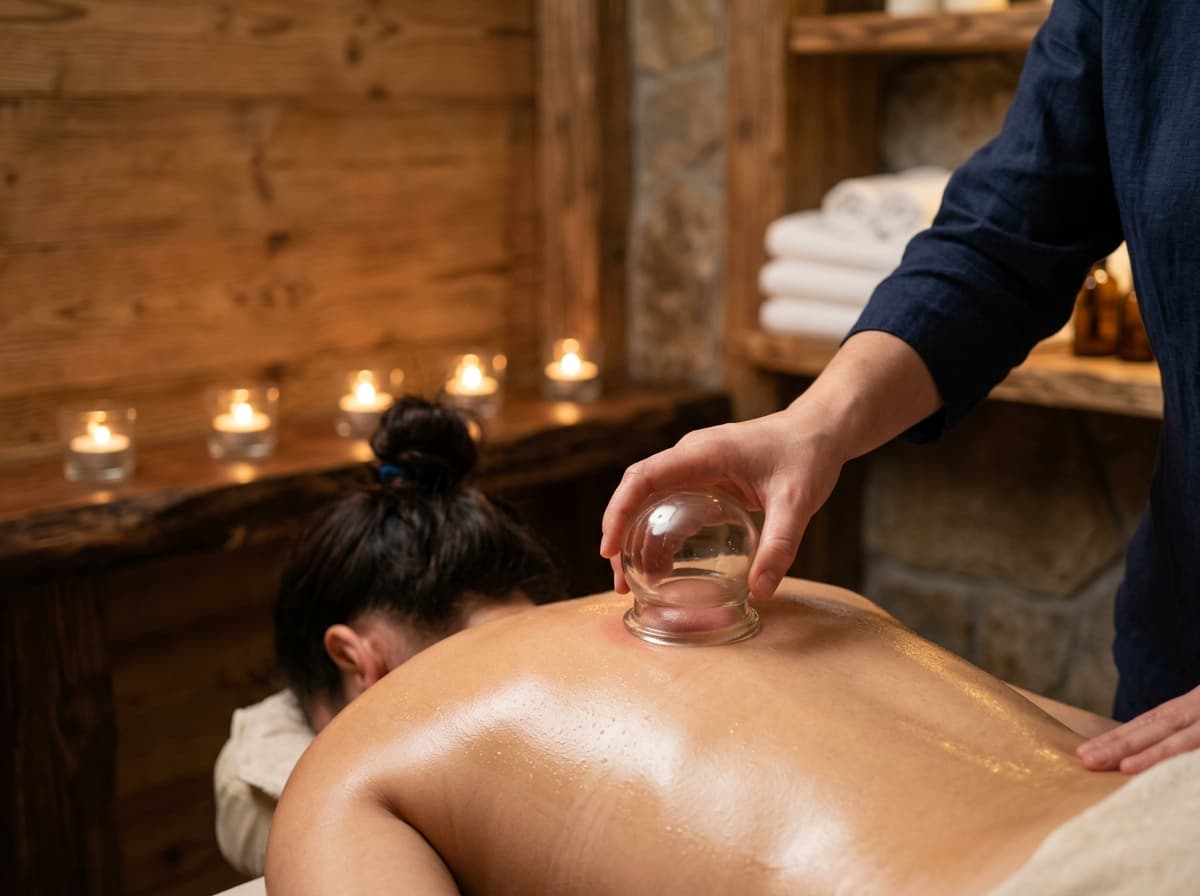
Vacuum changes shear; many notice looser-feeling shoulders after static desk weeks.
Paired with hands-on work, some people feel smoother movement—individual as always.
Professionals vet veins, meds, and skin integrity and decline when red flags appear.
Pressure can dial down within seconds; sessions should never be a pain contest.
Flow
Surgery history, blood thinners, varicose segments, dermatitis, sunburn—all affect whether cups belong on the map.
Therapists begin gentler or shorter, then escalate only with your green light.
After removal, palms finish the area; you get pragmatic advice on showers, hydration, and training load.
Choosing a modality
Navigation without miracle marketing.
Vacuum adds novelty and heat stories; sensitive skin may still prefer low vacuum only.
Request light suction or postpone; even minimal pulls can sometimes ring faintly.
Manual massage or drainage-first flows may suit better—therapist decides after inspection.
Vacuum is not universal relaxation.
FAQ
Circular marks are common; intensity hinges on vacuum and your vessel response. Bruises marketed as mandatory proof of efficacy are a trust warning.
Hands rely on compression and muscular stripping; cups add suction lift. Studios frequently blend both in one booking.
After heavy markings, postpone peak lifts for ~24 hours; light walking or mobility often feels kinder.
Spa cupping cannot replace nutrition coaching or proven detox narratives; skin may look briefly smoother from local stimulus.
Gua sha emphasizes directional scraping; cupping emphasizes vacuum pulls. Pick based on sensation goals and vascular tolerance after therapist consult.
Silicone cups are most common in wellness studios for their adjustable pressure. Glass cups used with heat (fire cupping) remain in use in traditional Chinese medicine settings.
A single session suits curiosity or event prep. For tension relief or circulation goals, a course of four to eight sessions with about a week between each is common.
Therapists
Practitioners across Ukraine who provide this massage type. Choose a specialist and view their profile.
Choose your city and read profiles for cup materials, mark expectations, vascular screening, and refusal patterns when contraindications show up.