Circular scalp mobilization
Fingertips move the scalp in small circles without pulling hair — within the first minute you feel the scalp come alive and warm under the contact.
Indian head massage for scalp, neck, and shoulders — lighter head after screens, softer jaw tension, calm ritual without full-body undressing.
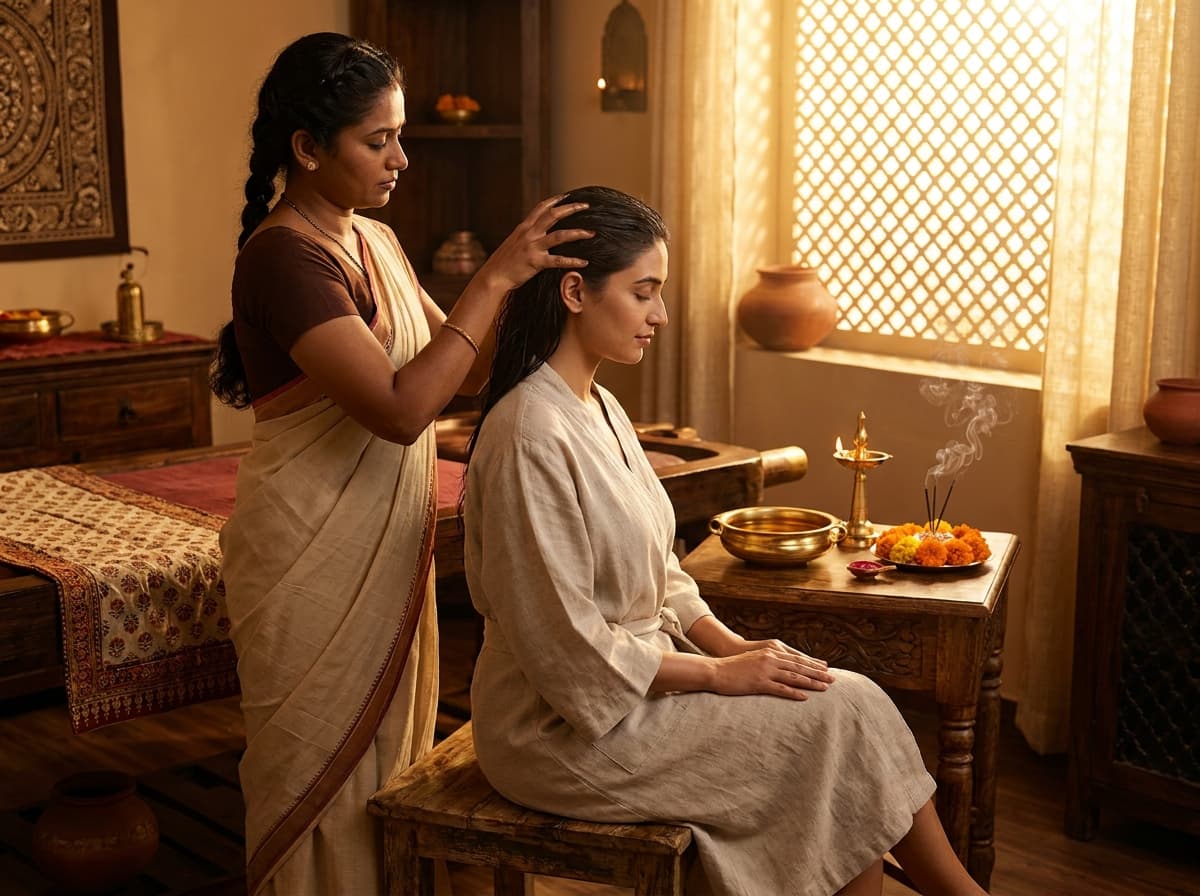
Massage overview
The word champi derives from the Sanskrit champa — a flower traditionally used in aromatic hair oils. In India, this massage has been practiced within families since childhood, often with sesame or coconut oil, and barbers at street markets offer it as an everyday service. In the West, Champi gained recognition through Narendra Mehta, a blind Indian massage therapist who brought the practice to the United Kingdom in the 1970s and popularized it under the names Indian head massage and champissage. In contemporary studios it typically means 30–60 minutes working on the scalp, occiput, neck, shoulders, and upper back.
Therapists use fingertips, palms, and soft circular work around the hairline, alternating friction, light pressure, and short pauses. It feels closer to untangling screen fatigue from the head than to a full-body classic massage. The format may be dry or oil-based: dry Champi works before a workday when you do not want to wash your hair; warm-oil Champi becomes a slower, more sensory ritual. Neither version guarantees hair growth — this is a wellness bodywork format, not trichology treatment.
People often book Champi for tension around the occiput, temples, and jaw after long focus blocks, when a full massage feels excessive but the nervous system wants brief, articulate touch. If you have a sudden unusual headache, dizziness, visual changes, head trauma, or active scalp inflammation, seek medical evaluation before booking.
At a glance
Technique
The session moves from the periphery inward: shoulders and neck release the load they have been carrying, then fingers move to the scalp where the skin comes alive under the fingertips, and a slow close returns the body to ease. Each step prepares the next.
Fingertips move the scalp in small circles without pulling hair — within the first minute you feel the scalp come alive and warm under the contact.
Soft pressure and short holds near the base of the skull create a sense of gentle release — precisely where laptop posture quietly stores its tension.
Kneading of shoulders and neck without forceful digging — shoulders drop a few millimetres and you notice how much weight you were holding without reason.
Gentle circles at the temples and careful contact near the jaw reveal where concentration turned into clenching you had not noticed until now.
Slow strokes over head and shoulders close the session without an abrupt cutoff — the body has time to register its new resting tone before you stand.
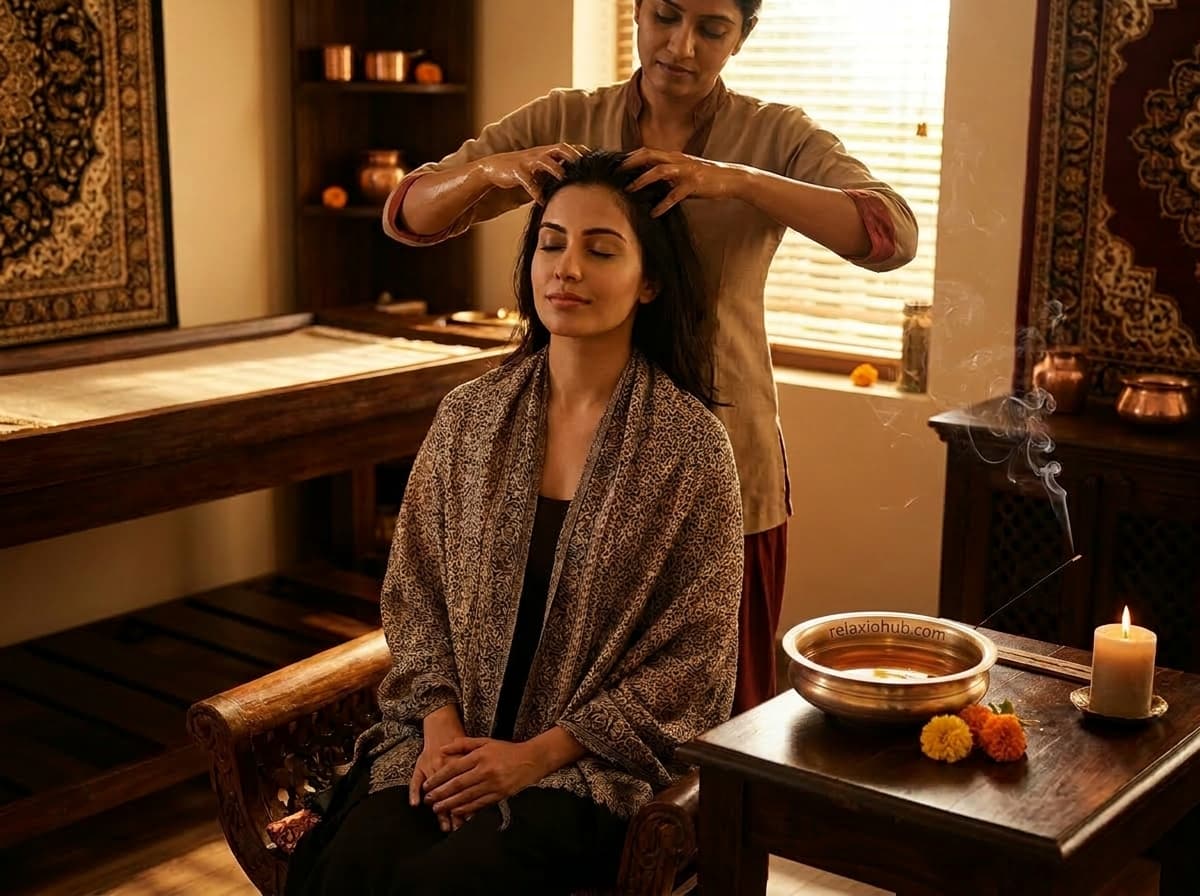
Effect
The motivations below stay within wellness boundaries, without promises to treat migraine, hair loss, or neurological conditions.
After scalp, occiput, and temple work the subjective heaviness lifts — you leave the session with a noticeably different mental pace.
When you need head, neck, and shoulder attention but not an hour on the full body, Champi delivers exactly that focus.
A slow close and soft pressure help the body shift from screen mode toward rest — breathing deepens while the session is still happening.
Dry formats refresh without oil, while oil rituals leave a genuinely cared-for feeling — no hair-growth guarantees, but real tactile satisfaction.
Process
The therapist asks about oil preference, scalp sensitivity, headaches, dermatitis, extensions, or fresh color work.
The session opens with shoulders and neck — kneading and pressure release the surface muscular load before moving into the finer scalp work.
Circular scalp mobilization, pressure at the skull base, temples, and jawline — the most intensive part of the session, paced to your comfort.
After oil, discuss washing or blotting; after dry work, a few quiet minutes of transition are usually enough to return to tasks immediately.
Choosing the format
Searchers often blur Champi with face massage, neck classics, or spa hair care. Three practical scenarios.
Choose no oil if you cannot shower afterward and want to preserve styling as much as possible.
Best when you have time to wash or rinse hair afterward and want sensory recovery.
Ask for more attention at the skull base, upper traps, and temples, but avoid aggressive neck pressure.
Head, neck, and scalp work needs extra care: unusual pain, trauma, or active inflammation should not be masked by massage.
FAQ
Champi has Indian roots and typically covers not only the scalp but also the occiput, neck, shoulders, and sometimes upper back. The champissage tradition, which Narendra Mehta brought to the UK in the 1970s, is the direct ancestor of what studios today offer as Indian head massage — a structured sequence, not an improvised scalp rub.
No. Dry Champi suits days when you cannot shower or need to return to tasks. Oil fits slower care rituals.
Massage can improve the feeling of warmth and care on the scalp, but it is not hair-loss treatment. For shedding, see a dermatologist or trichologist.
For familiar screen-related tension, keep it gentle and avoid cure claims. New, sharp, or unusual headache means postpone and consult a clinician.
Usually a lighter-head and softer-shoulder feeling lasts several hours or a day; under heavy stress, routine and habits matter more than one session.
Yes, but tell the therapist before the session starts. Techniques that pull at roots or tug the hair shaft are adapted or skipped, and oil is kept away from attachment points. Dry Champi is generally the safer and more comfortable choice with extensions.
One session is enough to feel the difference — Champi is not a cumulative treatment requiring a course. Regular visits every two to three weeks help keep neck and shoulder tension low, but frequency depends entirely on your rhythm and intent.
Look for a practitioner who specifically names Indian head massage or champissage training in their profile — and asks about oil allergies before you arrive. Choose your city on the home page and browse profiles with those markers.