Candle choice and allergy check
Before the session, the practitioner asks about reactions to nut oils, fragrance, essential oils, soy, or cosmetic ingredients.
Candle massage is a ritual of warm touch: a special massage candle melts into skin-friendly oil, while the practitioner checks the temperature and applies it slowly so the body feels warmth, glide, and scent without burn risk.
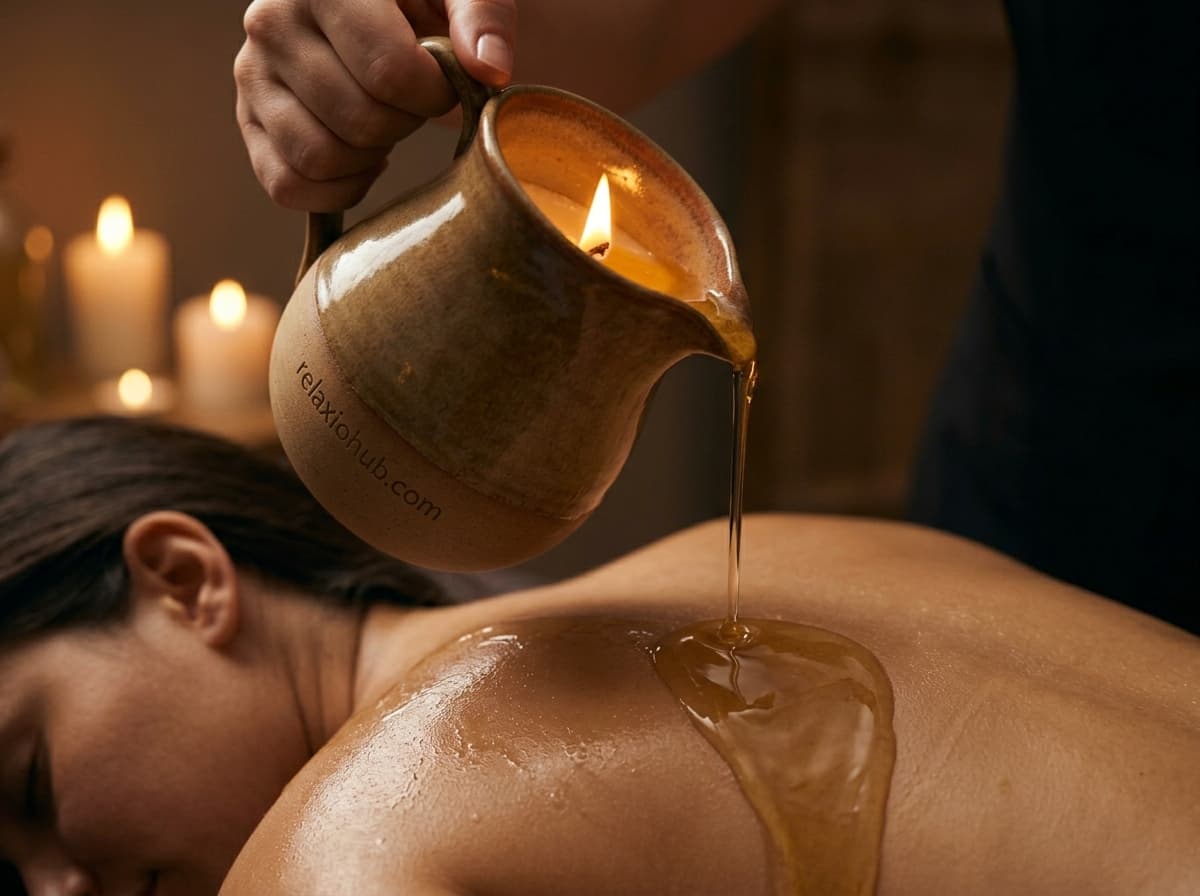
Warm ritual
Candle massage does not use a decorative paraffin candle. It uses a dedicated massage blend that melts at a lower temperature and turns into warm oil. Common formulas include soy wax, coconut oil, jojoba, almond oil, shea butter, or cocoa butter; these ingredients provide glide, softness, and a skincare feel. A practitioner does not pour “hot wax” on the body: they extinguish the flame or decant the melt safely, test temperature on their own hand, and only then apply the oil to the skin.
The main search intent is practical: people want to know whether candle massage is safe, whether it hurts, how it differs from classic massage, and whether skin really feels softer afterward. The experience is usually intimate and slow: a warm drop lands on the back or shoulders, scent opens gradually, and long strokes keep the body in a relaxed rhythm. This is not the format for forceful trigger-point work; it is for warmth, sensory comfort, and reducing the feeling of dryness.
Quality depends on details: candle ingredients, absence of personal allergens, temperature control, ventilation, and whether the practitioner explains the process before the first application. When reviewing studio profiles, choose those that clearly state what massage candles they use, how they test warmth, and how they adapt the session for sensitive skin.
At a glance
Process
The technique relies on three things: safe warmth, a quality formula, and a slow rhythm of touch.
Before the session, the practitioner asks about reactions to nut oils, fragrance, essential oils, soy, or cosmetic ingredients.
The candle burns for a few minutes until the top layer becomes liquid warm oil rather than hard wax.
A drop is tested on the practitioner's hand or a small patch of your skin; if warmth feels sharp, application waits.
Oil is applied in a thin layer, and strokes become longer so the back, shoulders, arms, or legs receive soft warmth without jerks.
Excess oil is blotted with a towel or partially left to absorb if the formula suits your skin.
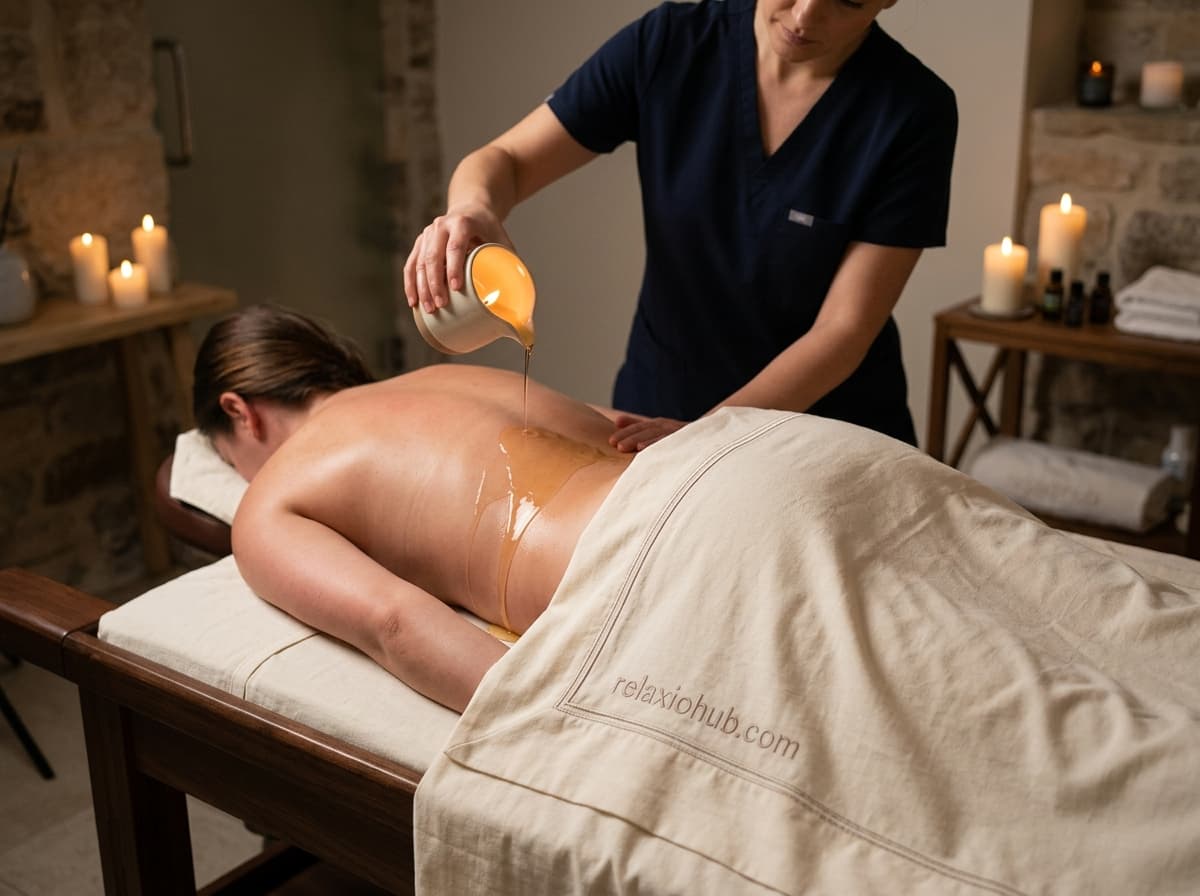
Expected effect
This format is about warmth, skin care, and nervous-system downshifting — not a replacement for pain treatment or dermatology.
Bodies that tense up from cold oil often accept contact more easily through gentle warmth.
Oils and butters can leave dry areas of the back, legs, and arms feeling softer.
Light, scent, and slow pacing create a spa-care feeling without a complicated technique.
Lavender, vanilla, citrus, or a neutral blend set different moods; fragrance should never feel intrusive.
Warm oil helps contact stay fluid, so the session feels like a ritual rather than a quick rub.
A good practitioner does not skip the heat test and never uses regular decorative candles on the body.
Timeline
The practitioner asks about allergies, dermatitis, pregnancy, fragrance-triggered asthma, open irritation, and scent comfort.
The candle is placed securely, fabrics stay away from flame, the flame is controlled, and the room is ventilated without a draft.
Warmth should feel pleasant from the first drop; burning is not part of a normal session.
Long strokes spread oil over the back, shoulders, arms, or legs; pressure stays soft to medium.
After the session, skin gets a few minutes to absorb part of the oil if there is no discomfort.
Comparison
Choose by what matters most: warmth, technique, or scent.
Candle massage best matches that request when the candle formula suits your skin.
Classic or therapeutic massage may fit better because candle massage is usually softer.
Aromatherapy massage with a selected essential oil may give you more control over fragrance.
The main risks are temperature, ingredients, and skin condition.
FAQ
It is safe only with a special massage candle and a temperature test. Regular decorative candles are not used on the body.
It is made with oils and low-temperature waxes that melt into warm massage oil; a household candle may be too hot and unsuitable for skin.
Often yes, if the formula is safe for you. Oils and butters can leave skin softer, but dermatitis or irritation should calm first.
It depends on the candle. If you are sensitive to fragrance, ask for a neutral or lightly scented formula.
Look for candle ingredients, temperature testing, allergy rules, and a clear statement that regular decorative candles are never used.
A quality massage candle typically contains soy wax (melting point 47–57°C), shea butter, and carrier oils such as sweet almond, jojoba, or coconut. Unlike paraffin with a higher melt point, soy wax leaves liquid at ~40–50°C. After a short pour distance of 5–15 cm, the oil cools to approximately 35–42°C at skin level — comfortable warmth, not a burn risk.
At 35–42°C the lipid matrix of the stratum corneum becomes more fluid: the spaces between ceramide bilayers widen slightly, lowering transepidermal resistance to the fatty acids in the oil. Heat also raises local cutaneous blood flow through thermal vasodilation, improving nutrient transit to the superficial skin layers.
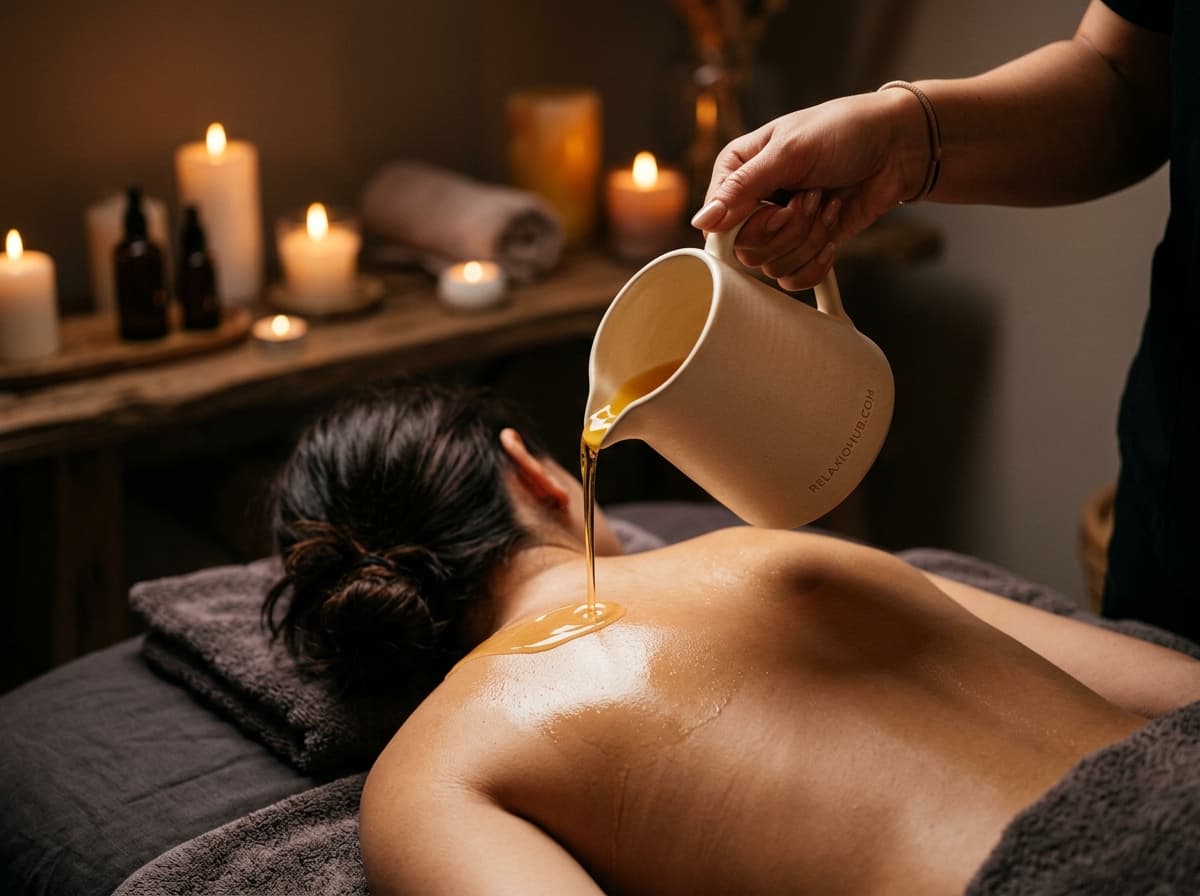
The best moment in candle massage is a controlled warm drop: it should soothe the skin, not make the body flinch.
Compare profiles that explain massage candle ingredients, temperature testing, scents, and contraindications so the warm ritual stays comfortable and low-risk.