Long effleurage and "big maps" on the back
Palms bridge scapulae, lumbar curves, and rib angles without jerking between patches.
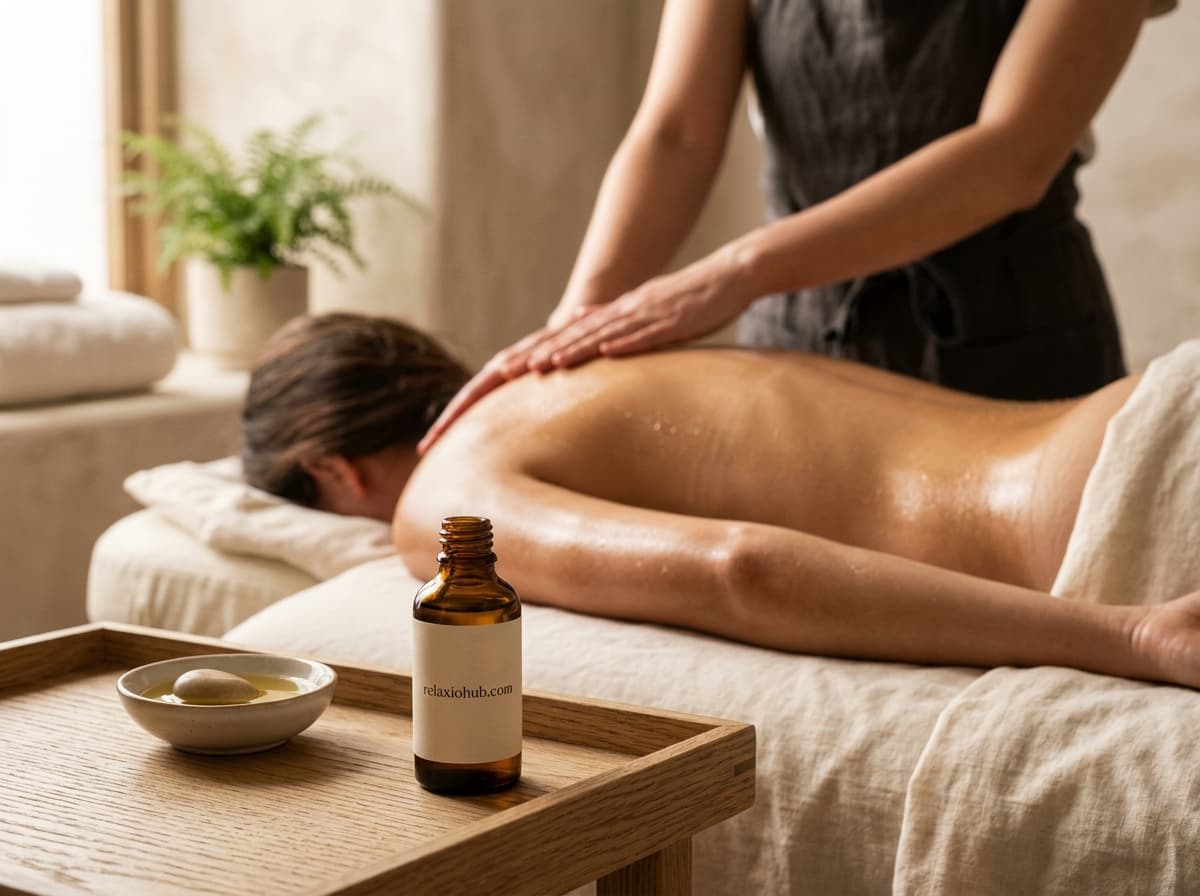
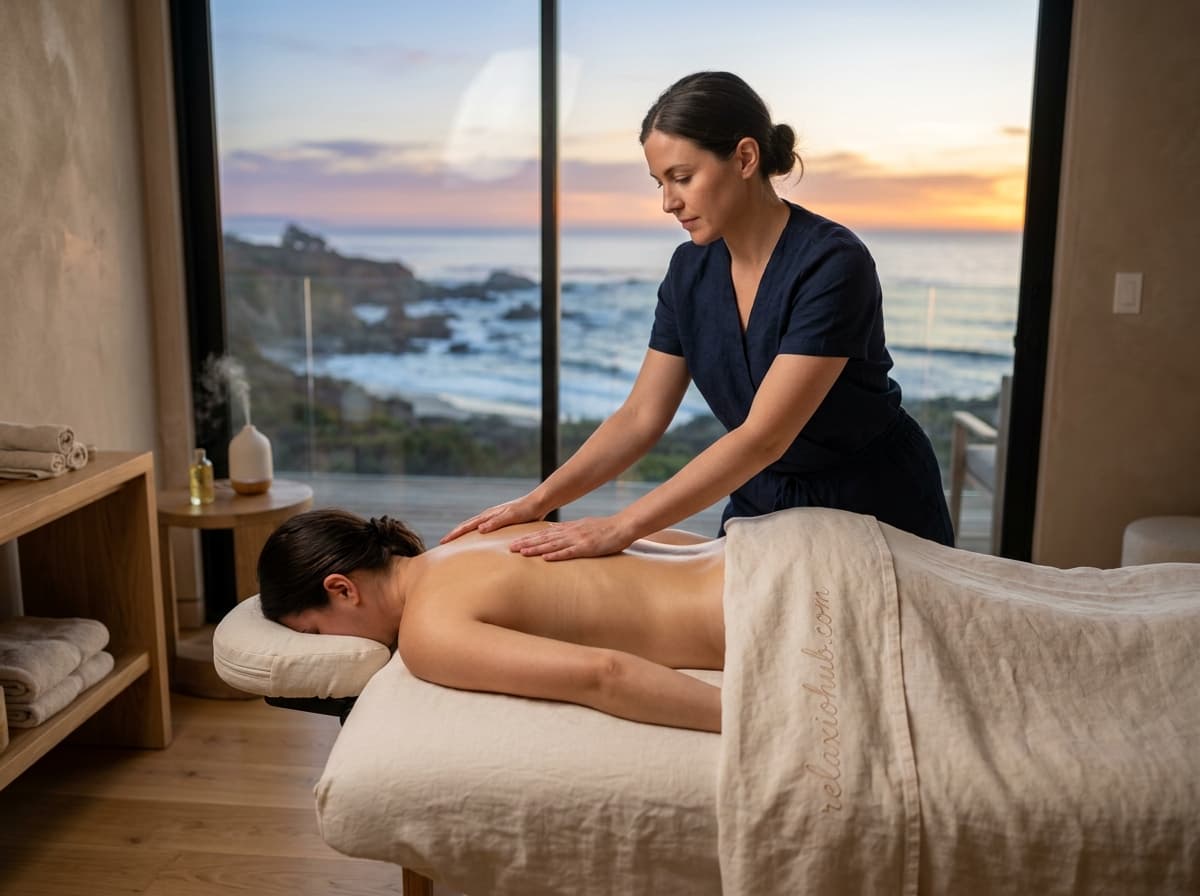
West-coast informed oil table work that favors one long wave over scattered patches: broad palms sketch arcs from spine to limbs and back, breath lengthens the rhythm, contact stays predictable enough for your nervous system to downshift—without pain trophies or promises to "erase" chronic diagnoses in an hour.
Search intent
Searchers blend "Californian," "California style," and "Esalen-inspired" designations. In European studios it often signals unhurried, oil-rich sequencing: fewer chop-chop segment changes than textbook Swedish, more continuous mapping so your skin stays in contact with intent, and depth that ramps through voice check-ins instead of surprise elbows.
You may be invited to slow exhale or simply rest in quiet—goal is reduced hurry physiology, not forced mysticism. It is still wellness: therapists screen red-flag pain, defer to clinicians for nerve lightning, fever, or fresh trauma, and refuse oil if allergies demand it.
Versus classical Swedish you usually feel fewer rapid cycles per zone and more whole-body glue between regions; versus Balinese spa marketing there is less island-aroma theater and more sober consent talk; versus Lomi waves there is less constant forearm ocean and a different narrative lineage; versus deep tissue sprinting there is slower loading and less trophy chasing through acreage.
Snapshot
Technique
School branding varies—this tracks honest post-Google client language.
Palms bridge scapulae, lumbar curves, and rib angles without jerking between patches.
Contact rarely hard-stops at regional borders; the body reads as one canvas.
Pressure lingers across a few breaths and backs off the moment you revoke consent.
Brief stillness lets proprioception catch up—no mandatory silent performance trap.
Fade-out contact avoids the ripped-away feeling some high-tempo sessions leave behind.
Why book
Sensory downshifting—not a pain cure contract.
Useful when you want embodied calm rather than a knot checklist sprint.
Comfort scaling beats imaginary toughness quotas.
Wide palms distribute load so mystery thumb spikes are rarer.
Your threat budget shrinks when the next five seconds are guessable.
Predictable slow contact signals the ventral vagal complex: neuroception reads 'no threat' and drops defensive vigilance without the client having to consciously relax.
Long strokes tracking the posterior chain maintain tensional awareness across fascial lines — Thomas Myers's Anatomy Trains model — without abrupt load changes that jolt proprioceptors.
Flow
Allergies, pregnancy, meds altering skin fragility, and no-go areas belong here before first touch.
Flowing lines along back and limbs; chest or face only with explicit zone consent.
Shower timing, sauna caution, and how to tell pleasant fatigue from urgent neuro flags.
After the main sequence, the therapist checks in on comfort and adjusts depth on any remaining areas—ongoing dialogue, not a front-loaded intake monologue.
Compare modalities
Three signposts, no universal champion.
Choose this when arcs across multiple regions feel more regulating than rapid local cycles.
Less exotic packaging than some Balinese formats, more breath transparency than surface-level promises.
Tempo stays low; acute radicular pain still belongs with clinicians first.
Oil, shear, and sustained pressure still have limits.
FAQ
Terms overlap historically. In practice, ask the therapist for tempo, zones, and oil cards—not the marketing adjective alone.
Swedish formats often cycle shorter techniques per region and may feel more athletic. Californian sessions lean into longer strokes, slower loading, and whole-body glue.
By default, no—depth scales with your spoken comfort. If someone ignores your stoplight language, end the session.
Only with medical OK and a therapist trained in positioning; deep abdominal compressions are typically off the table.
Look for transparent technique notes, studio photos, allergy literacy, and firm refusal skills when red flags appear—no diagnostic promises.
The Esalen Institute, founded in 1962 in Big Sur, California, became a hub for the Human Potential Movement. Educators Charlotte Selver and Bernie Gunther brought sensory awareness and conscious-touch practices that studios today describe as Californian or Esalen-style bodywork.
Stephen Porges's Polyvagal Theory identifies the ventral vagal complex as the neural circuit that registers "safe." Slow, repeated touch activates neuroception — the body's subconscious threat-scanning — toward a safety state, lowering defensive vigilance and supporting restorative parasympathetic tone.
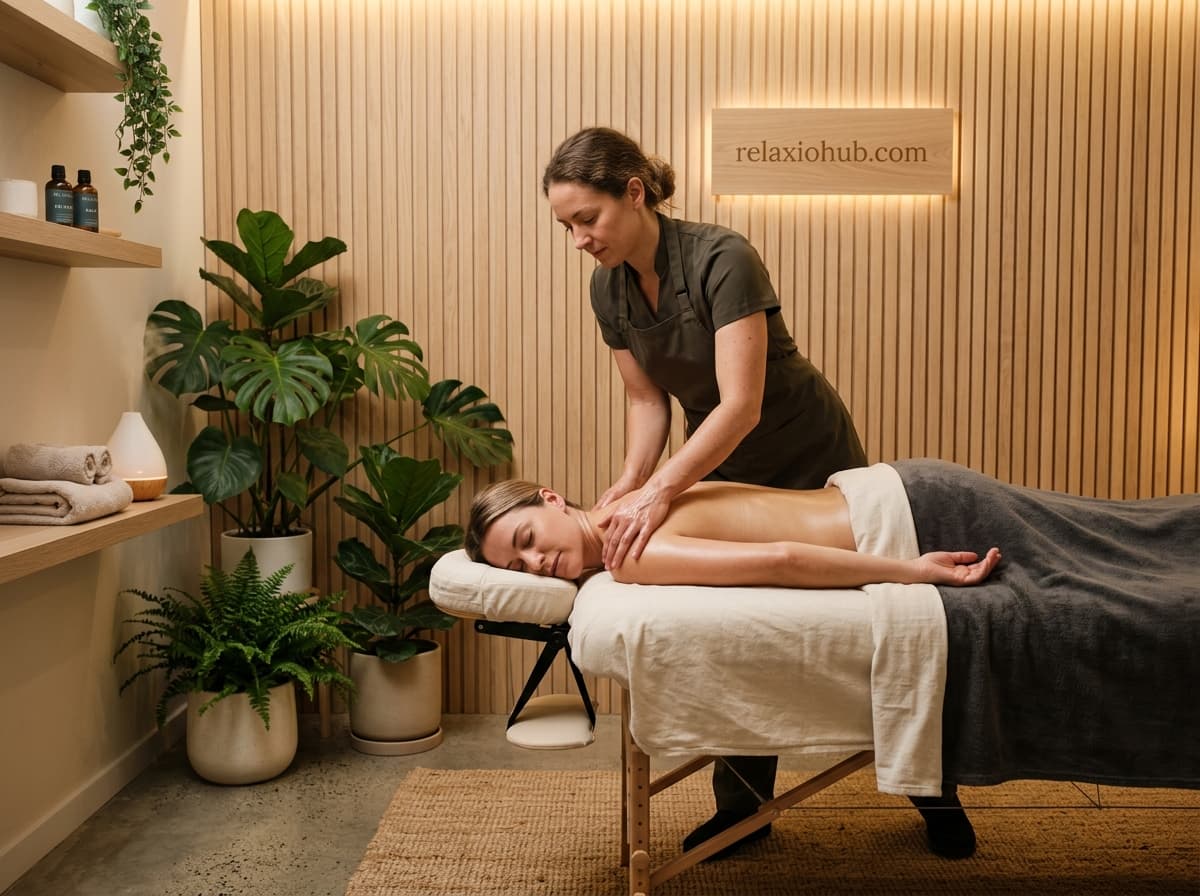
Wide contact sustains the wave—your nervous system likes knowing where the hands head next.
Compare profiles that describe long oil flow, breath pauses, and honest ingredient lists—minus instant pain-cure hype.