External mapping and warm-up
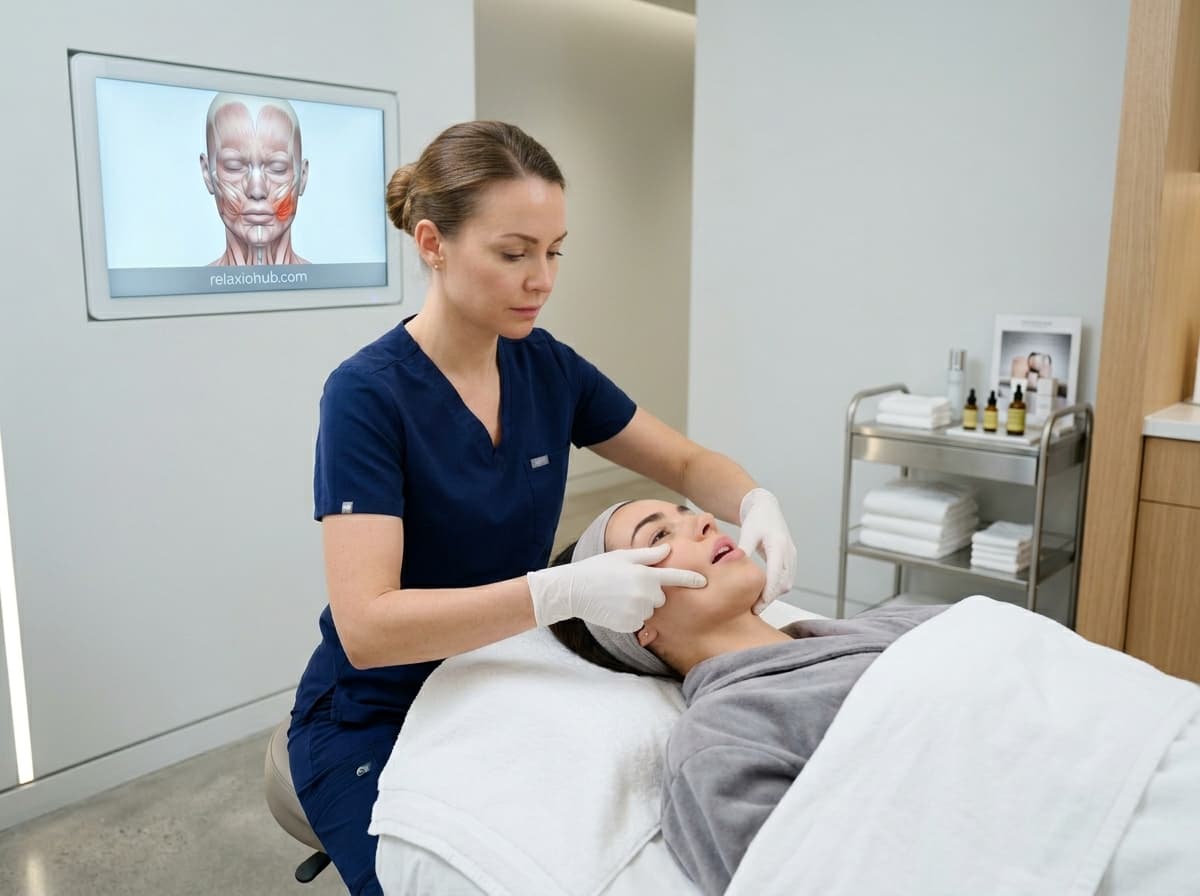
Slow glides from cheekbones to chin show where you brace with your bite even before the intra-oral pass.
A protocol where, after external warm-up, the therapist gently works the inner cheek in sterile gloves: you feel targeted access to dense masseter fibers, warmth, and a loosening of jaw-clench tension—without promises of instant surgical lift or buccal fat removal via hands alone.
Search intent
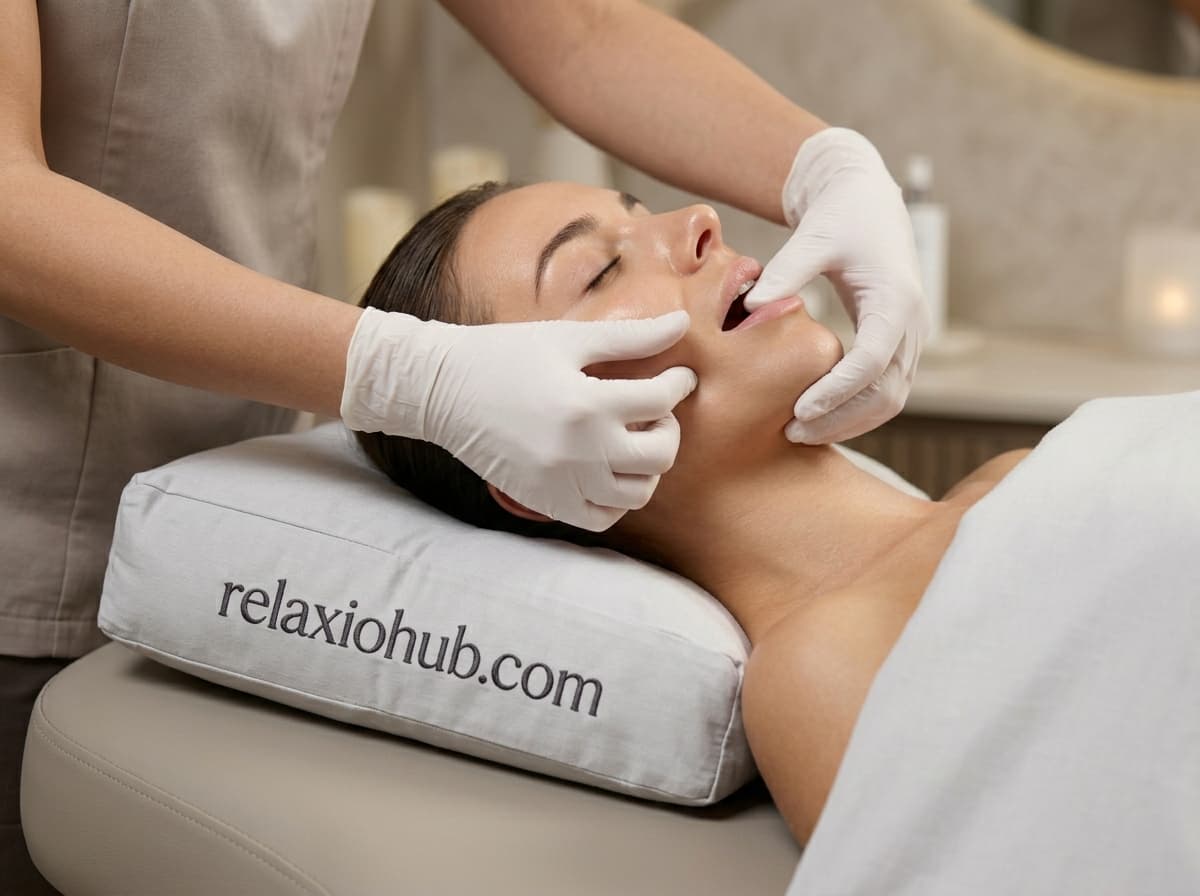
People search “buccal massage,” “intra-oral face massage,” or “masseter massage from inside the cheek.” Studios usually combine slow external mapping with a gloved intra-oral phase: the mouth opens slightly, the therapist enters along the buccal mucosa, and controlled strokes travel beside the masseter’s medial border—no jerking, no ramming teeth or gums. Guests often report deep unraveling of jaw “lock,” tingling circulation, and a lighter lower face for hours to a couple of days.
This differs from Kobido, which classically stays external with brisk Japanese rhythmic sequences. It also differs from lymph-centric facials dominated by super-slow drainage vectors; buccal depth is negotiated with breath and voice, not only superficial flow lines.
Marketing guardrails: one or two visits do not erase buccal fat pads or replace your dentist or TMJ specialist when inflammation is acute. Any ad promising skeletal remodeling overnight is a red flag—keep browsing.
Snapshot
Technique
Studio branding varies; the outline below matches how guests describe visits after Google comparisons.
Slow glides from cheekbones to chin show where you brace with your bite even before the intra-oral pass.
The cheek opens space; a gloved finger tracks beside the masseter—deep stretch, not ticklish cream fluff.
Speak up fast if it spikes; skilled protocols back off the angle or finish externally without drama.
Post-intra-oral strokes slow down—the contrast lands as a gentle seal on the session.
Some artists continue lines into upper traps when the goal is lighter head carriage, not only the cheek.
Why book
Subjective ease and short mirror wins—no disease-treatment copy.
Useful when external effleurage never reaches the stubborn jaw heaviness after stress or bruxy nights.
Serious practitioners explain gloves, rinse steps, and pressure boundaries before you commit.
Many notice warmth, easier temples, and satisfying muscle fatigue instead of skin-only pampering.
Contour can look a touch tidier when puff or tone relaxes—different from changing bone or fat surgically.
Flow
Fresh implants, wisdom removal, herpes flare, antibiotics, or facial procedures belong on the table first.
The therapist names intra-oral duration and your word or tap for pause.
Gloves off, skin calms; guidance often covers hydration, food temperature, and when pain is abnormal.
Compare modalities
No universal winner.
Buccal work can fit after screening; with raging gum infection or undiagnosed TMJ crises, pause for medical clarity.
Choose Kobido; buccal blends inside-out contact and often runs slower within the intra-oral block itself.
Book drainage-first formats; intra-oral hygiene and consent are a separate decision—not for every guest.
Mucosa demands stricter hygiene honesty than a back rub.
People also ask
Kobido is typically an external Japanese rhythmic protocol; buccal adds a gloved inner-cheek phase aimed at chewing-layer depth. Training and promises differ—read profile keywords carefully.
Responsible studios use disposable gloves and explain sanitation. If gloves never get mentioned, ask before paying.
No. You might see temporary de-puff or tone shifts; fat pad volume changes are medical pathways, not manual facials.
Some love one intensive ritual; others stack maintenance—ethical artists avoid medicalized package minimums.
Deep pressure can feel intense but not sharp; mild muscle soreness may follow. Inner-cheek bruising is uncommon yet possible—disclose blood thinners.
Look for intra-oral training notes, hygiene transparency, workspace photos, and answers about contraindications instead of instant-facelift hype.
It can ease masseter tension and give short-term relief from clenching fatigue. It does not treat the neurological habit of bruxism itself—a dentist or gnathologist manages that. Buccal work is a complement, not a replacement, and should be postponed during acute TMJ inflammation.

The outer pass structures tissue before or after the intra-oral segment—smooth paths matter more than flashy speed.
Filter for profiles that spell out the intra-oral segment, cite relevant training, and respect dental red flags.