Soaking the venik
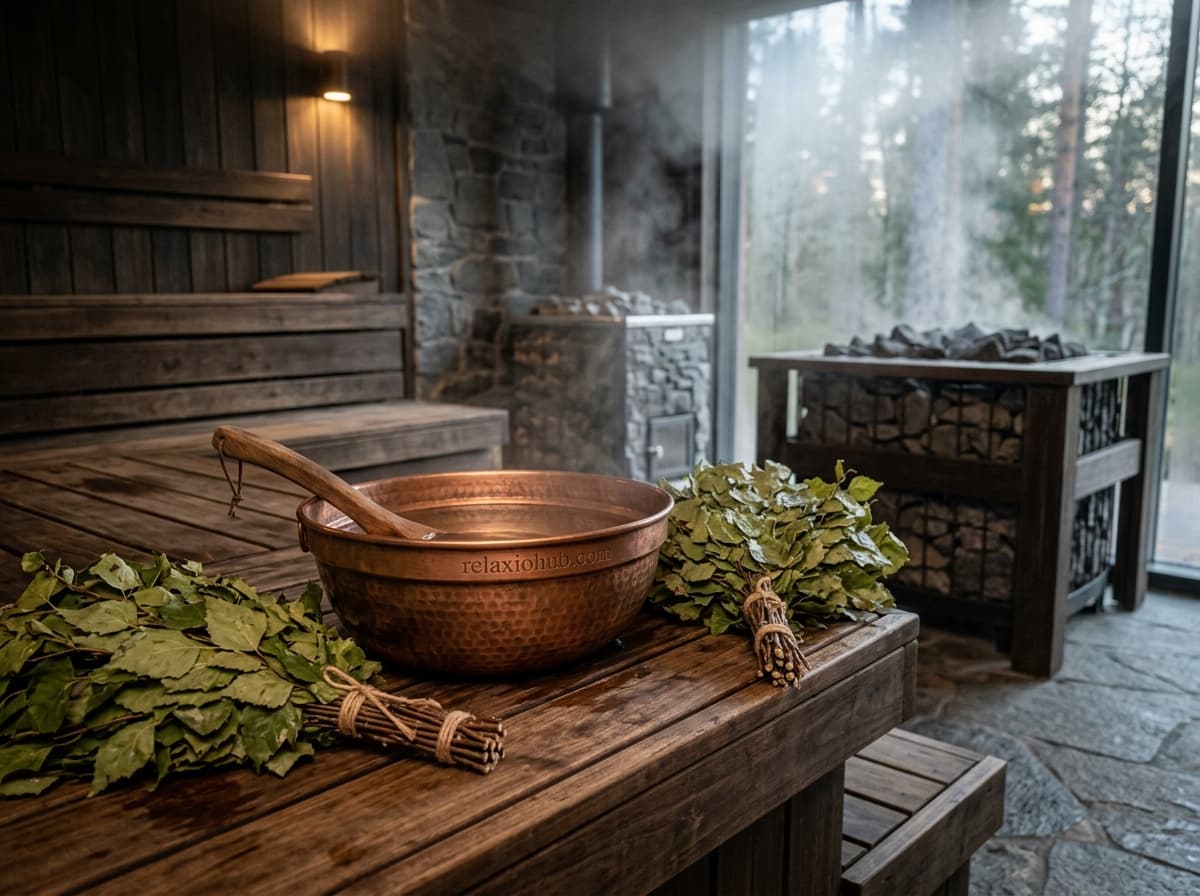
The broom is not used dry: it is warmed in water or steam so the leaves become flexible, aromatic, and less likely to scratch skin.
Banya massage with venik combines humid heat, steaming the body, rhythmic leaf contact, and careful hot-cold contrast: it is not just a spa show, but a structured ritual where the practitioner doses steam, broom intensity, and recovery pauses.
Steam room ritual
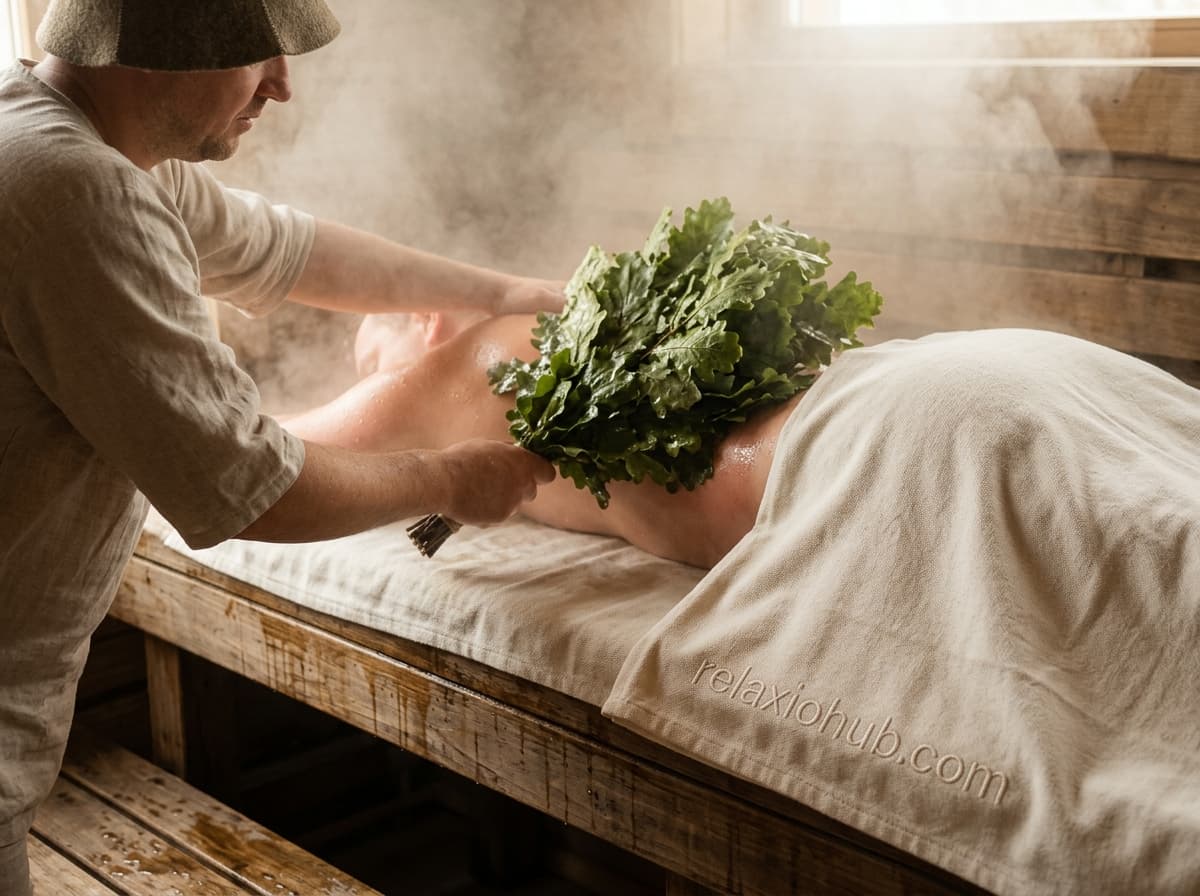
Banya massage is a massage performed in a steam room or after warming the body with bath brooms: birch, oak, eucalyptus, linden, or mixed branches. The practitioner does not simply “hit with a broom.” They prepare the body with heat, fill the room with steam, warm the skin and muscles, then use leaves as a broad natural tool: fanning, pressing, gliding, light whisking, and moving waves of hot air over the body.
Historically, venik massage grew from the bath cultures of Eastern Europe and the North: Ukrainian and Slavic banya, Russian steam rooms, Belarusian laznya, Baltic bath traditions, and Finnish sauna customs with vasta or vihta. Names and temperatures vary across countries, but the logic is similar: the body is warmed first, skin becomes moist and more responsive, and the plant broom adds rhythm, aroma, and mechanical contact without finger-point pressure.
Before a first banya visit, most questions follow the same pattern: does the venik hurt, why is steaming necessary, and how sharp will the contrast feel after the heat. A skilled banya practitioner does not chase extremes. They raise heat gradually, watch breathing, skin color, and wellbeing, and use cold water, a plunge pool, or snow only when the guest is genuinely ready for that contrast.
At a glance
Process
A professional banya ritual moves in waves: warming, pause, venik work, another pause, and only then contrast. If everything is done sharply, the body protects itself instead of relaxing.
The broom is not used dry: it is warmed in water or steam so the leaves become flexible, aromatic, and less likely to scratch skin.
The guest enters the steam room briefly, adapts to humidity and temperature, drinks water, and rests before the active phase.
The practitioner moves the broom above the body, directing waves of warm air toward the back, legs, and shoulders without sudden contact.
A warm broom is briefly pressed into tense areas or moved over the body with leaves so heat feels more local and deeper.
Once the body is warmed, light or medium venik strikes are added. They should feel like springy leaf rhythm, not painful beating.
After the steam room, the body is brought down calmly: cool air, a shower, or plunge pool is added only after checking wellbeing.
Expected effect
The effect depends on temperature, humidity, practitioner skill, cardiovascular condition, and how smoothly the hot-cold contrast is chosen.
The broom gives not only mechanical touch, but also the smell of wood and leaves, making the ritual more grounded and sensory.
After warming, skin and surface muscles often receive touch more easily than on a cold massage table.
Springy whisking and temperature change can create a feeling of tone, warmth, and a lighter back after a desk-heavy day.
Cool air or a shower after steam can feel clarifying when the contrast is not too sharp for the individual person.
The key is not heroics in a plunge pool, but control of pulse, breathing, temperature, and pauses between heat rounds.
Birch, oak, eucalyptus, and linden differ in flavonoid, tannin, and essential oil profile: each type brings its own aroma, contact texture, and degree of astringency on steamed skin.
Timeline
The practitioner asks about blood pressure, heart, vessels, varicose veins, pregnancy, alcohol, medication, heat tolerance, and past cold contrast experience.
The body enters heat gradually: a short round, sweat, exit, water, and rest.
The venik is soaked, excess water is shaken off, and leaf temperature and aroma are checked.
The practitioner alternates fanning, pressing, gliding, and whisking across the back, legs, shoulders, or the whole body.
After heat, mild or stronger cooling is chosen, then the body gets quiet, water, and time for breathing to settle.
Comparison
All these formats involve heat, but the sensation and the practitioner's role differ.
Banya massage fits when you specifically want body steaming, bath broom work, and possible cold contrast.
Turkish hammam is more about marble, steam, a kese mitt, and foam massage without rhythmic broom whisking.
Hot stone massage is better if you want local stable heat on a table without high humidity or steam room rounds.
Banya loads thermoregulation, heart, and vessels, so some limits are stricter than in a regular massage room.
FAQ
It is a bath ritual where the body is first steamed, then worked with a soaked broom: fanning, pressing, leaf gliding, and light whisking over warmed areas.
It should not hurt. A proper venik gives springy leaf contact and a wave of heat; if it feels like a sharp strike or burning, intensity should be reduced.
Steaming helps the skin and surface tissues accept heat, sweat, and broom contact. Without warming, whisking feels sharper and less comfortable.
Contrast is individual: for some people cool air or a mild shower is enough, while plunge pools or snow suit only prepared guests without contraindications.
Birch often feels more flexible and aromatic; oak feels denser and broader in contact. The choice depends on tradition, practitioner style, and skin sensitivity.
Check whether the profile explains broom types, steaming experience, contrast rules, contraindications, pauses between rounds, and willingness to make the ritual softer.
Birch leaves contain flavonoids (quercetin, kaempferol), tannins, and saponins; oak leaves contain denser ellagitannins. Warm, moist leaf contact with steamed skin partially transfers these compounds to the surface — giving each broom its characteristic aroma, mild astringency, and distinct tactile feel.
Therapists
Practitioners across Ukraine who provide this massage type. Choose a specialist and view their profile.
Compare profiles that describe bath brooms, steaming experience, temperature style, cold contrast, contraindications, and softer formats for beginners.