Back map and pressure contract
The therapist asks where the sensation sits, what makes it worse, and which pressure level should be avoided before hands start moving.
Focused work across the lumbar area, thoracic spine, shoulder blades and paraspinal lines helps the back feel warmer and less guarded, while pressure follows your words instead of chasing pain as proof.
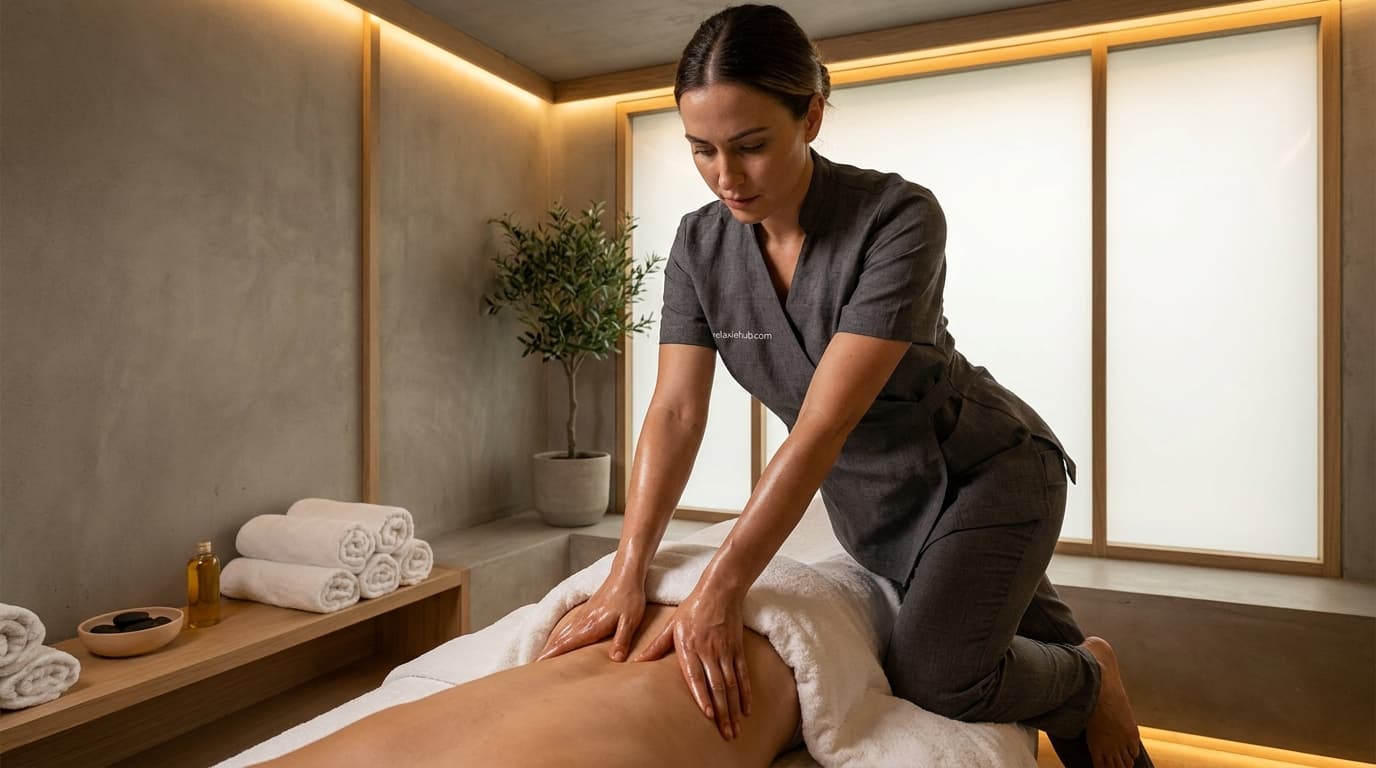
Whole-back focus
Back massage is the most searched and most misunderstood massage request: some people mean a relaxing 30-minute oil flow across the whole back, others want help with a stiff lower back, burning shoulder blades, computer posture, or the heavy feeling that arrives after driving. A professional session starts by separating these intents. The therapist maps whether discomfort sits in the lumbar area, thoracic spine, sacrum, ribs, shoulder blades, neck junction or one-sided line into the leg.
Historically, back work became central as massage moved from general rubbing traditions into more systemized European practice. In the 19th century, Johan Mezger’s terminology — effleurage, petrissage, friction and tapotement — gave the back a shared clinical vocabulary still used today. In the 20th century, sports massage, physiotherapy and myofascial thinking added precision: paraspinal muscles (the erector spinae group — iliocostalis, longissimus and spinalis — and the thoracolumbar fascia that links the spine, pelvis and posterior shoulder girdle), trigger areas and how desk posture overloads the back rather than only tight muscles.
The quadratus lumborum — a deep muscle from the iliac crest to the 12th rib and L1–L4 transverse processes — is a common but overlooked source of lumbar ache that responds to focused bodywork when neurological signs are absent. Massage may ease nonspecific back tension alongside movement habits, but it does not diagnose discs, cure sciatica or replace urgent care. Post-trauma pain, leg numbness, fever, unexplained weight loss, bladder or bowel changes, saddle numbness — these need a clinician.
Before booking
Technique
Good back work alternates broad warmth and precise pressure so the nervous system can settle before depth increases.
The therapist asks where the sensation sits, what makes it worse, and which pressure level should be avoided before hands start moving.
Slow gliding from sacrum toward shoulders spreads oil, warms large surfaces and lets the back stop bracing against contact.
Thumbs, palms or forearms work beside the spine, not directly on bony processes, so pressure feels specific rather than jagged.
Small angled strokes around the scapula help the upper back feel less glued after laptop posture and driving.
Broad holds and slow circles over the lower back and sacrum can feel grounding without forcing painful end-range movement.
A final shoulder roll, gentle twist or seated breath check confirms whether the back feels calmer or needs less depth next time.
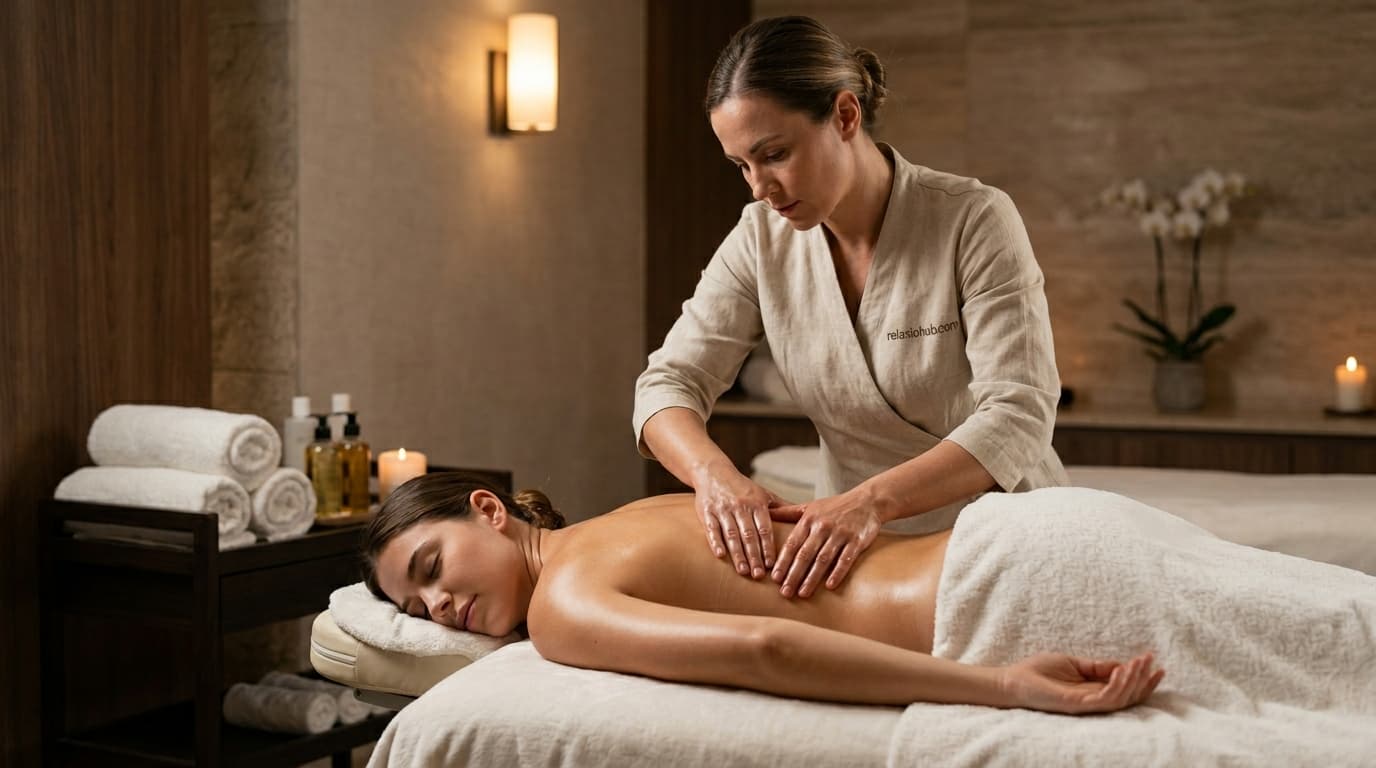
Why book it
Back massage is strongest as a comfort and awareness tool for non-acute tension, not as a substitute for medical diagnosis.
Slow pressure and heat can reduce the clenched feeling across lumbar or upper-back bands after long sitting.
When broad tissues calm down, bending, reaching or rotating can feel smoother for some guests.
Work around ribs and thoracic tension may make the back feel less like a rigid plate around each inhale.
Focused time on the back interrupts the pattern of carrying screen stress between shoulder blades and lower ribs.
A good therapist changes depth between lumbar, ribs and shoulders rather than using one force everywhere.
Questions about trauma, nerve symptoms and bladder or bowel changes prevent massage from delaying urgent care.
Session flow
You mention trauma, fever, cancer history, leg symptoms, numbness, weakness, bladder or bowel changes, pregnancy and preferred pressure.
Bolsters, side-lying or prone work are chosen so the lower back is supported before broad strokes begin.
The therapist alternates gliding, kneading, slow compressions and scapular or lumbar focus while checking your pressure feedback.
The session finishes with lighter strokes, breath or movement checks and enough time to sit up without dizziness.
Choosing the format
Choose the format by focus and depth, not by the strongest-sounding service name.
A focused page tells you how much time goes to lumbar, thoracic and shoulder-blade work instead of hiding it inside full-body flow.
If the main complaint is upper traps, occiput and desk-neck tension, a dedicated neck-and-shoulder format may fit better.
Radiating leg pain, weakness, trauma or persistent disability needs medical or rehab assessment before spa pressure.
Back pain is common, but some patterns should not be handled by deeper massage or “working through it.”
FAQ
It may help some people with nonspecific tension feel better short term, especially alongside movement and education. It does not diagnose or cure structural disease.
No. The back has ribs, nerves and sensitive spinal structures nearby. Medium sustained pressure often works better than painful digging.
No. Productive pressure can feel intense, but sharp, electric, nauseating or radiating pain means the therapist should stop or change technique.
Yes. Many providers offer a focused back session; confirm whether it includes lower back, shoulder blades, hips and neck junction.
Radiating pain, numbness or weakness can involve a nerve root. Tell the therapist before booking and consider medical screening first.
For ordinary tension, many guests start every 2-4 weeks and adjust based on response, work habits and self-care consistency.
Only after medical clearance. Recent surgery, fractures, severe osteoporosis or fresh trauma require clinician guidance before massage.
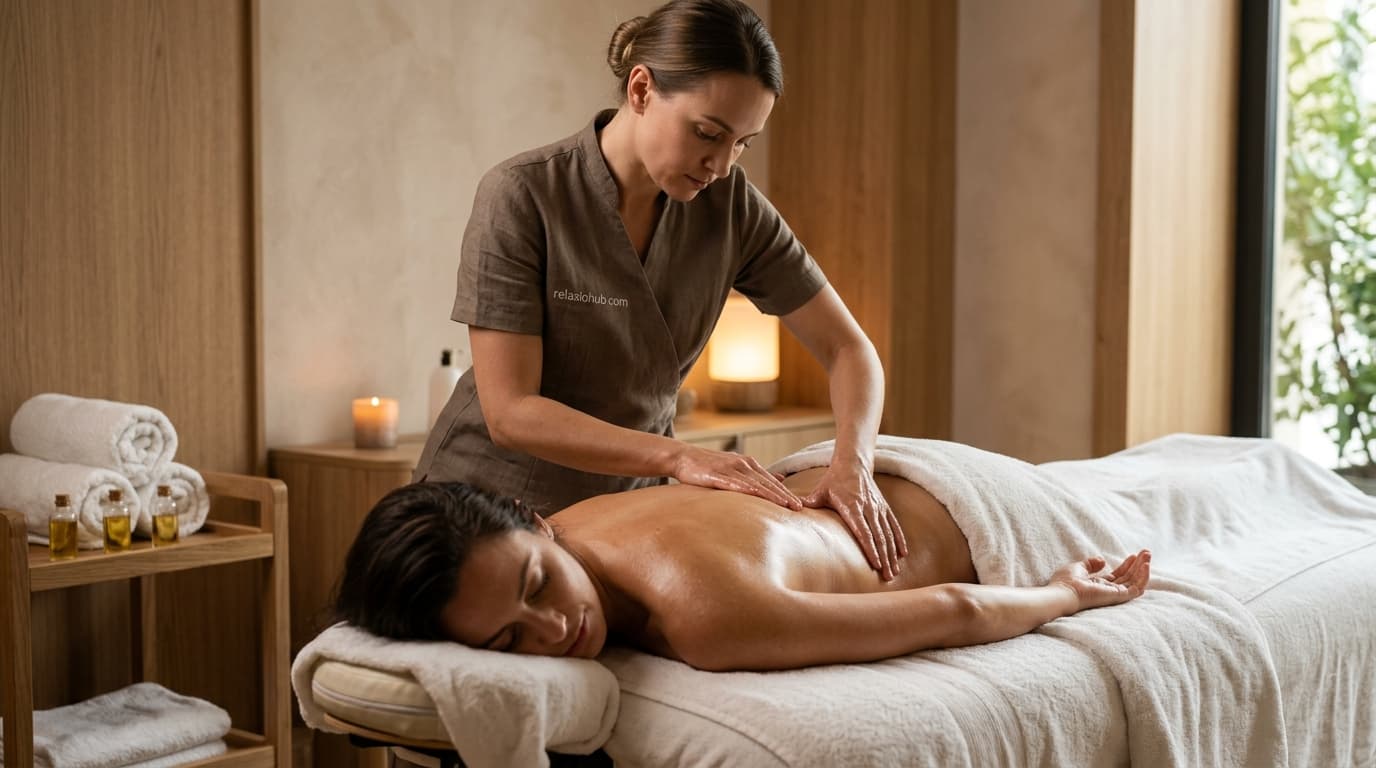
Good back work feels deliberate: broad warmth first, specific pressure second, and red flags never ignored.
Therapists
Practitioners across Ukraine who provide this massage type. Choose a specialist and view their profile.
Тетяна
Iлона
Катерина
Марія
Віктор
Роксана
Любов
Ірина
Ксенія
Поліна
Надія Світла
Кіра
Choose your city and compare profiles for focused back timing, pressure style, zones included, safety screening and experience with desk-related or training-related tension.