Bar-assisted weight control
The therapist holds overhead supports so only part of their body weight enters the stroke. This makes pressure adjustable rather than accidental.
Broad barefoot pressure, controlled by overhead bars, lets the therapist use gravity with precision: deep work for large muscle groups without the sharp elbow feel many clients dislike.
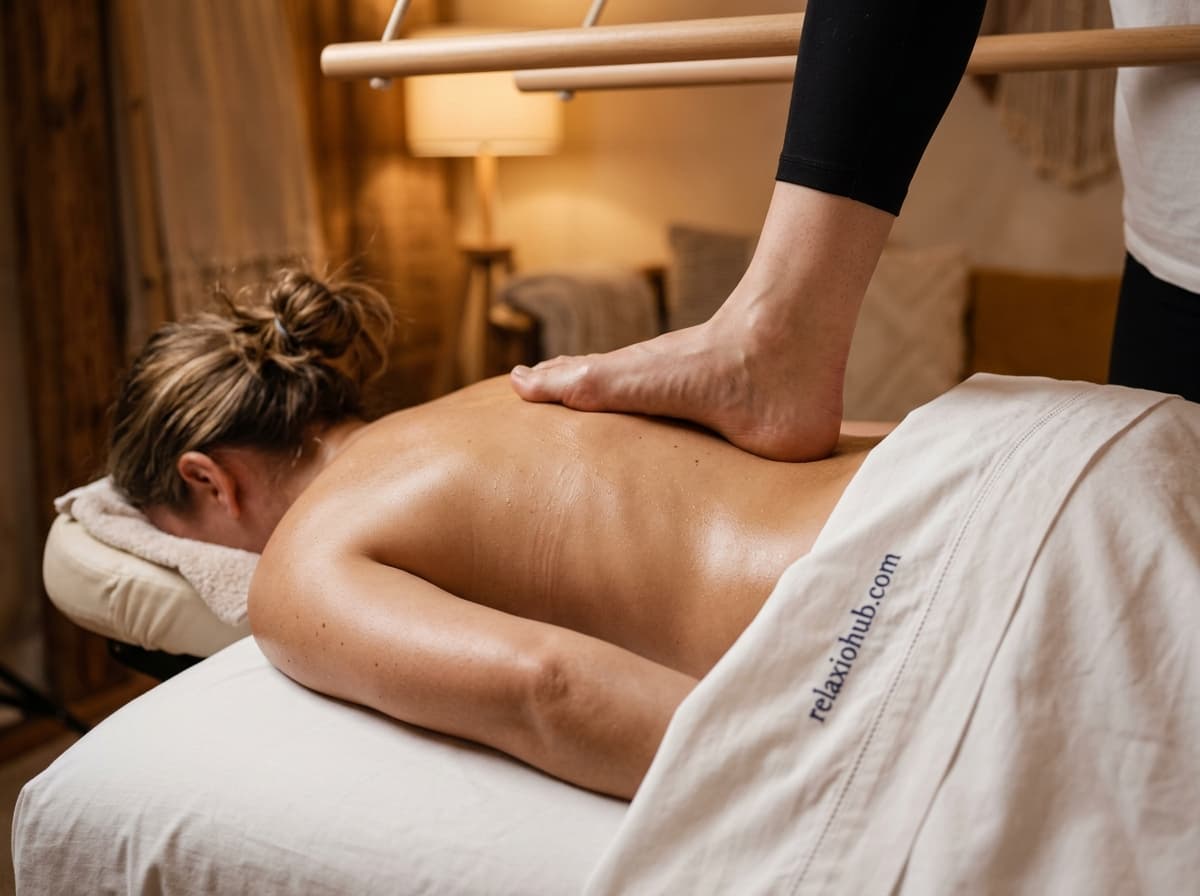
Barefoot bodywork
Ashiatsu comes from Japanese words commonly translated as foot pressure: ashi means foot and atsu means pressure. In today’s spa and therapeutic settings, the term usually describes massage performed with the therapist’s feet while they hold overhead bars, ropes, or a stable support system to control body weight.
The history is layered rather than owned by one school. Barefoot pressure methods exist across Asia, from Indian Chavutti Thirumal to Japanese Anma and Shiatsu-influenced pressure work. Japanese barefoot Shiatsu helped shape the vocabulary, while modern Western Ashiatsu Bar Therapy adapted the method for massage tables, oil-based gliding strokes, and orthopedic goals.
The search intent behind Ashiatsu is usually clear: people want deep tissue massage, but with broader pressure. Instead of a pointed elbow or thumb digging into one small spot, the therapist uses the heel, arch, and sole to create long sustained compression across the back, glutes, hamstrings, calves, or shoulder line. Good Ashiatsu feels deep and slow, not heavy or uncontrolled.
At a glance
Technique
The skill is not in using more force. It is in transferring weight slowly, avoiding bony structures, and using the foot as a broad intelligent tool.
The therapist holds overhead supports so only part of their body weight enters the stroke. This makes pressure adjustable rather than accidental.
The heel or arch travels along large muscle groups, producing a slow deep-tissue sensation without the pointed pain of elbows.
Sustained pressure over glutes, hamstrings, or back muscles can help tissues soften when the client exhales and stops guarding.
Long routes along the posterior chain can support a feeling of easier movement from back to hips and legs.
A trained practitioner avoids direct loading on the spine, knees, ribs, and vulnerable joints, using towels and positioning to refine angles.
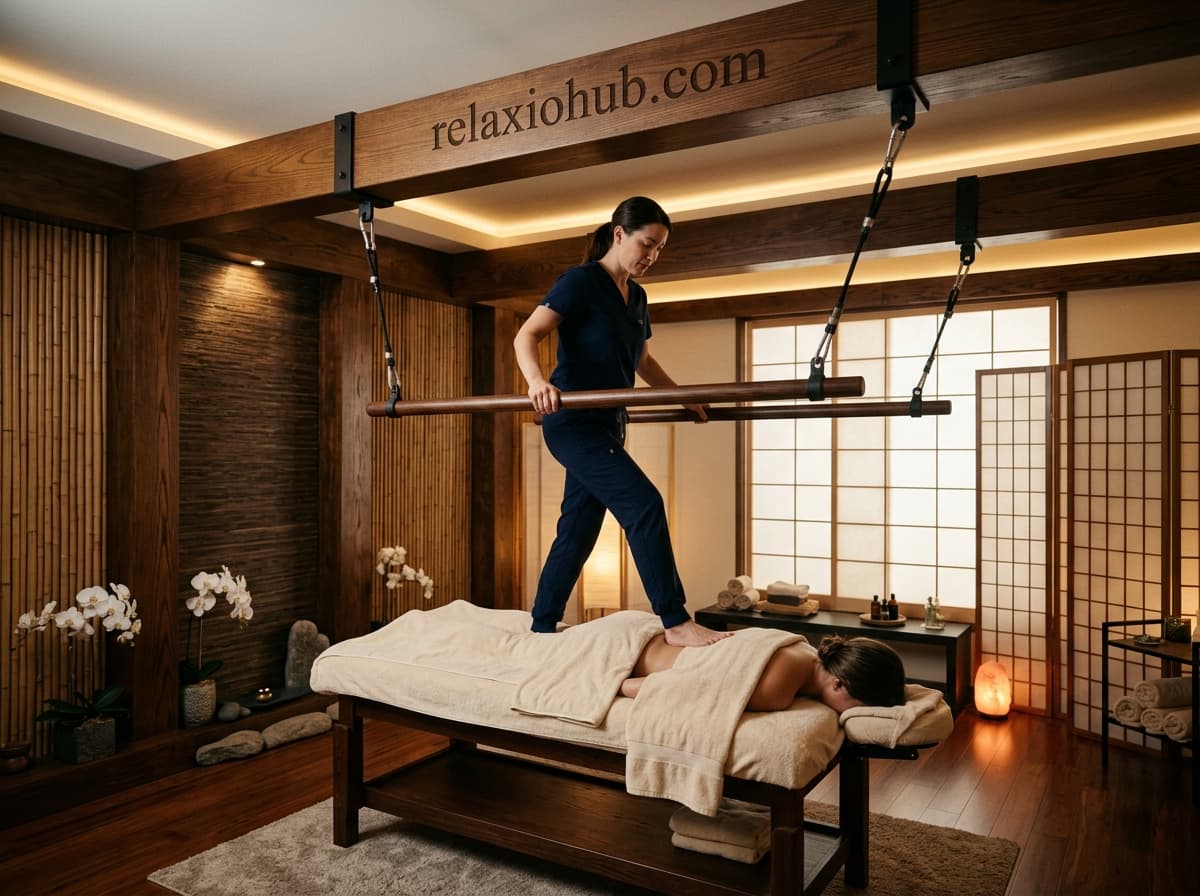
Effect
Benefits depend on the body, therapist training, pressure tolerance, and contraindications. The most realistic value is broad deep work with less sharpness.
The foot covers more surface than a thumb or elbow, which can feel deep yet less piercing across the back, glutes, and legs.
Slow compression and gliding may reduce perceived stiffness in large fascial chains after training, travel, or long desk weeks.
Clients who need intensity but dislike point pressure often choose Ashiatsu for distributed force.
The safest benefit comes from controlled load, clear feedback, and strict avoidance of joints, fragile bones, and medical risk zones.
Process
The therapist checks injuries, bone health, pregnancy status, vascular risks, medications, and confirms how deep the work may go.
Hands or lighter foot contact may start the session so tissues adapt before stronger heel or arch pressure appears.
The main phase uses bar-supported glides and compressions, then tapers into lighter strokes so the client can stand without dizziness.
Choosing the format
Ashiatsu is not for everyone, but it has a clear niche.
The therapist’s foot distributes force over a wider area, which can feel more tolerable for large muscles.
Back, hips, glutes, and hamstrings often respond well to broad sustained pressure when no medical red flags are present.
Ashiatsu is related to Asian barefoot pressure history, but modern table work with bars is a contemporary adaptation, not an untouched ancient ritual.
Because Ashiatsu uses body weight, contraindications matter more than marketing.
FAQ
The name is Japanese: ashi means foot and atsu means pressure. Modern Ashiatsu also reflects broader Asian barefoot massage traditions and Western table-based adaptations.
No. Professional Ashiatsu avoids direct spinal and joint loading. Pressure should land on appropriate soft tissues with bar-supported control.
It can be deeper, but the pressure is broader. Many clients find it intense without the sharpness of elbows.
They let the practitioner regulate weight, balance, direction, and safety. Without stable support, barefoot massage becomes risky.
For general wellness, every 3–6 weeks is common; stronger sessions need more recovery time and should not replace medical care.
Avoid heavy meals 2-3 hours before—foot pressure on the back and pelvis is uncomfortable with a full stomach. Disclose spinal injuries, osteoporosis, varicosities, and blood thinners so the therapist can adjust weight and avoid contraindicated zones.
Classic and Balinese sessions use palms, thumbs, and forearms. Ashiatsu replaces them with bare feet: contact area is broader, pressure is more evenly distributed, and load is gravity-driven rather than muscular effort. Overhead bars let the therapist control exactly how much weight reaches tissue.
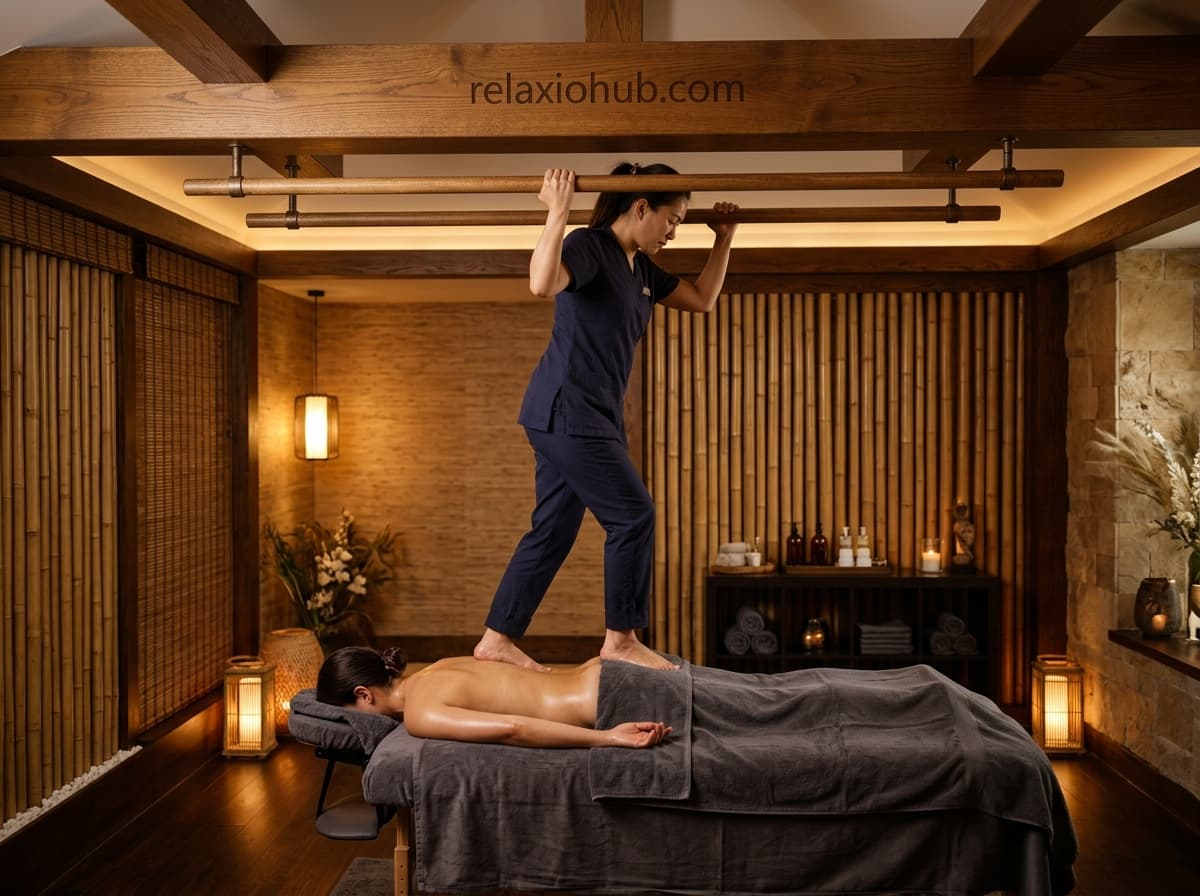
Overhead bars are not decor—they let the therapist turn body weight into broad, calibrated pressure with less sharpness.
Choose your city and read profiles for Ashiatsu-specific training, stable bar setup, pressure communication, contraindication screening, and clear refusal of unsafe joint loading.