Skin preparation and glide
The practitioner cleanses or checks the skin and applies cream, gel, or oil so fingers glide without stretching. Dry pressure does not suit Asahi Zogan.
A Japanese face massage with slow glide, lymphatic directions, and gentle sculpting pressure: people choose it to reduce a puffy feeling, refresh facial contours, and learn calmer face work without aggressive rubbing.
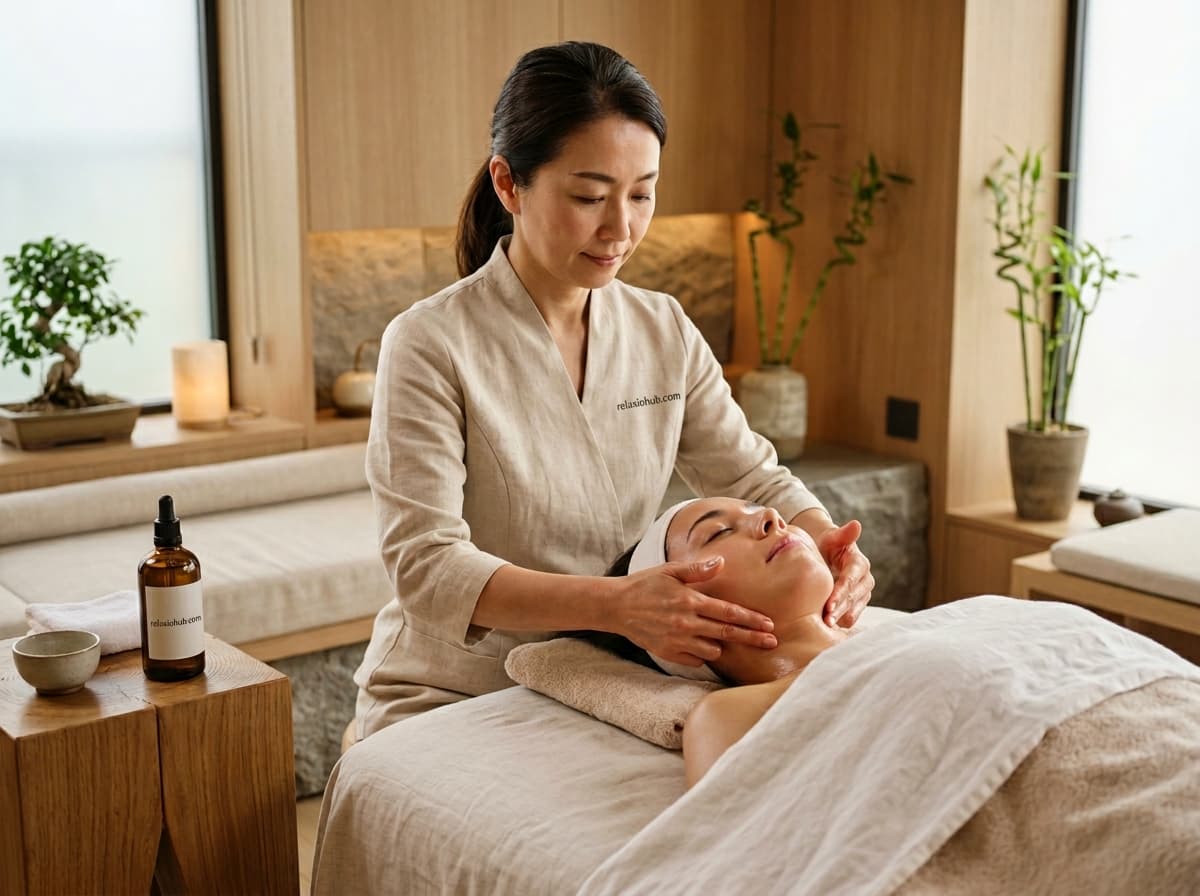
Japanese face massage
When the practitioner slowly draws their palms from chin to collarbone, the face feels not just touch but direction — as if the tissue finally has somewhere to go after a night's sleep, a stressful day, or hours in front of a screen. That is the opening movement of Asahi Zogan, a Japanese face massage combining lymphatic directions, deeper sculpting pressure, and a clear movement sequence. Searchers often call it Asahi massage, Zogan massage, Tanaka face massage, or Japanese face massage for puffiness. The goal is not to “erase wrinkles”; it is to help the face feel fresher through work with soft tissue, the neck, and the sense of stagnation.
The history of modern Zogan massage is tied to Japanese beauty culture and the work of stylist and author Yukuko Tanaka, who popularized face contouring massage in the 2000s through books, television, and video lessons. Zogan is often interpreted as “face creation” or “face shaping,” while Asahi is associated with morning freshness. It is best presented as a modern cosmetic technique, not as an ancient medical cure.
Today Asahi Zogan is practiced in Japan, South Korea, Taiwan, China, Hong Kong, Singapore, the United States, the United Kingdom, EU countries, Ukraine, and online facial massage schools. Demand is strongest among people searching for facial massage for puffiness, Japanese self-massage, non-injection beauty care, pre-event freshness, or a way to understand where the face holds tension after stress, sleep, or long screen work.
At a glance
Technique
A session should be precise and slow: the face is not rubbed randomly; movements follow clear lines with enough glide and finish toward lymphatic drainage areas.
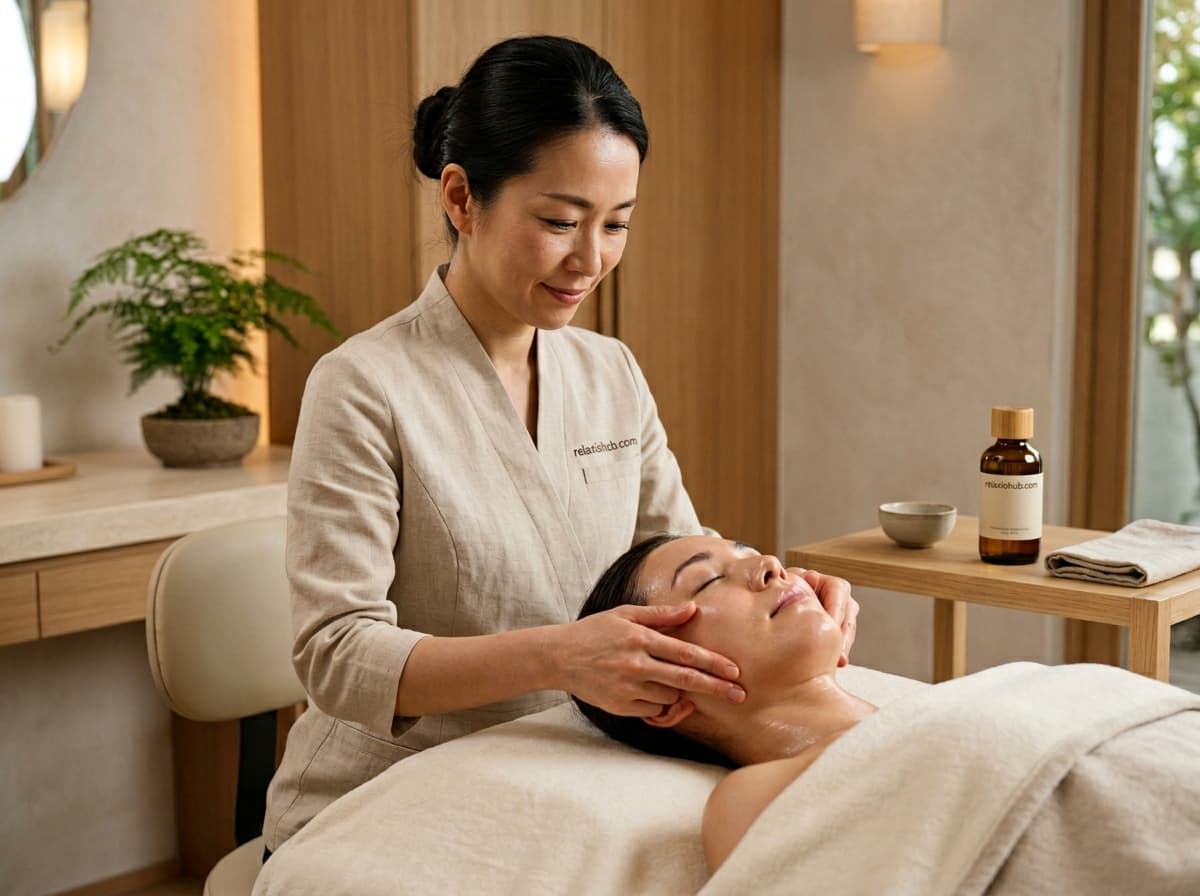
The practitioner cleanses or checks the skin and applies cream, gel, or oil so fingers glide without stretching. Dry pressure does not suit Asahi Zogan.
Movements often travel from the ear toward the neck and collarbones so the face is not treated separately from lower lymphatic pathways.
Palms or fingers slowly guide tissue from the center of the face outward, creating a feeling of support in the cheeks without sharp pinching.
Pressure is reduced around the eyes: movements should be light, with no pressing into the eyelids, eyeball, or painful points near the orbital bone.
The jawline is worked slowly, as if easing tension after clenching, but without aggressive pressure on lymph nodes.
The pace slows, excess product is removed or left depending on skin type, and the practitioner explains which movements can be repeated at home without overload.
Expected effect
This is cosmetic and wellness care, not a replacement for a dermatologist, dentist, or doctor. It works best as a careful ritual for freshness, a lighter-feeling face, and better awareness of facial tension.
Movements toward the neck and collarbones can help the face feel lighter after sleep, salty food, or long sitting.
After a gentle session, skin often looks more awake because of warmth, touch, and better distribution of skincare product.
Sculpting passes along the cheeks and jawline help you notice where tissue feels tense or heavy.
Strokes along the jaw, forehead, and cheekbones help you notice where the face quietly clenches after stress, bruxism, or long screen hours.
Asahi Zogan appeals to people who want manual care without devices, needles, or abrupt changes to facial expression.
A good practitioner does not chase painful pressure; they adapt movements to skin, vessels, sensitivity, and cosmetic procedure history.
Timeline
The practitioner asks about acne, couperose, rosacea, dermatitis, fillers, Botox, dental issues, surgery, and cosmetic sensitivity.
Cream or oil should suit your skin type; a sticky product encourages dragging, while an overly slippery one reduces control.
Movements repeat symmetrically and finish toward the neck or collarbones so the face does not feel heavy after massage.
The practitioner works with cheeks, jawline, chin, and forehead while monitoring pressure and skin response.
After the session, you may be shown two or three safe movements, but intense daily self-massage without adaptation is unnecessary.
Comparison
All three formats work with the face, but they match different search intents.
Asahi Zogan best matches searches for Asahi face massage, Japanese lymphatic face massage, and facial massage for puffiness.
Kobido is often seen as a professional anti-aging facial with a more complex manual school, faster techniques, and a stronger salon presentation.
Gua Sha uses a stone tool and gives a different skin contact; it depends on tool angle, glide, and vascular sensitivity.
The face reacts quickly to pressure, so contraindications involve skin, vessels, injection procedures, and inflammation.
FAQ
It is a Japanese face massage technique with lymphatic directions and sculpting movements, popularized by Yukuko Tanaka. It is often searched as Asahi massage, Zogan massage, or Tanaka face massage.
The modern method comes from Japan and Japanese beauty culture of the early 2000s, although face work and lymphatic principles have a broader cosmetology context.
It is practiced in Japan, South Korea, Taiwan, China, Hong Kong, Singapore, the United States, the United Kingdom, EU countries, Ukraine, and online facial massage schools.
It should not be expected to remove wrinkles. Massage may create a fresher, less puffy feeling and improve tissue tone perception, but skin aging requires broader care.
Asahi Zogan is often presented as a structured lymphatic and sculpting massage that can partly be learned for home use. Kobido is usually a more complex salon Japanese facial with a wider manual technique set.
Look for profiles that describe facial massage experience, sensitive skin work, contraindications, adaptation after injectables, and realistic expectations without “10 years younger” promises.
The basic movements are accessible from video — that is exactly how Asahi Zogan became popular as a home protocol. Without understanding directions and appropriate pressure, however, there is a real risk of dragging the skin. One session with a practitioner helps you feel correct technique: where to glide and where to stop.
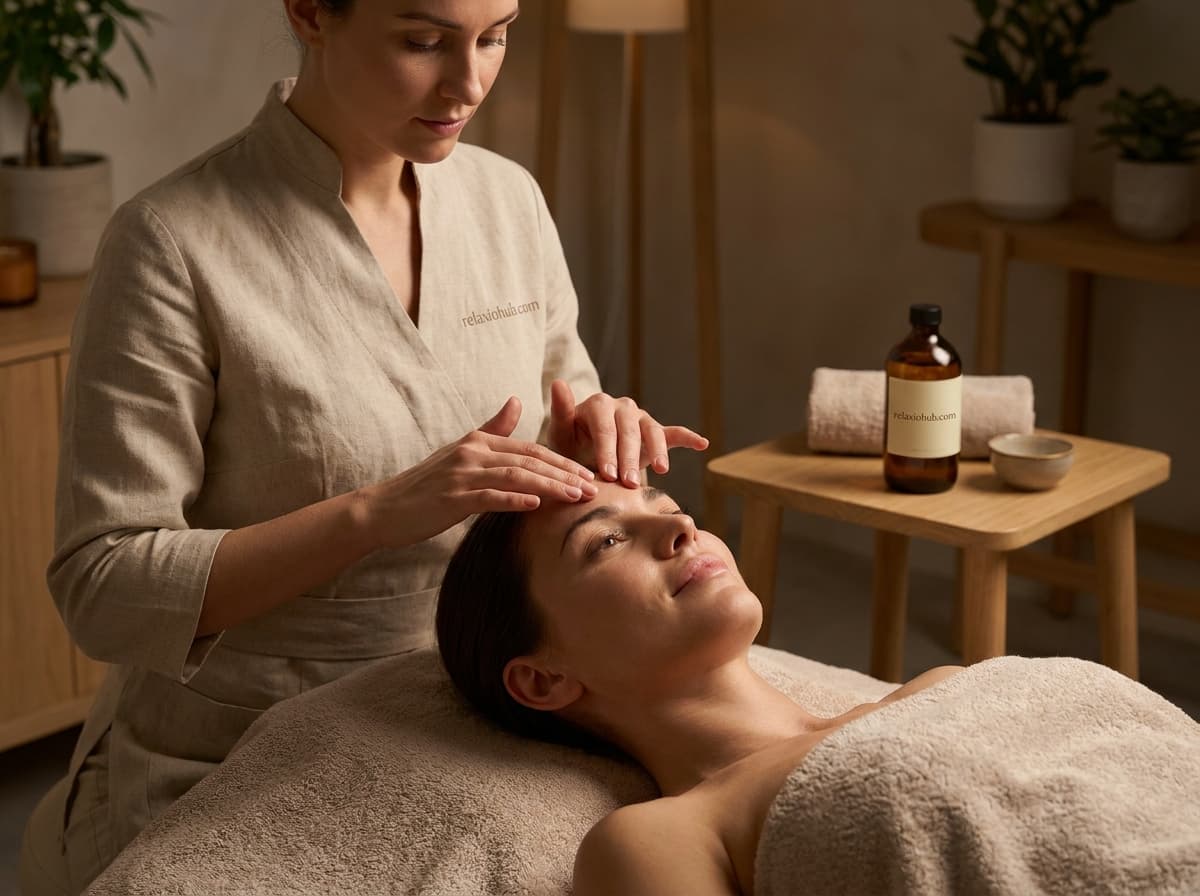
The valuable part of Asahi Zogan is directional control: movement guides tissue gently, not shifting skin by friction.
Look for profiles where the practitioner describes their facial massage experience, explains lymphatic directions, and lists clear contraindications — a sign they know the technique rather than just offer it.