Deep warming effleurage
Prepares tissue before stronger passes and lowers risk of skin irritation.
Work targets thighs, glutes, flanks, and lower abdomen with tissue-warming rhythm that supports circulation, eases fluid stagnation, and makes skin texture look smoother—without unsubstantiated weight-loss claims.
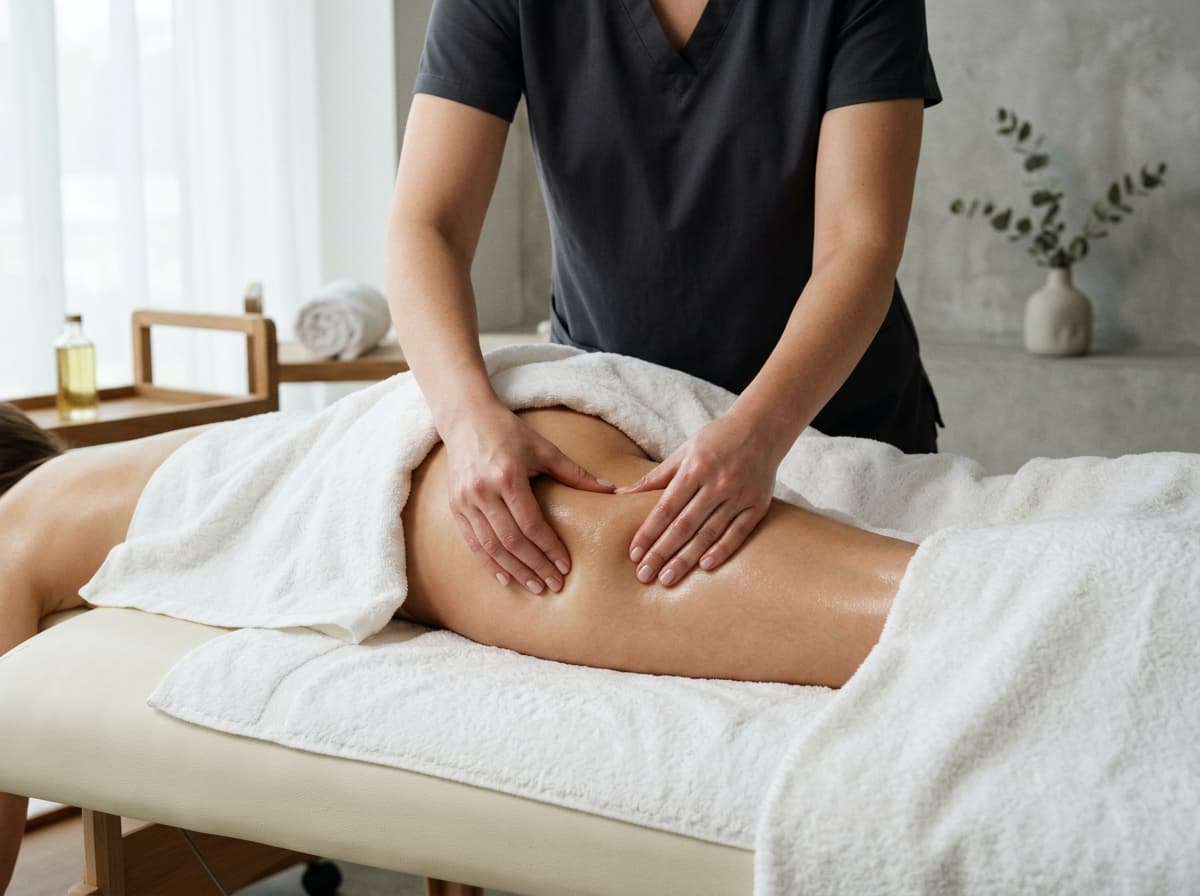
Top search intent
People searching “how to lose weight quickly and effectively” or “how to get rid of cellulite on thighs and glutes” often meet aggressive claims that massage alone burns fat overnight. In real-world practice, anti-cellulite massage supports a different outcome: better local microcirculation, less fluid stagnation, softer-feeling tissue, and smoother-looking skin texture after a course.
Cellulite is multifactorial: connective tissue structure, hormones, genetics, activity level, stress load, and sleep quality all matter. Ethical practitioners do not sell permanent fat destruction in one or two visits. They set a measurable plan: cadence, pressure control, bruising avoidance, before/after photos in consistent light, and thigh or waist measurements.
If your primary goal is body-weight reduction, anti-cellulite massage is a support tool inside a system that includes calorie control, resistance/cardio training, and recovery. Massage does not replace nutrition, but it can make the aesthetic progress easier to see: less puffiness, smoother surface texture, lighter-feeling legs, and more motivation to continue the plan.
At a glance
Technique
Methods are layered progressively: tissue prep, contour-focused work, then calming integration.
Prepares tissue before stronger passes and lowers risk of skin irritation.
Small-zone work improves control over sensitivity and pressure tolerance.
Helps reduce heavy-leg sensation in clients with sedentary routines.
Applied selectively to improve tissue glide without treating bruises as a success metric.
Calming exits help tissue adapt after intensive phases.
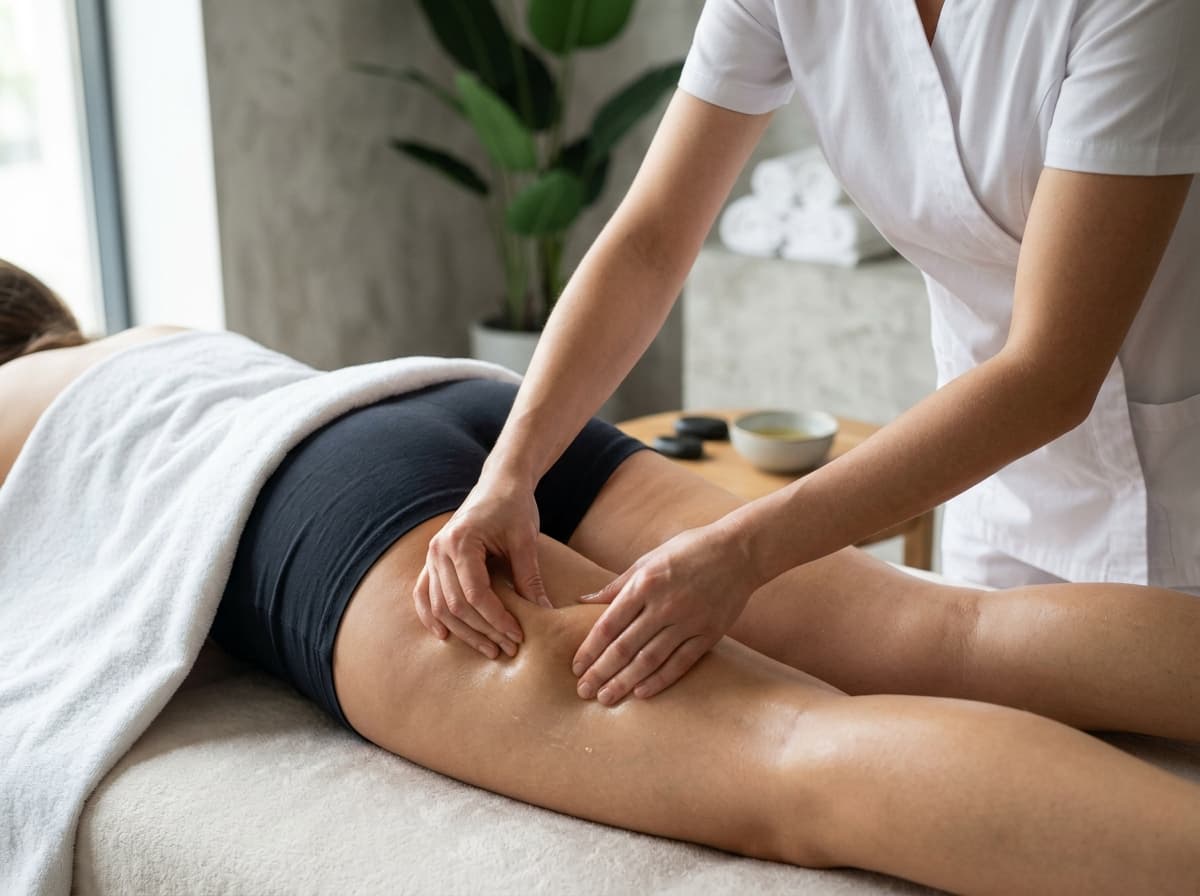
Why people book
These are realistic wellness outcomes, not manipulative “drop sizes in one day” claims.
Target zones often feel more responsive and less stagnant after focused manual work.
Drainage-focused pacing can improve evening comfort and leg-lightness perception.
With cadence and home care, surface irregularities may appear less pronounced.
Skilled therapists monitor tissue response and avoid turning treatment into trauma.
Flow
The session starts by clarifying priorities: contour texture, fluid retention, event prep, or comfort in targeted zones.
Therapists alternate kneading, drainage, and selective friction while tracking pain and skin reaction in real time.
Finish with calming passes, then agree on home support and next-session timing.
Choosing the modality
Practical navigation for “get rid of cellulite,” “lose weight quickly and effectively,” and “anti-cellulite vs lymphatic drainage massage” search intent.
A structured anti-cellulite course can improve contour appearance when paired with home care.
Prioritize nutrition and training architecture; massage improves aesthetics but does not replace energy balance.
Start with a gentler lymphatic drainage protocol or a combined course: first reduce fluid stagnation, then layer firmer anti-cellulite work.
Get clinician guidance first, then use an adapted protocol without aggressive loading.
Safety standards always outrank fast aesthetic promises.
FAQ
It can improve contour appearance and reduce fluid-related puffiness, but durable weight loss requires a full system: nutrition, movement, sleep, and stress management.
A permanent full removal guarantee would be misleading: cellulite depends on hormones, genetics, connective tissue, and lifestyle. Massage can visibly smooth texture and reduce puffiness, especially as a course.
Many people notice early visual change after 3-5 sessions, while stronger outcomes usually require a 6-10 session course.
No. Mild sensitivity can happen, but pronounced bruising is not a quality marker and may indicate excessive force.
For strong fluid retention, drainage-led starts are common; for contour texture goals, anti-cellulite techniques are then layered in.
Manual work allows finer pressure control and suits sensitive areas. Cupping or vacuum formats can feel more intense, but need caution with varicose veins, easy bruising, and delicate skin.
A typical course is 1-2 sessions weekly, then maintenance every 2-4 weeks based on tissue response and goals.
Therapists
Practitioners across Ukraine who provide this massage type. Choose a specialist and view their profile.
Сергій Олександрович
Ольга
Iлона
Катерина
Анастасія
Оксана
Оксана
Поліна
Choose your city and review profiles for anti-cellulite experience, realistic communication, before/after tracking, safe pressure strategy, and a system-based approach to “get rid of cellulite” and “lose weight quickly and effectively.”