Percussive thumb walks
Short circles or marching contacts along paraspinals and glutes—you feel patterned points instead of one endless pinch.
Bright rhythm and articulate hand contact—for muscular warmth after desk days, needle-free tone, and a structured session with Korean lineage adapted for modern studios.
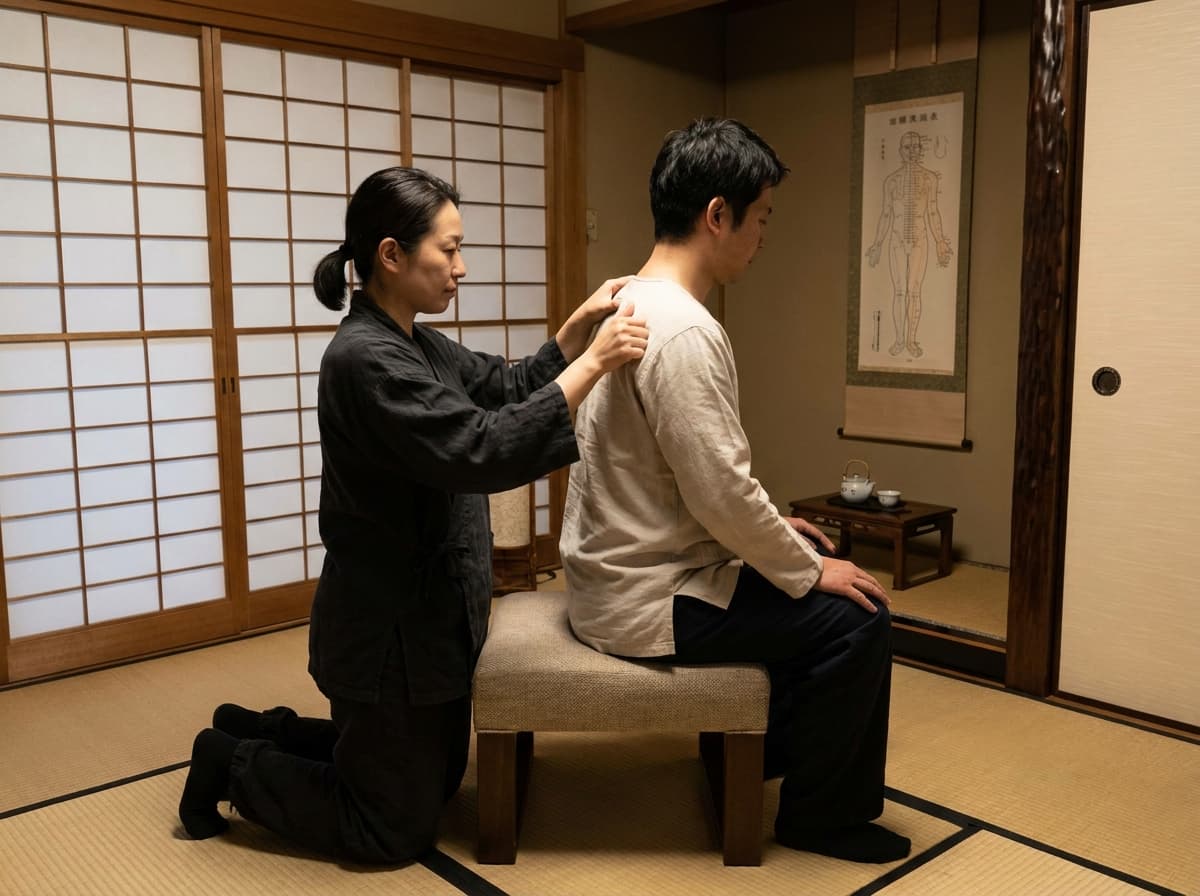
Massage overview
Amma grows out of Korean bodywork traditions and in salons often arrives as a mapped session alternating thumb-point compression, broad palm presses, and moderate kneading across major muscle groups. Sensations skew toward warming wakefulness rather than a single ultra-slow pressure cadence from scalp to heel.
Studios diverge: some emphasize tension lines along back and legs, others layer cautious vibration or brief percussion only after tissues warm; table sessions with oil coexist with clothed futon protocols. The term "Amma" is not one rigid syllabus—read therapist bios and ask about tempo before paying.
Guests frequently choose it for wooden-feeling backs after office marathons, Eastern rhythmic touch without acupuncture needles, or when Swedish strokes feel monotonous yet lymphatic pacing feels too light. It is not medical therapy—acute pain, numbness, suspected thrombosis, or pregnancy without physician coordination means postpone the booking.
At a glance
Technique
School vocabulary shifts, but sequencing stays legible: warm up, rhythmic pressure, intentional close.
Short circles or marching contacts along paraspinals and glutes—you feel patterned points instead of one endless pinch.
Broad contact across back or thighs melts desk chill after aggressive AC.
Traps, calves, or quads receive familiar kneading embedded inside Eastern pacing.
Edge-of-hand taps appear only where tissues tolerate it and you explicitly agree.
After a perkier mid-session, therapists widen strokes so nerves do not stay overstimulated.
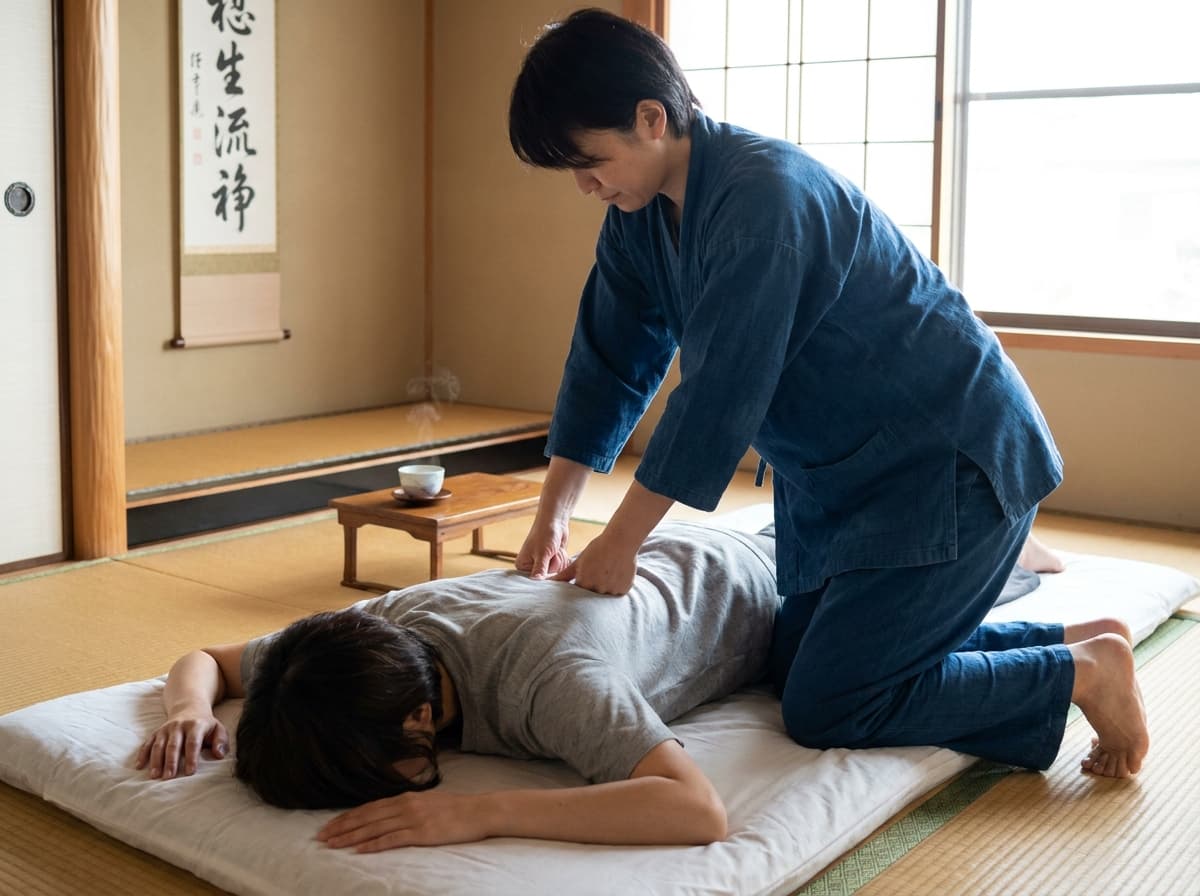
Effect
Results hinge on sensitivity and chosen intensity. Below are wellness motivations without disease-cure claims.
Moderately active pacing helps backs and shoulders feel awake post-monitor marathons.
Compression plus kneading often sparks pleasant heat without sports-table bruising.
Sessions usually decelerate—less nervous-system buzzing than endless percussion without closure.
Structured East Asian touch language for guests avoiding invasive modalities.
Process
Discuss pain patterns, training load, stress, injuries, varicose zones, and fresh bruising.
Broad contact shifts into rhythmic pressure and kneading on approved regions.
Quiet closing strokes plus hydration and load guidance for the next day.
Choosing the format
Searchers confuse Amma with shiatsu or tuina. Three grounded scenarios.
Request medium intensity and minimal percussion on visit one.
Prioritize traps, paraspinals, and gentle scapular freeing.
Amma often feels perkier—still cancel if acute pain or fever appears.
Rhythmic compression and kneading defer during acute inflammation, suspected thrombosis, or unstable cardiovascular states without clearance.
FAQ
Shiatsu frequently stays slower with sustained line pressure. Salon Amma tends toward perkier rhythm and more mingled kneading—exact boundaries depend on each therapist's training.
No. Tuina follows different curricula and emphases. Trust the modality list on each profile, not the buzzword alone.
Rich intensity can happen but sharp or breath-stealing pain is off-brief—negotiate depth live during the session.
Some studios yes, others table-only. Ask if knees or hips struggle with floor transitions.
Maintenance every 2-3 weeks is typical; draining life chapters occasionally justify short weekly series without contraindications.
Japanese Anma (按摩) influenced Korean Amma's development; both build around rhythmic thumb and palm pressure. Studios sometimes use the names interchangeably, so reading each therapist's listed techniques matters more than the name.
Warmth and easier shoulder movement often appear after the first session. Sustained reduction in trapezius and neck tension typically stabilizes over three to four visits spaced two weeks apart.
Choose your city on the home page and browse profiles listing Amma or closely related techniques.