Static holds on tight zones
The therapist maintains steady depth while you breathe; the goal is gradual release, not chasing maximum pain.
Deep yet negotiated pressure without needles—for easing grip-like muscle tension, stress offload, and a calmer breathing rhythm.
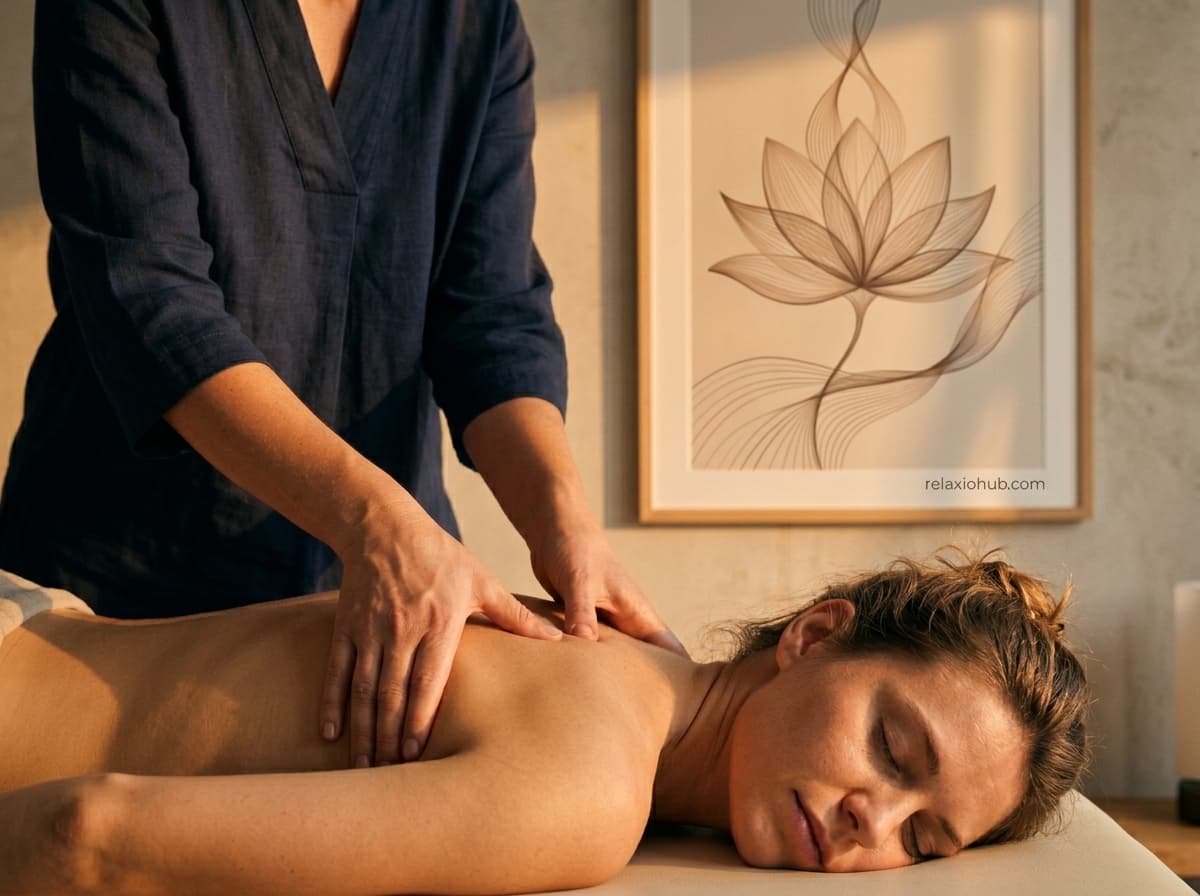
Massage overview
In this wellness context, acupressure massage uses thumbs, fingers, palms, or knuckles to apply sustained pressure to localized zones—often along habitual tension lines from screens, heavy backpacks, or stress-held posture. Unlike acupuncture, no needles penetrate the skin; sensations feel closer to deep, gated pressure with pauses than to sweeping strokes across the whole back at once.
Skilled practitioners balance intensity with safety: they find a tolerable depth first, then layer short holds or 10-30 second compressions until tissue softening is felt. Static points alternate with slow traveling pressure so one spot never overloads and the nervous system does not spike into guarding.
People often choose it for dense upper-back and neck fatigue, tension headaches without a medical diagnosis, or when they want focused contact instead of continuous kneading. It is not a substitute for diagnosis: sharp pain, numbness, cramps, or pregnancy require clinician alignment before booking.
At a glance
Technique
Names differ by school, but the narrative is steady: prepare tissues, apply focused pressure, travel along tension lines, then integrate with slower contact.
The therapist maintains steady depth while you breathe; the goal is gradual release, not chasing maximum pain.
Broad pumping pressure across the back or thighs warms superficial layers before deeper focal work.
Fingers trace tension pathways with brief stops where tissues resist—you might notice easier neck rotation midway through.
Lighter surrounding strokes calm hypersensitivity after strong pressure so the body integrates the stimulus.
Wide, slow contact and eased pacing settle breathing instead of leaving you wired after deep stimulation.
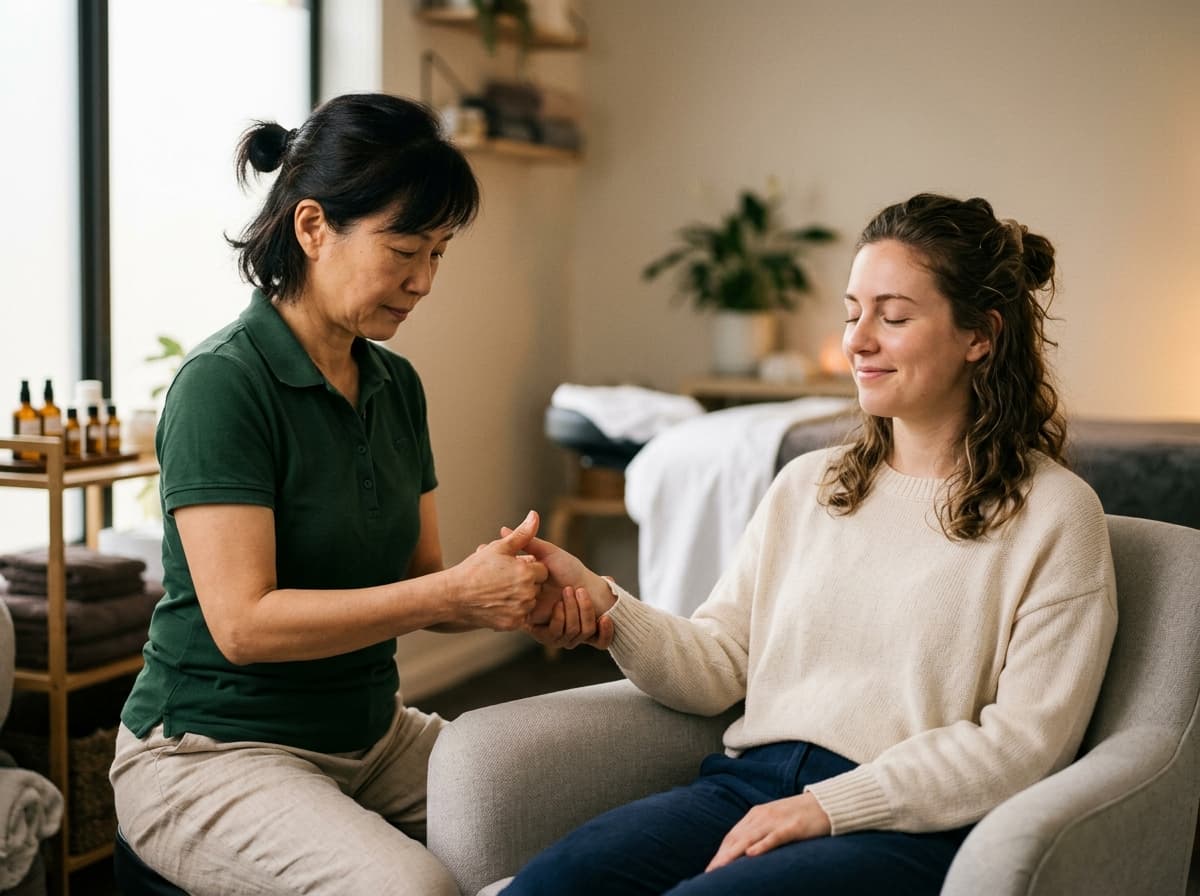
Effect
Outcomes hinge on sensitivity, hold lengths, and daily stress load. Below are realistic expectations without miracle claims.
Pressure-and-pause patterns help tissues warm after long static posture.
Useful after laptop marathons when rotation feels gritty.
Predictable touch can help the nervous system exit hypervigilant mode.
A structured option when you want intensity but prefer non-invasive contact you can steer verbally.
Process
You discuss movement-related vs resting pain, stress, sleep, injuries, and zones that must stay light.
Gentle warming contact leads into holds and traveling pressure on agreed regions.
The closing rhythm slows so blood pressure and breathing stabilize before you stand.
Choosing the format
Searchers often confuse acupressure with Shiatsu or classic Swedish-style massage. These three scenarios stay inside wellness boundaries.
Start with medium depth and shorter holds. Depth scales only with explicit consent.
Prioritize upper-back focus alternating focal pressure with scapular clearing strokes.
Lean on slower pacing and broader compressions, sprinkling deep holds only where tension is obvious.
Acupressure massage defers during acute injury phases, infections, unexplained swelling, or until pregnancy clearance outlines safe zones.
FAQ
Acupuncture uses sterile needles under licensed providers. Acupressure massage stays manual—no punctures—and depth is negotiated continuously.
Shiatsu follows Japanese lineage protocols. Studios may borrow acupressure concepts; ask each practitioner how they structure sessions.
Intensity yes, sharp suffering no. Speak up immediately—pressure should remain cooperative, not punitive.
Every 2-3 weeks suits maintenance; short weekly blocks may appear during crunch periods if contraindications are absent.
Classic massage often emphasizes effleurage and broad kneading. Acupressure prioritizes holds and targeted compression, though techniques can blend.
Yes—blends are common. Therapists may layer acupressure holds with classic effleurage or Shiatsu-derived passes. Ask upfront whether a combined session serves your goal better than one focused approach.
A single visit often reveals how your body responds; lasting change for chronic tension typically emerges after three to five sessions paired with ergonomic or lifestyle adjustments off the table.
Therapists
Practitioners across Ukraine who provide this massage type. Choose a specialist and view their profile.
Choose your city on the home page and browse profiles listing acupressure or point-pressure techniques.